
Last updated: September 2026
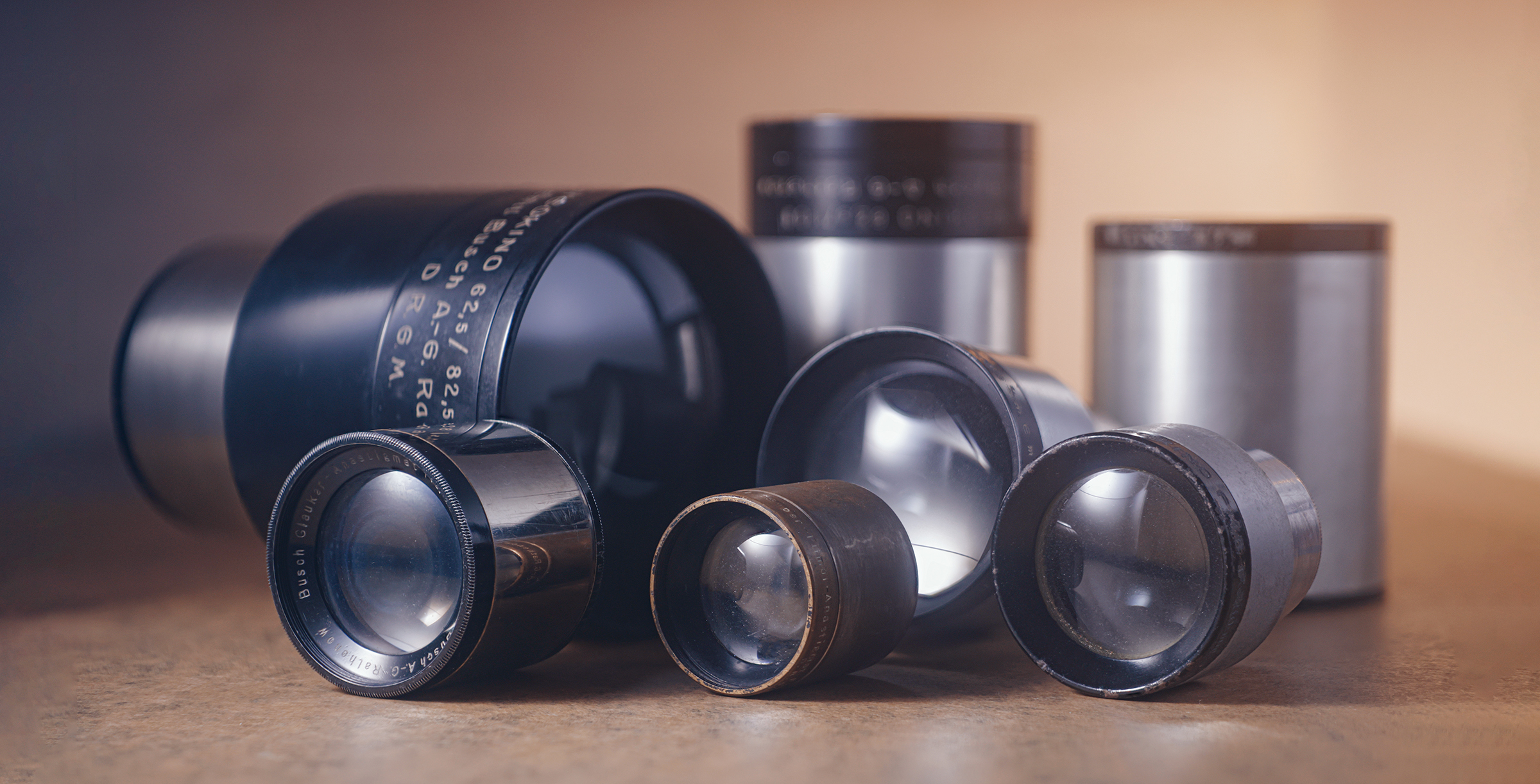
There are some really well done write-ups about the company Emil Busch and some of their lenses out there already and so initially I didn’t have any plans to write one myself due to fears of not having anything of value to contribute.

The article  Objektive aus Rathenow (Lenses from Rathenow) on the zeissikonveb website for example gives a great overview of several manufacturers from that german city, including Emil Busch of course. It’s well worth a read, even if you have to translate it to your language, because the author Marco Kröger seems to have done some thorough research and adds a lot of necessary and interesting context to it all.

In terms of projection lenses, there’s an excellent writeup by Espen Susort, which goes into the history of the Neokino family of projection lenses as well, but then mainly focuses on two particular samples, the 50/1.6 as well as the 65/1.6, two small lenses for 16 mm projection, which – according to the lens experimenter from Norway – “pack a punch”. I can confirm that to be true, so make sure to check out his thoughts and images as well, particularly because Espen shows lots of beautiful portraits taken with these two samples from the 1930s.
An excellent biographic piece about Johann Heinrich August Duncker can be found online as well, albeit only in German. It’s an excerpt from the company’s 100th anniversary in 1900, which is a particularly interesting aspect and provides a unique point of view.
If you want to know more about the early years of the company with lots of details and an unfortunately relatively uncommon nuanced perspective (not only including the advantageous views), I’d recommend reading the great article Geschichte der ROW from the TU Dresden (University Dresden).
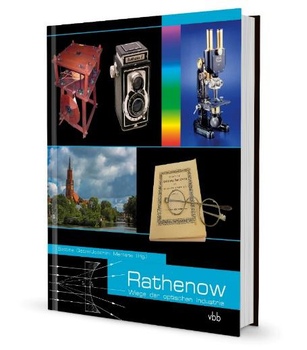
Anyone interested in getting a really well researched and beautifully made book about the optical industry and its history in Rathenow, should do so by getting in touch with the OIMR (Optisches Industrie Museum Rathenow), where you can order a copy of ‘Rathenow – die Wiege der Optik‘, which provides some excellent insights into the various different branches and numerous products the well-established optical industry has developed over the span of several centuries.
While there’s obviously no lack of interesting sources on the history of the company it all seems to be kind of fragmented and so I felt like a compact overview of the whole history, albeit more focused on the photographic and particularly projection lens production, was still something worth pursuing in order to give some necessary historical context and insights. And in addition to that I also wanted to give my personal perspective – as someone who tends to use these old lenses to shoot on a modern camera with the help of my unique setup – and show a good number of sample images, in order to give you an impression, why I consider it worthwhile to save some of those old lenses and to tell their story.
This write-up got quite long, so it’s probably important to mention, that it consists of three parts (for now), with the possibility of additional parts being added later. The first part is about the history of the company Rathenower Optische Industrie Anstalt (R.O.J.A), Emil Busch and ROW, the second part is all about the projection lenses they produced and accompanied by hundreds of sample images taken with them, and the third part focuses on the serial numbers as well as the lens series and where they fit in time-wise.
Here’s an overview:

1945 – 1989 Losing independence, growing in Zeiss
Emil Busch & ROW Projection Lenses
Epidiascope/Episcope Projection Lenses
If you look at all of this and think: Wait, why don’t you write a book in the first place, if you’re going to do that kind of deep dive anyway? I guess my answer would be, that it’s just too much of a hassle to deal with everything necessary to do that in an adequate way… but if you happen to know a lot about publishing etc. and are willing to help out. Perhaps there’s some interest in a printed version of this, however random the topic might be in the grand scheme of things.
History
1800 – 1872 A Family Business
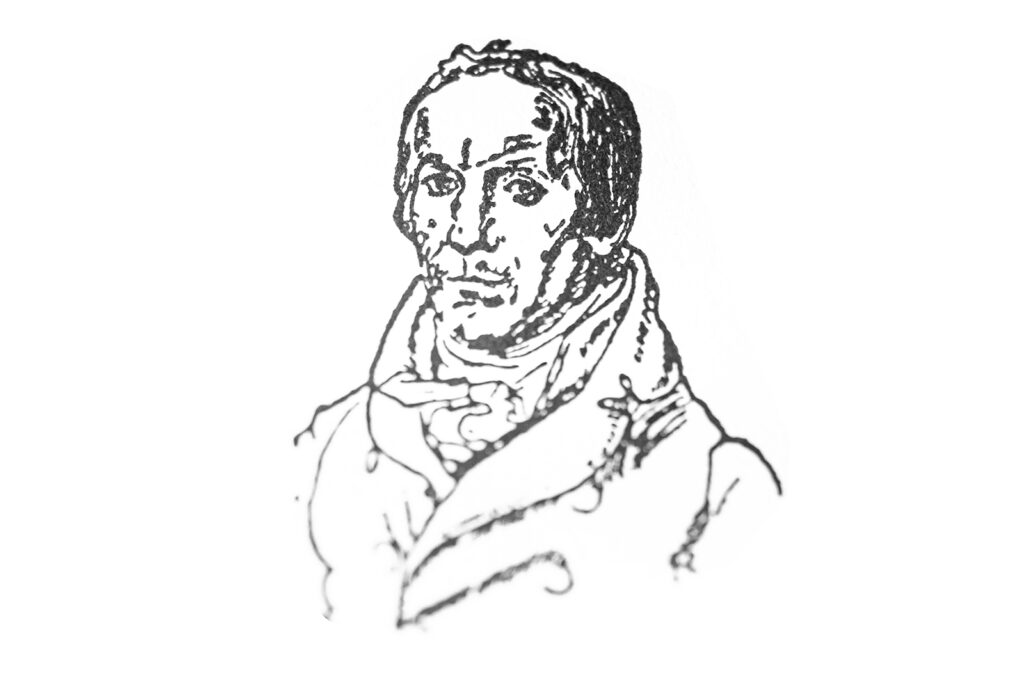
The story of the company Emil Busch actually started with a completely different name: Johann Heinrich August Duncker, who was a preacher and deacon in the late 18th and early 19th century in Rathenow, had to get creative because his meager income wasn’t sufficient for taking care of his family and the education of his kids. Because he had gained some knowledge and developed skills in the production of optical glass, he came up with a plan to employ disabled war veterans and orphans in order to produce lenses for spectacles and asked the king of Prussia Friedrich Wilhelm III. for permission to do so. His proposal was accepted and in 1800 he was able to establish the Königlich Privilegirte Optische Industrieanstalt Rathenow (the first part of the name means Privileged by the Crown).
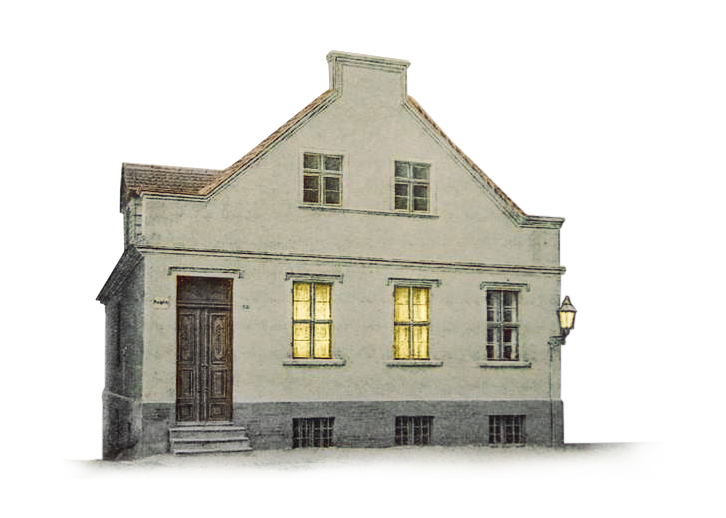
Duncker, a good thinker and creative inventor himself, purchased an old grinding machine and managed to re-design and improve it further in order to grind several optical elements for glasses at once. The machine could even be operated by the workers with disabilities, Duncker employed in his factories, and he was granted a patent for this machine – called the ‘Vielschleifmaschine’ – in 1801.
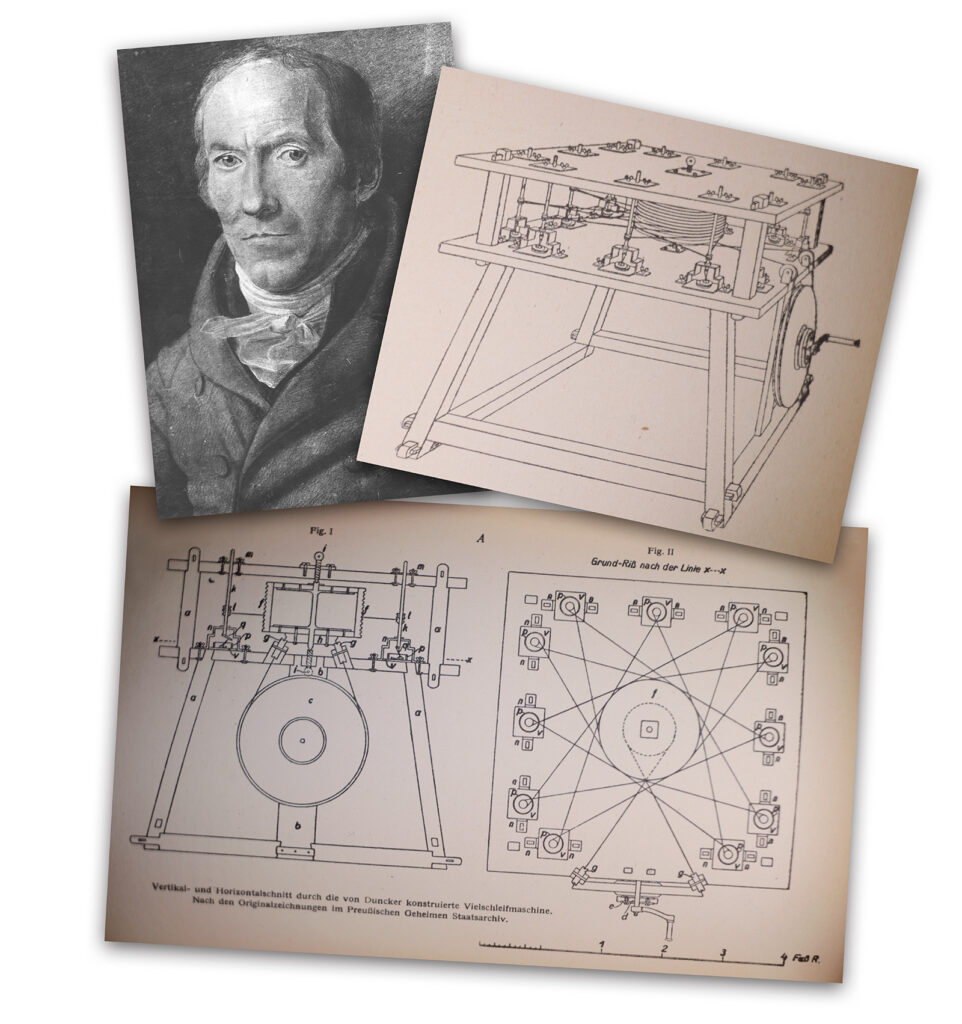
Nowadays Duncker is regarded as having laid the groundwork for the optical industry in Germany, later known and highly regarded all around the world. But in his lifetime he continually struggled to make ends meet and had to suffer setbacks by wars and his gradually failing sense of hearing. He was a restless and diligent soul however and managed to gain at least some success with his inventions and the company, before he tragically fell ill in 1819. Unfortunately his sudden illness resulted in an almost complete loss of his sound mind and forced him to live with severe mental disabilities until his death in 1843.

His son Eduard Duncker, who had received a decent education in the theory of optics and lens making by his father and had also worked as a merchant, followed in his father’s footsteps. He managed to expand the company considerably, due to his skills as a business man, increased publicity and big efforts towards only selling high quality products. The company even won significant trade show awards in 1822, 1827 and 1844.
Eduard extended the product range, which, in addition to spectacles and microscopes – now included opera glasses and telescopes. In addition to expanding the distribution network within Europe (300 retail offices from Moscow to Bergen) he also established the first overseas distribution office in New York (1842) and made plans for another one in Rio. The overall workforce was greatly increased from 29 in 1834 to 67 in 1845, which demanded an expansion of the production sites for which Eduard managed to buy several properties.
While 1852 is usually considered the date where production of photographic equipment within the Busch company was started, the OIMR (Optische Industrie Museum Rathenow) mentions that it actually was initiated around 1844, so seemingly as one of the last efforts of Eduard Duncker, which – given the success this branch ultimately led to – certainly showed a great sense for business opportunities and a good amount of foresight.

Because Eduard didn’t have any children, his nephew Emil Busch got the necessary education – an apprenticeship in the optical industry in Berlin – and after completing it, took over the leadership role within the company in 1845.
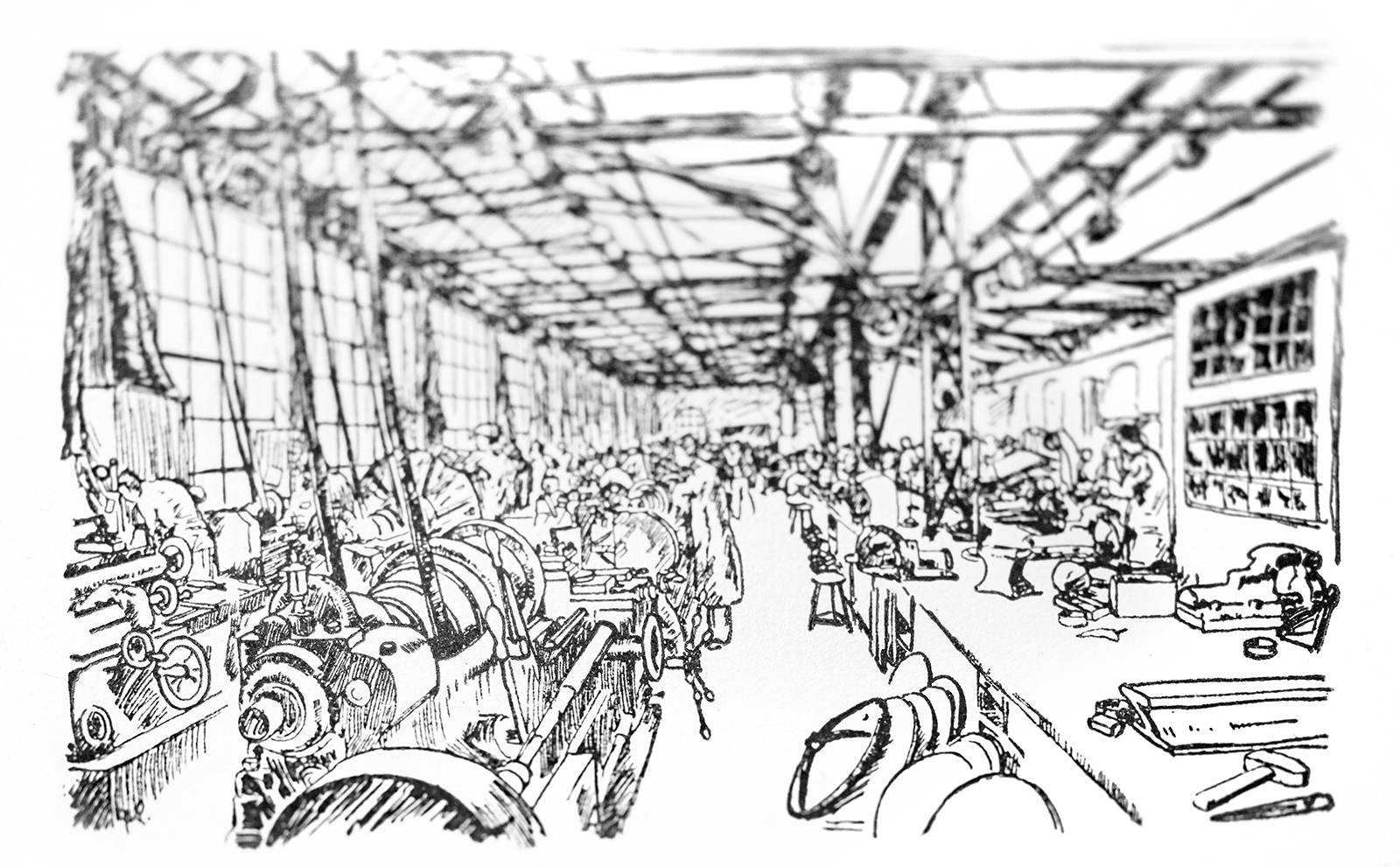
He decided to use new and uniquely invented machines, introduced steam engines to expand production significantly and his endeavors and carefully planned modernization was very successful. In 1852 production of photographic equipment was started in a serious fashion and in 1865 he released the wide-angle lens the ‘Pantoscop’ which was considered a big achievement in the field of optical design.
To get an impression of the range of products Emil Busch was offering around 1857, here’s a short description by the company itself:
“In addition to photographic apparatus, the following are manufactured to the highest quality: pocket telescopes, military and marine telescopes, tubes of all sizes, field glasses, opera glasses, stereoscopes, ophthalmoscopes, non-achromatic and achromatic microscopes, magnifying glasses of all kinds, thread counters, reading glasses, panoramic and spectacle lenses, spectacle (…), lorgnettes, pince-nez and many other articles relating to the optical field.”
(Emil Busch catalog, translated from German)
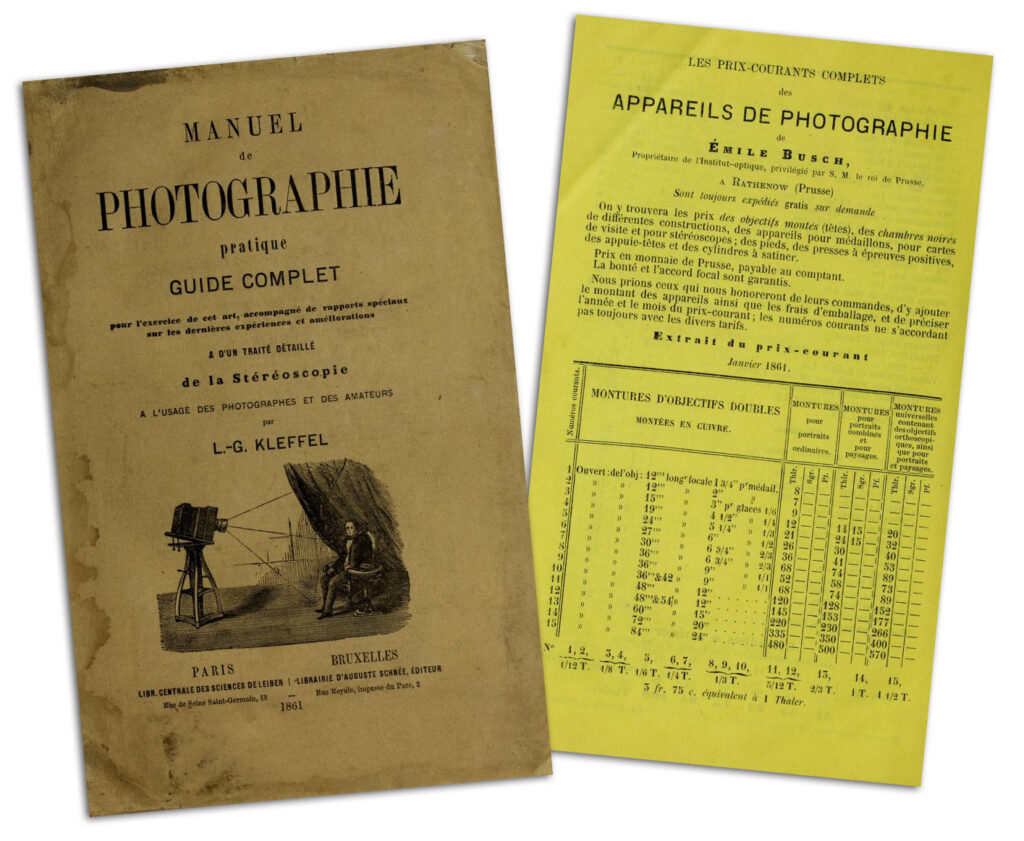
In the French compendium Manuel de Photographie from 1861 there’s also a price list of Emil Busch lenses, showing that they managed to gain a good reputation pretty quickly after the company started to ramp up its efforts:
1872 – 1945 Around the globe
Due to its success the business was transformed into a stock market company in 1872 and called Rathenower Optische Industrie Anstalt vorm. Emil Busch from this point on. The ‘vorm. (= formerly) Emil Busch’ part seems to suggest, that the company was known under its owner’s name for a while. An article on the site historiccamera mentions the name ‘Busch-Rathenow’ but so far I wasn’t able to find an official corporate entry for a company called that.
In a price list from 1857 the company is referred to as
Emil Busch, Besitzer der Königlich privilegirten optischen Industrie-Anstalt (vormals E. Duncker) zu Rathenow (Preussen).
That’s quite a mouthful…
The need for new glass types brought Emil Busch into contact with Ernst Abbe and Zeiss Jena, which turned out to be a fateful collaboration for the company.
Emil Busch died in 1888, but had managed to make the company one of the most significant in its field on the international market and helped to establish Rathenow as one of the world’s centers within the optical industry.
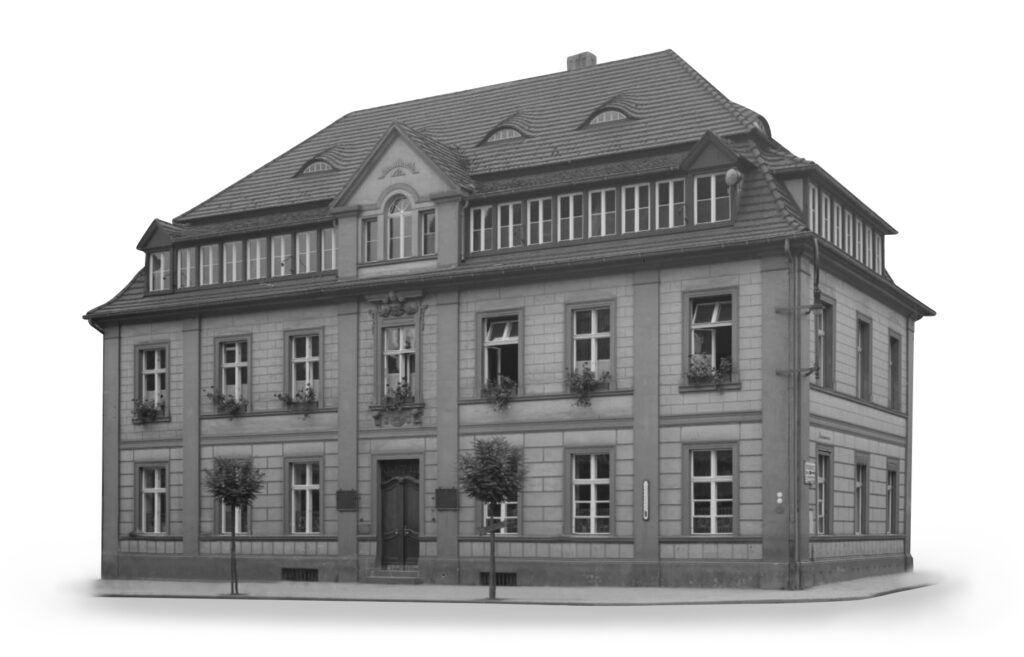
The photographic side of the business was a big success as well and Emil Busch lenses gained a good reputation all around the world. The company sourced their glass from Zeiss and it’s said that a cartel between the companies existed, including price fixing and similar illegal practices. Somewhere around the turn of the century, the production of cine projection lenses was commenced and the Emil Busch A.G. was one of the main suppliers of early cinemas all around the world, though particularly in Europe.
The range of products had been expanded even further over the decades and in 1883 the following products were listed in a catalog:
“Spectacle lenses, spectacle frames, optometers, ophthalmic, laryngeal, auricular and dental mirrors, tweezer frames, lorgnettes, limes, reading glasses, panoramic glasses, illumination lenses, concave mirrors, prisms, magnifying glasses, stereoscopic lenses, camera obscura, binoculars, microscopes, telescopic telescopes, polarizing devices.”
and that’s not even mentioning any of the photographic equipment.
Trade relations to Great Britain and Ireland were particularly successful and and from 1984 til 1905 Henry F. Purser was responsible for the distribution and promotion of Emil Busch lenses. From 1905 until the start of WWI in 1914 a dedicated subsidiary called Emil Busch Optical Co. was founded with the aforementioned Henry F. Purser at the head of it.
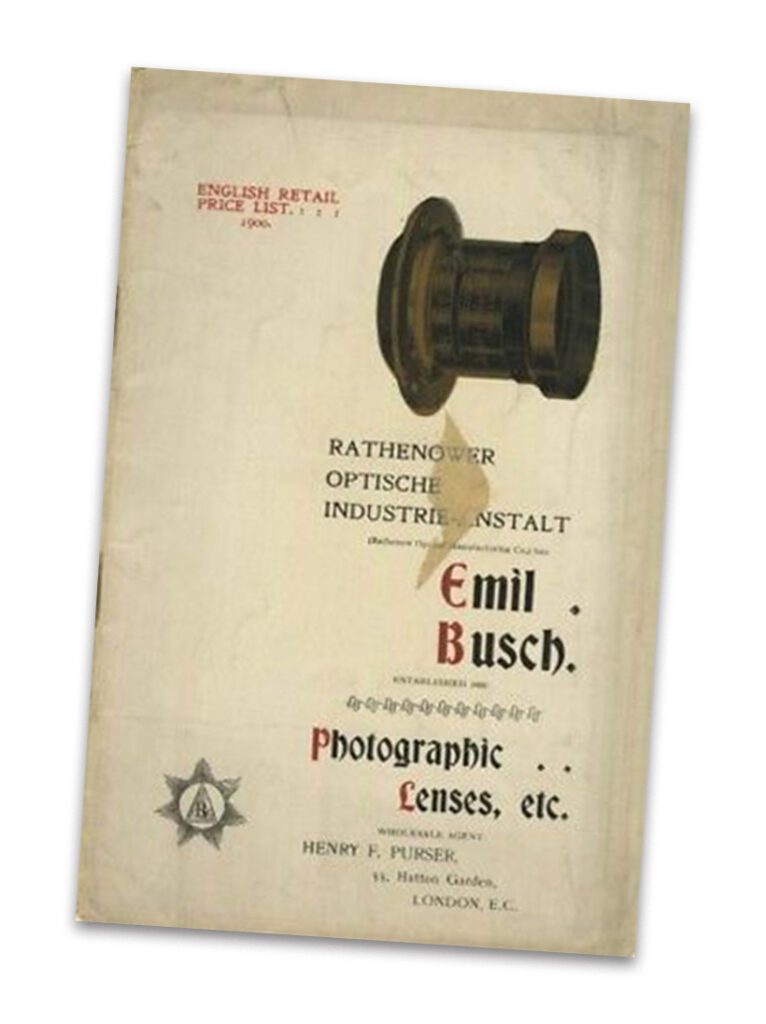
Why the name change to R.O.J.A. occurred in the first place is unknown. Perhaps it was decided to do so after its name-giving owner passed away to try and fade out the Emil Busch part slowly. Regardless of the intentions however, this didn’t happen, and so the sometimes tiny ‘vorm. Emil Busch‘ appendix to the name, seems to never have faded from the ads or mentions in books and magazines… to the contrary, it may have even grown bigger over time.

In 1908 the company was renamed once again and henceforth called ‘Emil Busch A.G.’ It also looks like serial numbers were engraved from this point on or a couple of years later. This name was used until the end of WWII in 1945. The lenses were engraved with Emil Busch A.G. for the following decades and so the name Busch stuck around (in one way or another) for 100 years after Emil Busch took over the company. Depending on the perspective, perhaps even longer, as you can see later on under ROW.
Around 1914 the company had offices in several important cities in Europe and even abroad:

This ad mentions several offices in Germany (Rathenow, Berlin, Hamburg), Austria (Vienna), Great Britain (London) and Argentina (Buenos-Aires) and since it was part of the French magazine La Vie Au Grand Air of course also one in France (Paris).
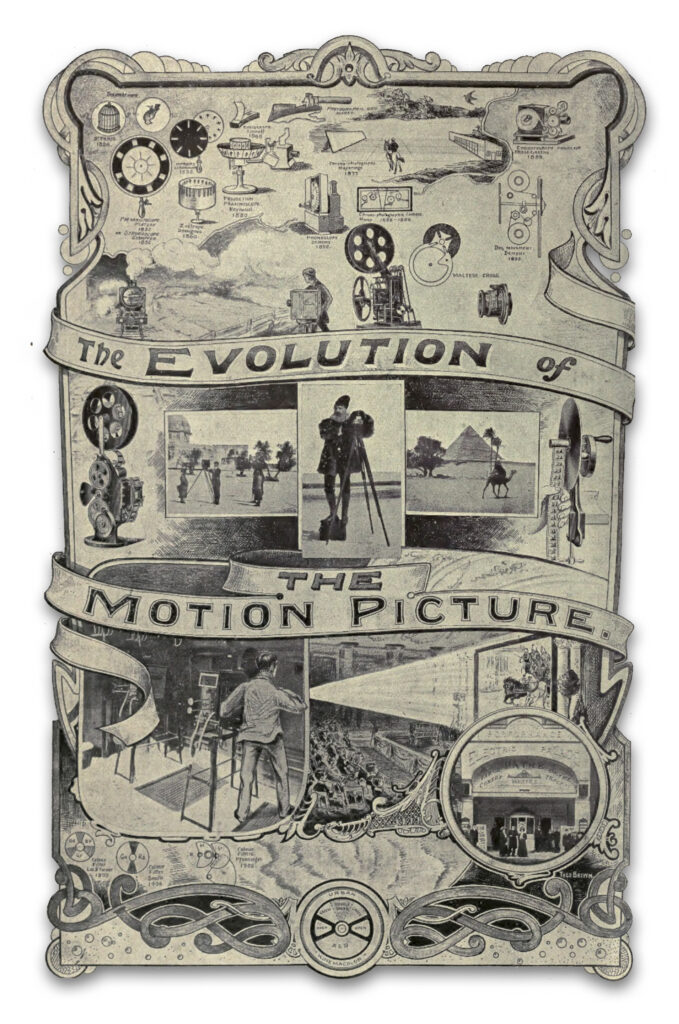
The global rise of cinematography as an artform but also quickly growing industry provided lots of opportunities for the company to develop new products and further extend their importance as one of the major players in this area.

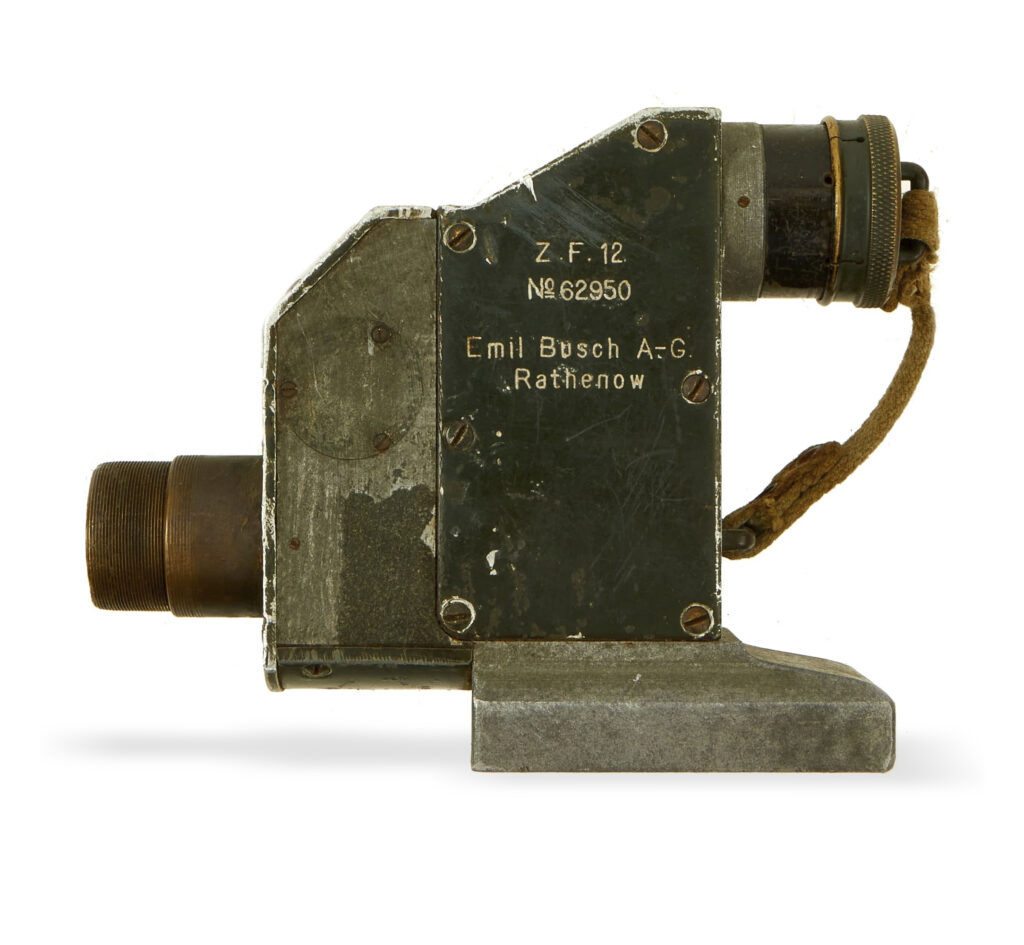
During World War I the company manufactured a lot of equipment used by soldiers, including gun sights, binoculars, compasses. However because of its reliance on war production the company started to struggle soon after the end of the war, particularly because its trade relations to a lot of relevant international partners had been severed or severely strained.
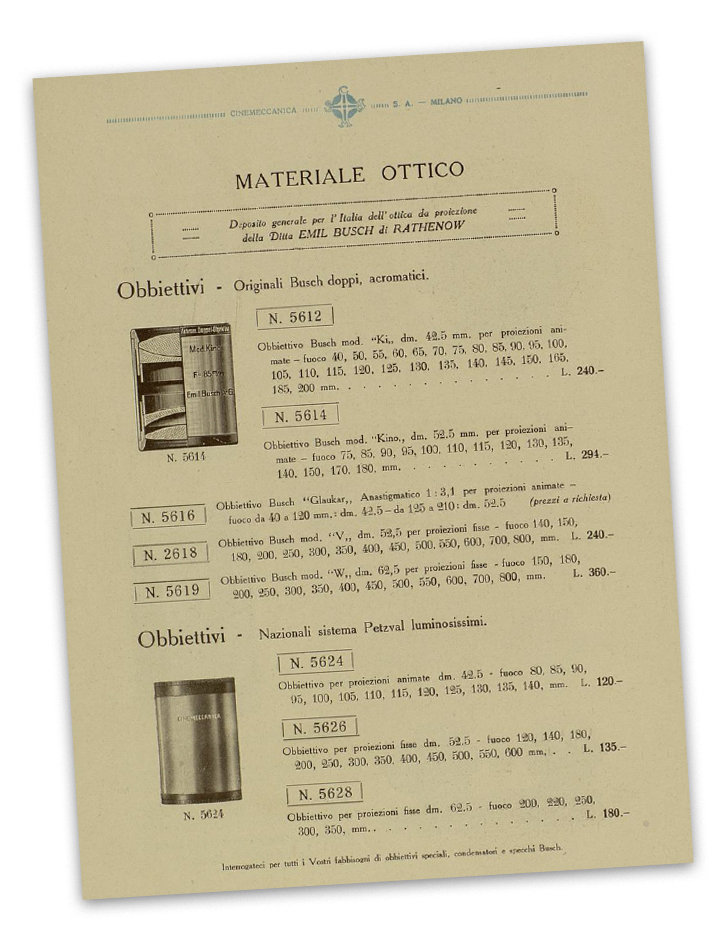
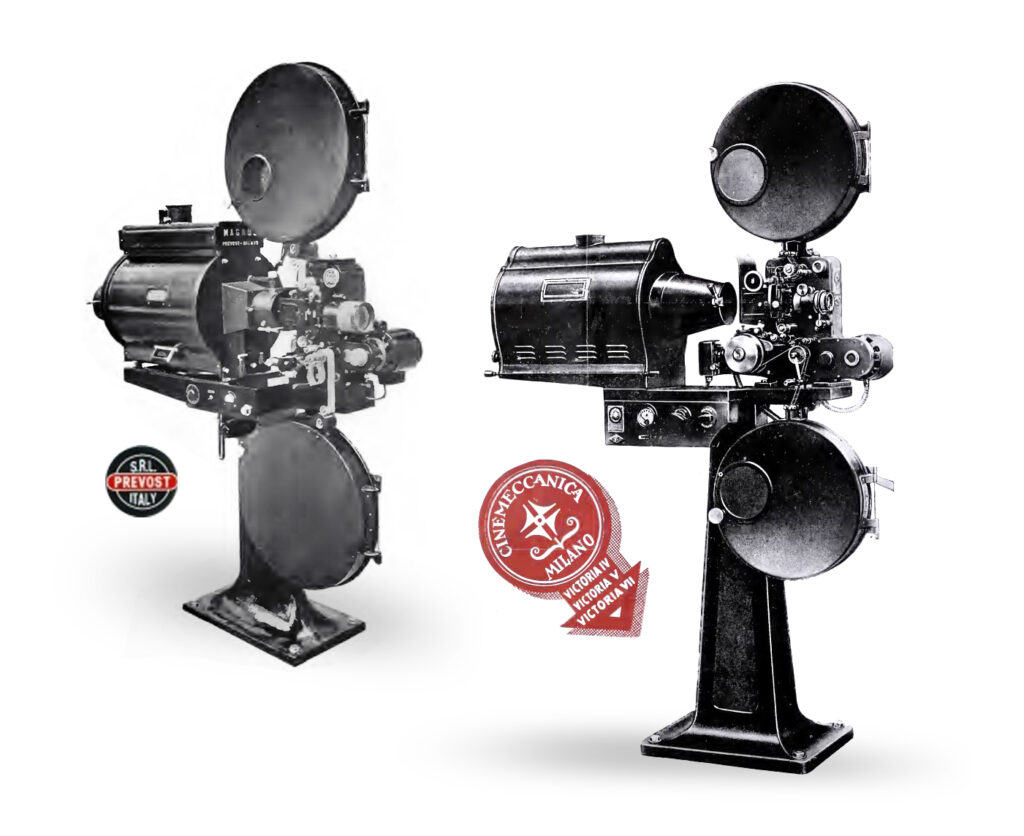
It was interesting to see however, that in a 1926 catalog from Cinemeccanica – a manufacturer for projectors and accessories from Italy – Emil Busch lenses were featured once more and even advertised as the superior option compared to a more-budget-friendly Italy-made lens series.
During those years the influence of Zeiss over the Emil Busch A.G. grew and in 1927 the giant Jena conglomerate finally owned the majority of the company’s shares. While the production of taking lenses was stopped, the various series of projection lenses were still a big success and the Neokino series, which was released around that time, produced in high numbers and a variety of different models and focal lengths
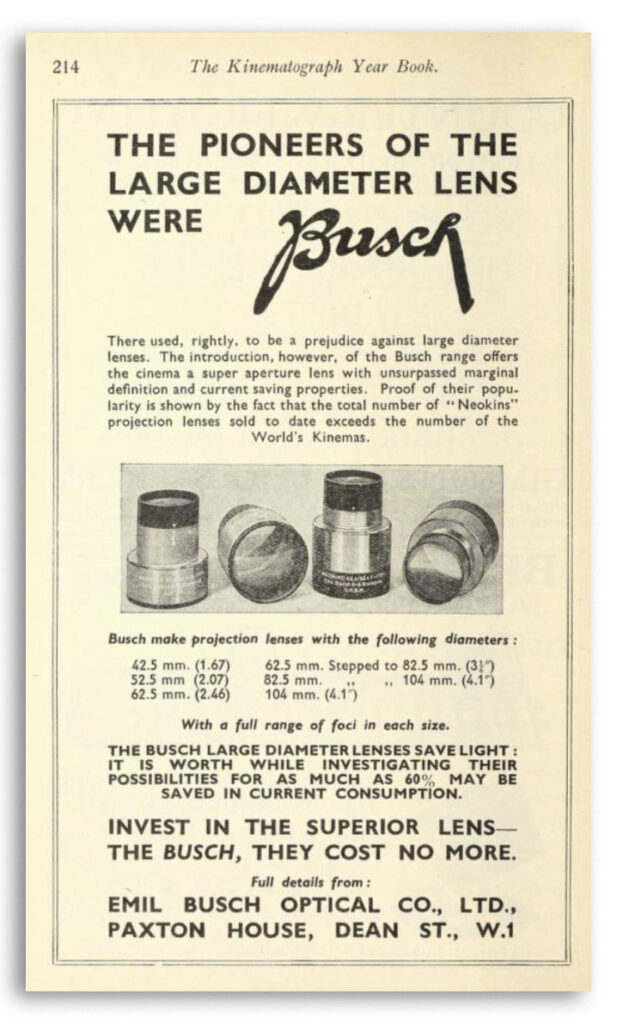
In a 1935 ad the company even proclaimed that the total number of Neokino lenses sold to date exceeded the number of the world’s cinemas.
The demand for faster lenses, enabling bigger formats and a cost reduction in terms of light/energy used, was met by newly developed big diameter lenses. Emil Busch was able to occupy a leading role in that race among lens manufacturers. In addition to the various Triplet (Glaukar) and Petzval-based (Neokino) cine projection lenses, new Ernostar-type Anastigmats – called Superfilmar and Neo-Filmar – were developed around 1935.
While other manufacturers like Bausch & Lomb (Super-Cinephor, 1931) or Zeiss also experimented with Double Gauss constructions (Kipro-Anastigmat, 1939), it’s unclear if the Rathenow-based company did as well. Some of the rare Glaukar lenses suggest that they may have tried to look into alternative designs, but there doesn’t seem to be any kind of documentation about it.

However, its portfolio of projection lenses was significantly more comprehensive than almost any other, as several lines of lenses for still projection (cinema advertisement slides), small-gauge projection, stage-projection as well as lenses for lighting and special effects applications were produced in its facilities.
Unfortunately information about a couple of different lens series is missing completely. While some ads and entries in books, like H. Naumann’s excellent work Das Auge meiner Kamera do include mentions of various lesser-known lens series for different applications a lot of information needed for proper documentation was likely destroyed during the bombings towards the end of WWII. It’s safe to say, that the array of optics produced at the Emil Busch A.G. between its renaming in 1908 and 1945 was considerable. You can find my best attempt at a complete as well as some estimates at production ranges further down.
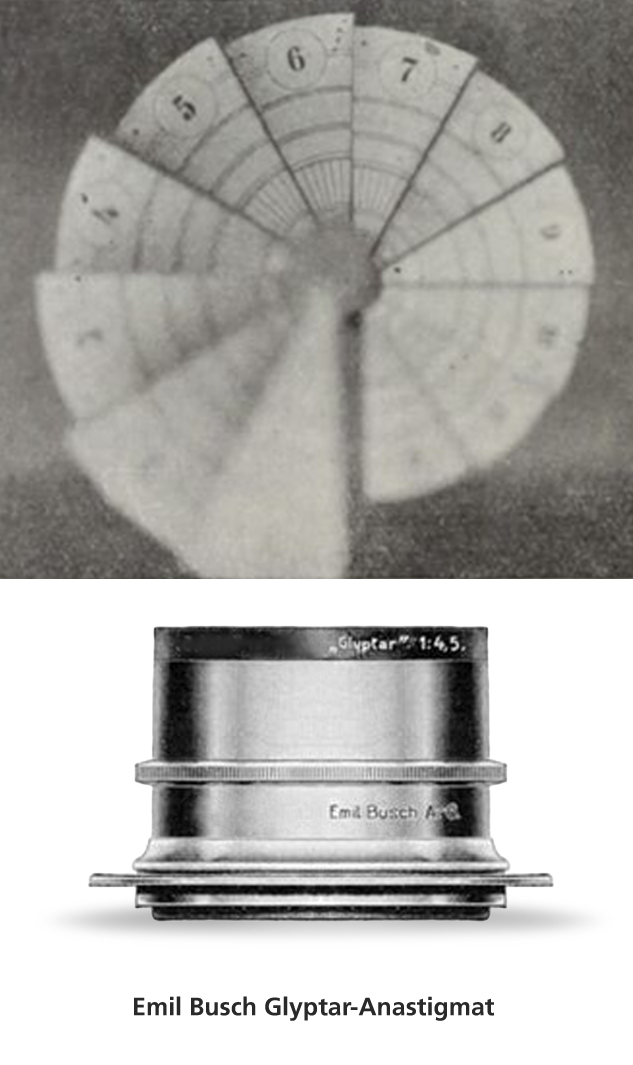
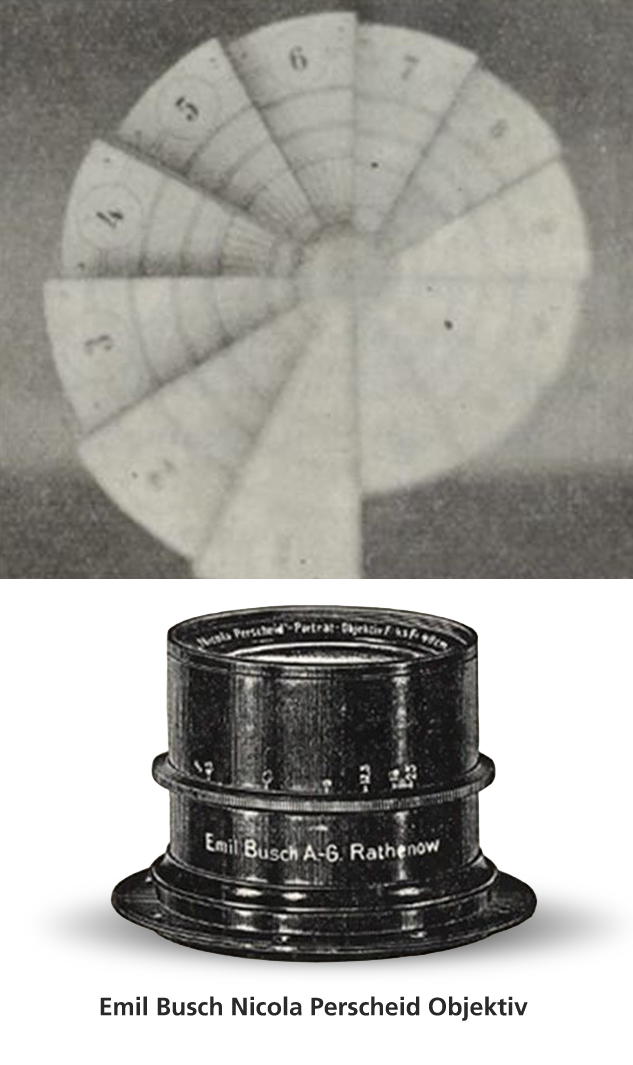
Around 1926 Emil Busch introduced a lens called the Nicola-Perscheid Objektiv which was created in cooperation with the well-known photographer Nicola Perscheid. It was a soft-focus portrait lens and quite interesting with its unique rendering, Busch even created a patent for. Here’s a comparison from an article in the Allgemeine Photographische Zeitung, an old magazine from 1926.
Even though the company certainly felt the impact from the global economic crisis in the 1930s it managed to push through and continued to produce well-regarded lenses and optical devices. Meyer’s Lexikon mentions distribution offices in Kopenhagen (Denmark), London (UK), Rio de Janeiro (Brazil) and Milano (Italy) in 1937.
Around 1932 the company was part of an Interessensgemeinschaft (Community of interest) called Vereinigte Optische Werke G.m.b.H., Rathenow together with Nitsche & Günther, held a 49% share of Skandinavisk Optik in Kopenhagen, Denmark, 99% of Emil Busch Optical Co. Ltd.; London, 50% of Oftalmottica in Milano, Italy, 50% of N.G. Busch-Argentina Ltda., in Buenos-Aires and 50% of another joint company called Nitsche-Guenther-Busch do Brasil Ltda., in Rio de Janeiro, Brasil.
After the outbreak of World War II in 1939 the Emil Busch A.G. was once more mainly producing military equipment which likely reduced their output of optics for civilian use massively.
The company was important enough for the extensive war efforts to receive secret codes, which the Nazi regime used to hide the identity and possible locations from enemy bombing and sabotage. For Emil Busch two existed:
c x n Emil Busch, A.G., Optische Industrie, Rathenow
k r q Emil Busch, A. G., Optische Industrie, Budapest, Hungary (assembled from foreign components)
While the former seems to have been used for products made in the main plant in Rathenow, the latter was used for products, which were assembled from foreign components. It’s likely however that these products didn’t include lenses.
Products within the k r q label were apparently produced (at least in part) in Budapest, Hungary. Perhaps there was a connection to Goerz, which also had a production site there.
A truly weird, and unfortunately completely undocumented connected to Vienna through a German Citizen of Italian descent, called Romelo Catasta appeared in the form of a CIA document:

The person in question is mentioned to have been “in charge of Busch optical firm”, which likely refers to either the Emil Busch AG in Rathenow, Emil Busch Göttingen or the aforementioned Emil Busch plant in Budapest. The CIA then mentions that he “concentrated his production for export more and more in Austria”.
Does that mean that Emil Busch had some sort of production facility in Vienna as well? If so it was probably exclusively for war-related stuff anyway, but it would be interesting to find out more about the truth behind these claims.
It’s very important to mention that the company also made use of forced labor by victims of the Nazi regime and prisoners of war and the exploitation and harm caused is certainly a dark but very real chapter of the German optical industry as well.
The extensive use of forced labor doesn’t seem to be documented as well as it is with some other German companies (or perhaps I just didn’t manage to find the necessary sources), but the autobiographic Novel ‘Jesus ist die einzige Hoffnung für dich. Steht sogar in meiner Stasi-Akte‘ by Jürgen Schönnagel mentions some more details about the matter:
”During the Second World War the Nazis established a sub-camp of the Sachsenhausen concentration camp, where prisoners were forced to work. The Emil Busch AG had six subcamps of their own with 1.600 forced workers (1943/44)”
(translated from German, likely based on Wikipedia-entries)
That certainly sounds like a willful effort and also active participation and it’s sad to see how much of the work responsible for the excellent international reputation of the german optical industry was based on exploitation of people. There’s an overview site showing all the locations of these forced labor camps as well as other atrocities.
At the end of WWII the Emil Busch company buildings were destroyed by the devastating bombings of the allied forces, street battles and fires. The same happened to a major part (some sources mention > 70%) of the city of Rathenow.
1945 – 1989
Losing independence, growing in Zeiss
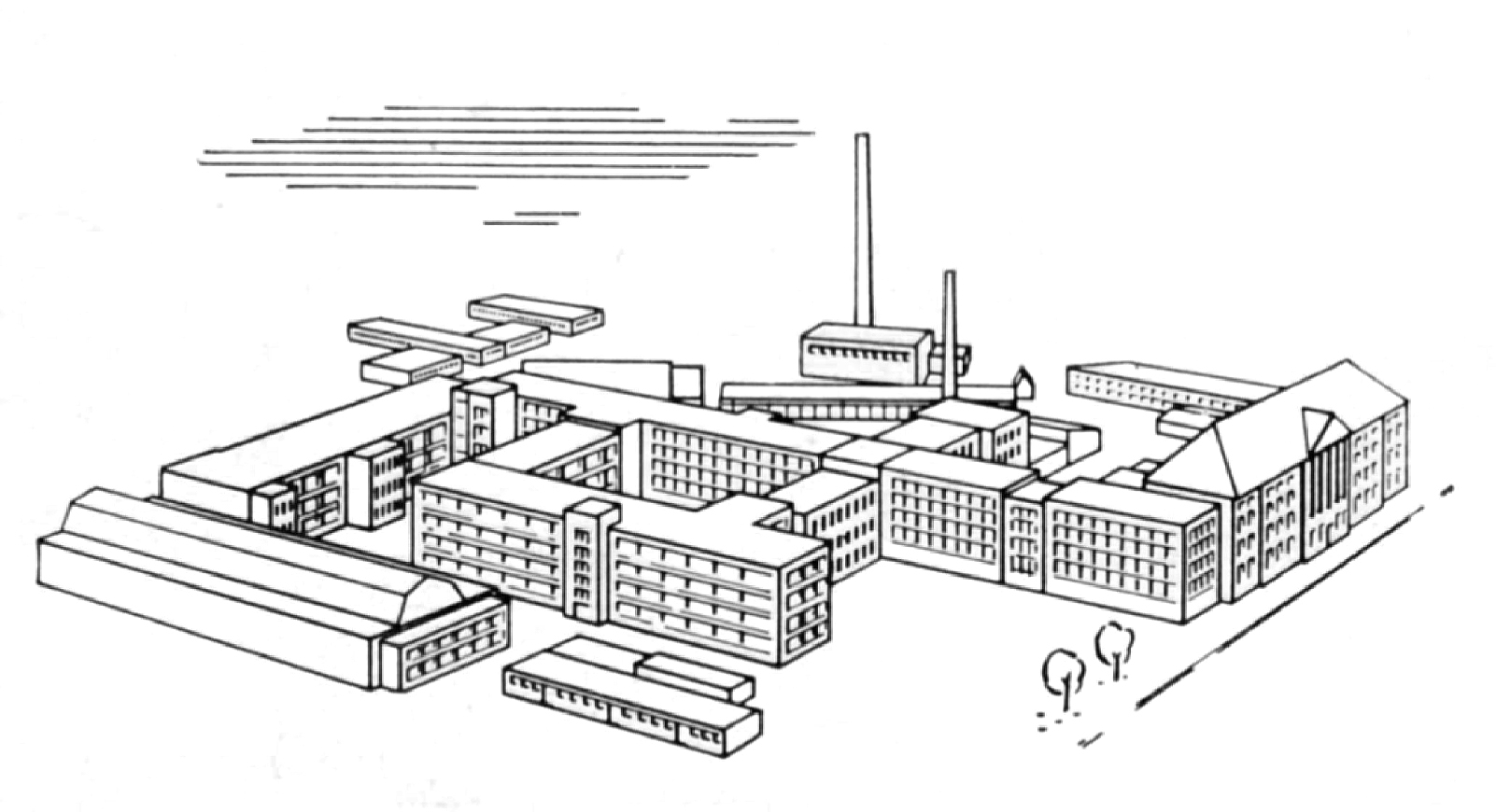
After the German Empire lost the war, the Emil Busch A.G. was expropriated and dissolved. However in 1948 the remains of the company were merged with the (also expropriated) company Nitsche & Günther into the VEB ROW (Volkseigene Betriebe Rathenower Optische Werke), which continued to produce both glasses as well as projection lenses.

In 1950 its workforce had already grown to more than 1500 employees. In 1966 it was subordinated to the Carl Zeiss Jena Kombinat.
The VEB ROW continued to produce a new version of the Neokino series, and over time also various other projection lenses for still projection, like the Neo-Dia-Anastigmat, Diarectar and Diarectim, as well as cine projection like the Cinerectar, Cinerectim, Neostar, Neorectar and Projektar. Interestingly enough, the Neokino series was also labeled ‘System Busch‘, which seems to suggest that the name Emil Busch still held some significant value among projectionists at the time.
Despite some highly possible challenges in terms of production capabilities and materialistic challenges the ROW company seems to have tried to upheld the high standards the Emil Busch company had been known for before the war. In a company booklet I even found a new claim, which used the ROW initials: ‘Repräsentant Optischer Wertarbeit’ which might be translated to ‘Representative (of) Optical Workmanship’ is written on there, evoking (in typical German fashion) the quality-aspect as well as the historical importance of the Rathenow establishment.
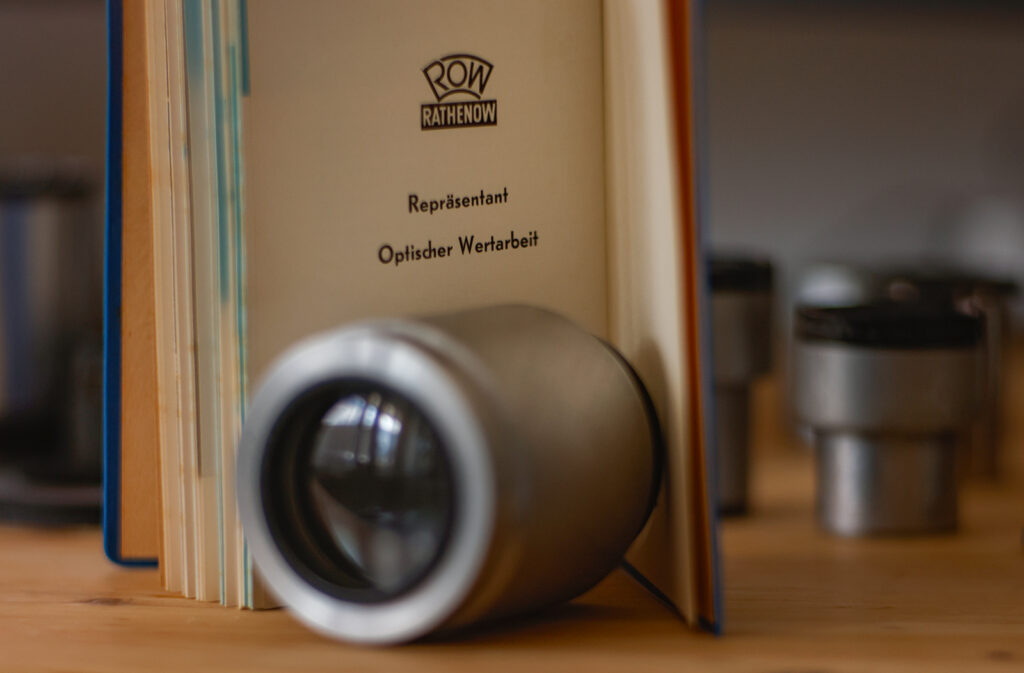
The company didn’t rest on its laurels however and in addition to Triplet- and Petzval-based series, also experimented with Double-Gauss designs, called Cineluxim, Dioluxim or (in combination with attachments) Neoluxim. However those don’t seem to have been produced in any significant numbers, either because they were too complex or expensive to produce, had some deficiencies, were highly specialized or perhaps dropped by the mother company Carl Zeiss Jena in order to free capacities to produce their own modern Double Gauss design, the Visionar instead.
The Visionar was indeed produced in really high numbers by the VEB ROW and had a very good reputation. The company also managed to design and produce several different anamorphic lens attachments which were a big success, particularly in Germany and other countries in Europe. However on the international stage the company wasn’t able to keep up with their competitors from West Germany (Schneider/ISCO), the US (Kollmorgen, Bausch & Lomb etc.) and Japan, where the optical industry was booming.
Meanwhile in West-Germany the Emil Busch A.G. was continued under the ownership of Carl Zeiss Oberkochen in the city of Göttingen from 1949 on and from 1953 it operated under the name Emil Busch Göttingen Gmbh. Its efforts were focused on the production of glasses and later optical measuring tools. At some point in history the company was relocated to Oberkochen, where it existed until 2008. After that it was dissolved and merged into the Carl Zeiss AG.
After the reunification of Germany the VEB ROW was split into different parts. Some of them managed to find some success on the free market, while others went out of business. Most of the large workforce (of more than 4000 people) were dismissed in 1989.
The Rest… is History?
Unfortunately Rathenow faced an uphill battle after 1989 and the fall of the Soviet Union and while it managed to stay a relevant place in the world of optics even today, it’s likely still a far cry from its glory days. The city, its remaining companies in the optical field and some culture initiatives are still putting a lot of efforts and resources into keeping the legacy of Rathenow as the cradle of German optical engineering alive.
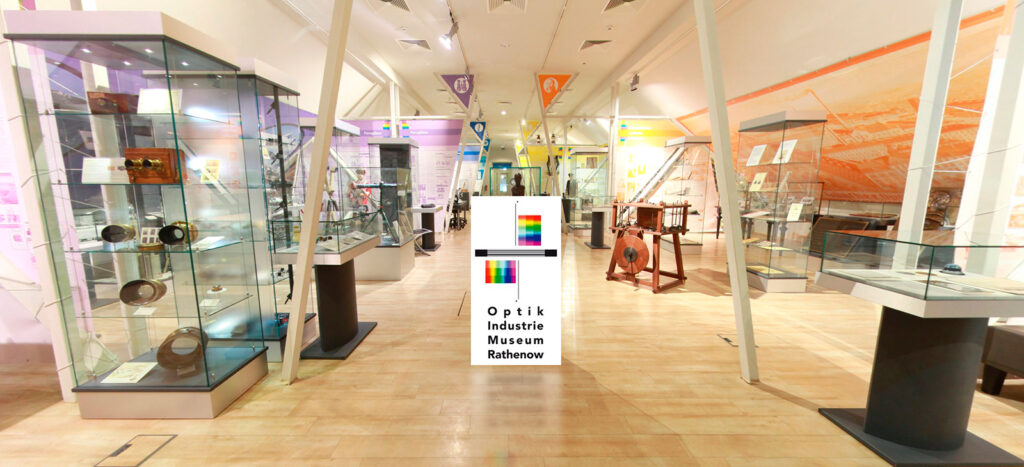
The Optisches Industrie Museum Rathenow (OIMR), where the history of Emil Busch, Laack and other important companies are displayed and explained in detail, seems worth a visit and if you can get hold of the book Rathenow – Wiege der optischen Industrie by local expert Bettina Götze make sure to give it look. I’ve done so myself with interest and while it certainly doesn’t go into as much detail about the projection lens department as I would have hoped for, it gives an excellent overview and some highly relevant insights and historical context.
In general the cultural institutions with support from the still existing parts of the optical industry, seem to do an exceptional job at preserving the history of Emil Busch and many other companies which had been there in the past. After many conversations with friendly people from Rathenow including expert Bettina Götze, it turned out that indeed vast amounts of knowledge regarding the specifics of the projection lens models must have been lost due to the war activities and the turbulent times which followed. While very disappointing for me personally, I still want to thank the people of the Optik-Verein (the entity responsible for the OIMR museum) for their efforts to help with my investigation.
They were very kind and shared some of their material they had on Emil Busch, Laack etc. which was a big help in answering some of the open questions towards the end of my own research.
If you’re in Rathenow there’s also the Optikpark Rathenow which you can visit where lots of events take place over the course of the year.
If you’re more interested in actual stories from the projectionists and some details about their day to day, I’d recommend checking out this site. Though it’s from Köln (Cologne) and thus offering a perspective from West-Germany, which probably was different in a couple of aspects, it’s very interesting and offers some great insights and anecdotes.
With 190 years of existence in its various forms, the Emil Busch/ROW company certainly is one of the greats of the optical industry and was an important factor for various developments we’ve seen emerge since then.
Emil Busch & ROW Projection Lenses
The impressive range of projection lenses Emil Busch/ROW produced consisted of several optical designs: Petzval, Triplets, some Ernostar-, Triplar- and later on Double-Gauss-variants. Of these by far the biggest group are Petzval-based, only a couple are Triplets and two or three (depending on the definition) are 6 element Double-Gauss designs. The 5 element Ernostar/Sonnar-like designs are quite rare and were likely not produced for a long time. Most of these lenses were developed within the company, but later on (as ROW) it likely also produced a couple which were originally developed by Carl Zeiss (Visionar) and perhaps Meyer (Diarectim).
For the most part the company also kept its three element (Glaukar) lens series pretty basic and unassuming in terms of specs, likely to maintain optimized performance across the full range. In contrast to that, they experimented a lot with Petzval-based designs and showed great efforts to improve them, probably because it was a lower cost alternative to new designs, while still being able to compete with those and in some aspects even outshine them. They also were one of the very first companies in the world to successfully make varifocal and even full zoom-lenses, both for taking pictures as well as projection work.
One might say that the development of Emil Busch shows some parallels with Angenieux, whose name is still held in high regards today and I’m fairly sure political decisions on the world stage of the time and the company’s involvement in the production for two world wars had more to do with the failure as a lens-manufacturer than its products. A couple of Emil Busch products can be called collectors’ items and still fetch high prices, but for the most part their lenses have been forgotten or at least don’t get too much attention.
At one point in history, however, this company was one of the forerunners of advancing projection optics and so it certainly seems worthwhile to try and give an overview of the projection lens offerings from one of the early greats in that area.
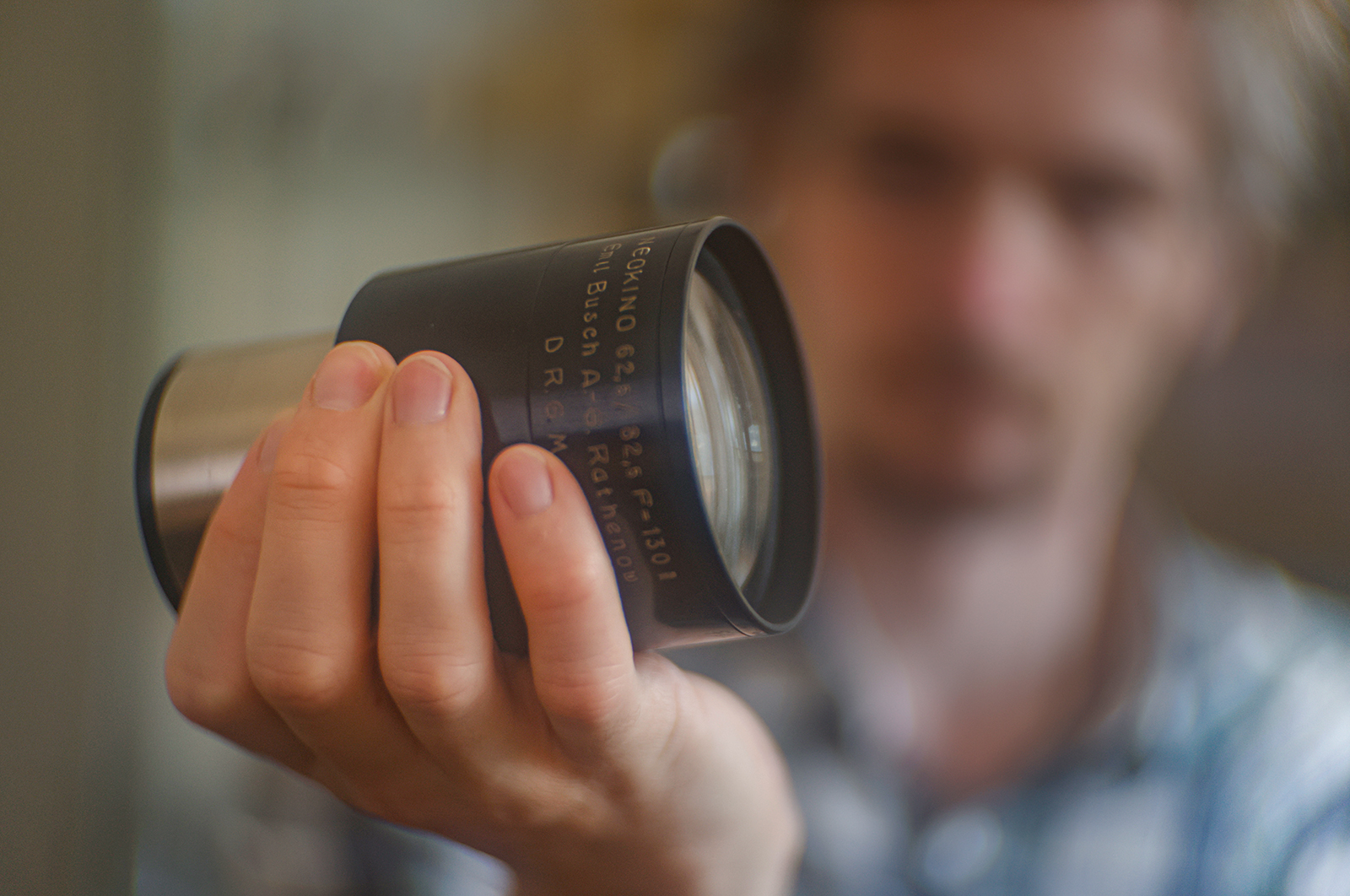
My first experience with Emil Busch lenses was with a rather unassuming Neokino 120/2.6 (52.5 mm) sample. Despite its unimpressive specs, I was completely overwhelmed by the beautiful rendering and excellent color reproduction.
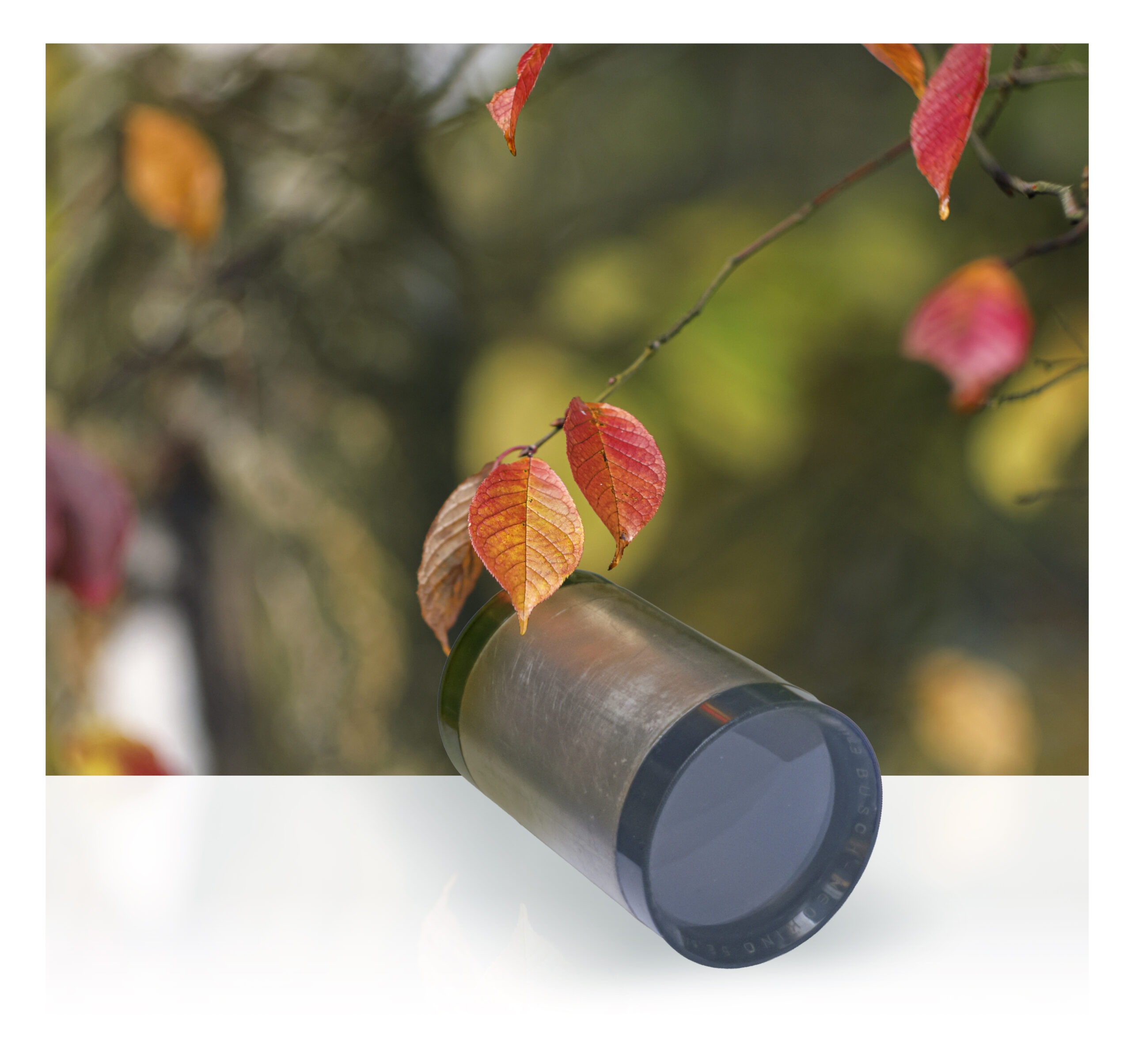
Because of that I started to look into the series and was surprised to learn about the age of these lenses. I quckly learned that all ‘Emil Busch’ labeled lenses were made before 1945, with some being even significantly older, which left me impressed by the craftsmanship and skill involved in making them.
For a lens enthusiast like me, this seemed like a company I had to find out more about sure. As one of the ads from the Emil Busch in the book The Handbook Of Kinematography by Bennett put it:
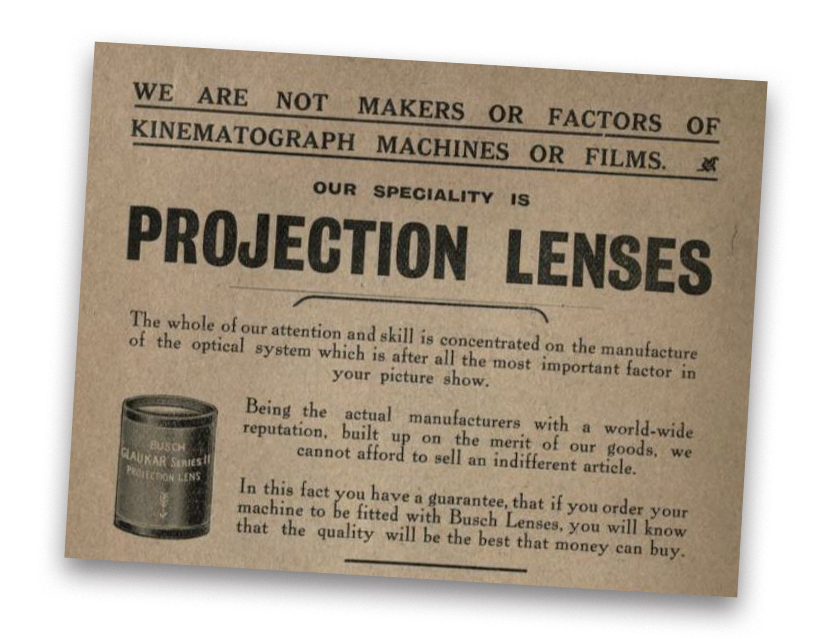
“We are not makers or factors of kinematograph machines or films.
Our speciality is Projection Lenses”
Indeed it was and for many decades the company was at the forefront of cinematic and still projection as well as stage and episcopic projection. Here’s a graph showing most of the different lens families which were created in those efforts:
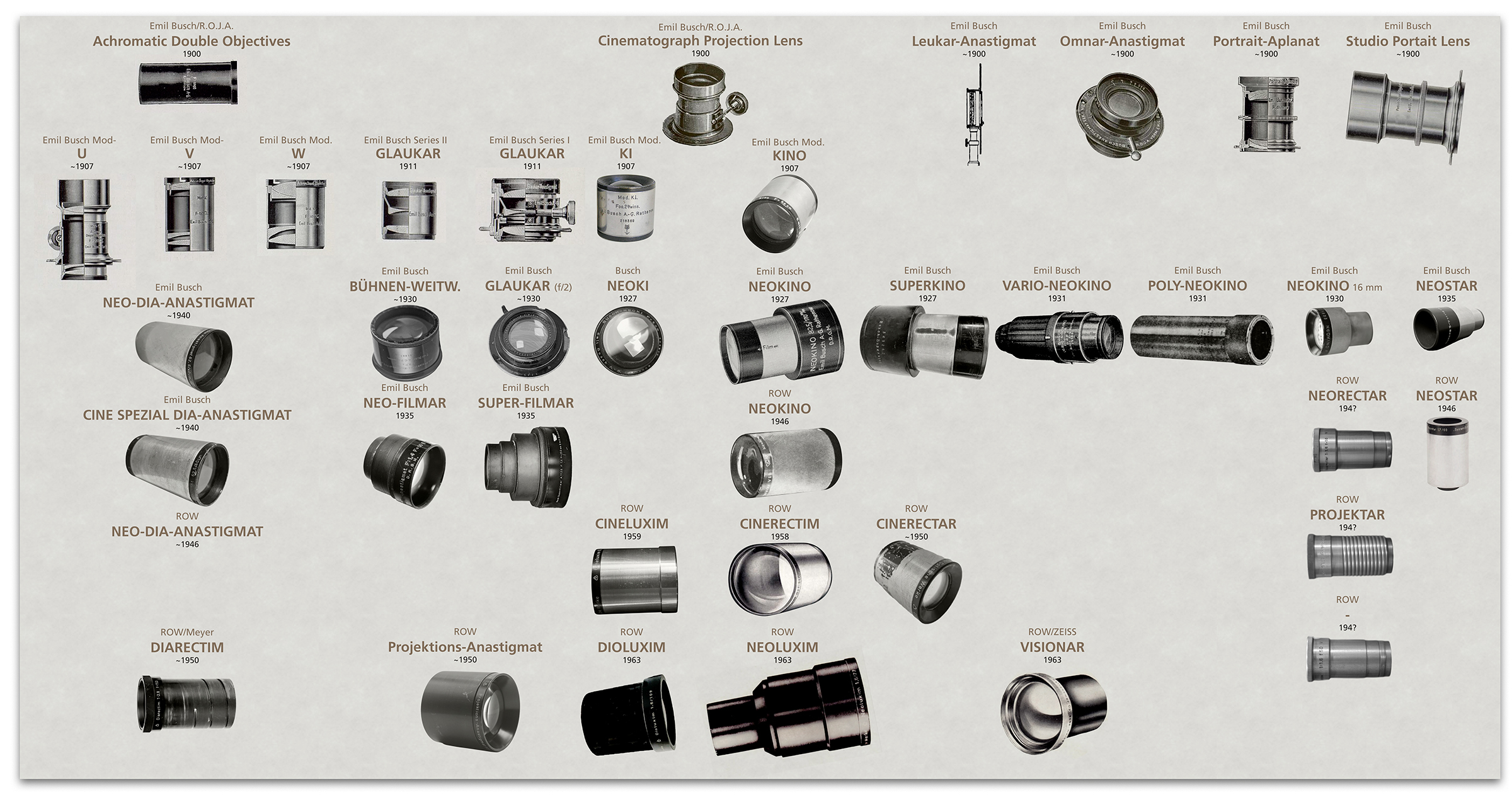
There’s quite a bit of variety among the range of lenses produced by the Rathenow-based lens maker, however not all of them are equally suited for being adapted onto a modern camera. Hence this article is trying to give a complete overview of all the projection lenses we know of so far (albeit listed with uniform measuring in mm and – partly estimated – f-stop values instead of the original varying markings…) and a good number of sample shots taken with several of those.
Cine Projection Lenses
R.O.I.A Cinematograph/Achromatische Doppel-Objektive
These are identical or an extremely similar predecessor of the Model KI lenses. It seems to fit in terms of barrel diameter (42.5mm) as well as the description (the Mod KI series is called “doppi, acromatici” in a catalog from Italy, which translates to “Achromatic double-objective” or the german equivalent, which is the name of the series). These lenses were introduced in 1899 internationally, according to this ad:
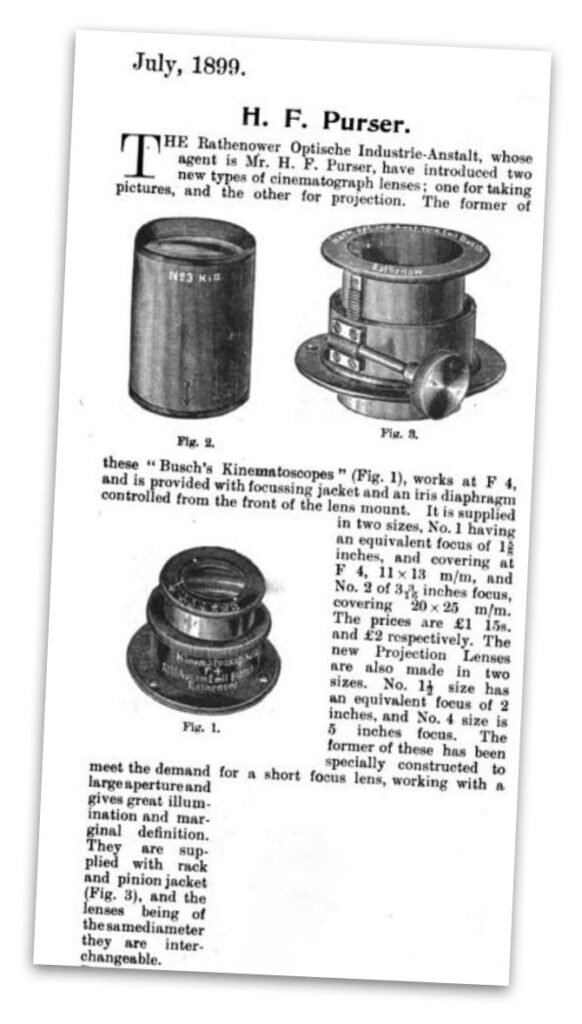
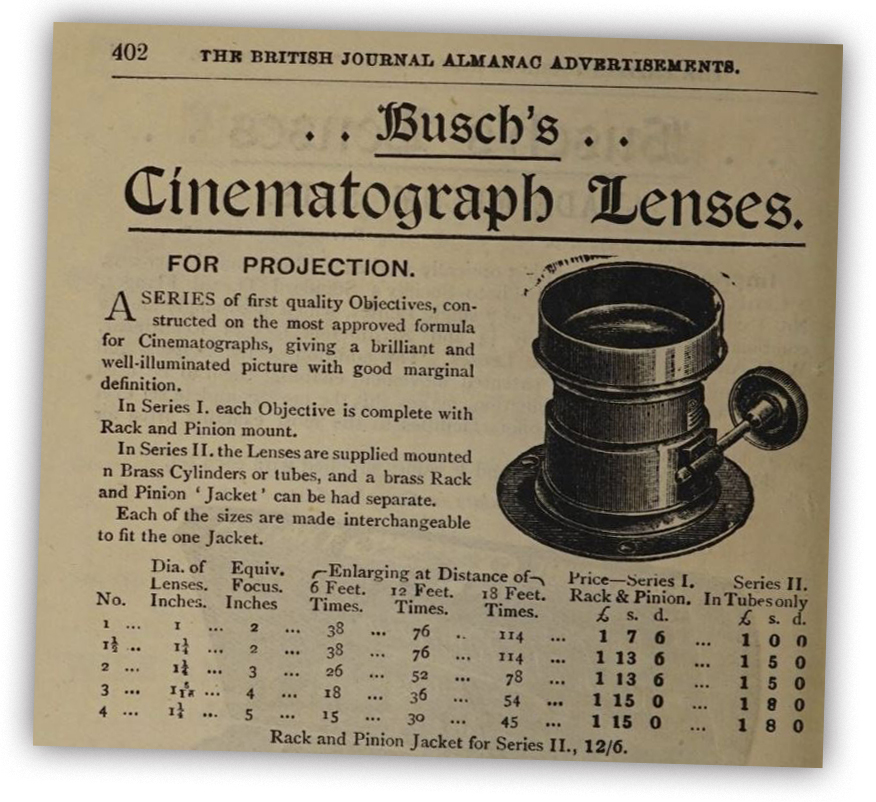
Only two focal lengths are mentioned in this 1899 announcement (though a third shown, if you take a look at the image…) and they seem to have been introduced in tandem with the Kinematoscope taking lenses with the same diameters. An extended range of these Cinematograph lenses was then shown in the 1900 issue of the British Journal Photographic Almanac
Some of these lenses even have a ‘Ki’ inscription on them, like the sample below:
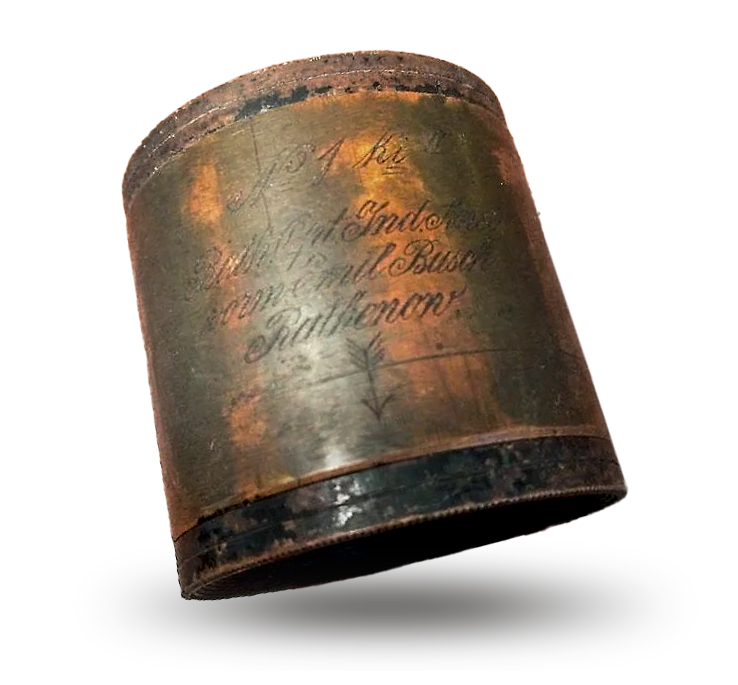
The ‘Rath. Opt. Ind. Vorm. Emil Busch‘ inscription makes a manufacturing date very close to 1900 highly likely. The series (II) is also mentioned on the lens as well as the No. (1). The series name Ki is not mentioned in all of the ads, but there are some mentions as seen above in the 1899 image accompanying the announcement.
This ad from the German magazine Der Kinematograph from 1907 might be one of the last ones before the larger diameter Kino series was introduced. It already shows the KI name in the listing and has an extended range of focal lengths compared to the above listing in the British Journal Almanac. Also note that the company name is still Rathenower Optische Industrie-Anstalt vorm Emil Busch A.-G., Rathenow, just like the lens sample shown above.

While they may have been identical in terms of optics to what was later called the Mod Ki series, it seems like these older lenses used different materials. They certainly look more reddish, though – due to heavy wear of 100+ years, it’s not easy to say how they looked originally. They were always drawn in black however which suggests brass or a darker brass-like material. The inscription was usually on the outside of the lens and because many of these lenses were supplied with a Rack & Pinion mount, they are often not easily recognizable. Another important difference is the font of the inscription, which was applied in a script type face, at least if the image of a real sample found online is any indication to go by. There might have been different looking inscriptions from the beginning however and it’s possible that part of it was due to the necessary differences between lenses labeled in mm (for mainland Europe) and lenses intended for export to the UK and perhaps even US in inches. It’s hard to verify however because so few of these lenses seem to have survived.
To my knowledge there’s no example of a lens from this early series being adapted onto a modern camera online, though my experience with the overall similar early Mod. Kino lens, makes me confident that they’re interesting lenses with an unconventional rendering, though likely a lack of real sharpness and probably also some visible optical flaws. If you can live with that (or even cherish some of the imperfections) and have such a lens at your disposal, please go ahead and try it and show some results – it would be very interesting to see for sure!
The speed of the lenses is a rough estimation only and can differ in many instances.
R.O.I.A. Cinematograph/Achrom. Doppel-Objektiv 50/1.7
R.O.I.A. Cinematograph/Achrom. Doppel-Objektiv 50/2
R.O.I.A. Cinematograph/Achrom. Doppel-Objektiv 60/2.1
R.O.I.A. Cinematograph/Achrom. Doppel-Objektiv 70/2.3
R.O.I.A. Cinematograph/Achrom. Doppel-Objektiv 80/2.5
R.O.I.A. Cinematograph/Achrom. Doppel-Objektiv 90/2.7
R.O.I.A. Cinematograph/Achrom. Doppel-Objektiv 100/3
R.O.I.A. Cinematograph/Achrom. Doppel-Objektiv 110/3.3
R.O.I.A. Cinematograph/Achrom. Doppel-Objektiv 120/3.6
R.O.I.A. Cinematograph/Achrom. Doppel-Objektiv 130/3.9
R.O.I.A. Cinematograph/Achrom. Doppel-Objektiv 140/4.2
R.O.I.A. Cinematograph/Achrom. Doppel-Objektiv 160/4.8
R.O.I.A. Cinematograph/Achrom. Doppel-Objektiv 180/5.4
Emil Busch Mod KI
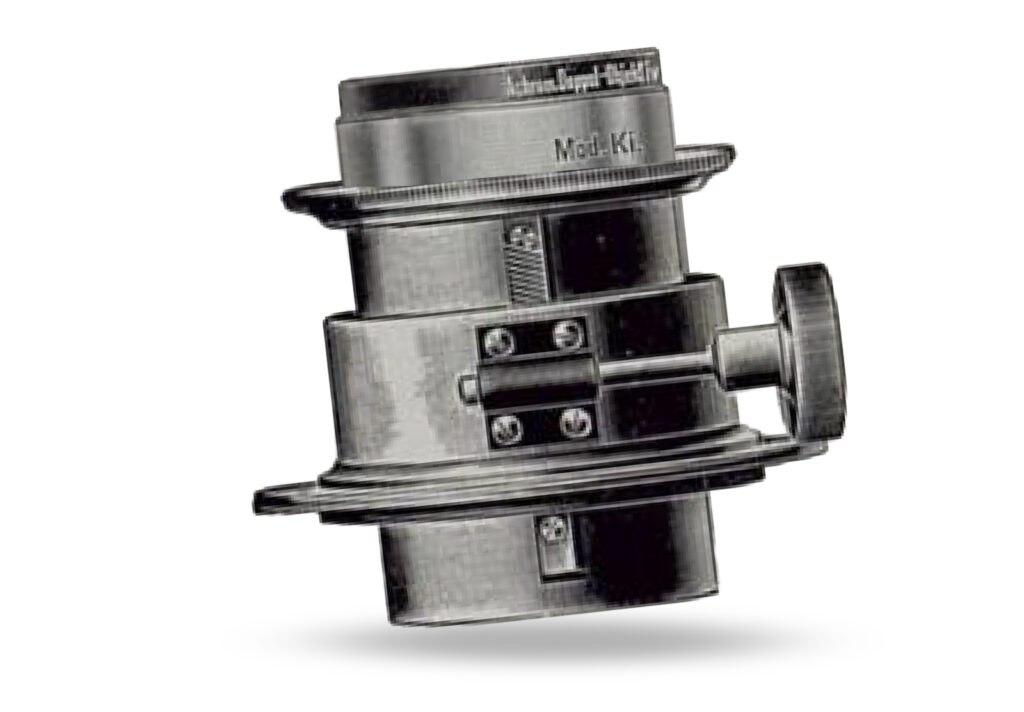
This basic Petzval-based series of projection lenses was a continuation of the Cinematograph lens series mentioned above. It was likely redesigned at some point (possibly even several times over its existance), perhaps also slightly faster and the range of focal lengths extended significantly.
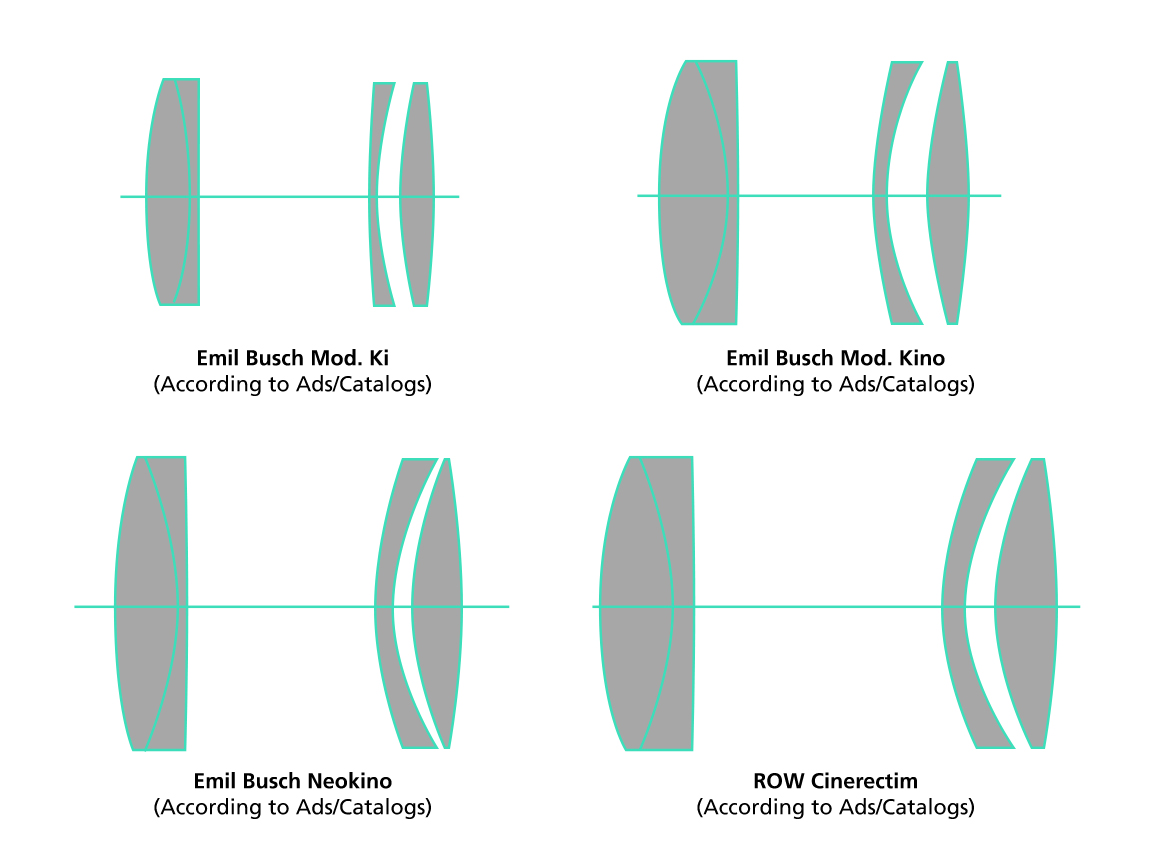
The Mod KI definition was added in ads and listings to distinguish it from the larger diameter series of lenses introduced in 1907. In an old ad it’s described in the following way:
“A series of first quality Objectives, constructed on the most approved formular for Cinematorgraphs, giving a brilliant and well-illuminated picture with good marginal definition.
In Series I. each Objective is complete with Rack and Pinion mount.
In Series II. The Lenses are supplied mounted in Brass Cylinders or tubes, and a brass Rack and Pinion ‘Jacket’ can be had separate. Each of the sizes are made interchangebale to fit the one Jacket.”
The cost for most of the lenses was given in ₤/s./d. (Pound/shilling/pence) as 1/13/6 which roughly equates to 220£ or 250€ in 2025. Emil Busch lenses seem to have been advertised as cost-effective and often with prices. The KI model was supplied in 42.5 mm diameter barrels and usually labeled Mod. KI + focal length, either in mm, cm or inches. The lenses were also numbered in lists and catalogs and some show that number (No.X) on the barrel as well.
Since the history of projection lenses in the early days of cinema is overall quite poorly documented, it’s hard to judge how successful the Cinematograph/Mod Ki series was, but in what appears to be one of the later ads for the series, the company mentions thousands of samples being in use.
Still, more than 100 years later, it’s not really a common lens and due to its small form factor (42.5 mm diameter) and unassuming look, it probably wasn’t on many ‘need to adapt this – lists’ during the decades plenty might have been around still.
Emil Busch Cinematograph/Mod KI 25/1.6
The only listing of this extremely short focal length lens stems from a 1921 issue of the magazine Photographische Korrespondenz, which makes it likely that it was added later on. The speed is just an estimation, it could actually be even faster. While I initially thought it might have been a printing error, I’ve definitely seen a similar lens was offered by Pathè Freres from France for example and it was able to cover the 28 mm movie projection format. Perhaps the shorter KI variant was made for a similar purpose (short focus throw) as well.
Emil Busch Cinematograph/Mod KI 30/1.6
Emil Busch Cinematograph/Mod KI 40/1.6
Emil Busch Cinematograph/Mod KI 50/1.7
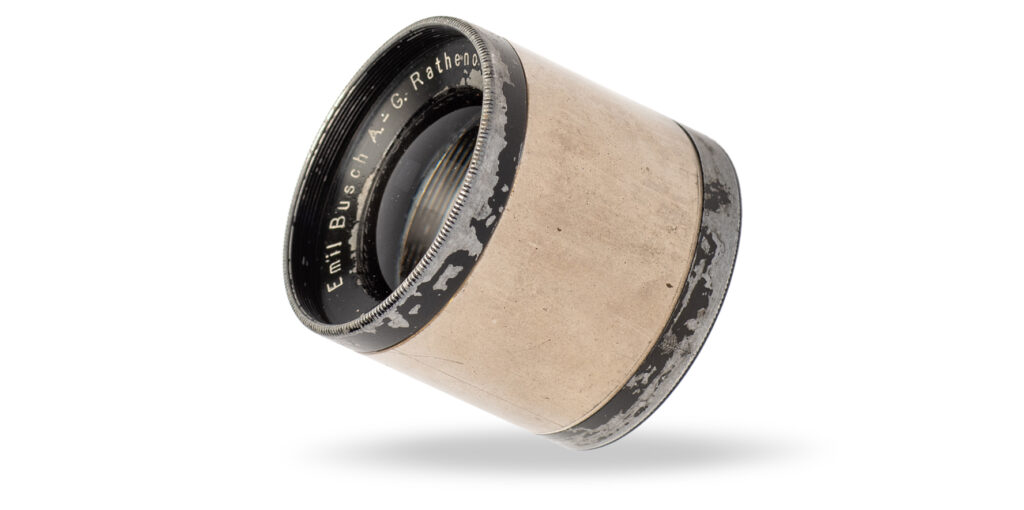
Norway-based photographer and knowledgeable lens experimenter Espen Susort has shared some information about this lens as well as wonderful sample shots on his site.
Espen mentions the speed of this lens as f/1.7 which is quite remarkable for a lens at that time. However that extraordinary speed is a feature of the shorter Ki variants only, due to the same diameter throughout the series. Espen also notes its great coverage and according to him the lens is capable of covering the Fuji GFX sensor which is quite unusual for a 50 mm projection lens.
The results Espen shows certainly make that lens appear like a very interesting one to be adapted because of the excessive field curvature and degrading image quality, which makes everything outside from the center completely blurred and gives it a unique look, very suitable for a certain kind of experimental shots. So if you find one of those tiny lenses, make sure to adapt them onto a full-frame (or bigger) sensor and perhaps share some results.
Emil Busch Cinematograph/Mod KI 55/2
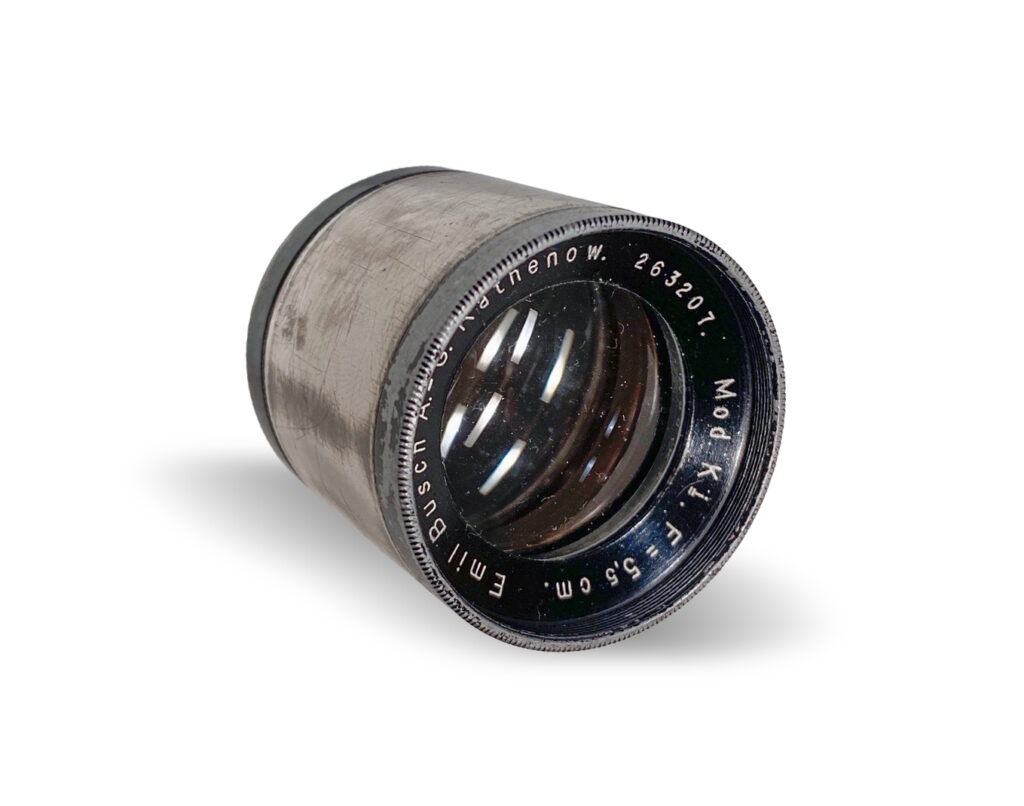
Emil Busch Cinematograph/Mod KI 60/2
Emil Busch Cinematograph/Mod KI 65/2
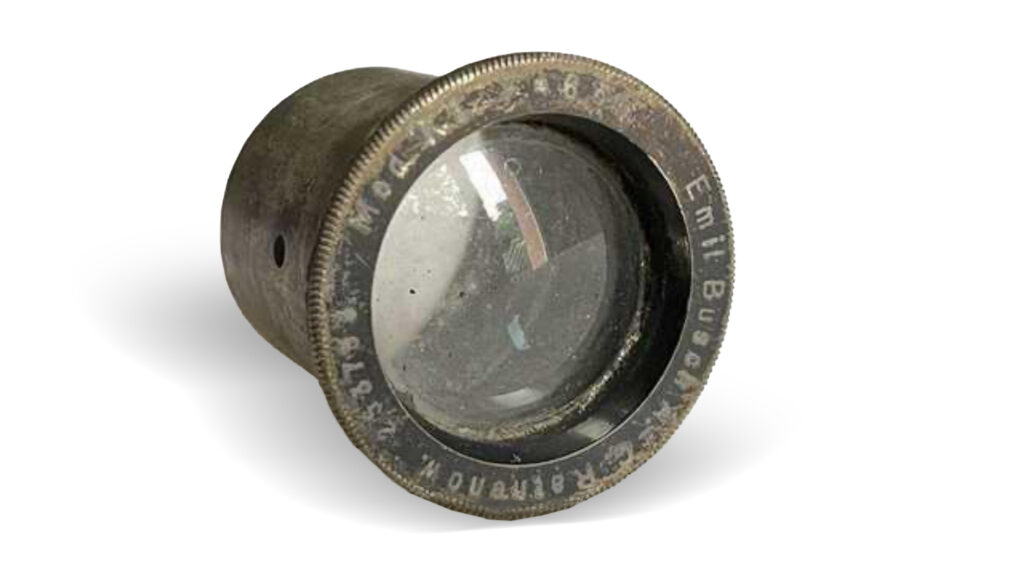
Unfortunately there was no information to be found on this unusual sample of a Mod Ki lens. It seems to have a different type of barrel than most lenses of it’s kind. Perhaps it was made for a particular type of projector. So far it has been the only sample with a look like this, so it might be a custom-made variant.
Emil Busch Cinematograph/Mod KI 70/2.3
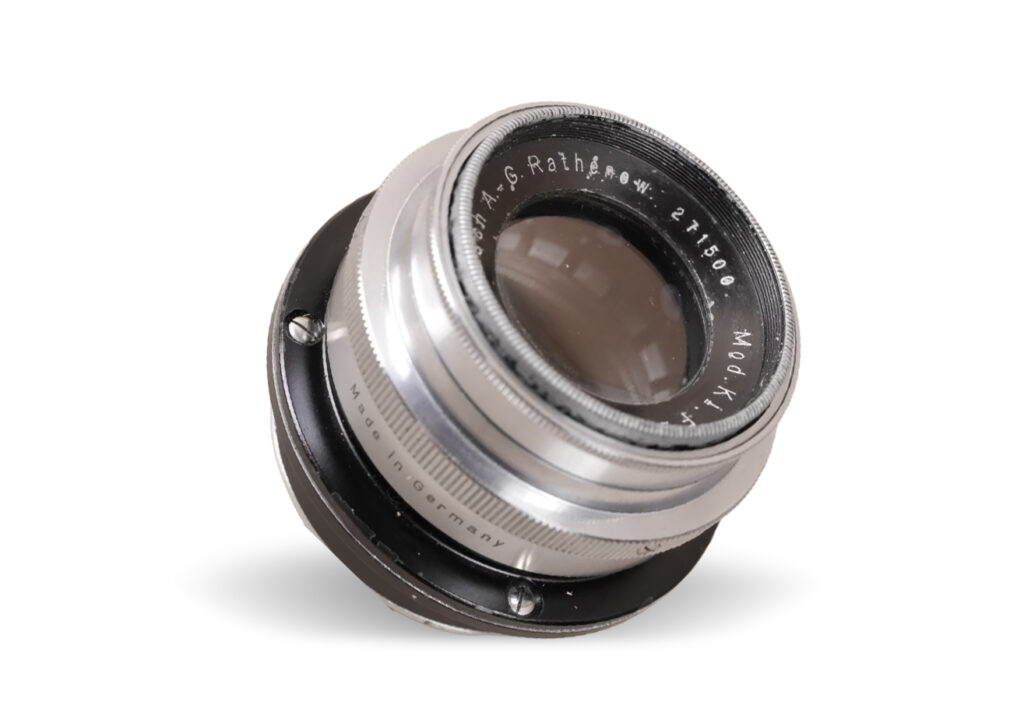
This interesting lens is a modified sample by digicamclub member arri from Germany, who managed to supply it with a variable aperture. As a highly knowledgeable person in the field of old German optics, he also shared the information that the Mod. Ki. lenses are original Petzval calculations which probably means, very close to what Petzval designed in the first place and thus different from the later re-designs, which were likely optimized for their purpose to a higher degree, but might lack some beneficial aspects when used as taking lenses. From my experience with a Mod Kino sample, I think there might be something to that, but I’ll leave judgement to the experts.
Emil Busch Cinematograph/Mod KI 75/2.4
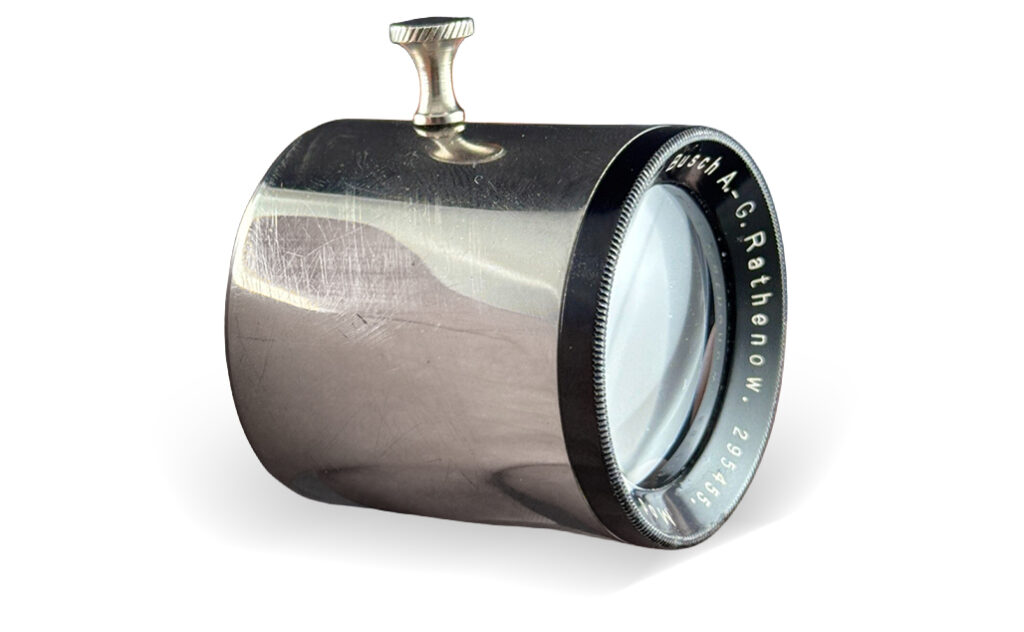
This lens was sold a while ago. The sample images on the original listing looked very nice however, so I’ve reached out to the seller, who regularly offers interesting lenses and he allowed me to share them here.





Emil Busch Cinematograph/Mod KI 80/2.5
Emil Busch Cinematograph/Mod KI 85/2.6
Emil Busch Cinematograph/Mod KI 90/2.7
Emil Busch Cinematograph/Mod KI 95/2.9
Emil Busch Cinematograph/Mod KI 100/3
Emil Busch Cinematograph/Mod KI 105/3.1
Emil Busch Cinematograph/Mod KI 110/3.3
Emil Busch Cinematograph/Mod KI 115/3.4
Emil Busch Cinematograph/Mod KI 120/3.6
Emil Busch Cinematograph/Mod KI 125/3.8
Emil Busch Cinematograph/Mod KI 130/3.9
Emil Busch Cinematograph/Mod KI 135/4
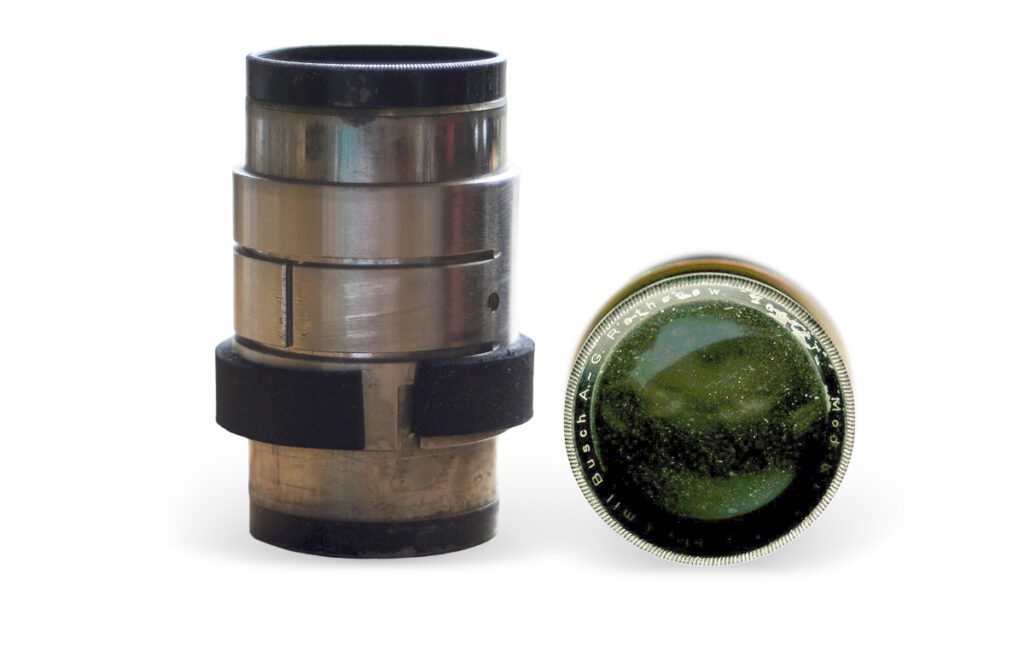
Forum member alex ph on the mflenses message board shared his impressions and a couple of shots taken with this lens. It’s fascinating to see how well these lenses hold up, despite their age and in the right hands, they can even be interesting lenses for street photography.
Emil Busch Cinematograph/Mod KI 140/4.1
Emil Busch Cinematograph/Mod KI 145/4.2
Emil Busch Cinematograph/Mod KI 150/4.4
Emil Busch Cinematograph/Mod KI 165/5
Emil Busch Cinematograph/Mod KI 185/5.3
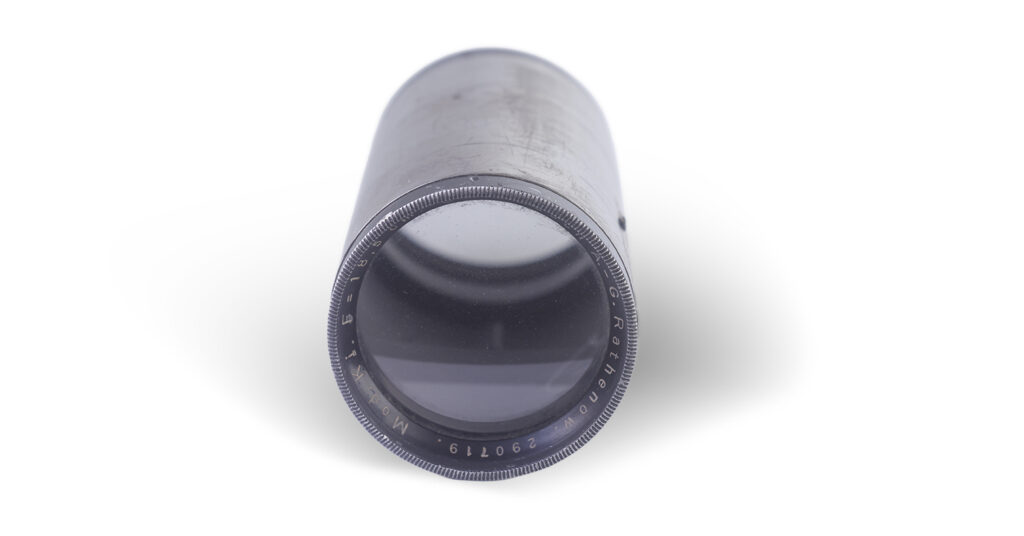
At f/5.3 this lens is already so slow, that it doesn’t really make sense to be adapted, given that it’s a Petzval-based design with small field of view and the fact that you can easily get high-grade (enlarging- and repro-) Double-Gauss lenses for very reasonable prices. The look is quite pleasant and with smooth transitions, but it just doesn’t stand out nearly enough to prefer it over any other Tele vintage lens. So unless you’re able to experiment with large or at least medium format cameras, I can’t really recommend checking longer Mod KI lenses out, unless you already have one and the necessary adapters as well.
Here’s a comparison with the significantly faster Voigtländer Projektos 180 mm f/3.1:
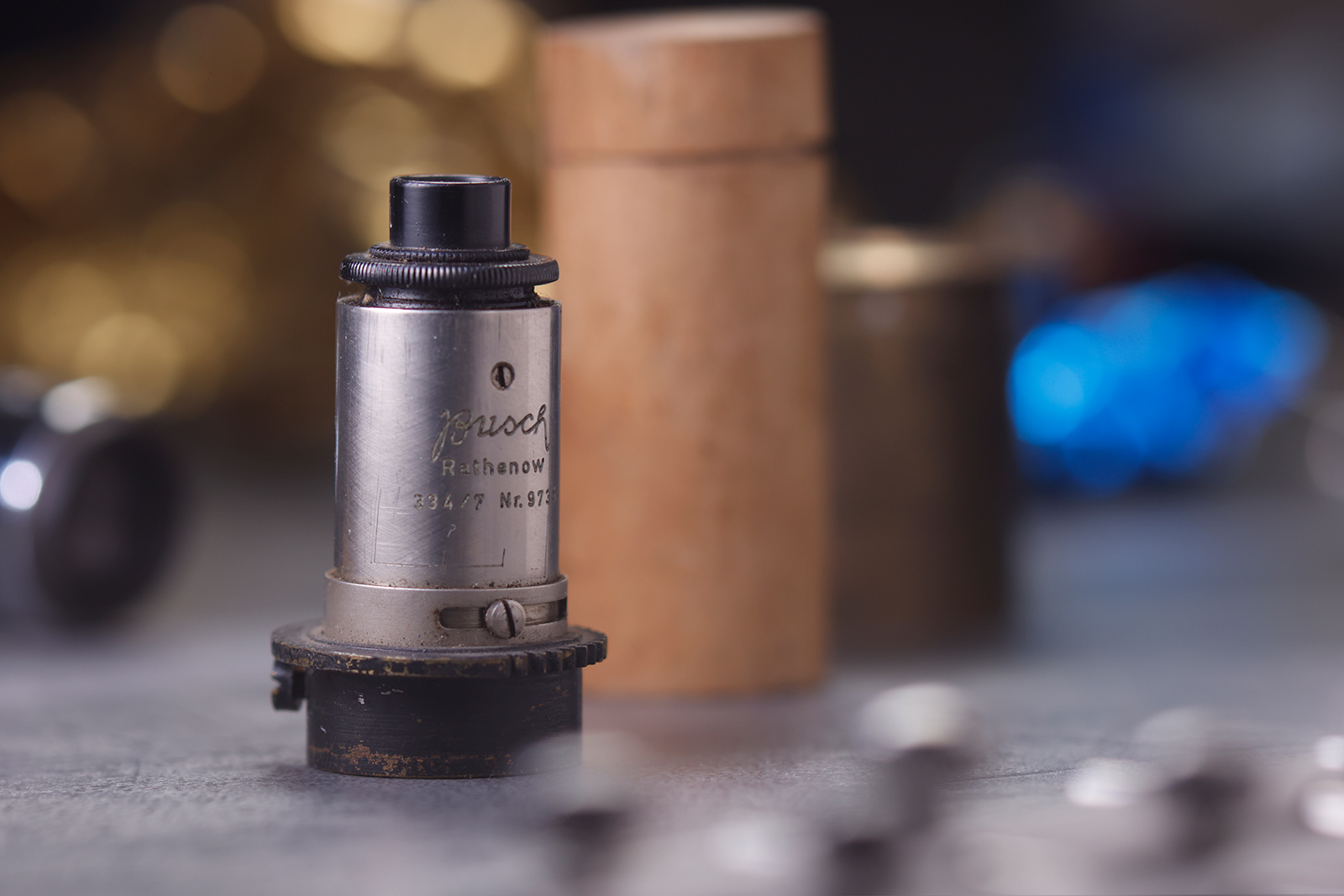
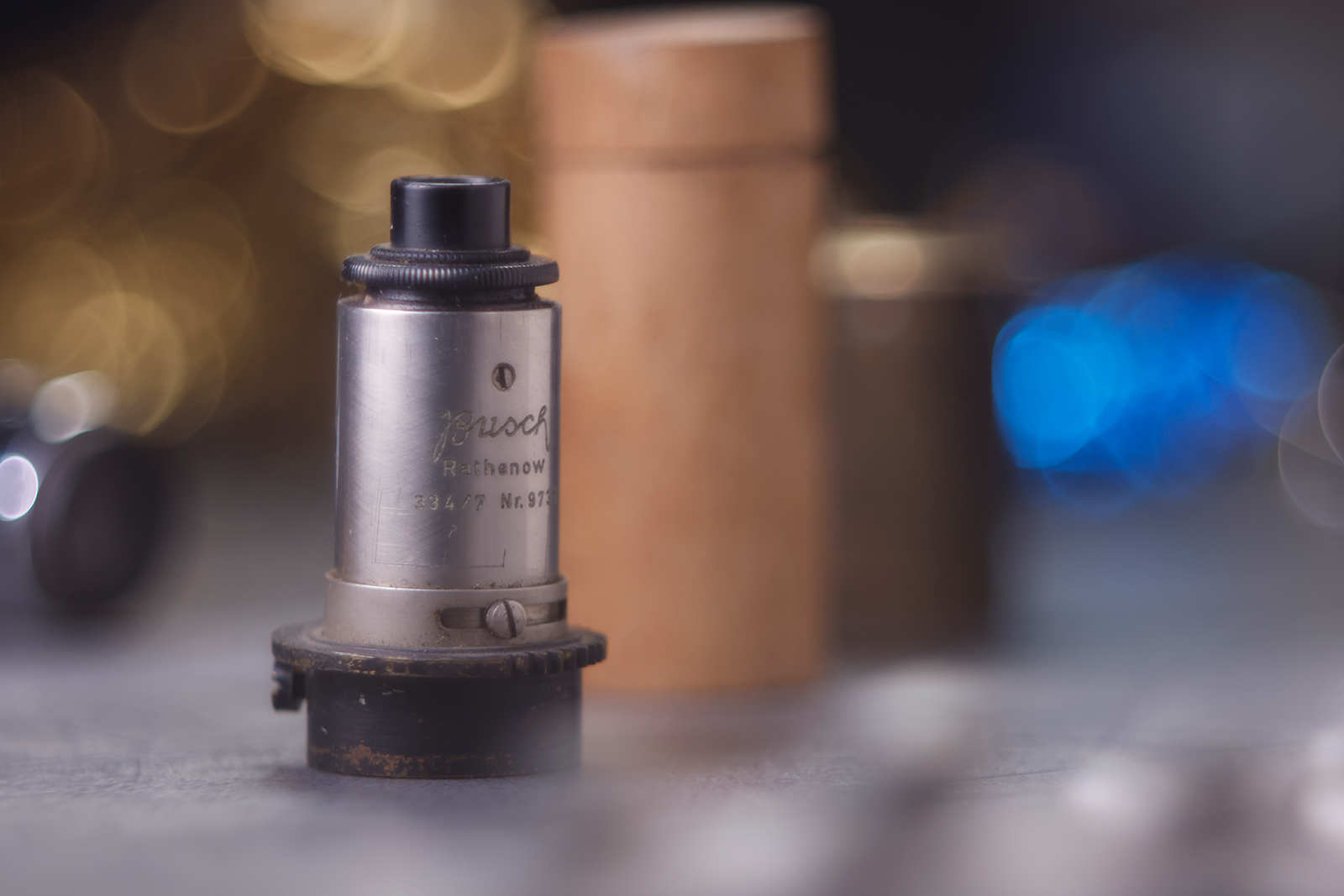
As you can see, both lenses do have vastly different looking out-of-focus highlights in addition to the difference in look caused by the variation in speed. Contrast is significantly better in the result of the Mod Ki, despite my use of an improvised lens hood for the Projektos only. It’s likely even more pronounced in direct sunlight outside. The Projektos shows noticable glow which – while not unusual for a Petzval projection lens – is certainly something to keep in mind. I personally think both lenses can be used to create interesting results, but the overall applications for moderate to slow projection lenses in this focal length, are very limited, if you’re not working with a large format camera.
To be completely fair though: When I found a moment to set my preference for faster Petzval lenses aside and decided to give this small lens from the 1920s a chance, it did manage to surprise me with some interesting looking results. But you’ll be the judge:






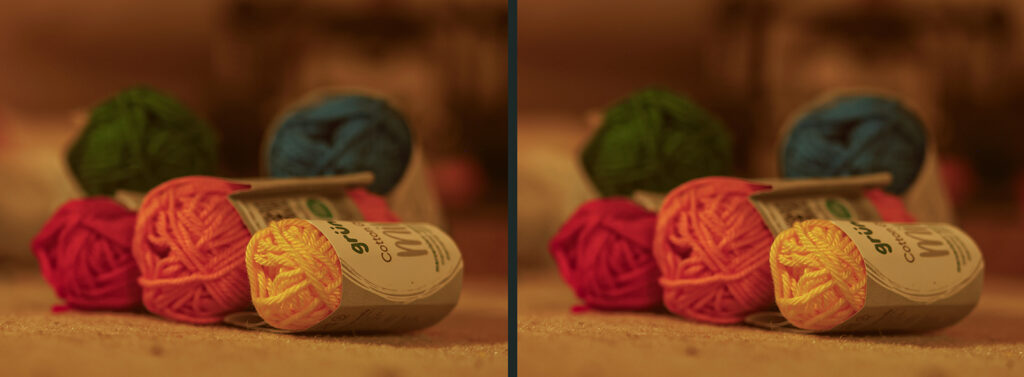
Here are a couple of stereo ( cross view) shots:

Emil Busch Cinematograph/Mod KI 200/5.7
Emil Busch Mod KINO
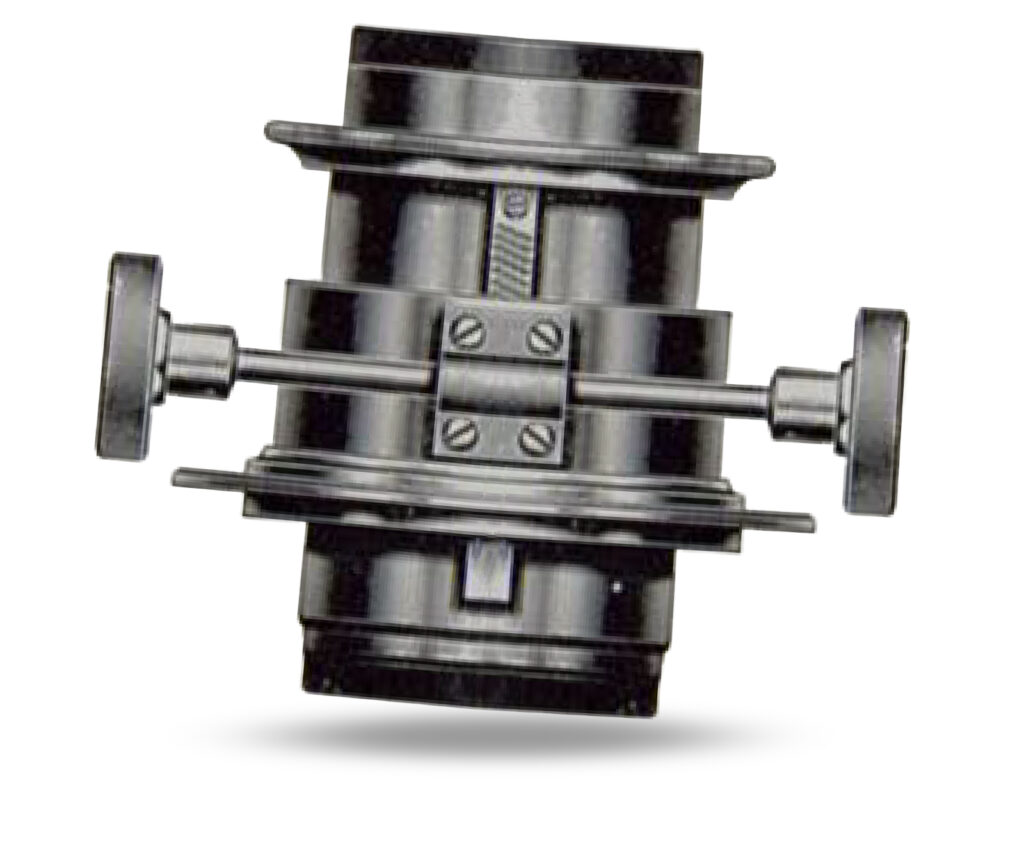
Another Petzval-based series of lenses with a bigger 52.5mm diameter which was introduced around 1907, according to this Italian ad:

While it’s somewhat surprising that the first mention is in a foreign magazine, a significantly earlier release is highly unlikely, because in the German magazine Der Kinematograph it was introduced as a new product in 1908 still:
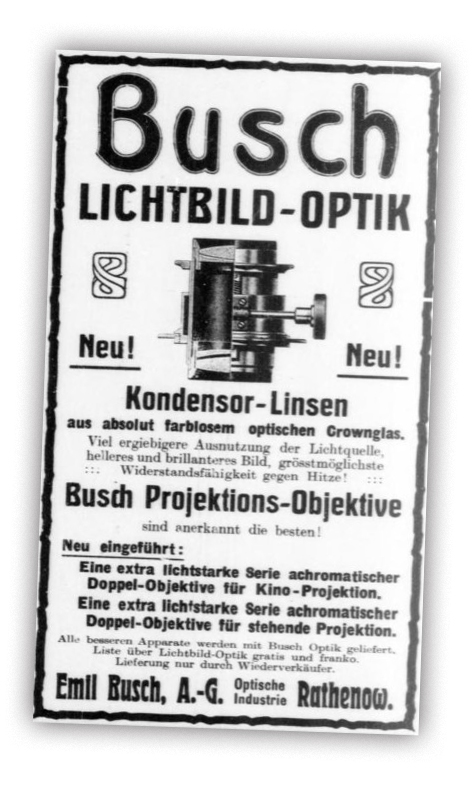
Once more there’s a description in a 1912 Busch catalog from the UK with the following information:
“The Objectives of this series give an image twice as brilliant as that given by the ordinary patterns on the market. The diameter of the lenses is 47 mm and of the Brass Cylinderical Mount 52.5 mm, which is the same size as the regular Lantern Lenses. The Tubes will consequently fit any ordinary lantern jacket.”
These were considerably more expensive as the regular Cinematograph series mentioned above and so double illumination meant almost double the price as well.
The funny thing about the naming only ocurred to me after a while, to be honest:
- The regular model is called K I
- The double illumination model K I N O
- The new versions of the same models are called
N E O K I (smaller diameter) and N E O K I N O (bigger diameter) - Finally there was the S U P E R K I N O for really long focal lengths
It’s easy to think that KI is just an abbreviation, but it looks like Busch made a marketing choice there to show that you really get twice as much, even when it comes to the name. I must admit that I find that quite entertaining.
Another interesting detail about the Mod. Ki and Kino series of lenses comes in the form of this short text about a presentation during a trade show in 1913:
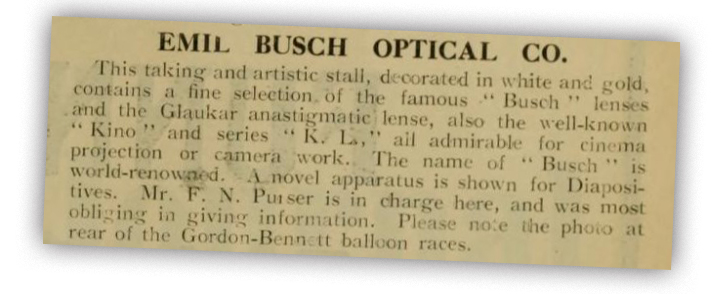
It calls these lenses “well-known” and “admirable for cinema projection or camera work” which further solidifies my view that they had been around for a while (at least 6 years) and proven their worth. It also mentions – which is probably mainly news to people unfamiliar with early large format photography – that these lenses were used as taking lenses occasionally. Of course, they had their drawbacks like relatively small image circles and weak corner performance but with their speed and center sharpness they were likely interesting options for portraits with a central subject.
Emil Busch Cinematograph Double Illumination/Mod KINO 47/1.6
The only mention of this lens with the somewhat unusual focal length of 47 mm stems from the same issue of the Photographische Korrespondenz magazine as mentioned before. Given that the front lens diameter of the series was often given by the company with that exact amount, this could also be some kind of error. The weird thing is, that so many parameters like focal length, front lens diameter, barrel size and even speed are given in detail… but something just doesn’t add up.
This is the only mention of the Mod. Kino existing with a 42.5 mm diameter. It also extends the focal length range of the Mod Ki in terms of shorter lenses down to 25 mm. The speed of the Kino lenses does not match the front lens diameters at all, unless these lenses were equipped with fixed stops, which would erase the reason for its existence…
So at this point the following three focal lengths are just assumptions and haven’t been mentioned anywhere else as far as I’ve seen.
Emil Busch Cinematograph Double Illumination/Mod KINO 55/1.6
Emil Busch Cinematograph Double Illumination/Mod KINO 60/1.6
Emil Busch Cinematograph Double Illumination/Mod KINO 65/1.6
Emil Busch Cinematograph Double Illumination/Mod KINO 70/1.6
Emil Busch Cinematograph Double Illumination/Mod KINO 75/1.7
Emil Busch Cinematograph Double Illumination/Mod KINO 85/1.9
Emil Busch Cinematograph Double Illumination/Mod KINO 90/2
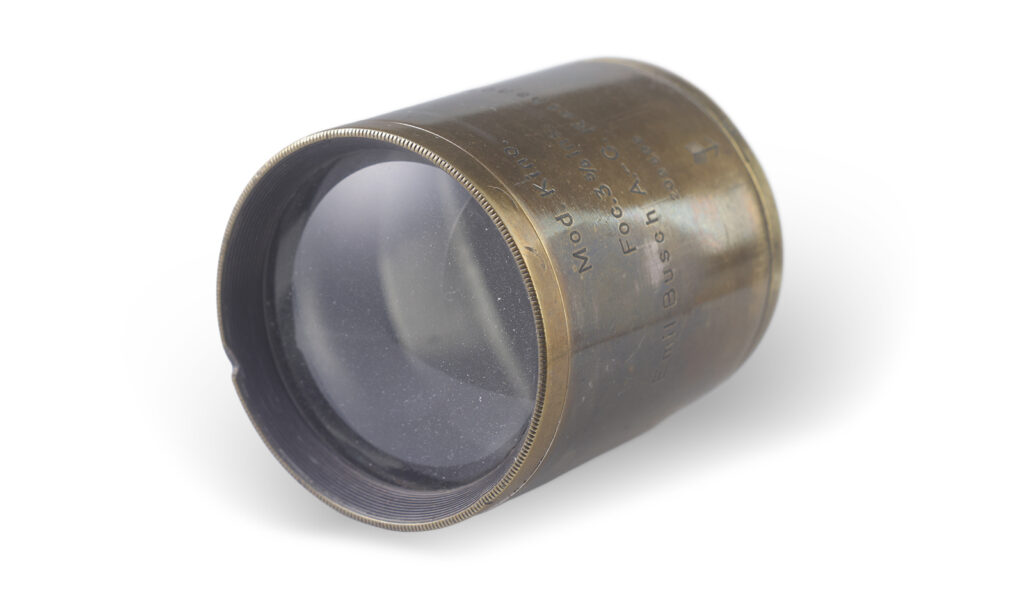
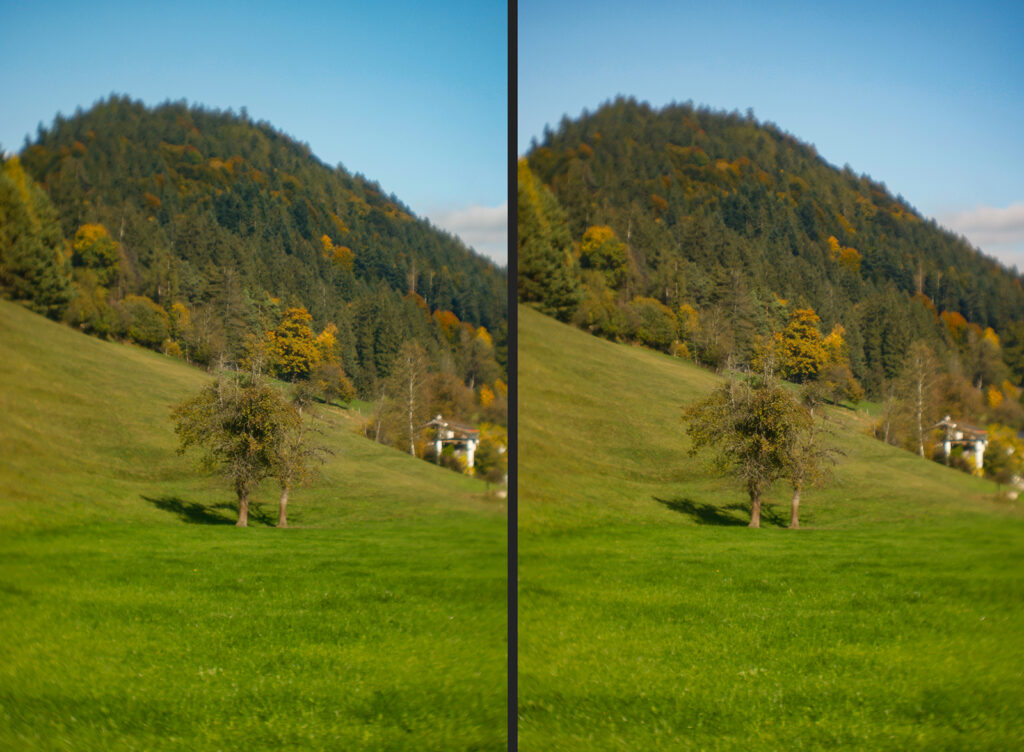
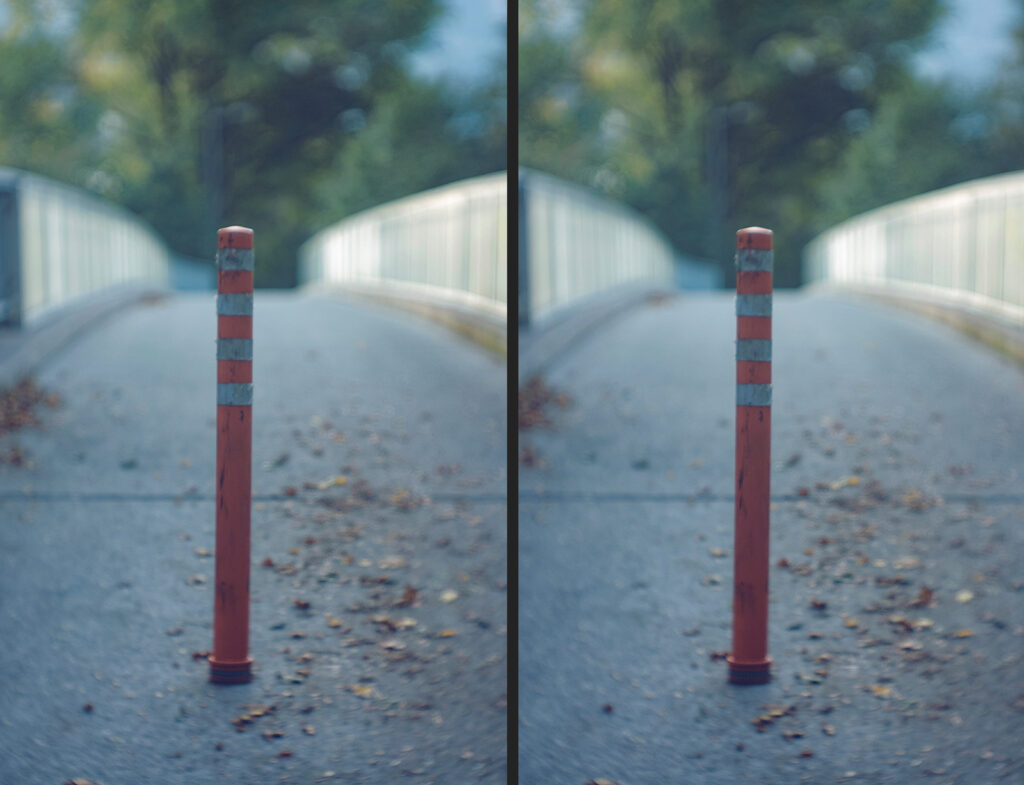
This golden lens immediately caught my attention when I saw it. It was almost certainly an export model because it had its focal length marked in inches (3 5/8”). Like many (I suspect between 10-15% of old Petzval projection lenses) it had its glass elements in the wrong order initially and looked like a broken lens to anyone trying it for either projection work or adapted onto a modern camera. After my repair attempt it was clearly improved though still fairly low contrast, which might be caused by a couple of central scratches one of the accidentally outward facing inner elements received over time, but also be due to the lack of coating or inner reflections. While it lacks any true sharpness at pixel level, results look very interesting and the rendering outstandingly smooth.
If you can live with the lack of sharpness, this lens is indeed an interesting one. Unlike the Neokino these older samples (at least this focal length) does also create quite distinct bokeh bubbles, which is nice if you want them but does make the out-of-focus look more textured and slightly more busy. I personally enjoy that for certain subjects and at particular distances subject separation is quite great as well.
Quality at distance is pretty much abysmal but as mentioned above there are several things which could be responsible for that. Perhaps there’s still something wrong in the way I’ve assembled the lens elements (like slightly wrong spacing) or the scratches account for most of the fuzziness. If you get the chance to try one of these lenses for a reasonable price, it’s worth checking out for people with a taste for the extraordinary bokeh. Otherwise you’re better off with the later Neokino lenses with 52.5 mm diameter which might be a direct (but improved) successor.
While sharpness has to be called subpar, even for a projection lens, the interesting feature of this lens might be its busy but interesting rendering. Here is a comparison of the same scene shot with the Mod Kino lens and a (significantly later Petzval design) ROW Cinerectar.


Left: Emil Busch Mod Kino 90/2 | Right: ROW Cinerectar 80/2
The difference is quite remarkable. If you prefer smooth, creamy bokeh the Cinerectar might be among the best choices for that, but if you like a more textured and slightly harsher look with outlines in the bokeh highlights, the Mod. Kino could be the more interesting option. It’s all a matter of taste.
Another relevant comparison – given that they were contemporary but in terms of price vastly different offerings by the same company – is the one with the Glaukar-Anastigmat. Even though it might not be fully accurate with both of the samples used showing some degradation and wear, it’s easy to see why the Glaukar was called superior at the time as far as image quality is concerned:

Left: Emil Busch Mod Kino 90/2 | Right: Emil Busch Glaukar 95/3.1
Of course the difference in speed which is still significant, has to be taken into consideration as well, particularly when we’re talking about using these lenses today. So while each of these two lenses might be preferable in some situation, the main takeaway from these comparison images should probably be, that there’s more than one suitable distinct look one can achieve with different old lenses, even when they were made by the same manufacturer.






The shot above shows the softer side of the rendering, this lens is capable of, and was probably the first one which fully convinced me to not limit my shooting to provoking its busier rendering. I really enjoy reminders like that, since it’s beneficial to keep an open mind, when working with old lenses.










Several of these shots show what I often describe as liquid or liquified out-of-focus rendering, because to me it almost feels like I’m looking through water in motion. I’ve only experienced that kind of rendering as intensely with a couple of lenses. I’ve mentioned one of them (also an old Petzval projection lens) in my article on Projection Optics.









Here are a couple of stereo ( cross view) shots:




Emil Busch Cinematograph Double Illumination/Mod KINO 95/2.3
Emil Busch Cinematograph Double Illumination/Mod KINO 100/2.3
Emil Busch Cinematograph Double Illumination/Mod KINO 110/2.5
Emil Busch Cinematograph Double Illumination/Mod KINO 115/2.7
Emil Busch Cinematograph Double Illumination/Mod KINO 120/2.8
Emil Busch Cinematograph Double Illumination/Mod KINO 130/2.9
Emil Busch Cinematograph Double Illumination/Mod KINO 135/3
Emil Busch Cinematograph Double Illumination/Mod KINO 140/3.2
Emil Busch Cinematograph Double Illumination/Mod KINO 150/3.3
Emil Busch Cinematograph Double Illumination/Mod KINO 170/3.6
Emil Busch Cinematograph Double Illumination/Mod KINO 180/3.9
Kleine Mod KI & KINO
Apparently, the model KI and KINO lenses were also available with the label Kleine, a US distributor of motion picture apparatus and supplies from Chicago.
Such a lens is shown in one of their ads. While there’s no mention of its origin it’s safe to assume that these lenses were indeed made by Emil Busch for Kleine Optical.
Kleine likely offered a range of different focal lengths of both Ki and Kino models, but no overview has been seen so far. The labeling seems unique however, so they should be distinguishable from regular Emil Busch lenses.
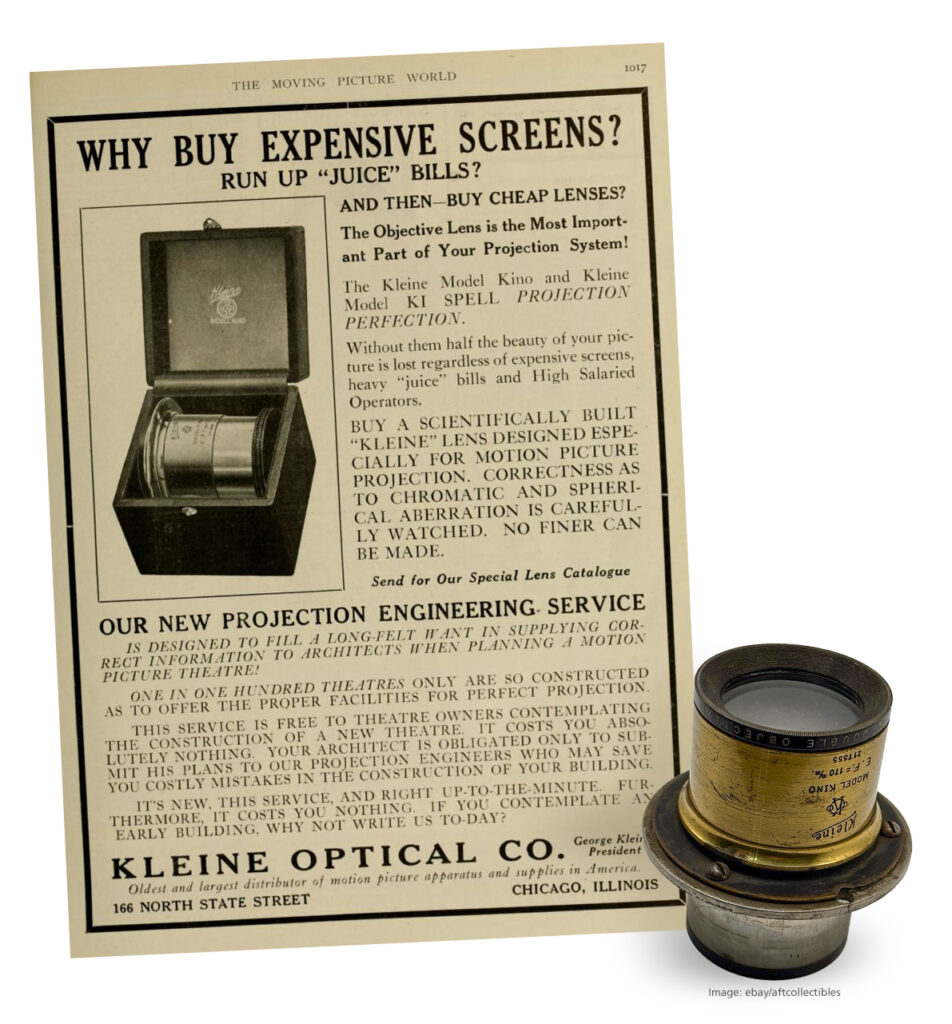
Kleine Model Kino 170/3.7
Emil Busch Neoki
The more of the different Emil Busch projection lens series you know, the more it all appears to make sense. They had the Mod. KI and the faster Mod. KINO… and – as explained above – of course the redesigns had to be the NEOKI and NEOKINO.
While the Neokino got very popular and well-known as a name, the Neoki lenses seem to be missing completely, so they were either not produced for a long amount of time, or in very limited quantity and also a significantly smaller number of different focal lengths. So far, I only know about a single one.
The lens likely features a 33 mm diameter which is very common among lenses intended for 16 mm projection.
Perhaps the series was intended to exist on its own, but instead quickly integrated under the Neokino umbrella, so 33 mm diameter Neokino lenses could be identical, at least in terms of optical components. An additional hint in that direction is the focal length inscription in cm (earlier) on the Neoki and mm (later) on the Neokino variant.
One unique detail to note: The lens is actually called ‘Busch-Neoki’ and the inscription spells the maker in full in addition to that… so the name certainly doesn’t seem to be an abbreviation of Neokino due to a lack of space on the front. The same is true for the ‘Busch-Superkino’ and early ‘Busch-Neokino’ variants btw.
Because of these peculiar details I’m fairly confident that this lens is from 1927, right around the time when the Neokino was introduced to the world.
Busch-Neoki 60/2.2
On his interesting website its author nonono3366 shows lots of fascinating and unique images taken with a Busch Neoki 6 cm lens. Given that most of them show a lot of softness and crazy rendering, I’m going to assume that the lens was used reversed or modified for most of them. The lens certainly seems to be able to produce normal looking results, but of course part of the fun when working with older unusual lenses is experimenting, and so I appreciate any kind of creative use like this.
Emil Busch Neokino
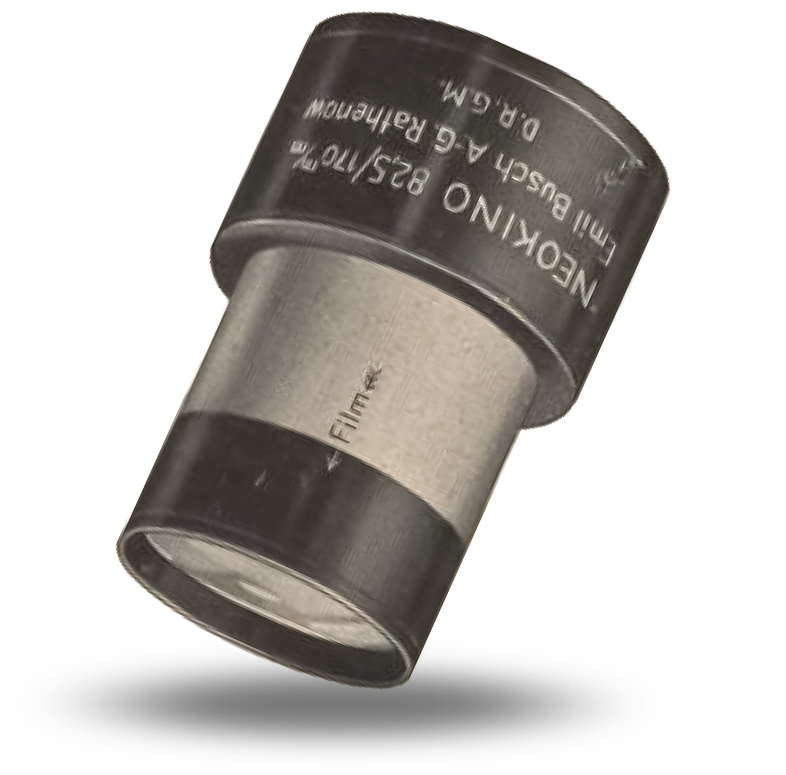
The Neokino was a long-lasting and widespread series of projection lenses and while certainly improved from the earlier Mod. Kino lenses – particularly in terms of speed – still using a classic 4 elements in 3 groups Petzval design.
While the initial upgrade to a 62.5 mm diameter in 1927, the series brought compared to the earlier Mod. Ki & Kino lenses already meant a significant increase in terms of speed, Busch continued to evolve and expand the Neokino series. Espen Susort notes a distinct point in time when another upgrade of the series occurred:
“The big difference came later as stated in 1935 when they made the f/1.6 aperture series for 16mm and 35mm film projectors.”
(
While this matched the information I found during my initial research, I stumbled upon this ad later on:

It is from the German magazine Kinotechnische Rundschau from 1930 and already mentions the 82.5/104 mm diameter Neokino lenses. Thus, it’s safe to say that the massive upgrade in terms of speed happened a couple of years earlier and was perhaps just delayed in some of the countries they were exported to.
This new line of Neokino lenses from around 1930 is among the fastest Petzval projection lenses ever made, only equaled/surpassed slightly by the (significantly later) Angenieux AX Type 86 series.
As Espen rightfully states, 1935 did mark a significant change in the Neokino line-up, because it seems to have been the point where an extended and possibly also recalculated range of the superfast Neokino lenses was released internationally.
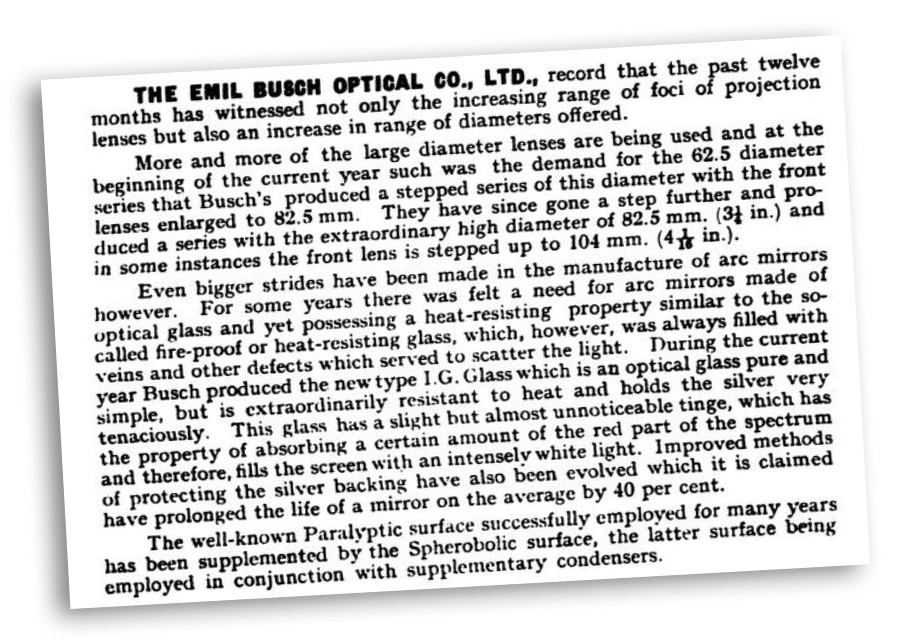
According to the company’s ads these lenses finally made good on the promises made by early superfast Petzval lenses.
Yet another redesign of the Neokino series came later in the form of the ROW Neokino lenses mentioned further below in more detail.
Neokino lenses were used all around the world it seems, but particularly frequently in European cinemas. The somewhat rare longer superfast variants with big diameters were apparently supplied with AEG Euro types of projectors.
Rare lenses with unique names, like the Neoki or Superkino labeled ones, seem to indicate that additional series were planned, but likely later integrated under the Neokino umbrella due to its name recognition and reputation.
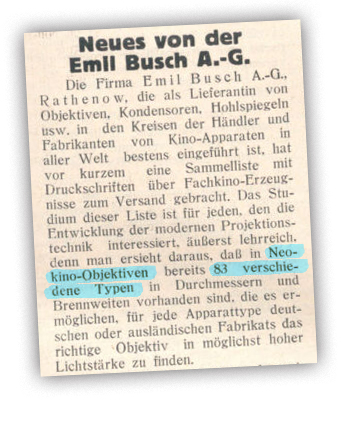
Because of this the number of lenses offered within the Neokino family is truly gigantic. In the Austrian film magazine Oesterreichische Filmzeitung from 1933 there’s a mention of 83 variants, which certainly seems to be among the biggest ones among projection lenses ever made. I’ve written about the ISCO Kiptar projection lenses on the deltalenses site in the past, which is very big as well but even that one only comes close if all the later Double Gauss (Super-Kiptar) variants are included as well.
Neokino lenses were made for 16 and 35 mm projection purposes, some of the longer focal lengths may have even been used for bigger formats, even though I haven’t seen many Petzval-type lenses which were advertised for widescreen projection specifically. The Angenieux AX Type 86 comes to mind however, so it’s at least possible that the 80, 82.5 and 100 mm diameter ROW Neokinos were used for similar formats.
Early Neokino lenses with 52.5 mm diameter seem to have been labeled ‘BUSCH-NEOKINO’ which thus likely have a production date from 1927 to 1930. At first they were labeled with their focal length in cm – with serials from ca. 300000 to 320000 – and then in mm. Lenses with 62.5 mm diameter seem to have been labeled differently (without Busch-) and with the focal length in mm from the beginning. So while it’s not easy to tell a definitive date for a specific lens you can take a look at my best estimate at the end of this article under serial numbers.
In terms of optical design the Neokino still continued to build on the classic Petzval formular, however it wasn’t just a continuation of the Mod Ki and Kino models with bigger diameter but very likely consisted of several serious recalculations over its long lifespan. It’s interesting to note, that there are several models among the Neokino family, which have lenses of significantly bigger diameter in the rear group, compared to the doublet in front. This might hint at them being used with either bigger source material, different mirrors/condensers or light sources.
Whatever the case, these lenses likely come with a bigger image circle, which is relevant if you decide to use them on cameras with larger sensors.
| 16 mm |
⌀ 33 mm
Emil Busch Neokino 35/1.6
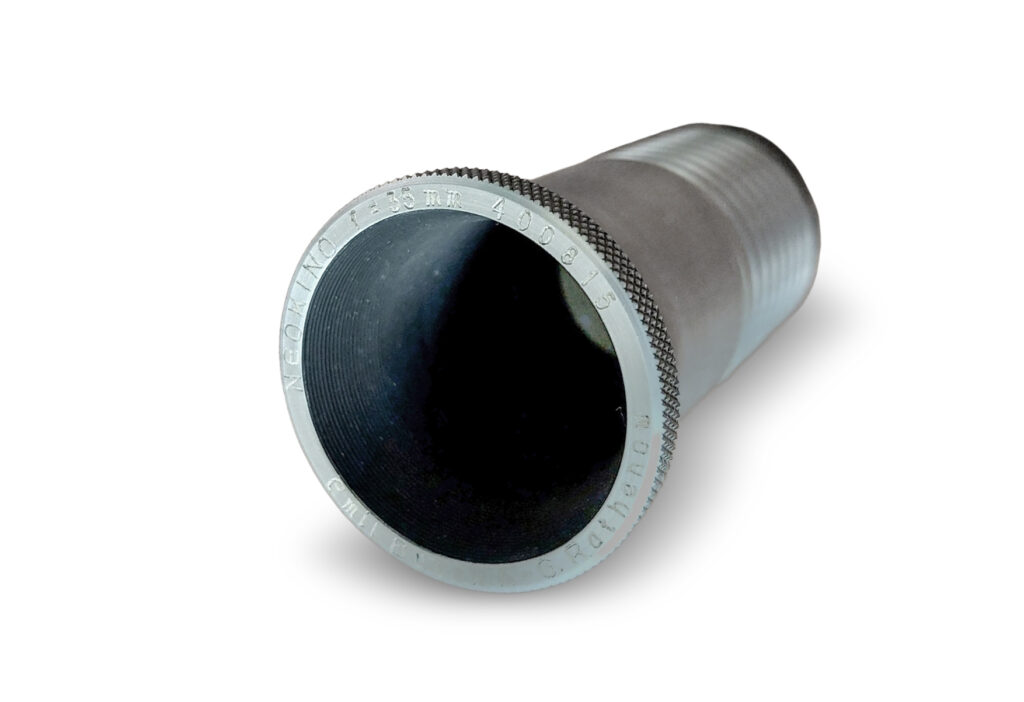
It took a while before a sample of this lens appeared online. Now that I’ve seen it, it seems likely that it is a 33 mm lens, comparable to the Meyer Kinon Superior I 3.5 cm and similar ones. While we don’t know anything concrete about coverage. It’s possible that this shorter focal length used the same tactic as the 50 and 65 mm variant and had a significantly bigger image circle than necessary in order to maintain a high quality over the whole frame. Two lenses by different manufacturers might give a good indication of what the means as an adapted lens – the Optical Proiectar 35/1.6 (which needs modification in order to use its full image circle) and the Agfa Ocellar 35/1.6 (which can be modified by unscrewing parts).





Unfortunately it looks like the Neokino 35/1.6 might be the type of lens which requires non-reversible modifications in order to unlock its full potential, so it’s likely only a good fit for those who like to experiment and don’t regret such a decision easily.
The sample shown above has a serial number of 400815, right around that threshold where I expect the re-calculation to have happened in 1935. If you find such a lens, please let me know how it performs. It would certainly be interesting to see.
Emil Busch Neokino 60/2.2
UK based photographer Simon Forster has taken some wonderful shots with this lens. It’s not the fastest one around in its focal length, but it certainly is a nice sample as well. So far I haven’t been able to find a mention of the projectors it was used on, but it’s pretty safe to assume that it was made for 16 mm projection.
Check out some wonderful shots made by Simon Forster here.
Another photographer on flickr, Geza W. Singer has also experimented with the same lens though only in a very limited capacity. The results suggest a fairly small image circle however, so keep that in mind, if you’re planning to adapt a lens like this. While he claims a speed of f/1.9 for the lens the narrow diameter and open diameter of the lens would rather suggest something along the lines of f/2.2.
It’s likely that this lens is optically identical to the Busch-Neoki, probably just a re-branding or later replacement.
Apart from these two lenses no 33 mm diameter Neokino lenses have surfaced so far. It’s possible that more have been made however.
⌀ 42.5 mm
Emil Busch Neokino 40/1.7
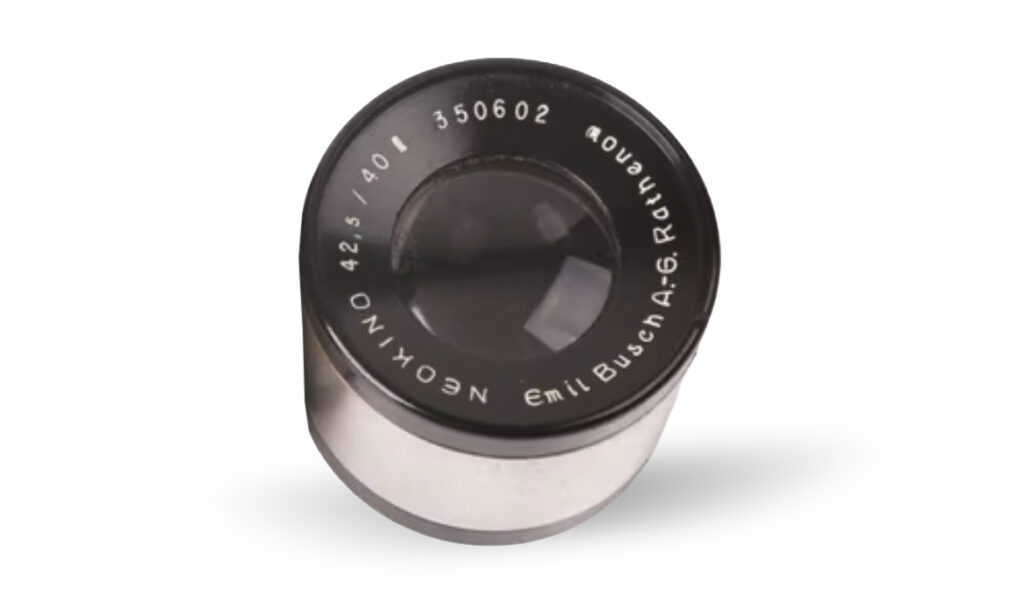
It’s unclear if this lens was indeed part of the superfast Neokino lenses, but from the diameter of the front lens it looks like it was closer to a f/1.7 lens and thus pretty fast. In terms of image circle I don’t know anything specific, but the information Espen Susort gave on the similarly short Mod. Ki lenses makes me believe that this one likely does cover a full frame sensor, even though sharpness can only be expected for the central portion of the image. Unfortunately no sample shots taken with an adapted variant seem to exist yet.
Emil Busch Neokino 50/1.6
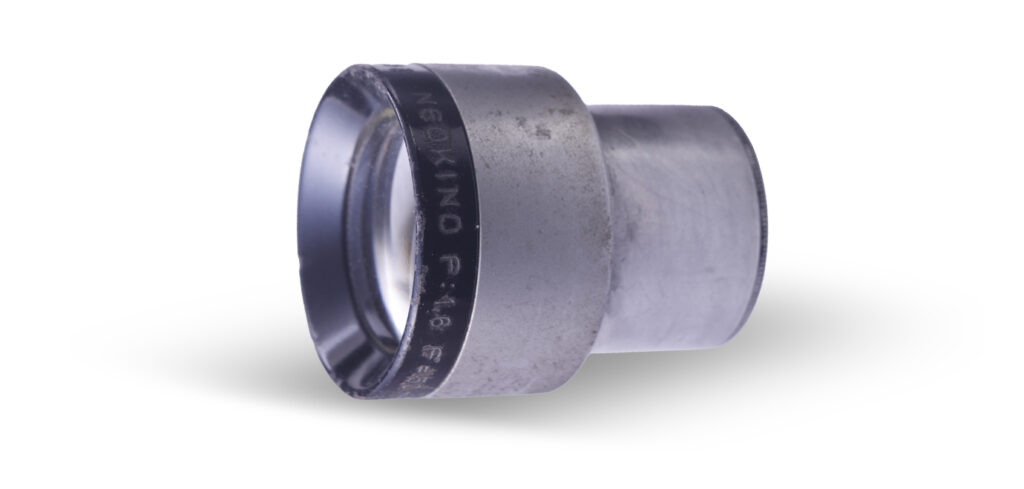
Of course 50 mm vintage lenses are the most common by far and even once with experimental rendering are plentiful. So one might rightfully ask, if there’s anything making this Neokino stand out among those, particularly given that it doesn’t feature a variable aperture, has a limited image circle and no screw mount.
My answer would be yes! However not without cautioning people who might be interested to look up some images beforehand and compare them to other interesting lenses in order to see if it’s for them or not. One place to do so is of course right here, so take a look at the sample shots below. Another interesting source is the excellent article by Espen Susort which features this lens as well. He does focus more on shooting portraits, so if that’s something you’re interested in, it’s a valuable resource for sure.
In my personal opinion the Neokino 50/1.6 is among the best of its kind. There’s a number of Petzval-based lenses with identical specs to compare it to out there and while a couple are quite similar in how they render, barely any of them have the image circle of the Emil Busch lens.
Probably the most famous of the lenses in question is the Meyer Kinon Superior I 50/1.6. While I haven’t featured it in any detail in my write-ups yet, I can confirm that it is indeed an absolutely stunning lens. Take a look at the description and images taken by Toby Marshall, who is a master at maximizing the unique looks of lenses and see for yourself. Unfortunately, word got around and because Meyer lenses of that time are sought after by the movie-filming crowd, the faster Kinon variants often appear for outrageous prices only. It’s also limited in terms of image circle however it might have the edge when it comes to central sharpness compared to the Neokino.
Another lens to consider – which I’ve featured in The Kiptar Projection Lenses article on deltalenses – is the JSCO/Optische Werke Göttingen Kiptar Serie S or Schneider-Kiptar 50/1.6. Similar to the Neokino it’s not among the sharpest, but certainly swirliest lenses of its kind, so very fun for photographic experiments.
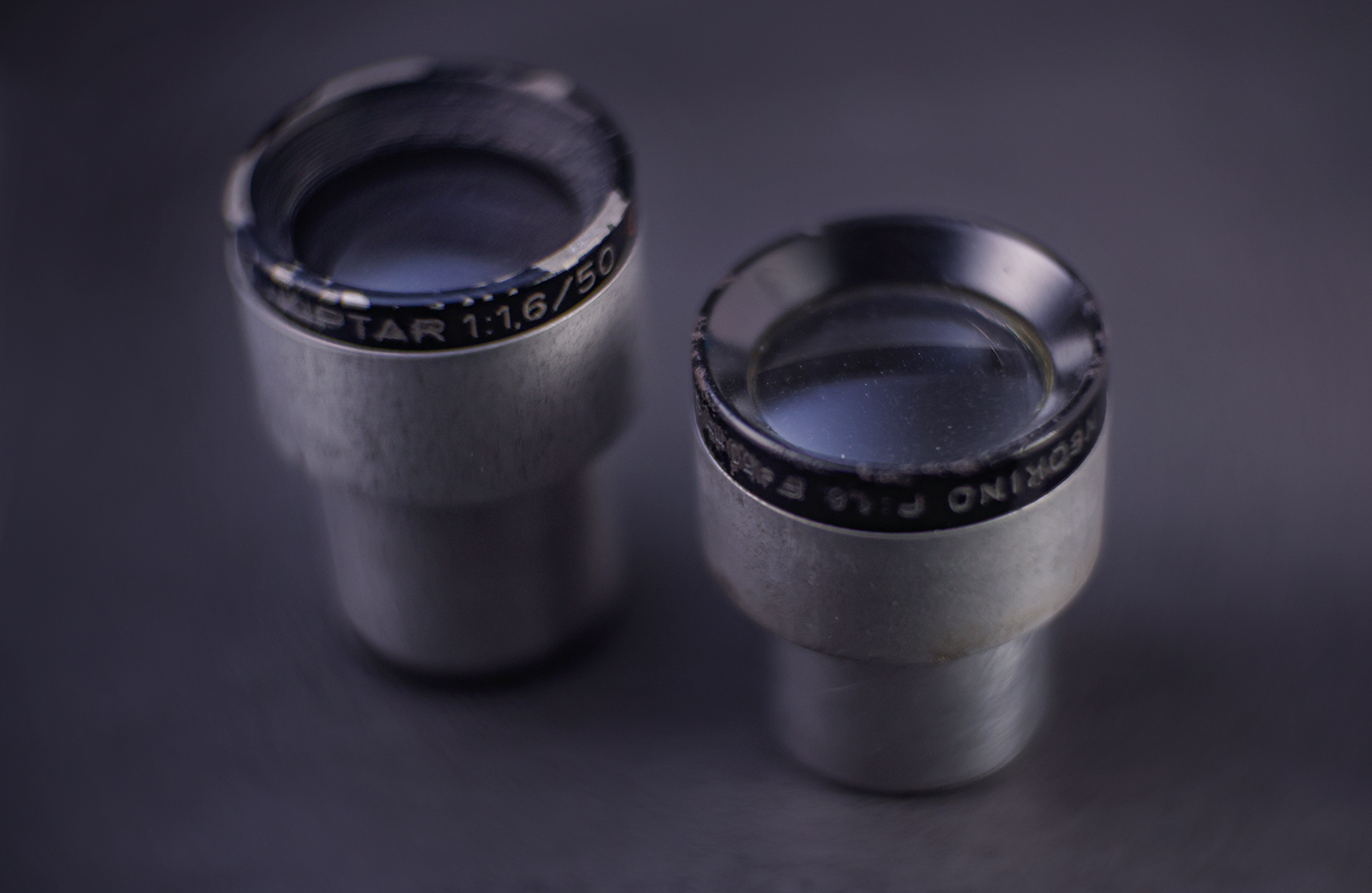
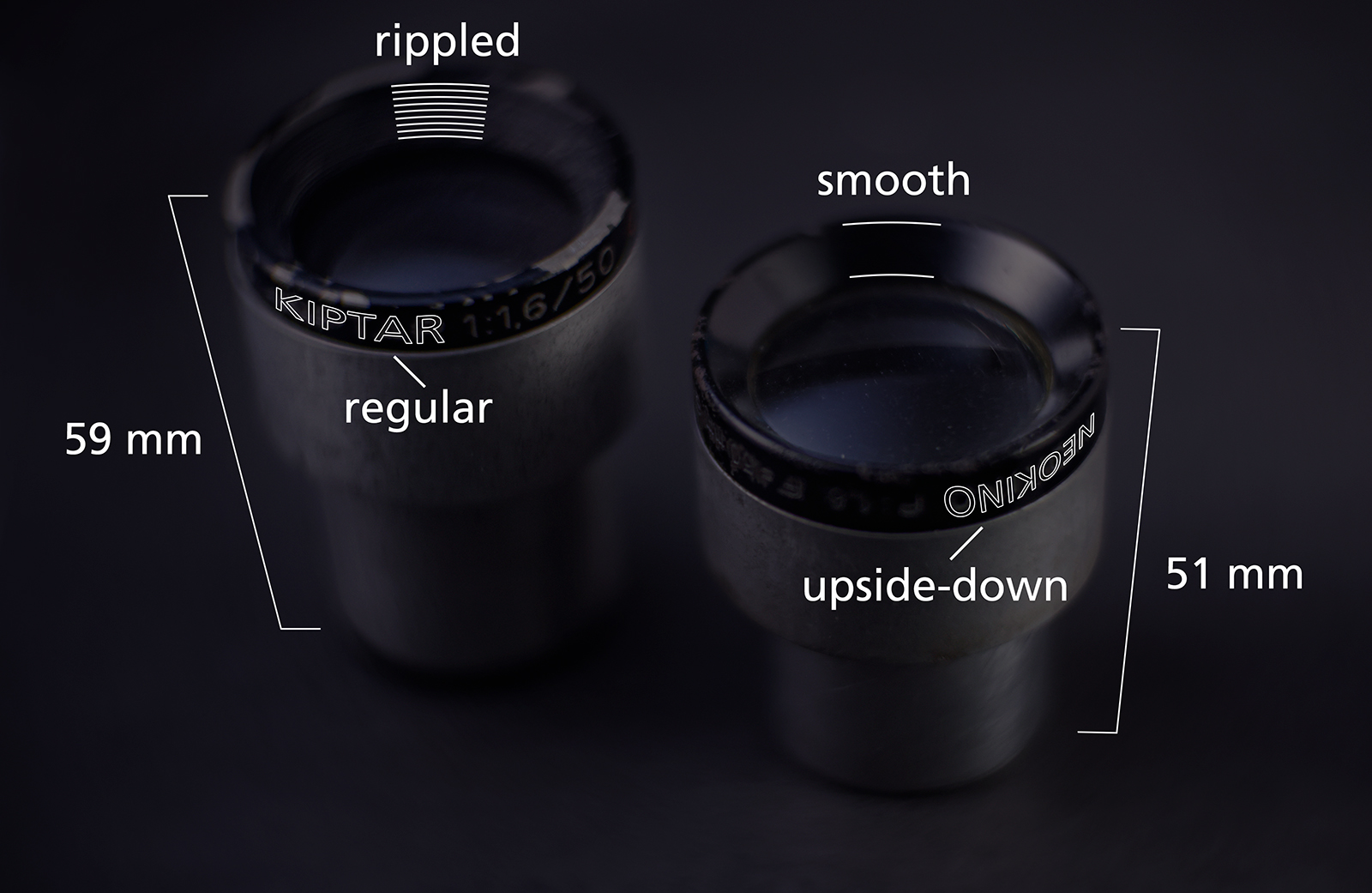
That lens in particular looks so close to the Neokino at first glance, that one could be tempted to assume it might be a relabled lens. However there are some significant differences on closer inspection:
In addition to those different housing details, the image circle of the Neokino is slightly bigger, making a re-labeling quite unlikely.
Last but not least, the Optical Proiectar 50/1.6 or 50-55/1.5 are also very interesting alternatives though the former has to be modified in order to give a reasonably big image circle on full frame and both still show more significantly more vignetting than the Neokino.
Here’s a comparison with two other lenses which have an equally big image circle:


Left: Emil Busch Neokino 50/1.6 | Right: Agfa Ocellar 50/2.2
The Agfa Ocellar 5 cm is visibly superior in terms of sharpness, but of course a big part of that can be attributed to the slower speed of f/2.2. Overall the look is very similar, both in terms of swirl as well as the handling of the background.
Left: Emil Busch Neokino 50/1.6 | Right: Boyer Jade 50/1.6
The comparison with the rare Boyer Jade 50 mm f/1.6 paints a completely different picture. The Jade is also more detailed within the focus area, but shows significantly less contrast, even though that parameter was already increased in this sample. The swirl is similar, but the background-rendering completely different. It almost feels like a different optical design, though it isn’t, as the swirl hints at.


Left: Emil Busch Neokino 50/1.6 | Right: Boyer Jade 50/1.6
Once more, this comparison at a slightly increased distance, shows the superiority of the Boyer Jade lens in terms of detail captured. Because of the higher contrast the Neokino image looks crisper SOOC. The highlights in the background are more defined with the Emil Busch lens while the amount of swirl and catseying seems on par.
The final comparison of this challenging, but still highly interesting tiny lens must of course be made with the extremely similar JSCO 50 mm f/1.6, made in Göttingen shortly after WWII:


Left: Emil Busch Neokino 50/1.6 | Right: JSCO 50/1.6
Here it’s the opposite situation from before: The JSCO Kiptar image is not quite as smooth and particularly more defined bokeh highlights, which regularly results in an overall stronger impression of the swirling aspect. In terms of image circle the Neokino is significantly better and thus provides more options.






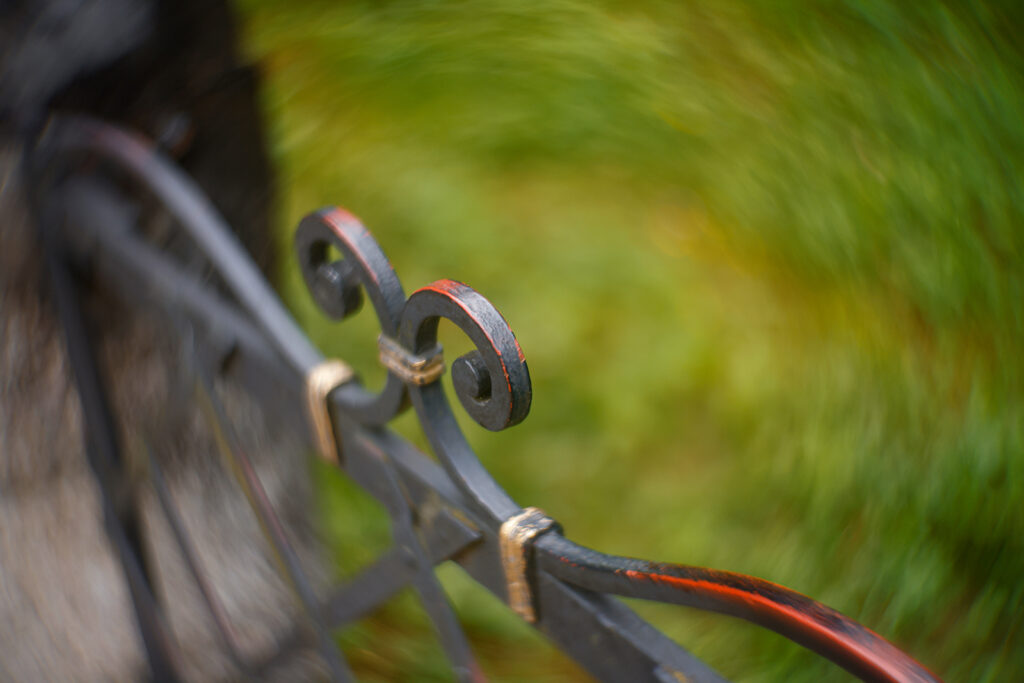
Compared to more modern fast Double-Gauss lenses, the images taken with the Petzval-based Neokino 50/1.6 have an often somewhat busy, but quite unique look. The limitation of having to compose around central subject is of course something to be considered.







Obviously this lens is not for people who don’t care for strong swirls or even dislike it and given its age, I think it’s also quite rare to find an impeccable sample. My particular lens certainly shows some reduced contrast and probably isn’t as crisp as it could be. I still think it easily makes up for those shortcomings with the way it handles the out-of-focus areas and its big image circle.




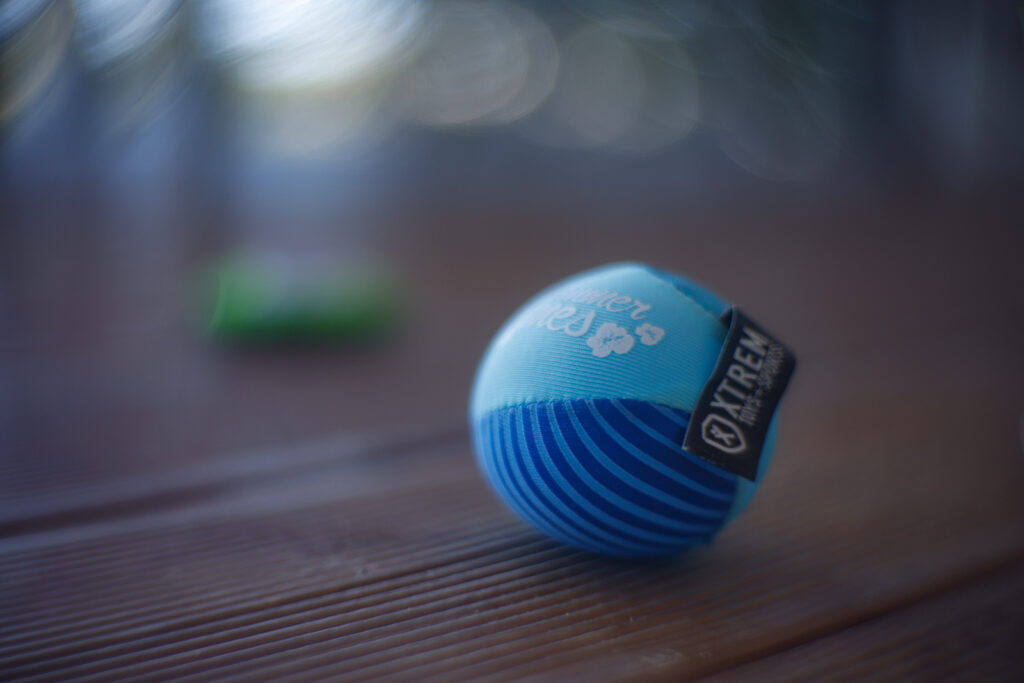

While it is possible to tame this lens to a certain extent, by avoiding challenging lighting situations or busy backgrounds, it feels like you cannot fully escape the motion towards the edges. That’s not necessarily a drawback, but something you have to be aware of, when deciding to use it for a particular occasion.









I haven’t used it for that purpose a lot, but I feel like the Neokino can be used as a portrait lens, however – at least with the samples I’ve seen so far – quality does depend a lot on the lighting as well as the distance. It seems to struggle at medium distance (full body portraits) somewhat, while it’s more convincing close-up. At infinity it doesn’t provide anything close to good detail, but the field curvature does allow for some pretty interesting effects, which can be used to highlight certain areas.




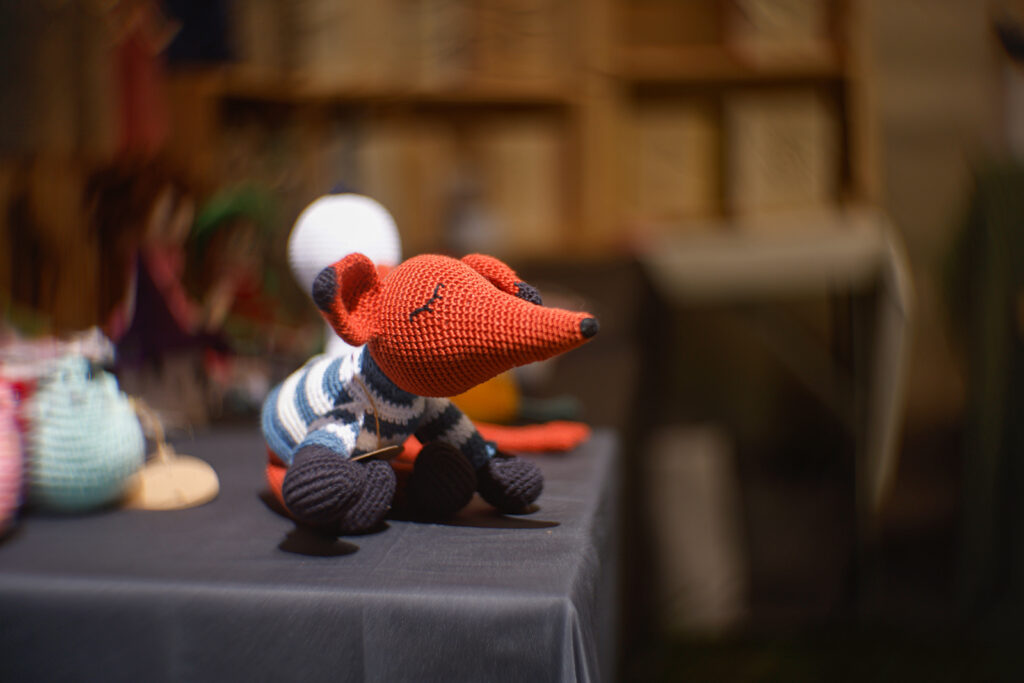
Here are a couple of stereo ( cross view) shots:




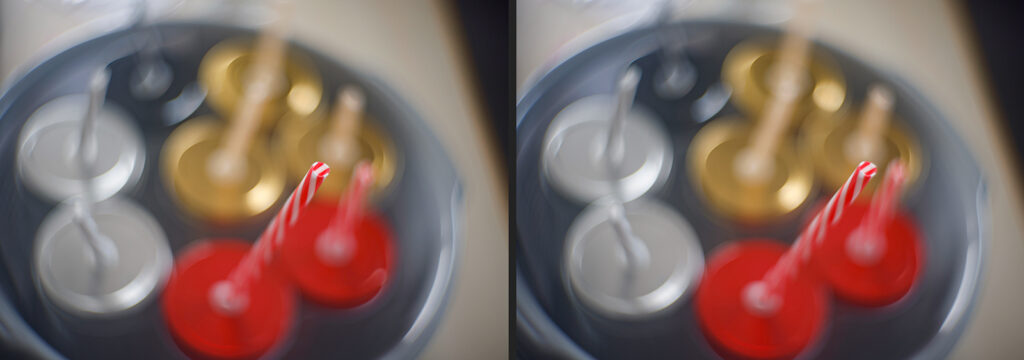

Emil Busch Neokino 60/2
This lens was mentioned in a Swiss magazine called Schweizer Film from 1941 and because it was sold together with a Lytax film viewer, it’s possible that this is where these lenses were used.
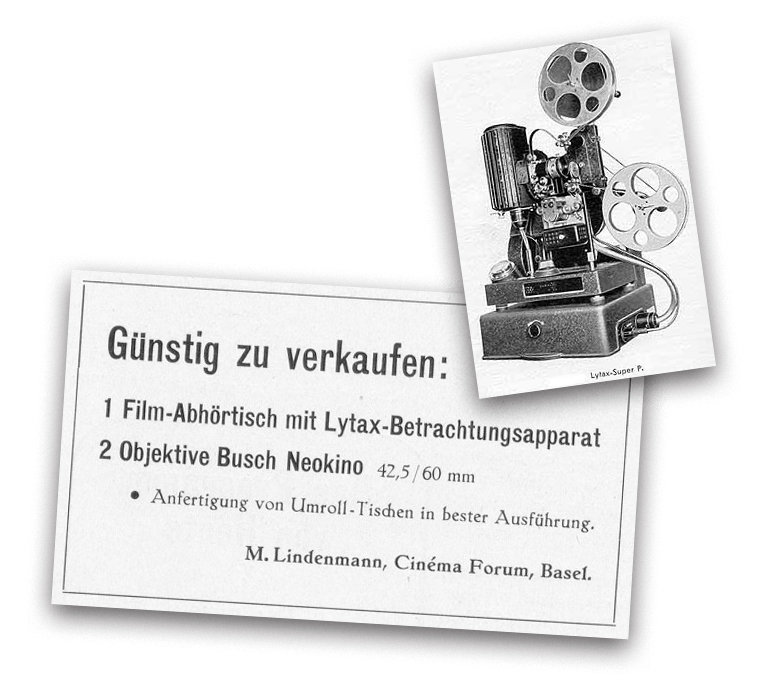
It’s also possible that some Lytax projectors used Neokino lenses like that. It’s once more likely that this is yet another optically identical version to the Busch-Neoki 6 cm mentioned earlier.
Emil Busch Neokino 65/2
While there isn’t an image of this lens, there are numerous sample shots taken with it by flickr user Leo Roos. You can find out more about this one-of-a-kind lens experimenter and photographer, who unfortunately passed away recently, on his profile on flickr.
Emil Busch Neokino 60/1.8
It’s truly unfortunate that no sample of this lens has appeared and no shots taken with it. Given my experience with a similar lens from France, I think that it might be a spectacular one, right between the 50 and 65 mm variant in terms of crazy rendering and good coverage,
⌀ 52.5 mm
Emil Busch Neokino 65/1.6
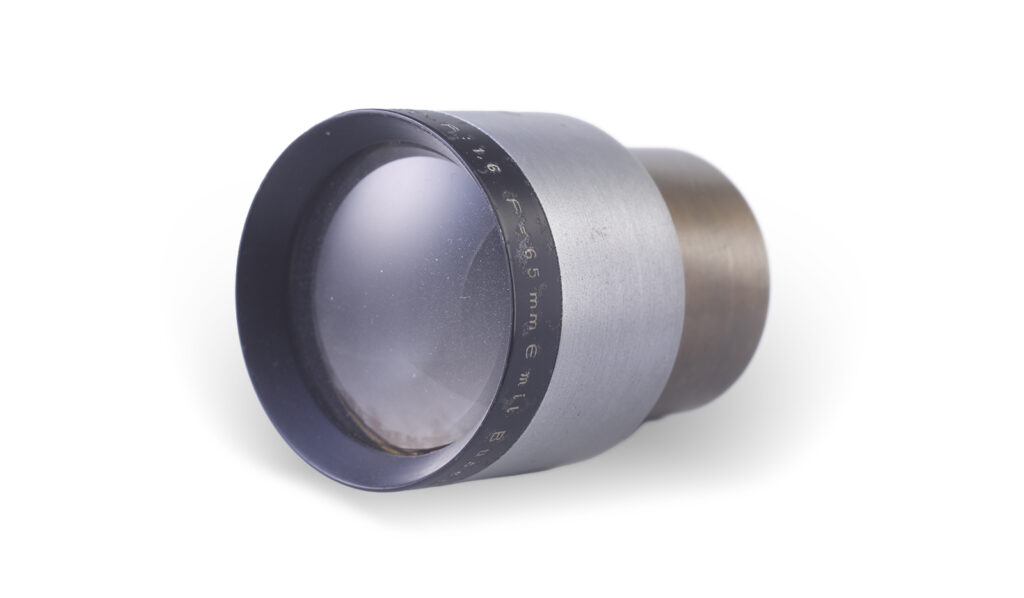
Among the numerous Neokino Models, the superfast 16 mm ones are certainly special in some ways. Espen Susort provides a lot of details on the 50 and 65 mm variants in his great article and both are outstandingly interesting lenses in their respective focal length.
When I discovered that French lens-enthusiast and experimenter Duféal Baptiste has shared some information and beautiful sample footage made with a very similar lens, the Officine Galileo Neocinar 65 mm f/1.6 I felt like this was an interesting opportunity to quickly compare these two fast 16 mm projection lenses here:
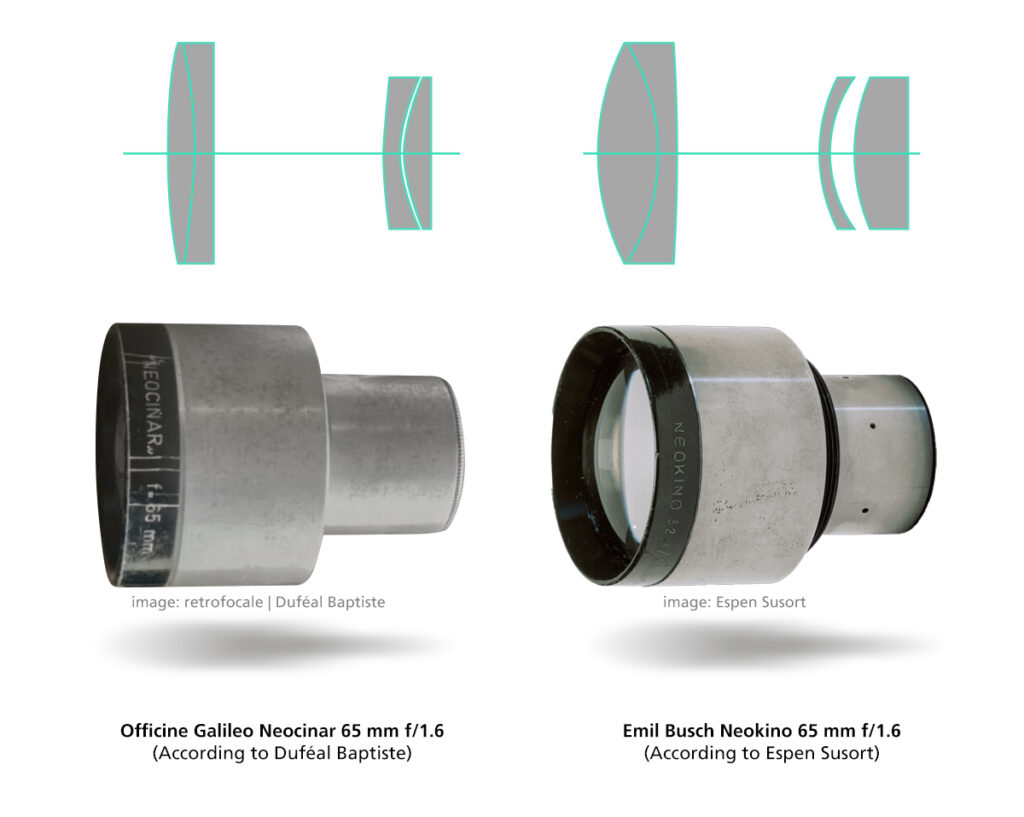
The first thing obvious similarity is the name of course. Neokino and Neocinar… it basically is the same name, just with a German and Italian background. These lenses also look very similar and likely share the same (or almost the same) dimensions in terms of diameters. A stepped metal barrel with a 32.5/33 mm diameter on the rear part and 52.5 mm diameter on the front. I’ve seen and used a lot of 16 mm projection lenses and that’s quite unusual. They also look eerily similar in terms of materials and colors (silver body, black front and rear rings, inscriptions on the outside of the front ring). So in a way it sort of surprising to hear that they don’t seem to have a completely identical optical design. Of course they’re somewhat similar with both of them being well-known Petzval-designs, but if they both really look like that, there’s enough difference to assume that this isn’t the same lens or some kind of knock-off.
The Neocinar features a design reminiscent of the Zeiss Ikon Kipronar (even though other manufacturers like Projection Optics – which I’ve written about as well on deltalenses– might have used it earlier), although seemingly with a small air gap between the lenses in the rear cell, while the Neokino is a pretty classic Petzval, albeit with flat rear surfaces. That being said, when I reached out to him for clarification, Duféal Babtiste mentioned not being sure about the accuracy of the optical design shown. So it’s best to take it with a grain of salt for now.
Coverage of these lenses may be almost identical as well with both being reported as covering the Fuji GFX sensor, which is bigger than full frame. That’s quite rare for 16 mm lenses and while it certainly doesn’t mean that a decent amount of sharpness can be expected outside the central part of the frame, it does make these lenses more versatile compared to many similar ones.
Among the vast lineup of lenses produced in Rathenow, this one might be one of the most interesting to adapt onto a modern camera today. It has a giant image circle, covering full frame sensors without vignetting and it provides very good center sharpness, combined with strong swirling and is usable for close-ups, portraits and even unique experimental shots at distance.
Compared to similar lenses within its focal length range, like the Seibert Wetzlar Emostar 65 mm f/1.6 or the Astro-Berlin Astro-Kino IV 65 mm f/1.6 it has the benefit of the aforementioned bigger image circle and in direct comparison with the Meyer Kinon 65 mm f/2.2 or Agfa Ocellar 6.5 cm f/2.2 it’s of course significantly faster and offers more interesting possibilities when it comes to crazy rendering and subject separation.
The lens is not common because it was only sold as a separate lens and not packed-in with any widespread projector models according to Espen Susort and prices vary a lot. However true quality alternatives are of course equally scarce or even more rare, so if you find one of the Neokino lenses, give it a try – you might be surprised what it does, when attached to a camera.
While of course other Petzval-type lenses are the most appropriate to compare it to, it’s also been interesting to shoot the Neokino 65 mm lens at close intervals with a lens that has similar specs, but a different construction, the IOR Supercin 65 mm f/1.5. Compared with this significantly more modern Ernostar-type design lens with 4 elements in 3 groups, the Neokino appeared to be lacking a bit in term of sharpness and detail.
Perhaps it’s an issue with the less than perfect sample of the Neokino I’ve got, but it could also have to do with improvements in coating tech or glass composition. Petzval lenses are known for their center sharpness, so that’s likely not the reason for the visible difference, even for central subjects.
Here are a couple of direct comparison shots with the closest lens I’ve got, the ISCO Kiptar 65 mm f/1.8:


Left: Emil Busch Neokino 65/1.6 | Right: ISCO Kiptar 65/1.8
It was surprising to see how close these two lenses are in terms of rendering and overall look, given that they’re not identical spec-wise. The lower native contrast of the Neokino lens is likely due to the bigger and slightly less protected front element or possibly also because of the coating-tech, since the ISCO lens is post-war (ca. 1954) and Busch’s offering likely from the early 1940s.


Left: Emil Busch Neokino 65/1.6 | Right: ISCO Kiptar 65/1.8
Both lenses do have their flaws in terms of image quality, particularly a significant amount of glow. The Kiptar is slightly better corrected in terms of chromatic abberations and also fares a touch better in detail, which likely is due to the slower speed.


Left: Emil Busch Neokino 65/1.6 | Right: ISCO Kiptar 65/1.8
Both lenses can be focused to infinity but while vignetting on full frame is insignificant with the Neokino, it is clearly visible in the images of the Kiptar. That being said, there’s no hard vignetting on the Kiptar and even at infinity detail seems slightly better with it. Both lenses are not recommended for any shots at distance,
Even for lens experimenters like me there are better lenses for landscape shots with selective focusing possibilities created by the field curvature (the weird Ikon Bambinox comes to mind…) and slightly longer Petzval lenses or Ernostar/Double-Gauss constructions certainly offer more options for working with tilt as well.


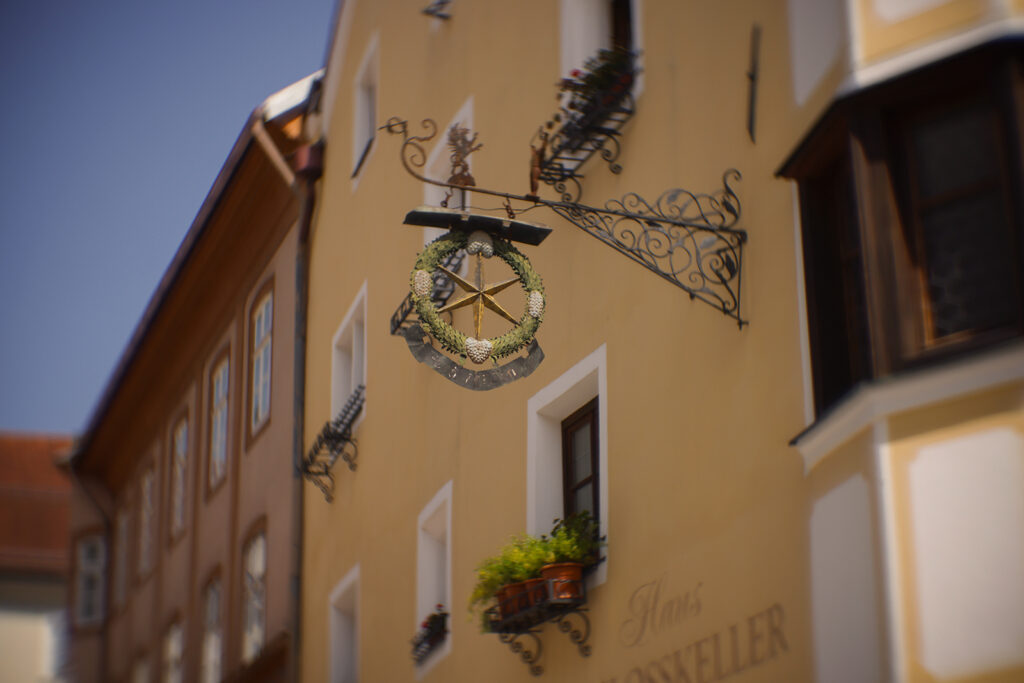




As you can see with these results from the Neokino 65 mm include everything from very smooth and calm to extremely busy, occasionally even on the harsher side, since it’s very dependent on the background and lighting. In my personal experience it’s far from guaranteed that you always get what you strive for with this, and yet the results feel interesting in a vast majority of the time.
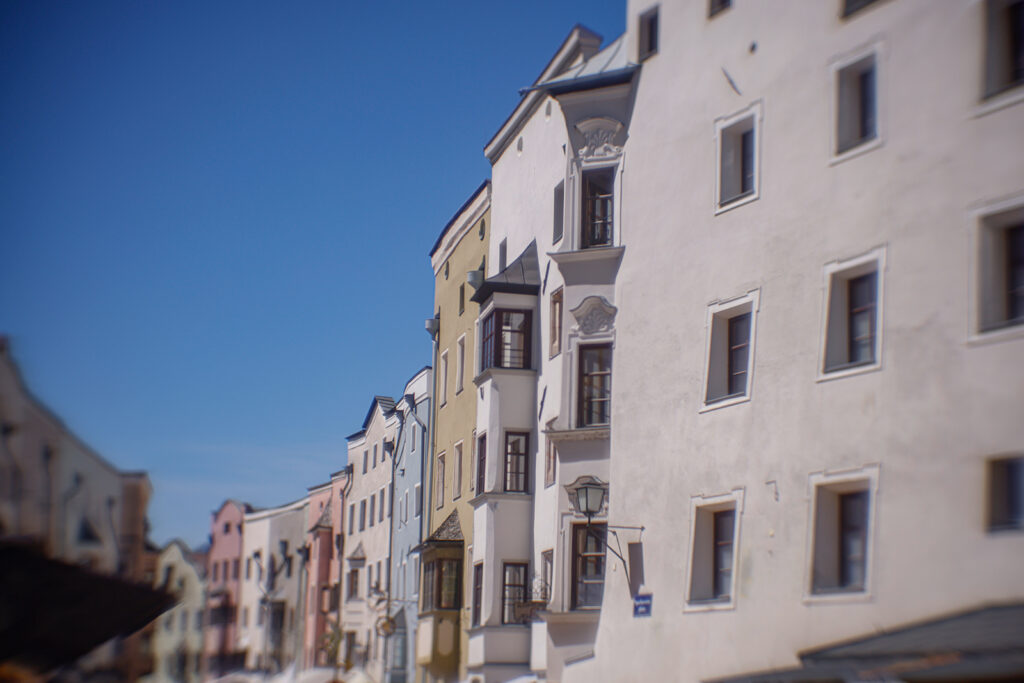



What I particularly enjoy about this lens and similar ones in the 60-70 mm focal length range, is that they provide a nice mix of decent image quality + interesting and often surprising out-of-focus look without the craziness and severe image circle restrictions 50 mm projection lenses sometimes struggle with.




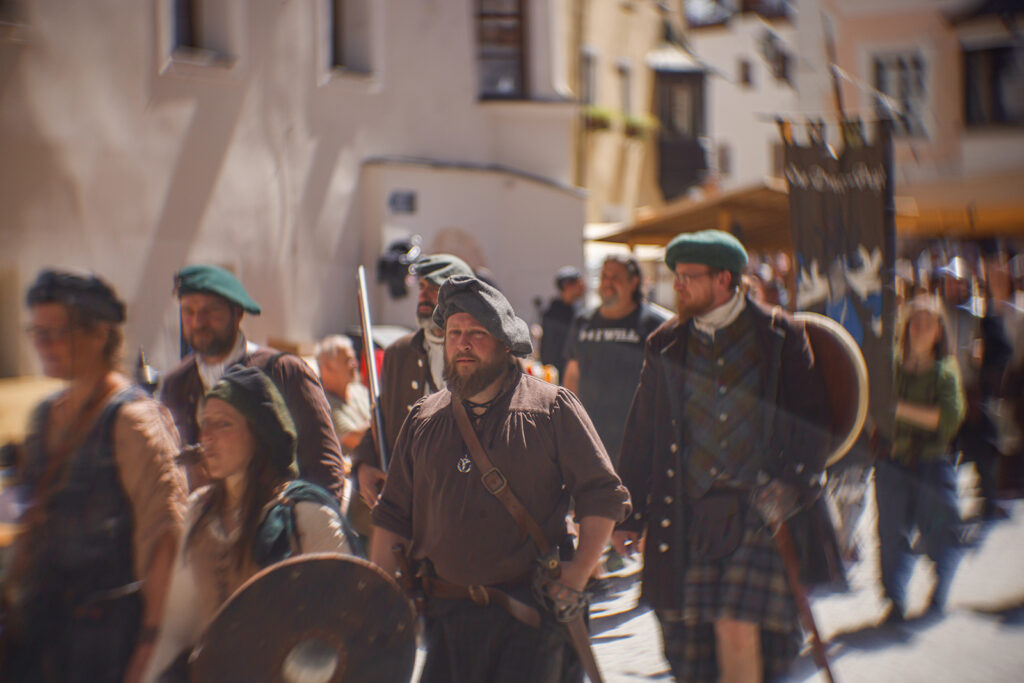
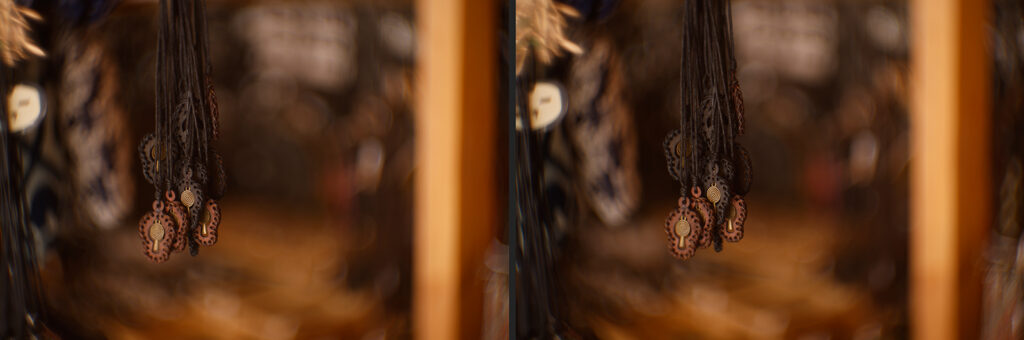
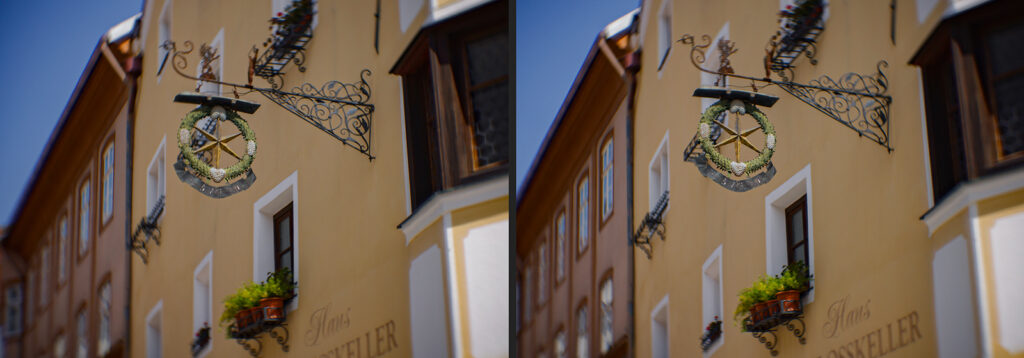
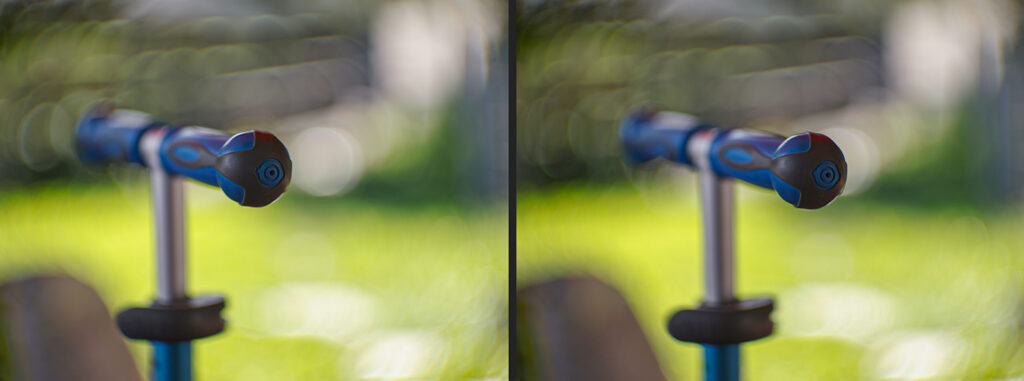
Here are a couple of stereo ( cross view) shots:






Emil Busch Neokino 75/1.8?
Unfortunately barely anything is known about this lens, apart from it being used on some projectors by Cinemeccanica, an Italy-based company from Torino. The aperture is only an estimation and it’s unknown if the 75 mm Neokino lenses for 16 mm and 35 mm are identical. It’s sometimes listed as 7.5 cm as well, so there might be several versions. Whether it used a stepped or straight barrel is also unknown at the moment.
According to H. Naumann it likely exists however and is distinctly different from the 75 mm f/2.2 version, which certainly can’t be considered a superfast lens. It also appears that several German manufacturers offered a 16 mm projection lens with similar specs, namely the ISCO Kiptar 75/1.8, the Seibert Wetzlar Emostar 75/1.6 as well as the Astro Kino IV 75/1.6 and of course the Zeiss Kipronar 70/1.4.
| 35 mm |
The Neokino lenses made for 35 mm projection were likely different from the 16 mm variants, particularly when it comes to the rear diameter. Specifics are almost impossible to find these days.
In the chapter on projection optics within the book Die Bücher des Lichtspiel-Vorführers by H. Naumann, the author describes the different diameter lenses and their possible fields of application as well as limitations:
| Outer lens diameter | Possible application |
| 42.5 mm | With condenser-bow-lamps, for advertisement- and home cinemas. Not usable for mirror-lamps. |
| 52.5 mm | For condenser-bow devices, in rare occasions for glow-lamps; Mirror lamps up to 17 cm mirror diameter; with 25 cm mirror not over 10 cm focal length |
| 62.5 mm | For condenser-lighting with glow-lamps; with mirror lamps up to 25 cm diameter, focal length no longer than 13 cm; with 35 mm diameter mirror lamp no longer than 11 cm focal length. |
| 82.5 (80) mm | Usable in all cases; with 35 mm mirror diameter no longer than 14 cm focal length |
| 104 (100) mm | For everything beyond |
(Translated from German)
Of course this likely presents the state at the time of writing, which in this case was around 1948, because diameters changed over time and particularly 35 mm projection lenses started out significantly smaller early one than they were later.
⌀ 42.5 mm
I’ve not seen any of these lenses, so it’s possible that some were unmarked, had an inscription, which went under the holder/collar in most projectors or were not sold in any significant numbers. Not all specific focal lengths were mentioned in listings, so grey ones are assumed focal lengths. Speeds are estimations as well. Naumann mentions the overall range in that diameter and specifies the diameter as well as the use for 35 mm projection.
Emil Busch Neokino 75/2
Emil Busch Neokino 80/2.2
Emil Busch Neokino 90/2.4
Emil Busch Neokino 100/2.6
Emil Busch Neokino 110/2.8
Emil Busch Neokino 120/3
⌀ 52.5 mm
Emil Busch Neokino 75/2
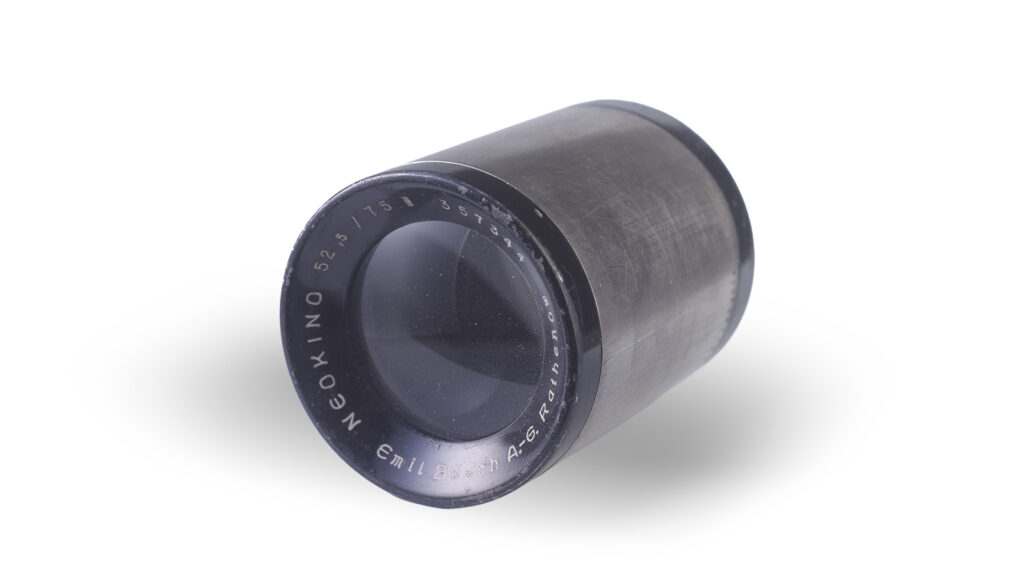
Unlike the same focal length version for 16 mm (see above under Neokino 75/1.8 for 16 mm projection), I now know some more details about this lens. It seems to have been made with a front facing inscription and because of the demand to cover a bigger format, it’s likely not as fast as its 16 mm counterpart.
Image quality is very good however and that even extends to shooting at distance, which I’ve done quite a bit. There’s some vignetting at distance, but it’s insignificant in terms of light loss. The major challenge, but of course equally great opportunity, is the field curvature and resulting good resolution in the center and very poor image quality towards the corners. The lens poses some interesting unique possibilities when used for central subjects at distance.
For some reason the out-of-focus rendering of this lens is a very mixed bag. It can look very pleasant and smooth in some situations:

However it can also get quite busy and distracting in others, partly due to the enormous amount of field curvature:

Like with any other lens most of that has to do with the type of background, the lighting as well as the distance to the subject and background, but my personal impression is, that this lens is particularly affected by this effect. So while it can be used intentionally for good effect, it’s certainly something to take into consideration when trying to adapt this one.
To further illustrate this difference I tried to compare it directly to the later ROW Cinerectar 80 mm f/2 (also a Petzval type) lens:


Left: Emil Busch Neokino 75/2 | Right: ROW Cinerectar 80/2
Besides being visibly warmer color-wise, the Cinerectar shows a significantly smoother out-of-focus rendering even though the two lenses are very close in terms of speed. Even though the field curvature looks similar, the swirling is far more noticeable with the Neokino and thus the corners already start to show the rougher looking trails. The surprisingly high contrast of the older and uncoated Neokino lens further exaggerates this effect.
I personally feel like the rendering of the Neokino is slightly too distracting in some instances and prefer the Cinerectar look, given that it still shows all the noteworthy peculiarities of a Petzval lens. But of course in the end that’s just a preference and for some applications the more distinct look of the Neokino might be a feature.
Another lens which I was immediately reminded of when seeing this dichotomy of smoothness and harshness as well as the similar specs and optical properties, is the Kiptar 70 mm f/1.9, featured in my ISCO Kiptar projection lenses article. Here are two comparisons:


Left: Emil Busch Neokino 75/2 | Right: ISCO Kiptar 70/1.9
There’s some differences between these lenses in terms of rendering and the Kiptar is noticeably sharper overall, but the main takaway for me is that – despite the different use cases (the Neokino lens was likely made and used for 35 mm projection, while the Kiptar is a 16 mm projection lens) these lenses do behave surprisingly similar.


Left: Emil Busch Neokino 75/2 | Right: ISCO Kiptar 70/1.9
Perhaps Emil Busch decided to re-use front groups from smaller formats and just replace the rear groups with bigger diameter lenses for some 35 mm projection lenses… Regardless of the reason, it’s of course a bit of a pity that the lens isn’t faster. It still delivers interesting results though. Here are some sample shots:
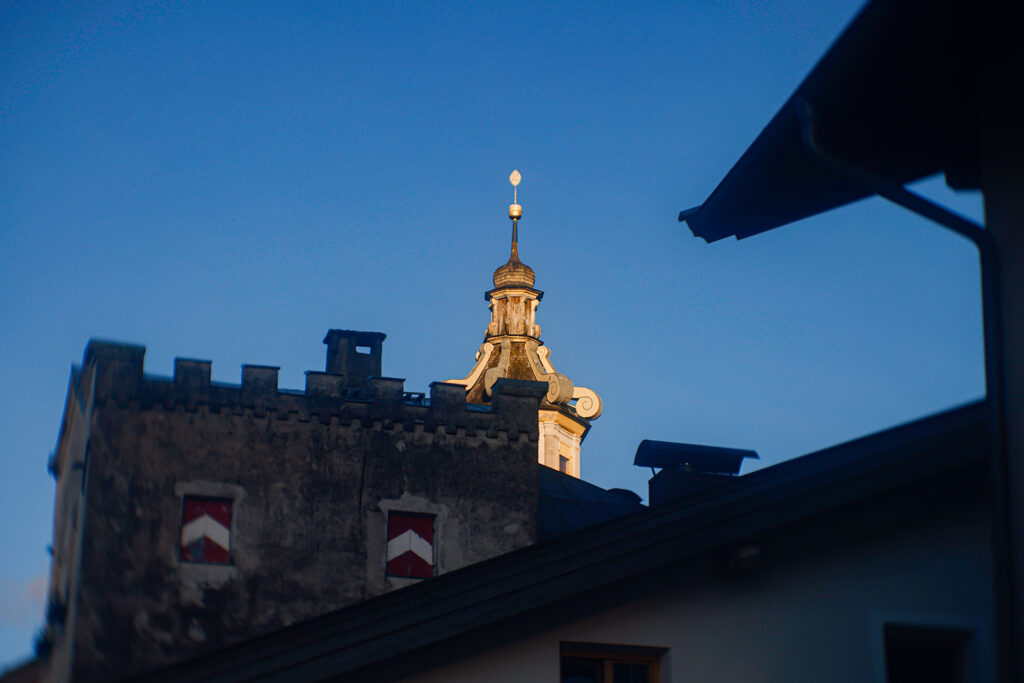
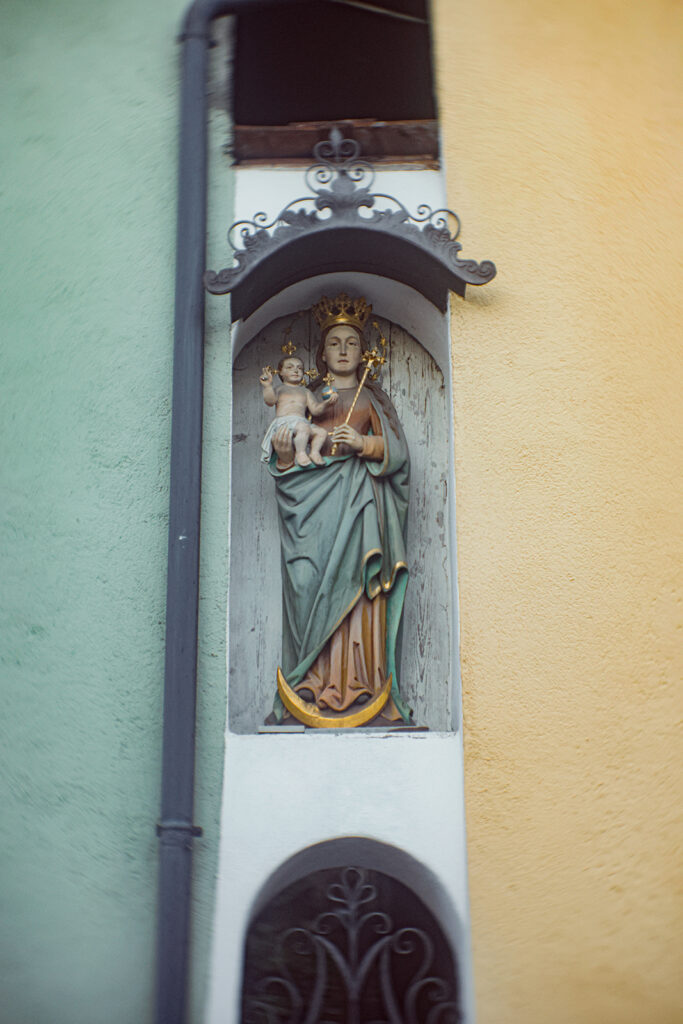
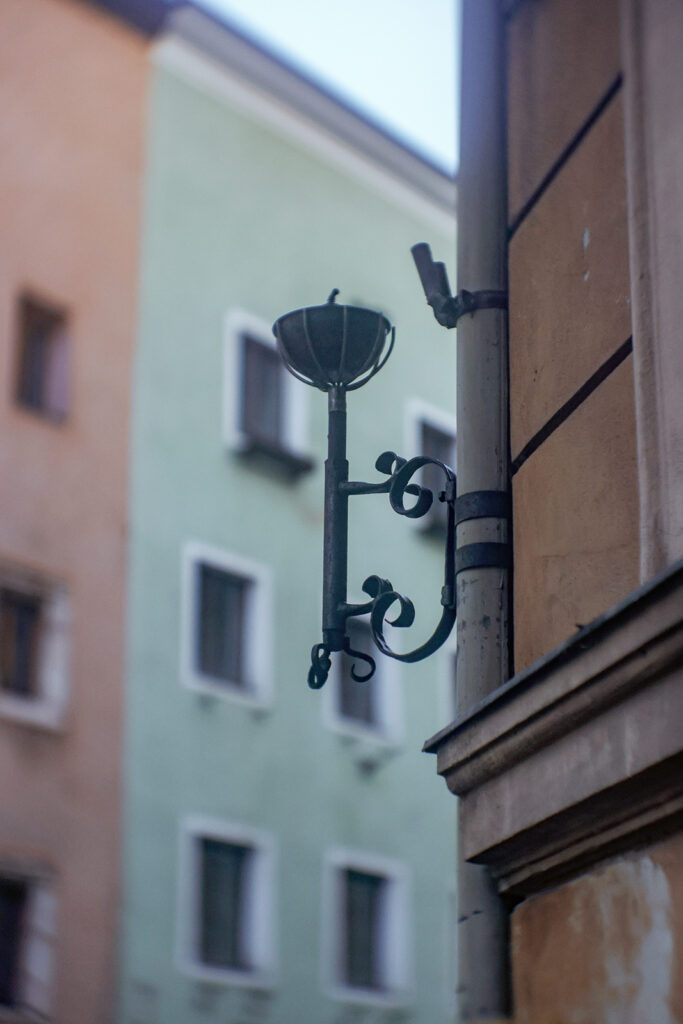



Image quality at distance isn’t too bad for a Petzval projection lens but as usual for the focal length, it’s only decent in the center. I like the results though and feel the slight vignetting is a good fit slightly moody shots.











Here are a couple of stereo ( cross view) shots:
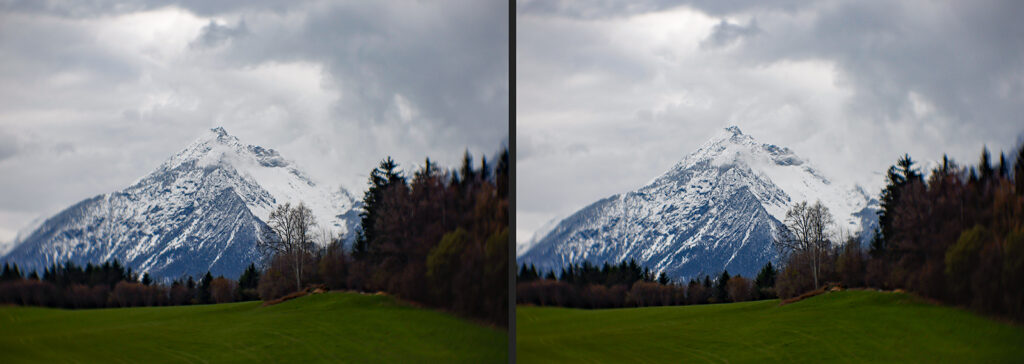
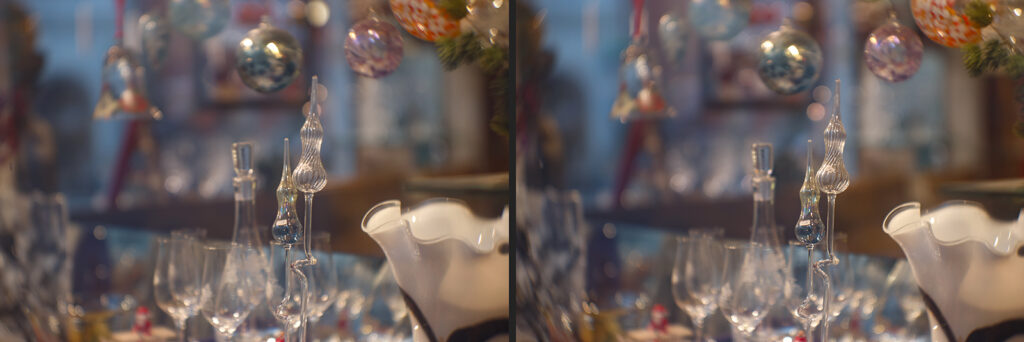
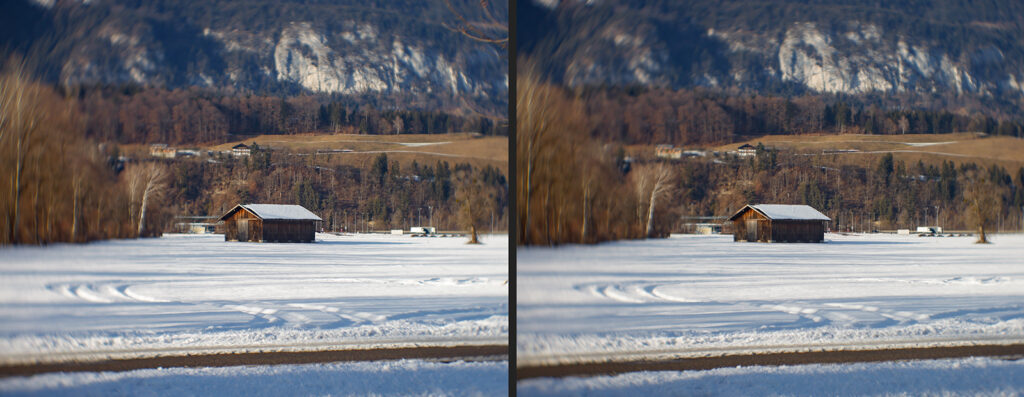
Emil Busch Neokino 80/2
Emil Busch Neokino 85/2
Emil Busch Neokino 95/2
Emil Busch Neokino 100/2
Emil Busch Neokino 105/2.2
Emil Busch Neokino 110/2.5
User Jas Man on flickr shows a handful of convincing sample shots in this album. Just like with my slightly longer sample of an early 52.5 mm diameter Neokino lens below, I feel like it shows an almost ideal balance between reasonable image quality and still beautifully smooth and pleasant rendering, so while it may not be among the fastest lenses of its kind, it certainly can be an ideal entry point into the world of adapted Petzval lenses.
Emil Busch Neokino 120/2.6
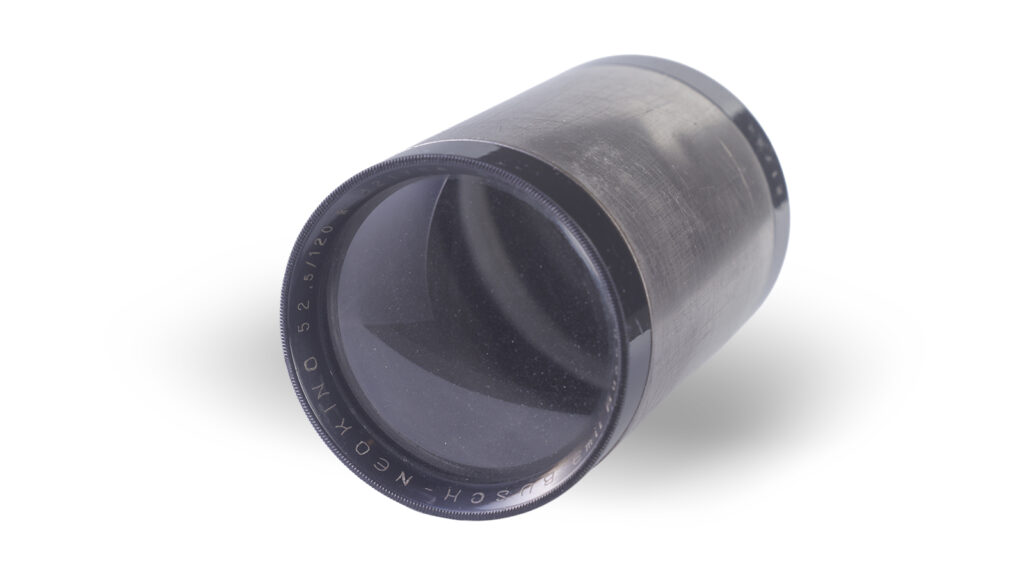
For me personally, this was the lens that started it all as far as Emil Busch projection lenses are concerned. It’s not an exceptional lens in terms of specs and likely the 52.5 mm series was the budget-conscious continuation of the earlier Mod. Kino series. In addition to not being an exceptionally fast lens at f/2.6, it also shows some amount of color fringing, even in situations which can’t be categorized as outstandingly demanding.
I’m convinced however that these flaws actually contribute to the wonderfully smooth rendering of the lens and are a main reason for the soft and pleasant transitions it shows in many instances. It clearly is visible improvement over the Mod. Kino in terms of sharpness and detail captured and also when it comes to smooth rendering, which most people likely prefer. My particular sample is labeled ‘Busch-Neokino’ on the inclined front bezel, so it is among the earlier ones.
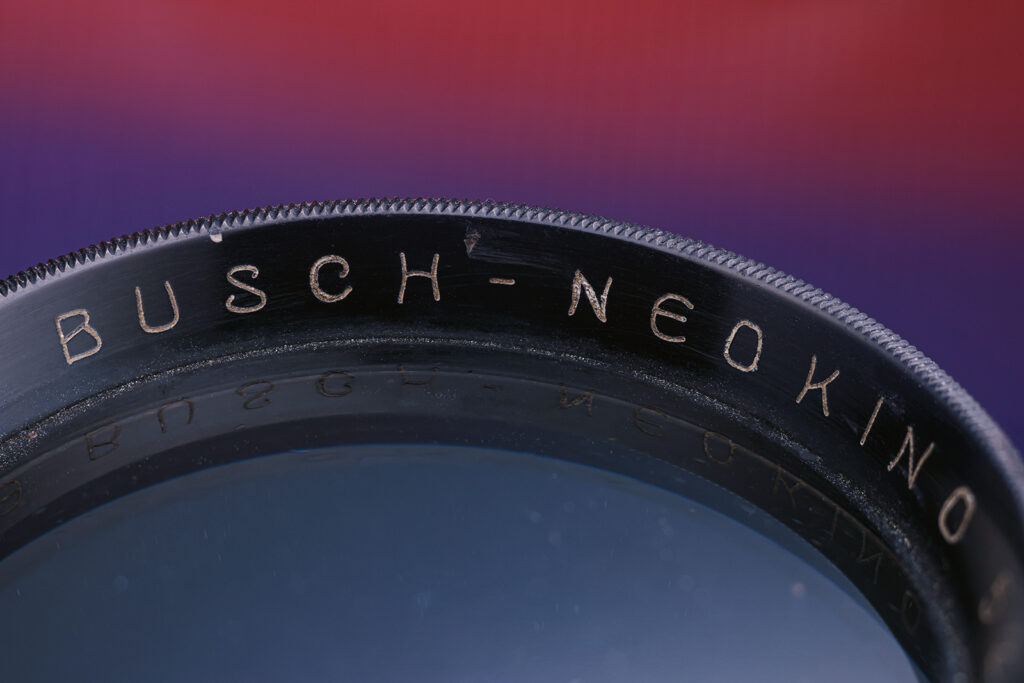
Lenses like this one are an interesting bridge between original Petzval calculations and the later re-calculated and maxed out variants. With their more modest specs the 52.5 mm variants in particular often give a nice mix of sharpness, definition and blur, the faster variants occasionally fail to achieve.
Here’s a quick comparison with the older Mod Kino 90/2:


Left: Emil Busch Neokino 120/2.6 | Right: Emil Busch Mod Kino 90/2
The contrast is significantly lower in the Mod Kino image and it’s also colder in terms of color temperature. Given its estimated aperture of f/2 – compared to the Neokino’s f/2.6 – it’s not surprising that there’s more blur in the Mod Kino shot. But the superior sharpness, definition and contrast of the Neokino give significantly more pop/subject separation.
Here’s another comparison with the ROW Cinerectim 120/2.1, another Petzval-based lens the company produced several decades later:

Left: Emil Busch Neokino 120/2.6 | Right: ROW Cinerectim 120/2.1
Results are significantly closer here and given the increased speed of the Cinerectim it’s safe to assume that it’s the overall superior lens, but the old Neokino lens holds up surprisingly well.













These lenses are usually inexpensive when they appear, so if you find one for a decent price or already own one, give it a try – it may surprise you in a positive way.
Here are a couple of stereo ( cross view) shots:







When I first attached this lens onto my system the resulting images were not only extremely low in contrast but also plagued by a severe glow and lack of sharpness. After a quick inspection of the lens I suspected that the rear element must have been reversed accidentally during cleaning. While this was the first time I encountered a Petzval lens like that, let me tell you it’s significantly more common than you might think. So if you ever get a Petzval lens which shows a suspiciously convex outer surface – particularly if its center extends beyond the rear of the barrel, make sure to double check the lens arrangement. While there are different Petzval designs (the older meyer Kinon variants come to mind) they’re absolutely the exception and almost never show similarly extremes as reversed elements.
Anyway: Experimentation is part of the fun, so while I reversed the element relatively quickly I find it interesting and worthwhile to show how different the results can look with such a modification:


And here’s a crazy stereo (cross view) shot, taken with that configuration:

Neokino 140/2.8
Neokino 130/2.7
Neokino 150/3
⌀ 54/71 mm (stepped)
Neokino 140/2.2
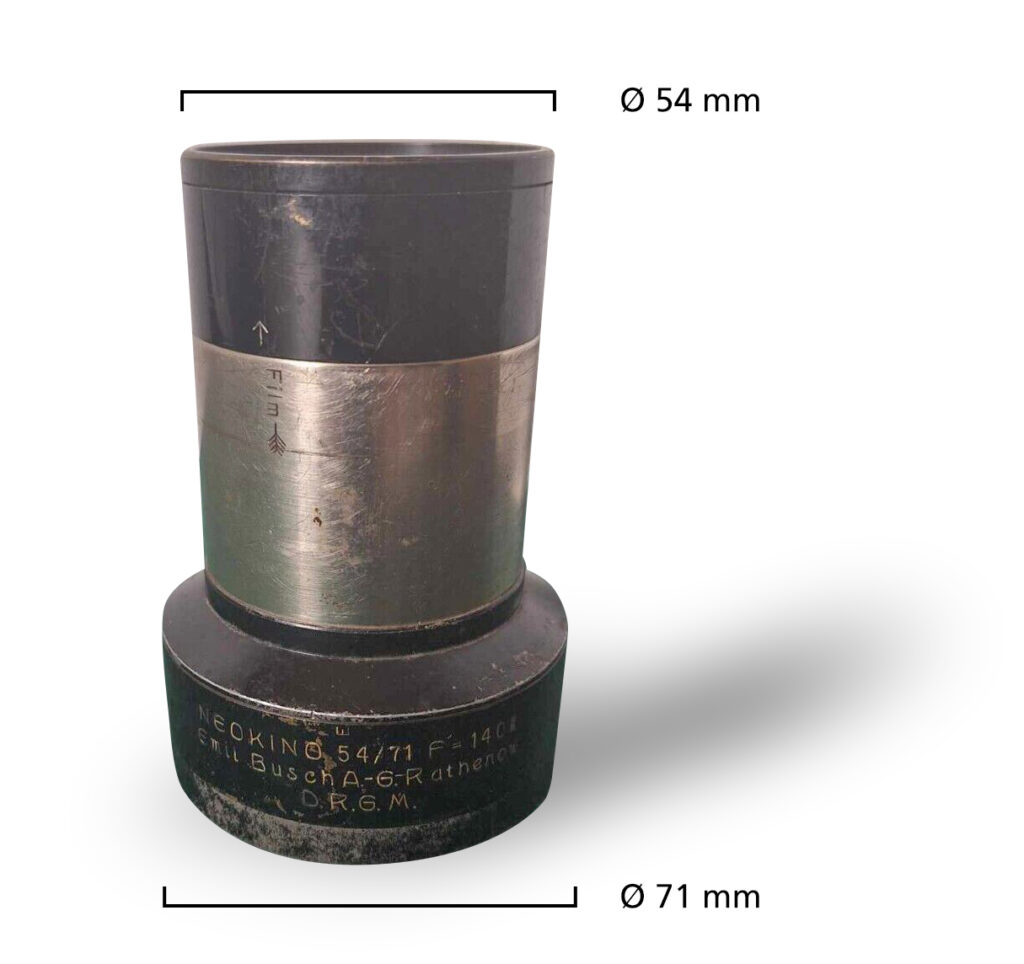
So far, this has been the only lens with a mounting diameter of 54 mm. While that makes it stand out among the Neokino series, that diameter is more common with US-made lenses – one of which I’ve shown an mentioned in the Projection Optics Story on deltalenses. It’s possible that it was made for use on a specific US-made projector or some other application where that diameter is used regularly. The inscriptions don’t give any indication however, as focal length is not marked in inches etc.
As if this weirdly specs aren’t enough on its own, there’s also an ad from 1933 which further complicates things:
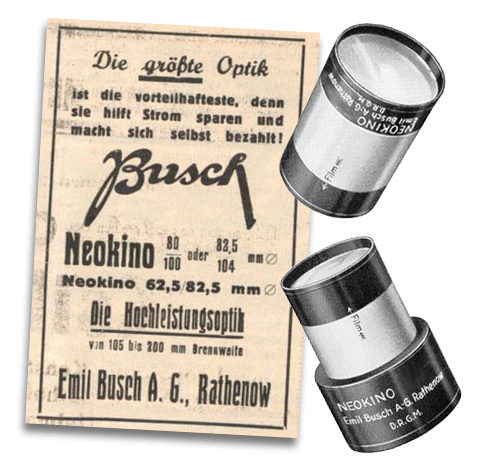
In this ad three diameters are mentioned, 80/100mm, 82.5/104mm and finally 62.5/82.5mm. That’s quite a lot of different measures (the standard high-speed diameter of Busch lenses is usually 82.5 and 105mm). It may have to do with DIN-norms or sizes of projectors, because there are mentions of 100 mm being a standard diameter in some books on projection.
While other lens series like the Kinostar by Zeiss Ikon or Cinestar by Benoist Berthiot have been observed as stepped variants with 52.5/62.5mm diameters, no Neokino lens like that has surfaced so far.
⌀ 62.5 mm
Emil Busch Neokino 80/1.8
Paul de Roode on flickr shared a number of shots taken with this lens. It’s significantly faster than the 85 mm variant and also compared to later Cinerectar/Cinerectim lenses.
Emil Busch Neokino 80/2
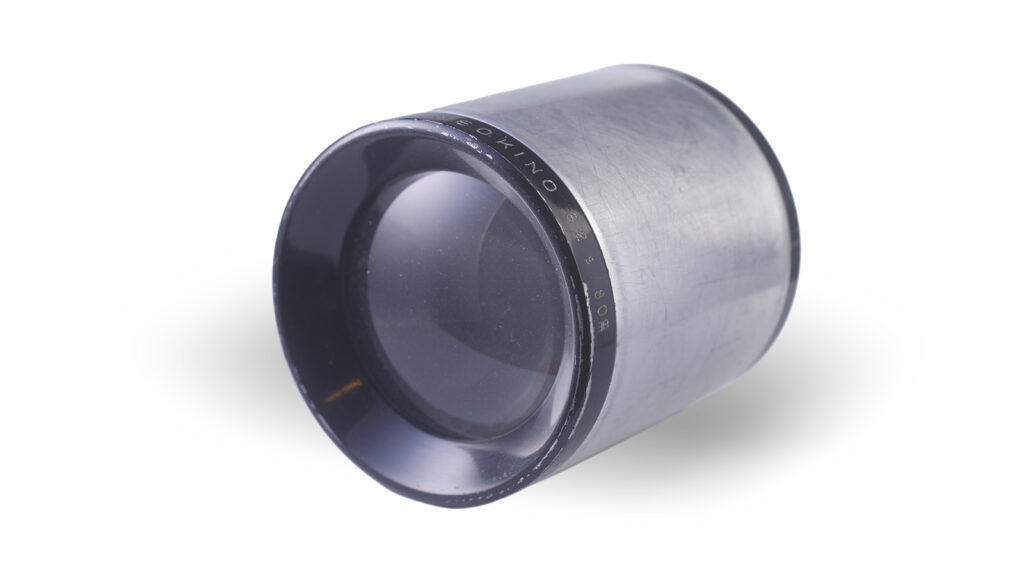
While is may be surprising to see that Emil Busch offered two 80 mm Neokino lenses with the same diameters but different speed, it’s not that weird, considering that ISCO seems to have sold their Super-Kiptar series in two different speeds as well almost from the get-go.
In the case of these lenses a later revision or a model made for a particular projector seems like the more likely explanation.
This 80 mm variant already looks surprisingly similar to the later Cinerectar and Cinerectim lenses from the outside, however it is still different in terms of rendering. Here are some samples:


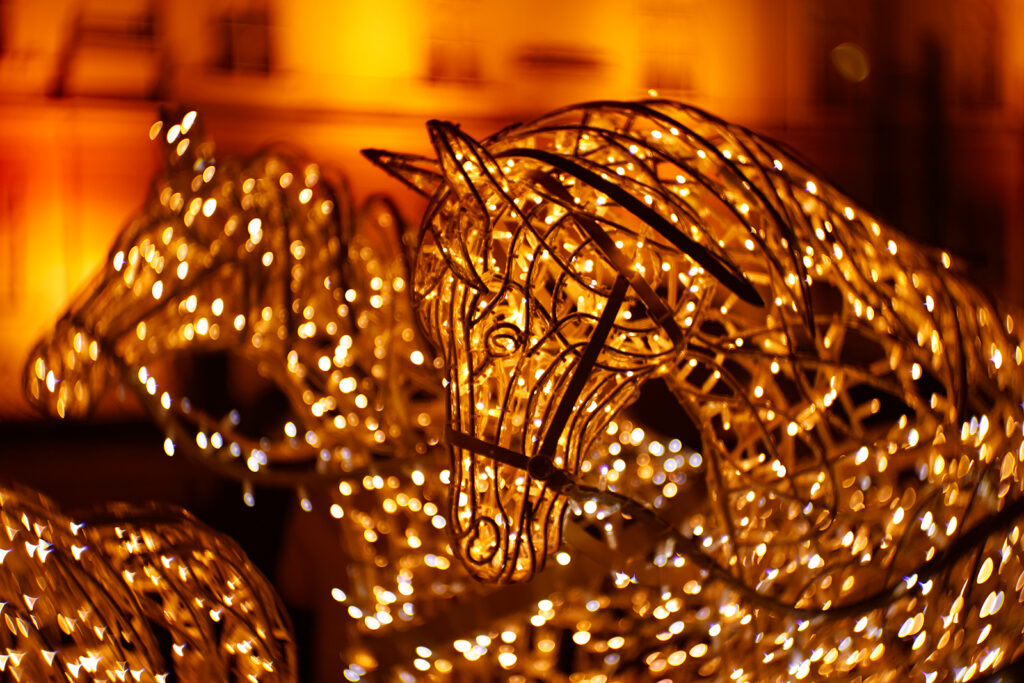
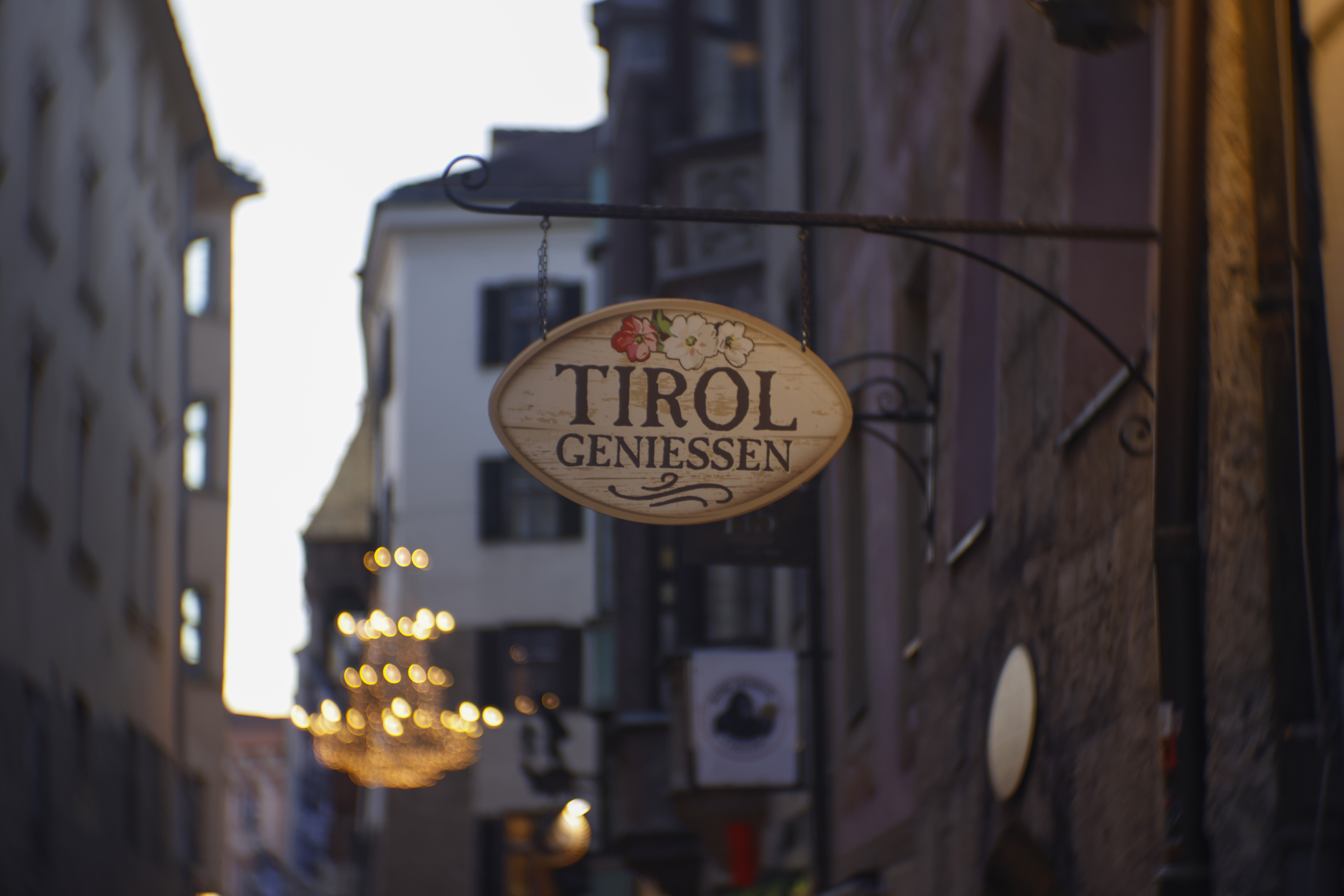
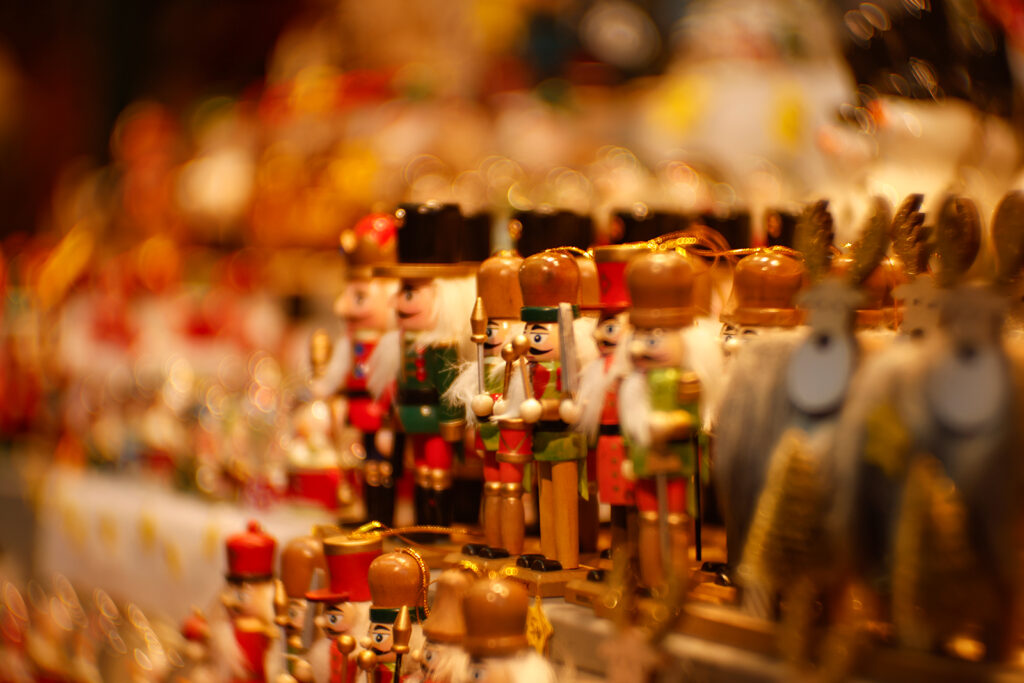

The sharpness is so-so with this one, but the overall look is nice and slightly smoother than the 75 mm (52.5 mm diameter) variant, shown above. The swirl is still quite noticable and bokeh highlights show some signs of spherical abberations. Bokeh highlights tend to bubble and separate a lot more, compared to the significantly smoother look of the later ROW Cinerectar/Cinerectim.


And finally, here are two stereo ( cross view) shots:


Emil Busch Neokino 85/2.1
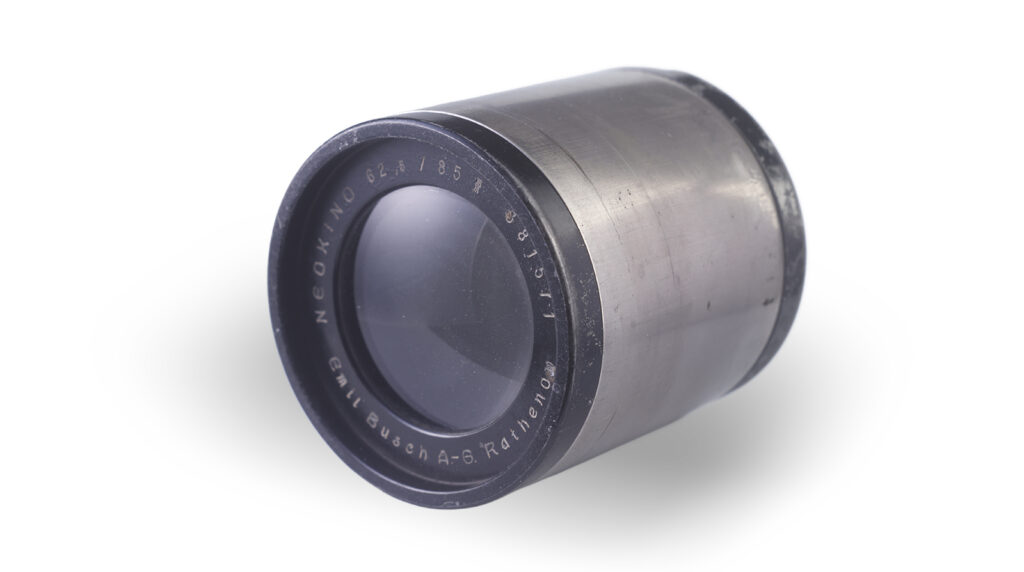
It’s interesting to see that the 85 mm focal length Neokino is slower than the 80 as well as the 90 and 100 – 115 mm variants. One possible explanation might be that these lenses used the same glass elements as their slower 52.5 mm diameter counterparts. If so, the flat fascia might be a good indicator to look out for. The one with the slanted front ring might be slightly faster and the fastest ones seem to have the inscription on the outside of the front ring.







I think the rendering of this lens is very pleasing and smooth. A couple of the shots with more experimental/crazier look were taken with the lens reversed, which was really fun to try as well with this one. In a way the results remind me a little bit of 52.5 mm diameter Meyer Kinon lenses… Fellow lens experimenter Alin Leanca from Romania has written about a couple of different and highly interesting projection lenses including one of those longer Kinon lenses here. Make sure to check it out since it features some great shots. You can find more of those on the dpreview adapter lens forum as well.











As usual, a couple of stereo ( cross view) shots on top:



Emil Busch Neokino 90/1.8
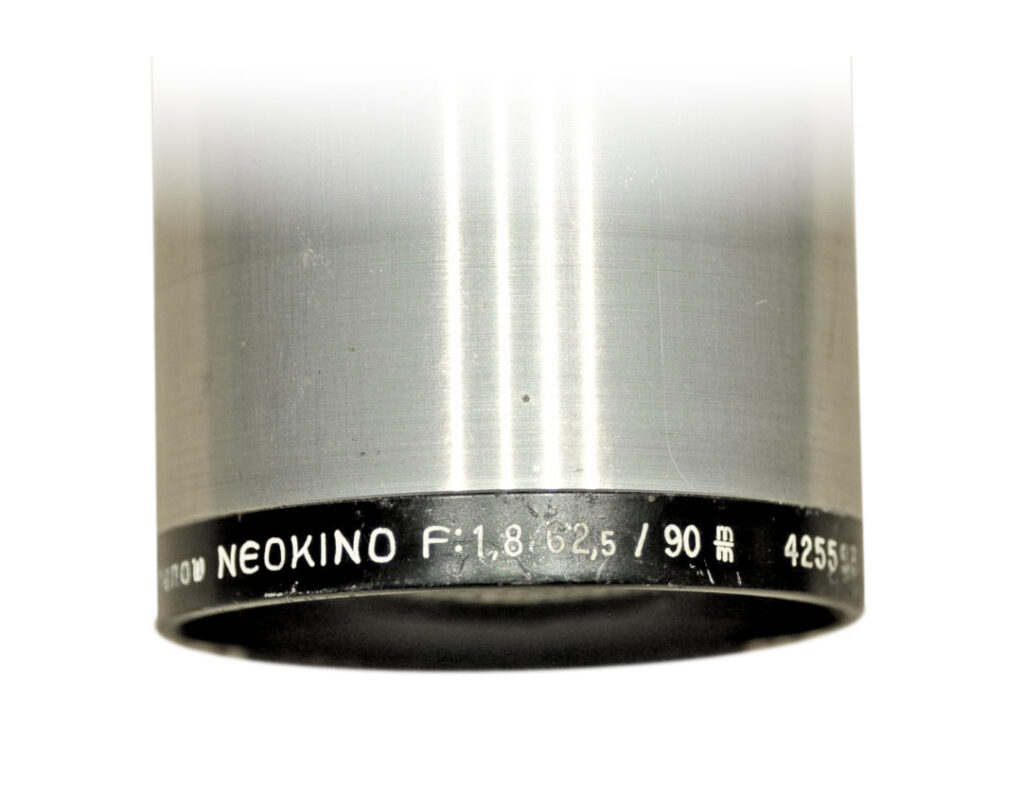
Flickr user Leo Roos took some great shots with this one. So far, it’s the only Neokino (for 35 mm projection) which has its aperture value marked on the barrel. It seems likely however that this was done to all the latest lenses. Their rarity might be explained with the situation in Germany during the last years of WWII however.
Emil Busch Neokino 100/1.8
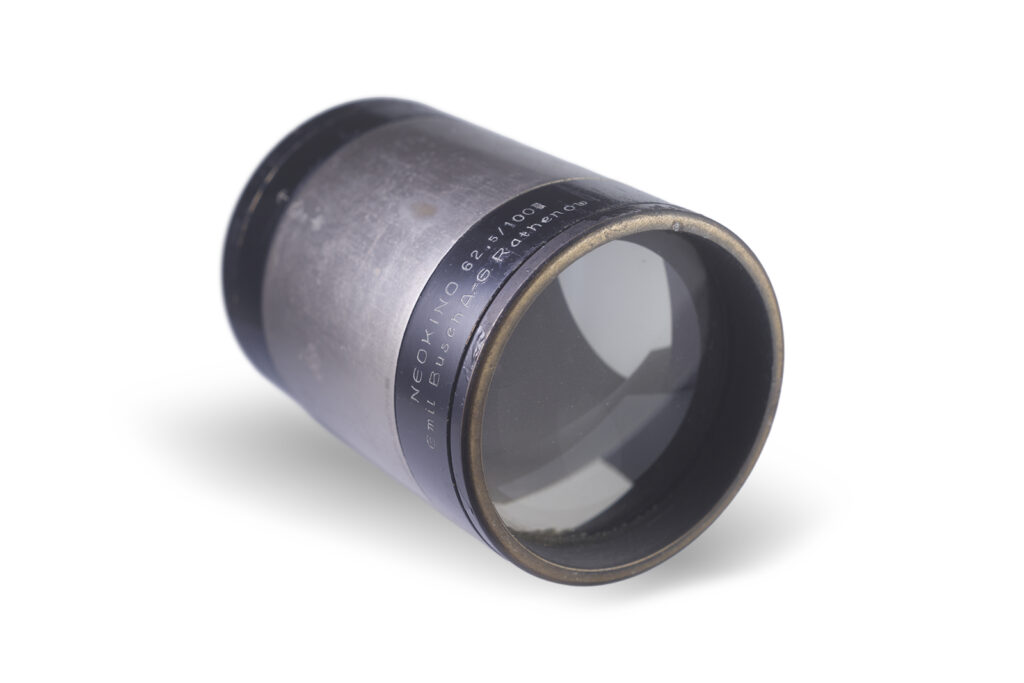
Given how old and clearly worn this lens looked, I wasn’t expecting too much. It certainly surprised me in a positive way however.





As you can see, sharpness is still what I would consider decent up close and the slight glow and overall quite fast speed, make this an interesting lens for people who like to have a more nuanced variant of Petzval, unlike the shorter extremely swirly ones.





Here are two stereo ( cross view) shots:


The following shots were taken with another Neokino 100 mm lens, which I modified… I think the glass elements might have been from a later ROW Neokino 100 mm lens, so they are of course not 100% representative of the older Emil Busch variant. I feel like image quality is noticably better.



And some stereo ( cross view) shots:


Emil Busch Neokino 105/1.8
Emil Busch Neokino 110/1.9
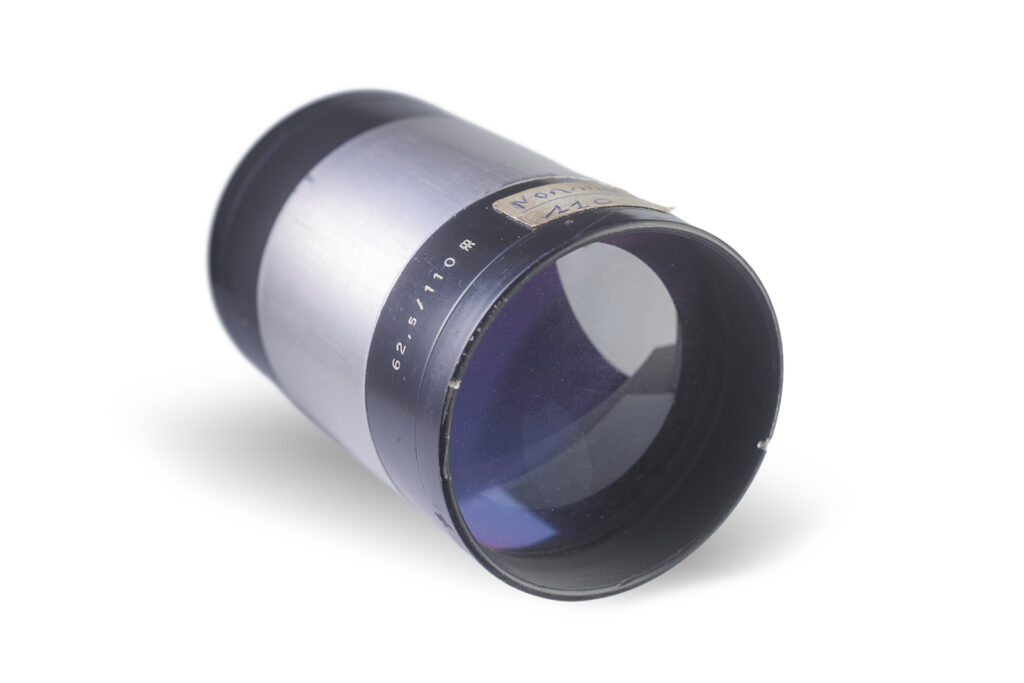
Given the amount of Neokino lenses already in my possession at that point, I wouldn’t have had any interest in this lens if it hadn’t been for two little details I spotted:
Firstly, this lens didn’t have any Neokino or Emil Busch inscription and was merely able to identify it as such, due to the typical look. There are of course numerous possible explanations for the lack of inscriptions. With the high serial number in mind, one might have been an intend to export it to a country which was at war with the German empire at the time or an intention to use it as property of the military, thus not wanting to risk mentioning manufacturers or their location. Finally it might also have been a partly finished lens, which was taken away by the USSR army after the end of WWII and the parts assembled there later on.

Secondly the lens seems to feature a sophisticated type of single coating for its time, particularly for the date its serial number would point towards in terms of construction (1940s). This could also be explained by the last theory regarding the lack of inscription above. Coating applied in USSR territories was distinctly different from earlier German types.


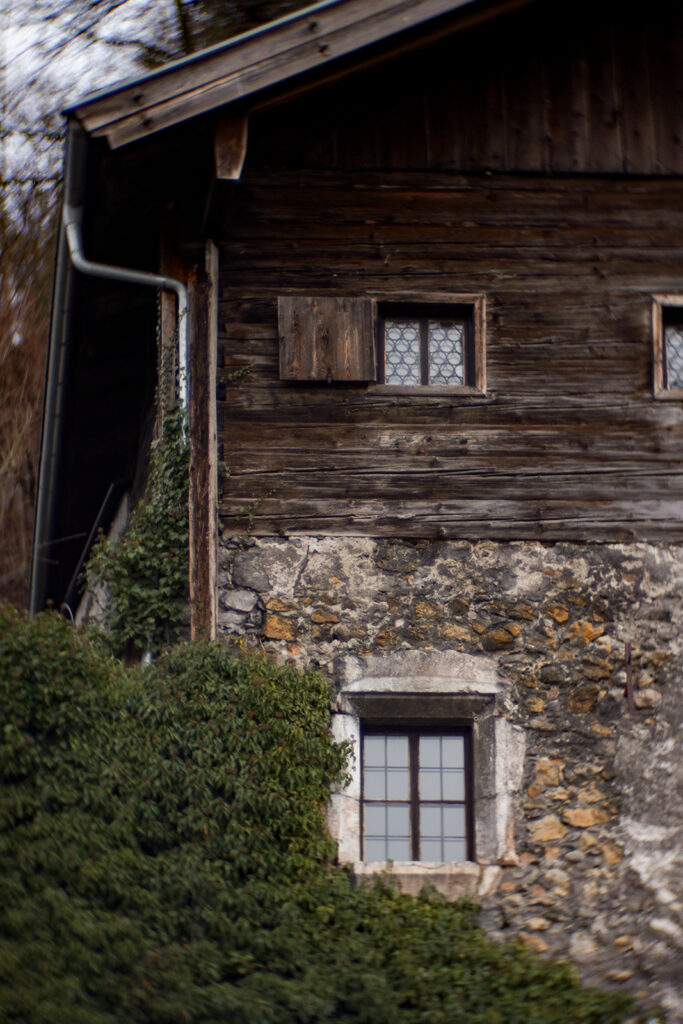


And a stereo ( cross view) capture:
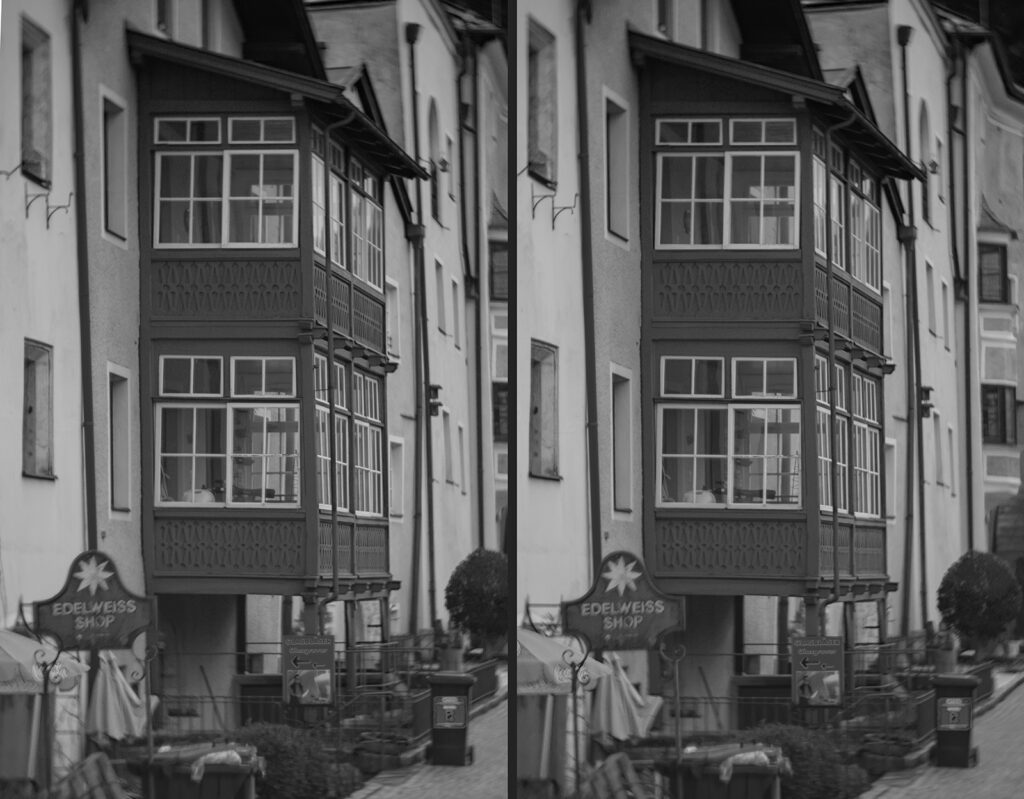
Emil Busch Neokino 115/1.9
Emil Busch Neokino 120/2
Here’s a couple of very interesting and unique looking shots from flickr user altglas, who used the great capabilities of these simple lenses for experimentation and reversed one element, which gives a completely different and crazier rendering.
Reversing elements is usually easy with Petzval designs, due to the simplicity in the design as good accessibility in many cases. However it’s important to be cautious and either change it back after experimenting or making sure non of the glass elements stands out beyond the end of the barrel. Horrible central scratches are quite common in these lenses and they often stem from incorrectly re-assembled lenses.
Emil Busch Neokino 127/2.2
Emil Busch Neokino 130/2.2
Emil Busch Neokino 135/2.3
Emil Busch Neokino 140/2.4
Emil Busch Neokino 150/2.6
Emil Busch Neokino 160/2.8
Emil Busch Neokino 180/3
Emil Busch Neokino 185/3
⌀ 62.5/82.5 mm (stepped)
Emil Busch Neokino 105/1.5
Emil Busch Neokino 110/1.5
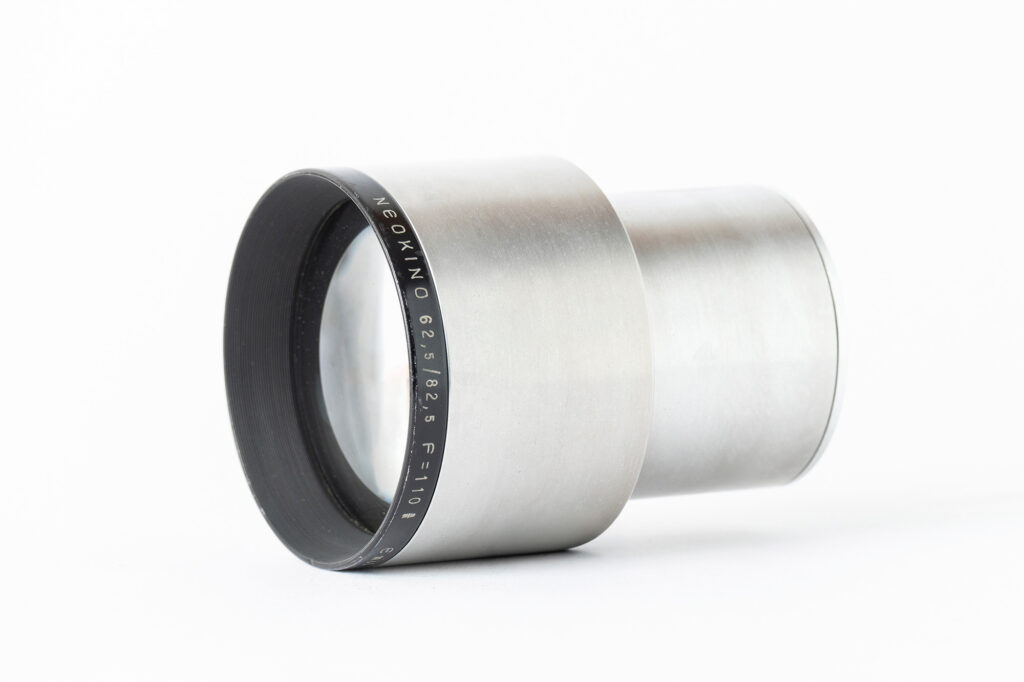
Sven Rahm, a photographer and old-lens afficionado from Germany, is someone whom I’ve been in regular contact with, because we have a shared interest in similar kinds of lenses and for me it’s always very interesting to hear the thoughts and impressions of fellow lens-experimenters. So here’s a couple of impressions about his experience with this lens.
“The 62.5/82.5cm Neokino is a rare specimen, which I greatly appreciate. It features a typical Neokino Petzval design. Thanks to its prominent f/1.6 front element, the aperture was remarkably fast for a cinema projection lens of its time.
The results justify this, albeit at the expense of contrast (single coating, bright/large front element). Even with a lens hood, the images appear low-contrast
(Translated from German)
It can even perform well at infinity if the focus is precise. However, in close-up shots, this isn’t always perfectly achieved due to aberrations.
Backlighting is problematic, as the contrast plummets. 🙂
Apart from the aperture, there are no major surprises. One could say it’s a classic 62.5mm Neokino on steroids with its typical field curvature and coma, etc. From a collector’s perspective, this lens is exceptional, especially in its condition.“
I fully agree! That’s indeed a special lens and the results are something you can’t achieve with many lenses. It might not be an alternative for a modern superfast taking lens in terms of sharpness wide open, but for someone who enjoys playing around with vintage lenses and experimental looks, this seems like an exceptionally potent lens.
See for yourself, because Sven was kind enough to share a couple of beautiful sample shots:


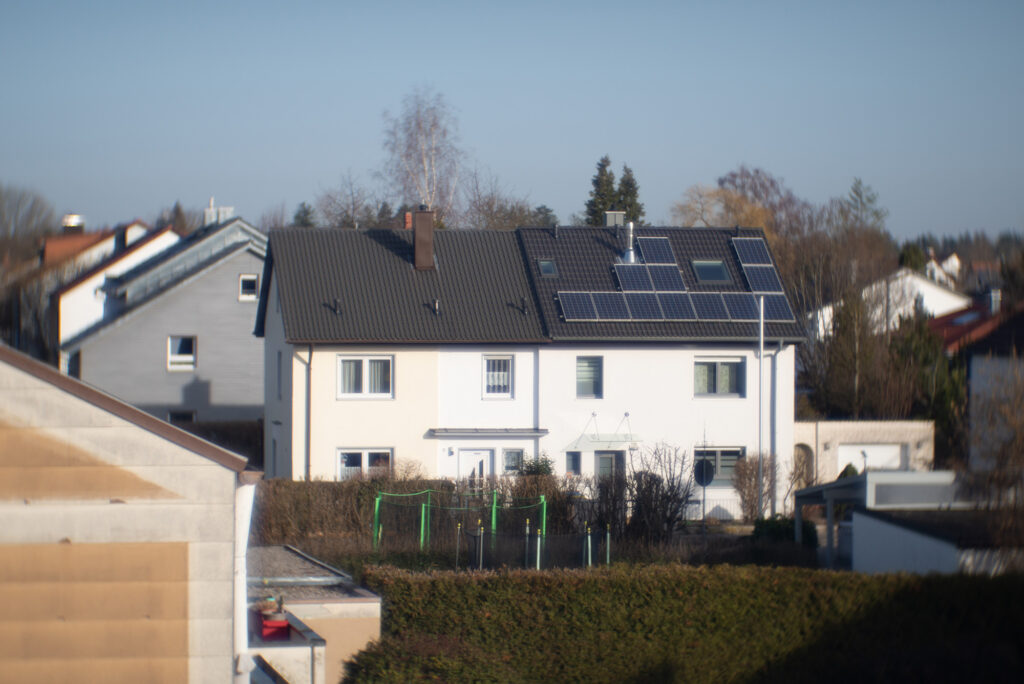


Emil Busch Neokino 125/1.6
Emil Busch Neokino 130/1.7
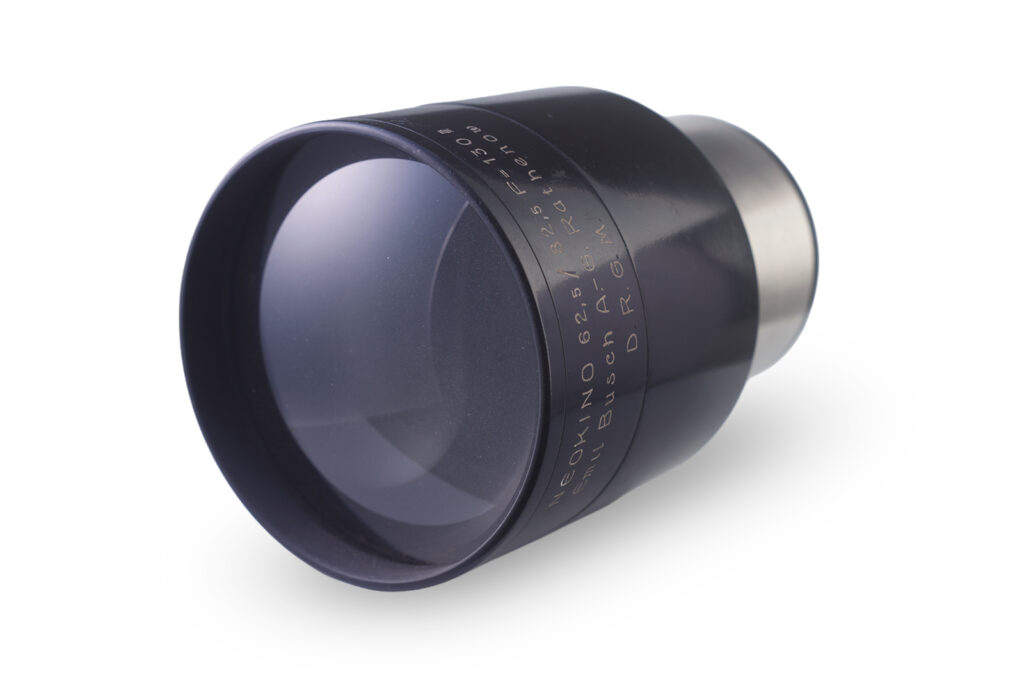
To say that these early superfast Neokino lenses do have flaws, certainly is an understatement, when you look at the images produced by this sample… They’re far from sharp and even in the center they won’t be anywhere close to later superfast projection lenses. Outside of the center things get quite weird and busy, mainly due to some optical flaws the manufacturer was willing to put up with in exchange for that incredible light throughput. I personally feel like it’s also part of its charm and offers unique possibilities for photographers who like to experiment, but it certainly is a challenging lens to use.
Here are some results to form your own impression:














The painterly qualities, created by the enormous light gathering abilities in combination with the lacking correction and sharpness, enable experimenters to take very dreamy and unique looking shots in my opinion. It’s a lens I’m still not close to controlling fully, but I like to try and see what it does from time to time.



Because its longer focal length does limit its abilities in certain situations, I decided to also use that lens for some ‘bokeh-panorama’ stills, where multiple images are combined into one, which provides a slightly similar result than shooting on a significantly bigger (in this case medium format) sensor:


And a number of stereo ( cross view) shots as well:

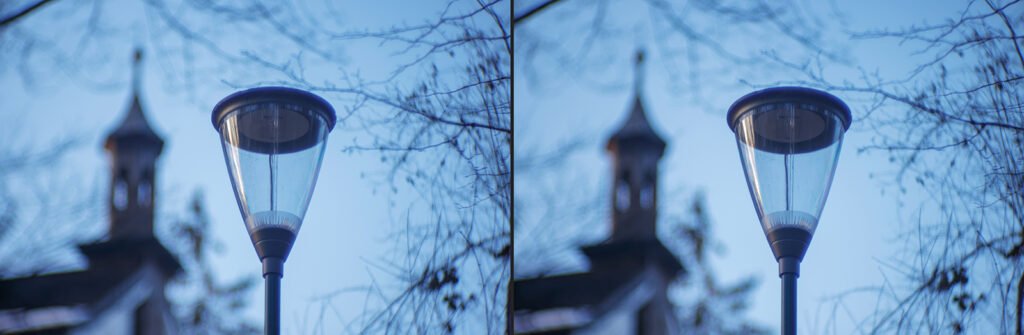



Emil Busch Neokino 135/1.7
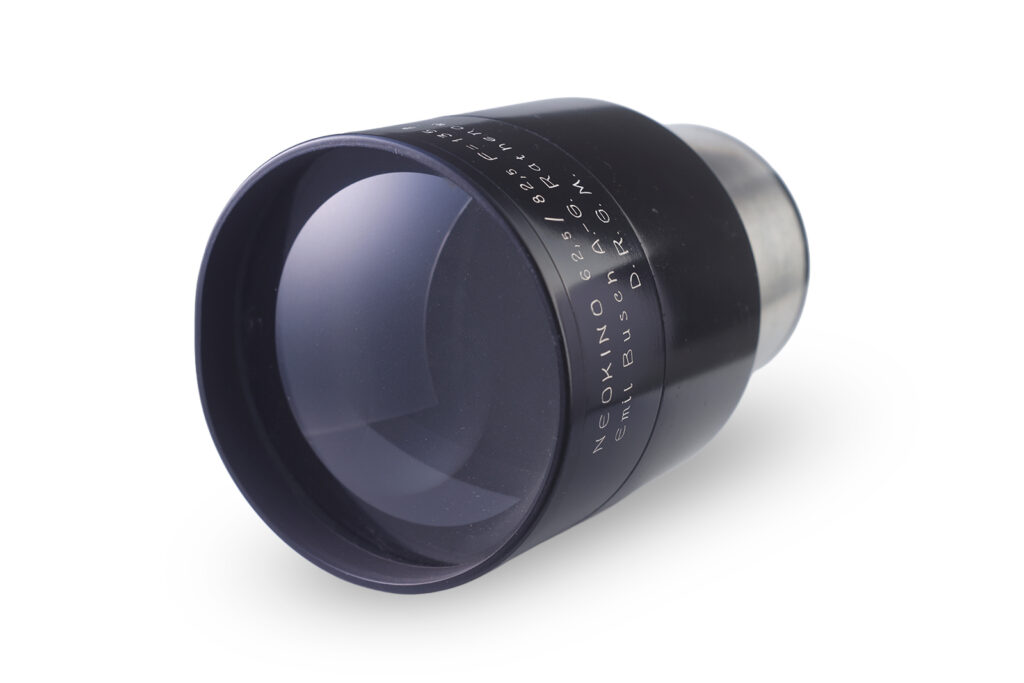

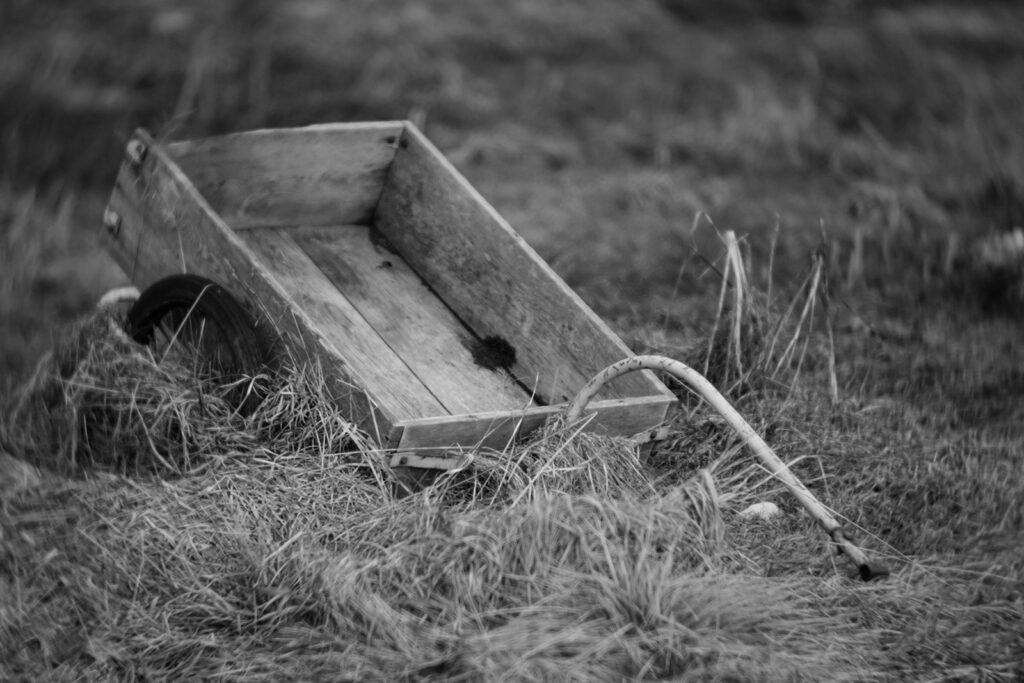






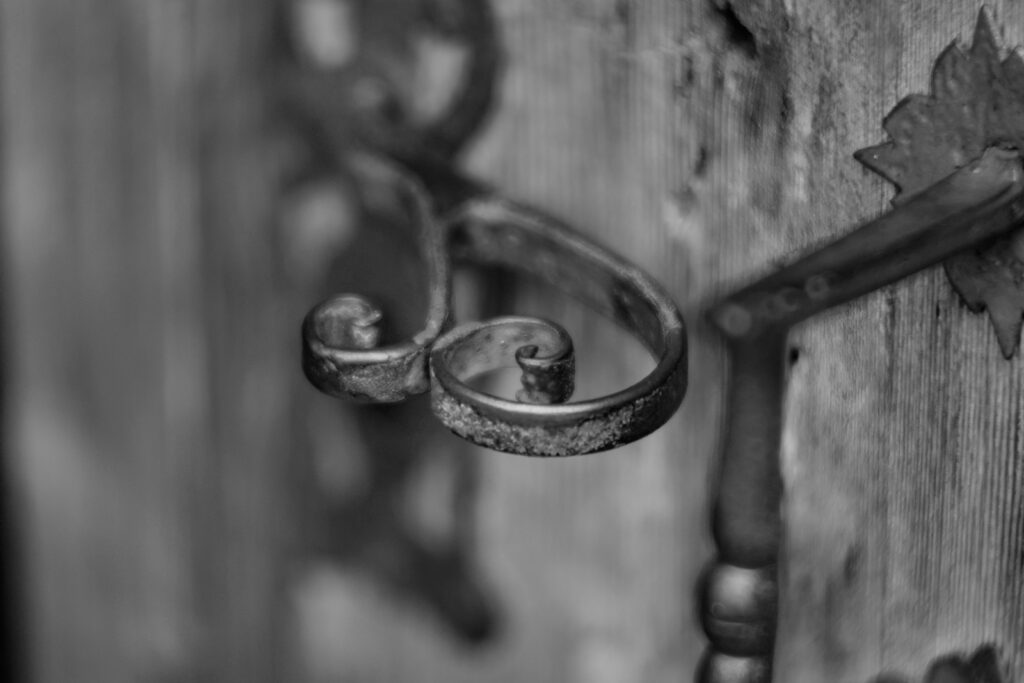
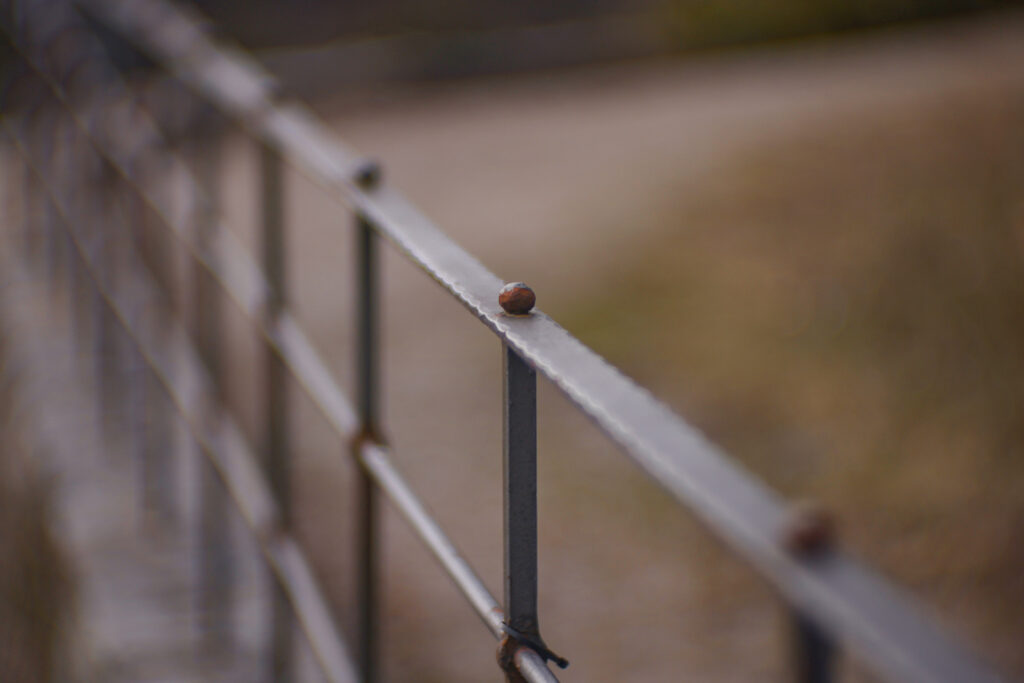



A couple of stereo ( cross view) shots:
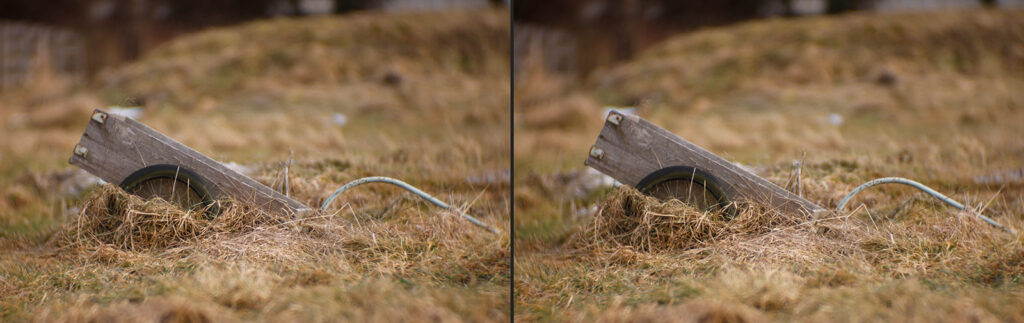
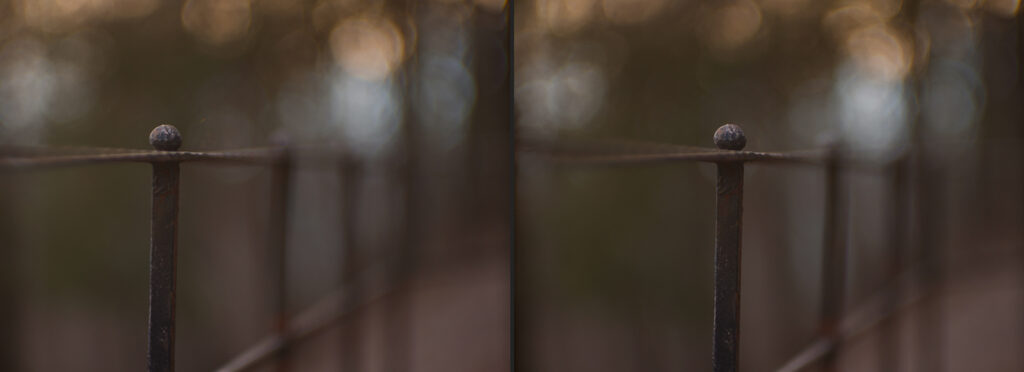
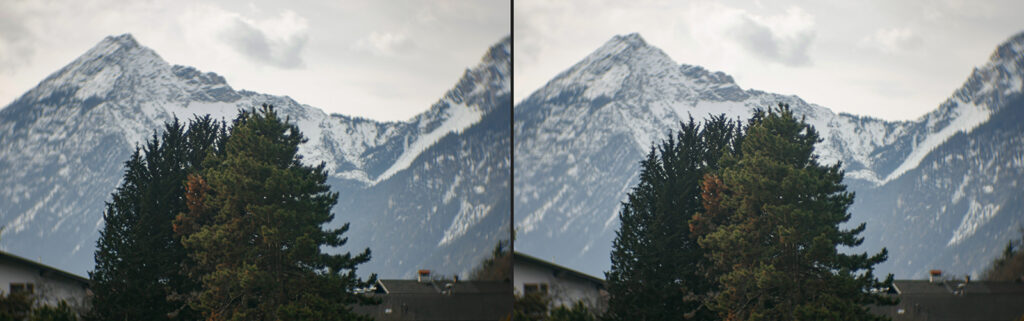

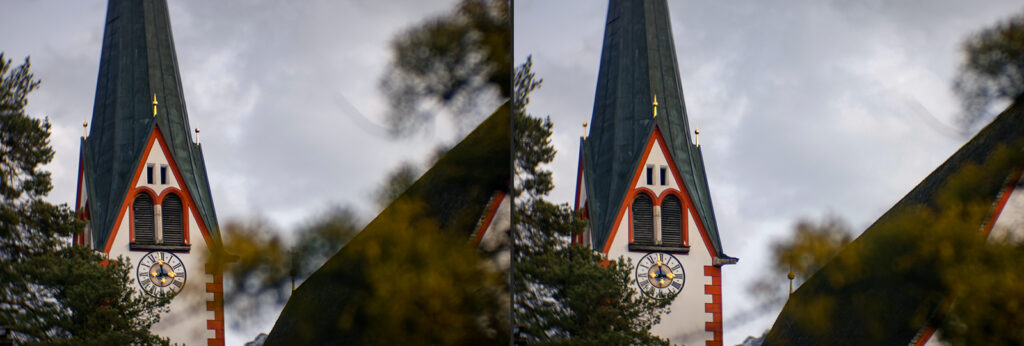
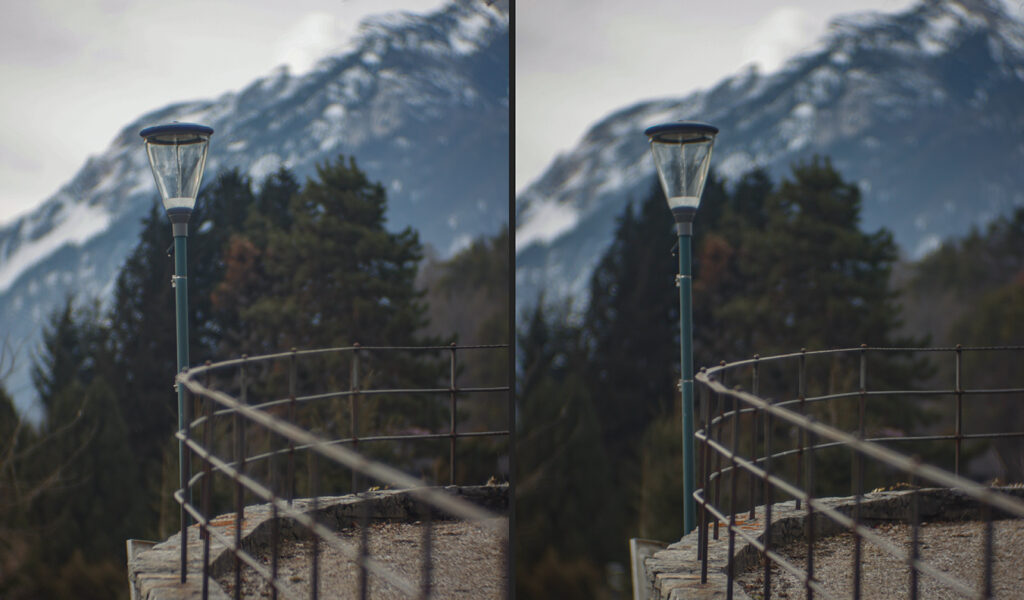
Emil Busch Neokino 140/1.8
Emil Busch Neokino 170/1.9
⌀ 82.5 mm
Emil Busch Neokino 110/1.5
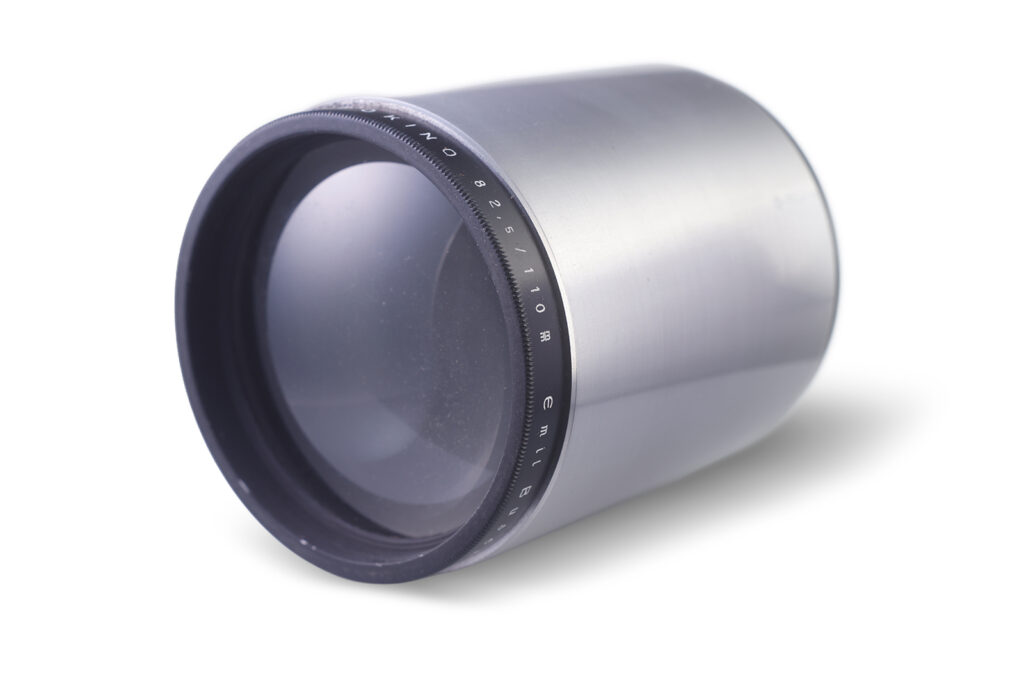
This lens clearly feels more modern than the (black front and silver rear) stepped variants I’ve tried. And according to the ads and announcements in magazines of the time, it actually looks like there was a significant upgrade of the superfast Neokino lenses at some point.
The major downside of the non-stepped barrels is that it’s significantly harder to adapt these lenses compared to the stepped ones with a smaller rear diameter.
That may be a hindrance, if you have the – admittedly very reasonable – intention of using a lens like that for portraits at distance. It didn’t limit my own experiments too much though, since I often say within the close-up range anyway, and so I got at least a couple of sample shots to show how this lens interprets the world in front of it:


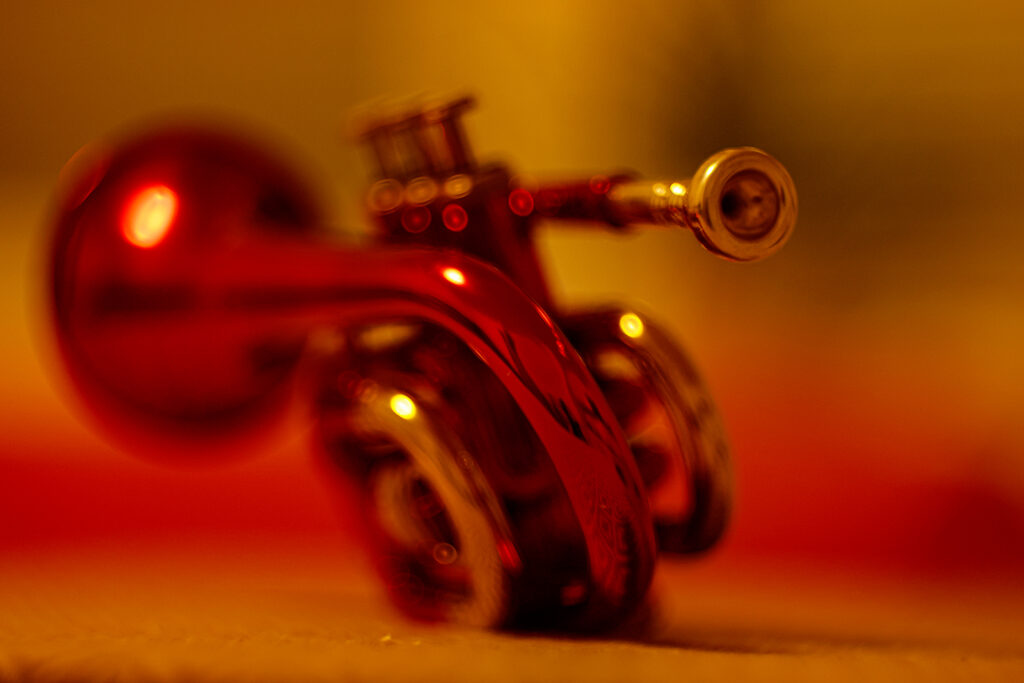
While out-of-focus highlights can show some weird artifacts in certain lighting conditions and the lack of detail might be a hindrance for some kinds of shots, the overall look is incredibly smooth, due to the awesome (often quite painterly looking) amount of blur. For my eyes it does provide a little taste of large-format-look and I certainly feel like it can be used to good effect with some more experience.


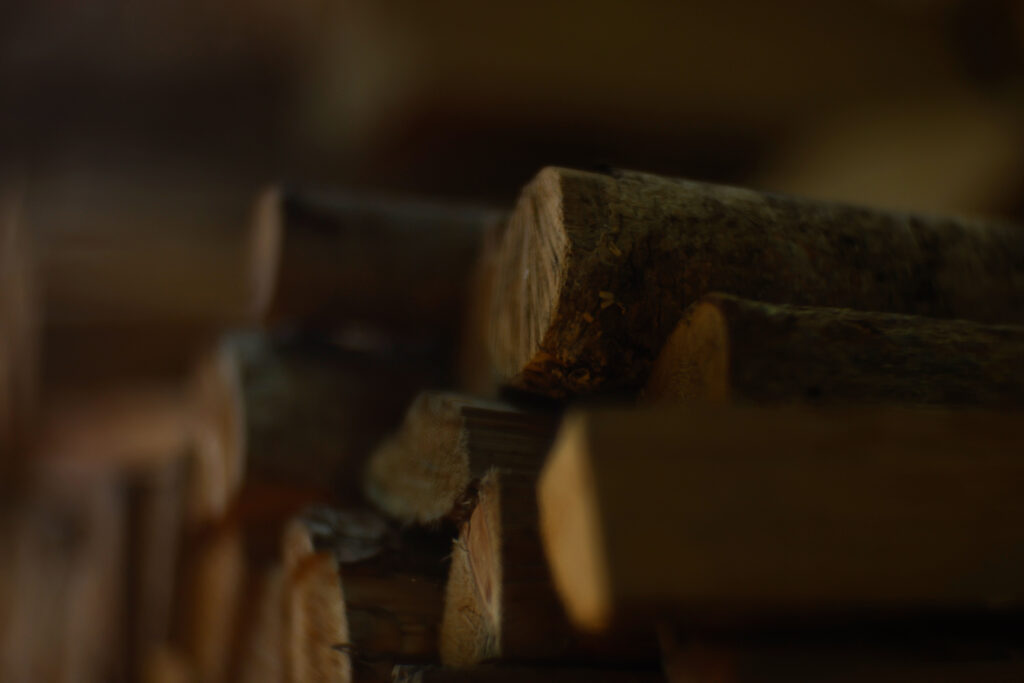


And of course a good number of ( cross view) shots:

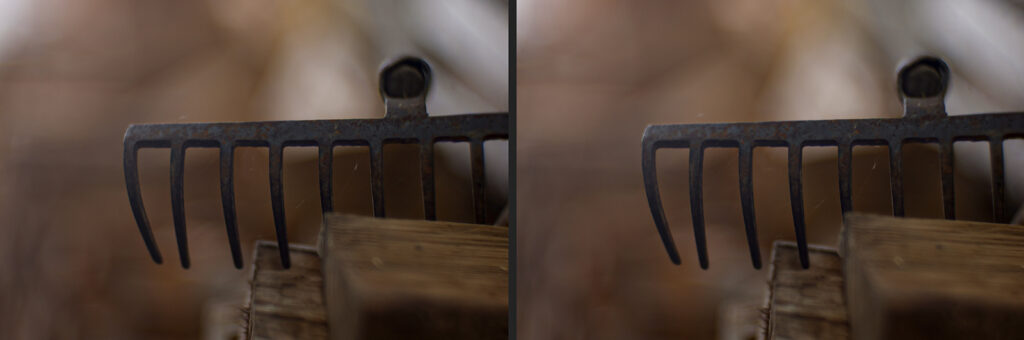

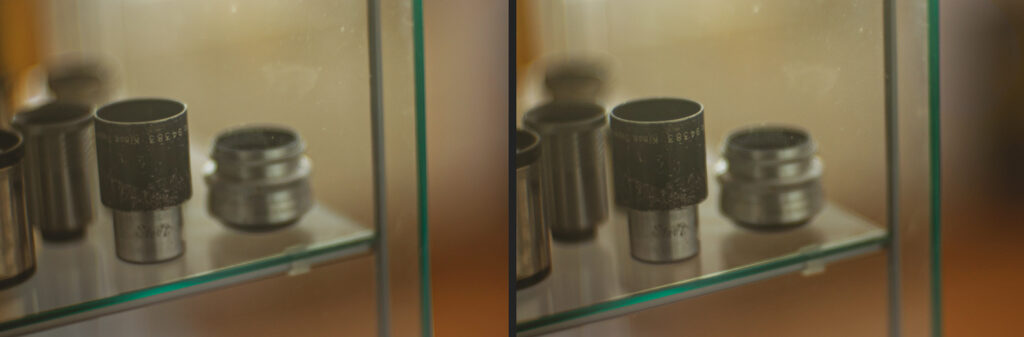

Emil Busch Neokino 115/1.6
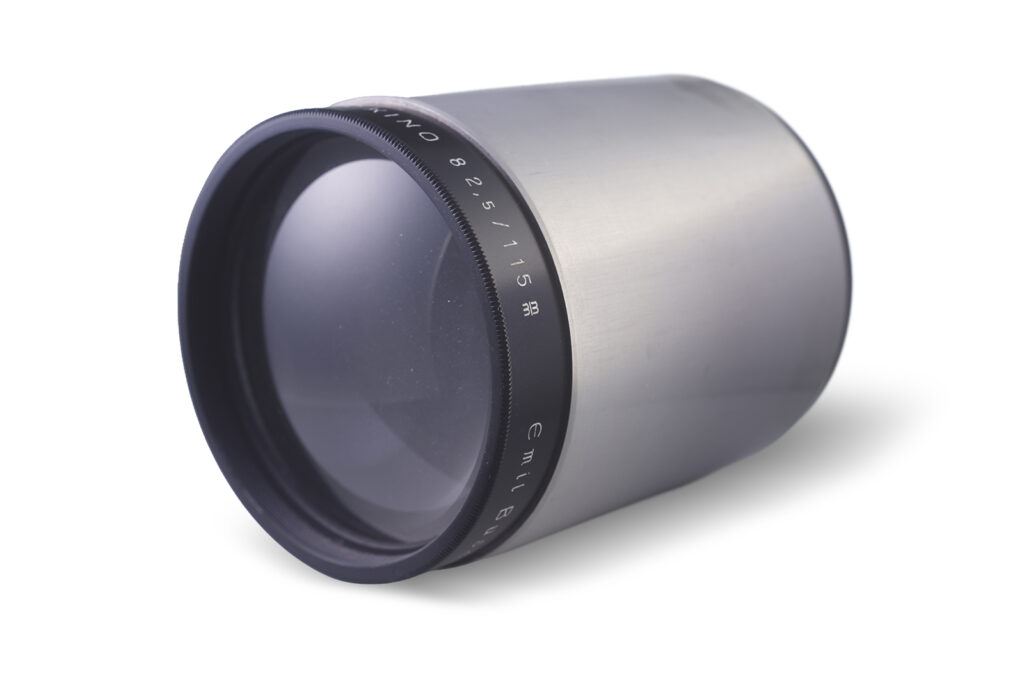
The same limitations mentioned in the description of the 110 mm (82.5 mm diameter) variant apply here as well. The lens is not going to blow you away in terms of sharpness, particularly if you look at 100% crops and it also shows several optical flaws.
Still, the resulting images are hard to compare to anything else, due to the combination of enormous speed and the softness its image quality deficiencies often result in. I’d suspect some people may hate it, while others are going to feel drawn to it. Your thoughts on them may even vary from shot to shot, as it has regularly happened to me. I can’t say I love what the lens does in every situation, but I do in some.






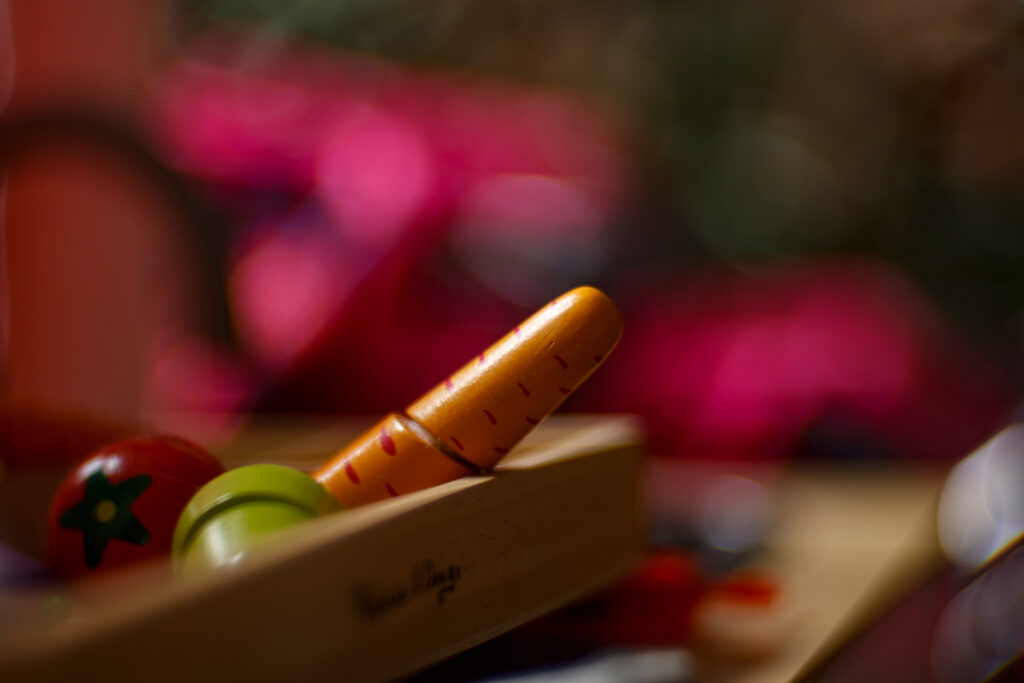


A couple of ( cross view) shots in addition:


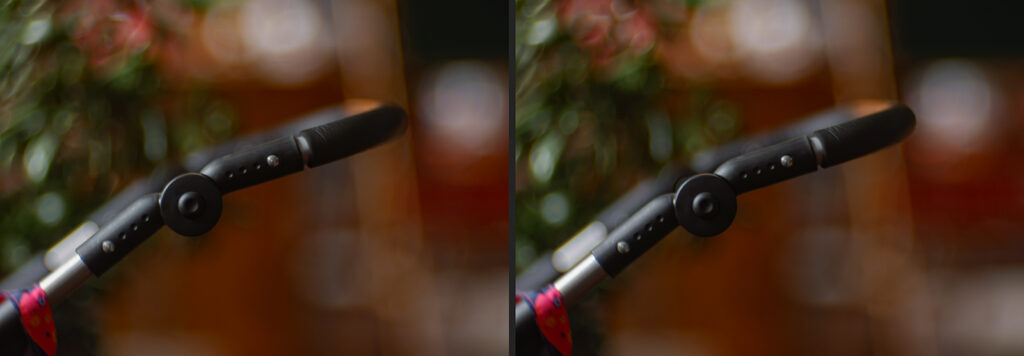
Emil Busch Neokino 120/1.6
Emil Busch Neokino 130/1.7
Emil Busch Neokino 135/1.7
⌀ 82.5/104 mm (stepped)
Emil Busch Neokino 170/1.9
Emil Busch Neokino 185/1.9
Emil Busch Neokino 200/1.9
⌀ 104/150 mm (stepped)
Emil Busch Neokino 250/1.7
Emil Busch Superkino
Given that so far only a single lens with the ‘Busch-Superkino’ inscription surfaced, it’s possible that this was just an alternative labeling for the longer focal length Neokino lenses and was swiftly scrapped in favor of the well-known Neokino name.
Busch-Superkino 170/1.7
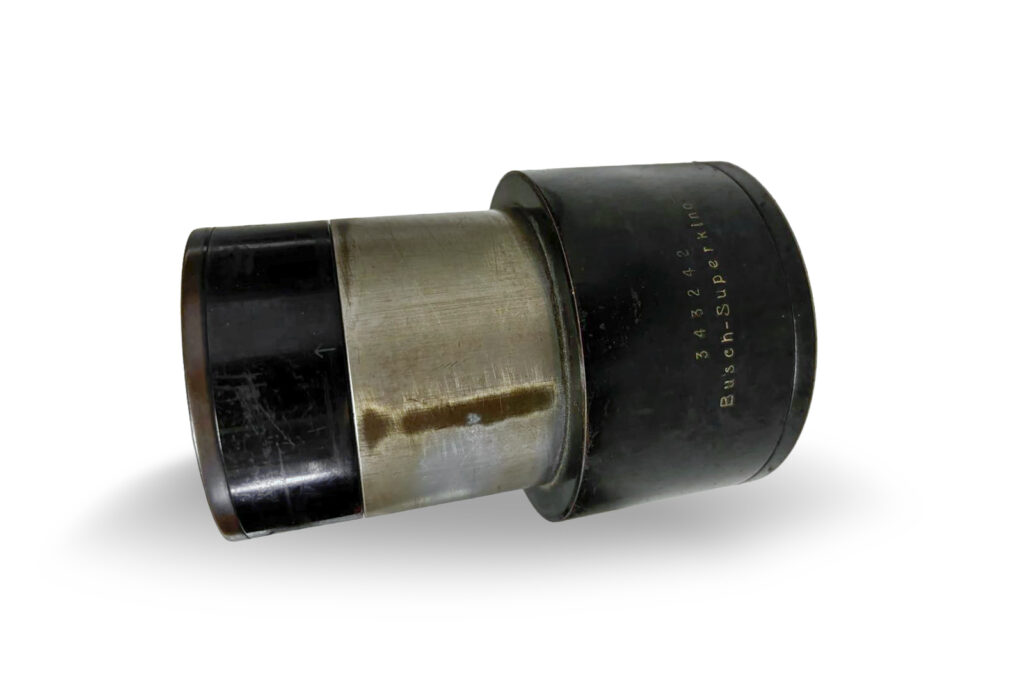
With these lenses offering incredible specs in terms of speed, Busch certainly took on a leading role among the makers of fast cine projection lenses. If you’re curious about the whole picture, you can take a look at the “Race for the Fastest Projection Lens” article, where I’ve tried to shine a light on several competitions in that vein all around the world. Here’s the overview graph:
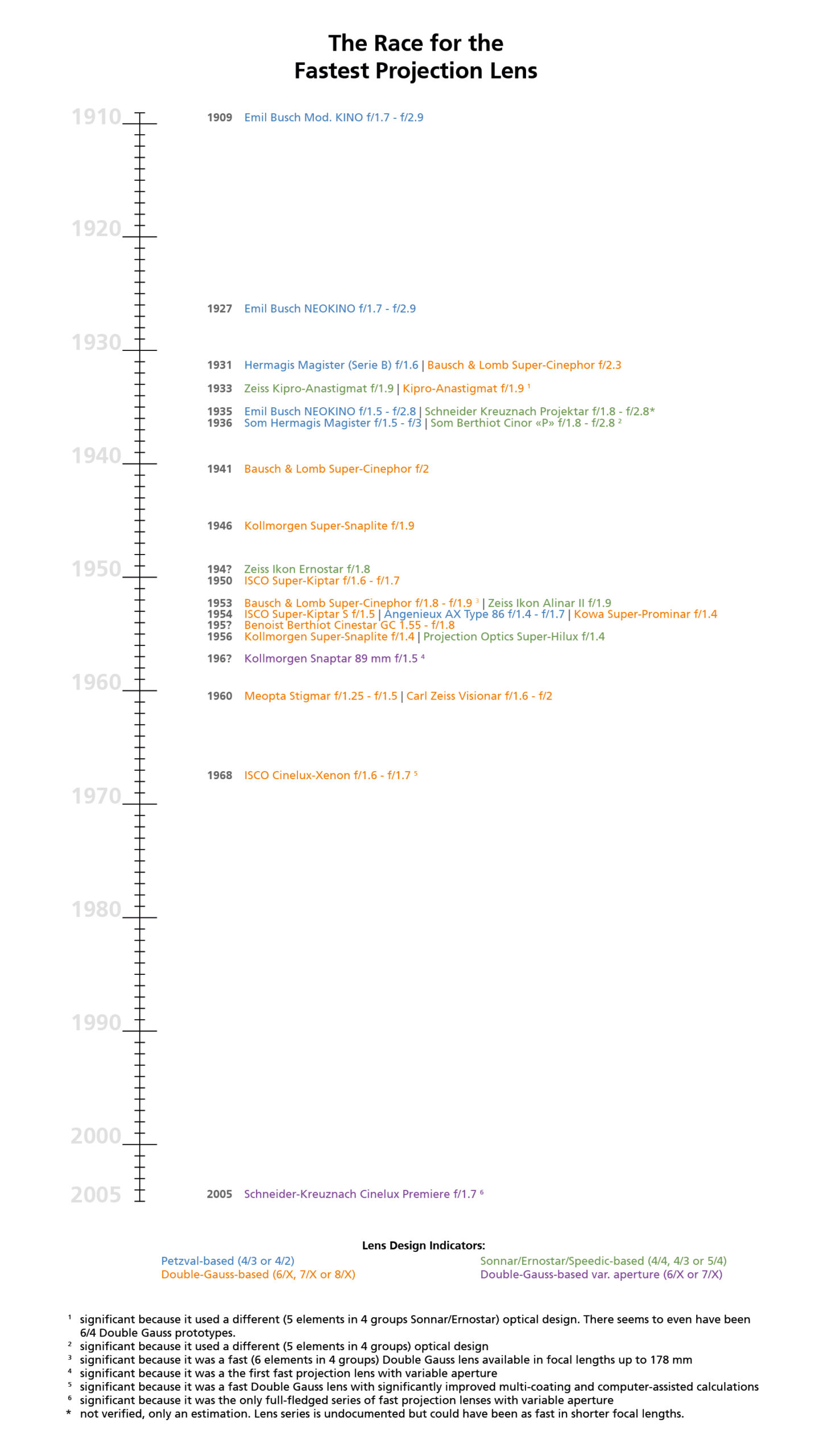
While the Emil Busch AG wasn’t able to fully carry over its reputation into the era of 6 elements Double Gauss lenses, where US rivals Bausch & Lomb, Kollmorgen and other German brands like Zeiss, ISCO and Schneider dominated the field, they were one of the early drivers of progress, and under the guidance of Zeiss also managed to stay highly relevant as the manufacturer of fast and versatile projection lenses.
Varioneokino (Variokino)
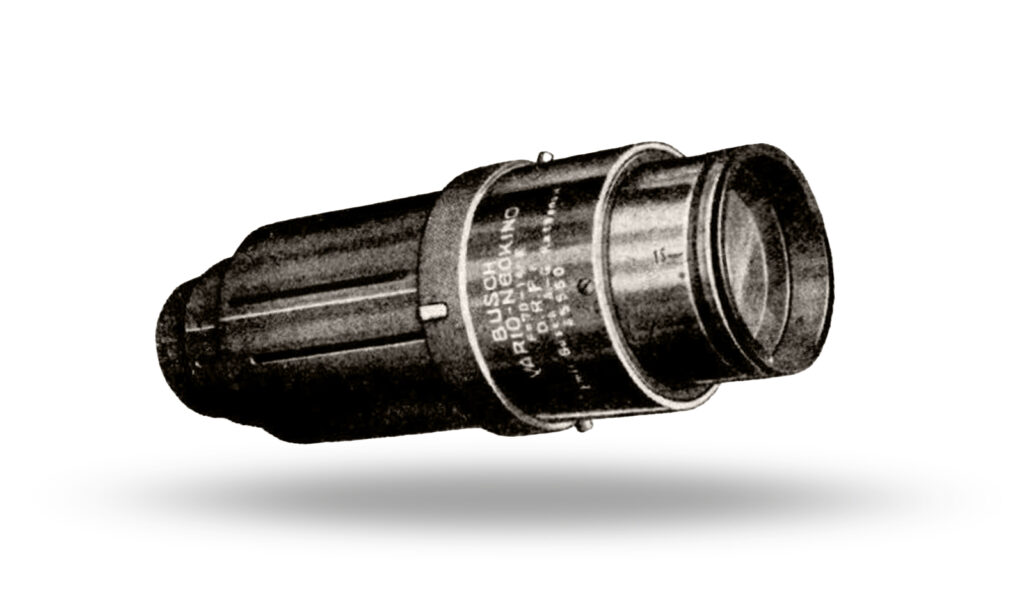
As far as I’m aware there is only one single Varioneokino lens. It was a really big and likely also heavy lens, which managed to provide projectionists with a focal length range you would have needed many fixed focal length lenses to cover. It was supplied with the AEG Euro line of projectors, but likely only in rare instances.
“The Emil Busch AG shows their highlight, the Vario-Neokino lens (a solution for the challenge of variable focus) with a focal length range from 70-140 mm and suited for the creation of a magnificent Magnoscope-effect. In addition to that they also show their normal Neokino lenses with diameters from 42.5 to 104 mm.”
(KINOTECHNIK Heft 3 / Febr. Berlin 1937 – translated from German)
Emil Busch Varioneokino 70-140/2
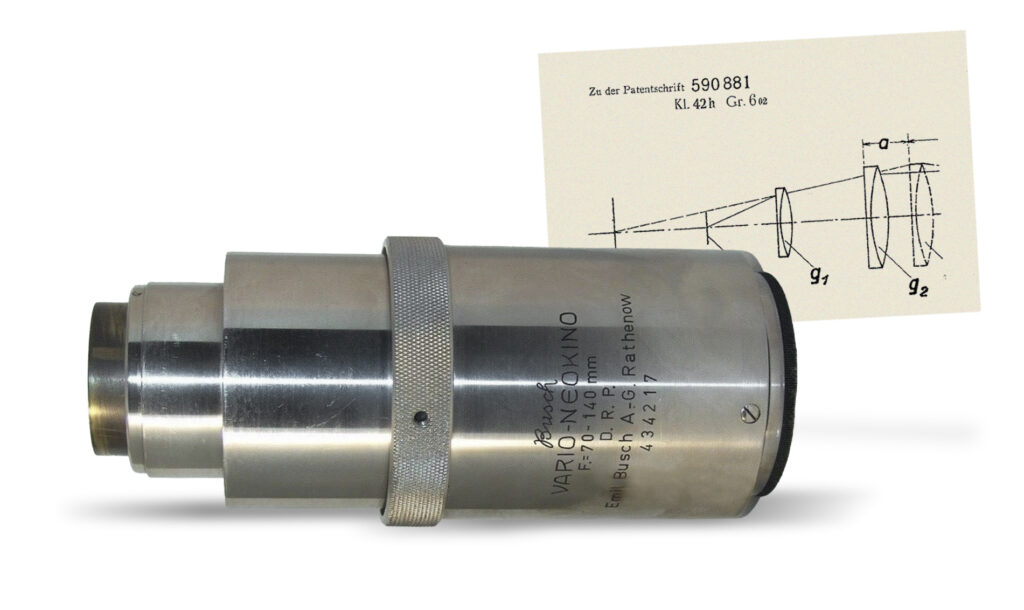
This lens features a 6 elements in 3 groups design and according to the excellent insights on zeissikonveb.de by Marco Kröger it wasn’t able to provide a decent enough image quality compared to fixed focal length projection lenses at the time to make a significant impact. It was however awarded a gold medal at the Paris World Convention in 1937 for its ingenious concept, likely inspiring several manufacturers to further enhance the concept of variable focal length lenses as well.
Polyneokino (Polykino)
This lens was originally called Polyneokino in Germany, but as far as I know Polykino in English speaking countries, likely due to being easier to remember.
Here’s an official description from an ad in 1936:
“POLYKINO the Variable Focus Neokino Projection Lens
The BUSCH POLYKINO Projection Lens is designed on the famous Neokino Formula, but varies in focus to suit cinemas which desire to alter screen width from time to time, or for portable outfits.
The BUSCH POLYKINO is made in the standard barrel diameter of 62.5 mm (2.46”) and is variable in focus from 80-130 mm (3 1/8” to 5 ¼”) i.e. at 100 ft. throw, the picture can vary between 15 and 28 feet in width; the adjustment is carried out instantaneously and at any focus the picture is dead sharp.”
Emil Busch Polyneokino 80-130/2.2
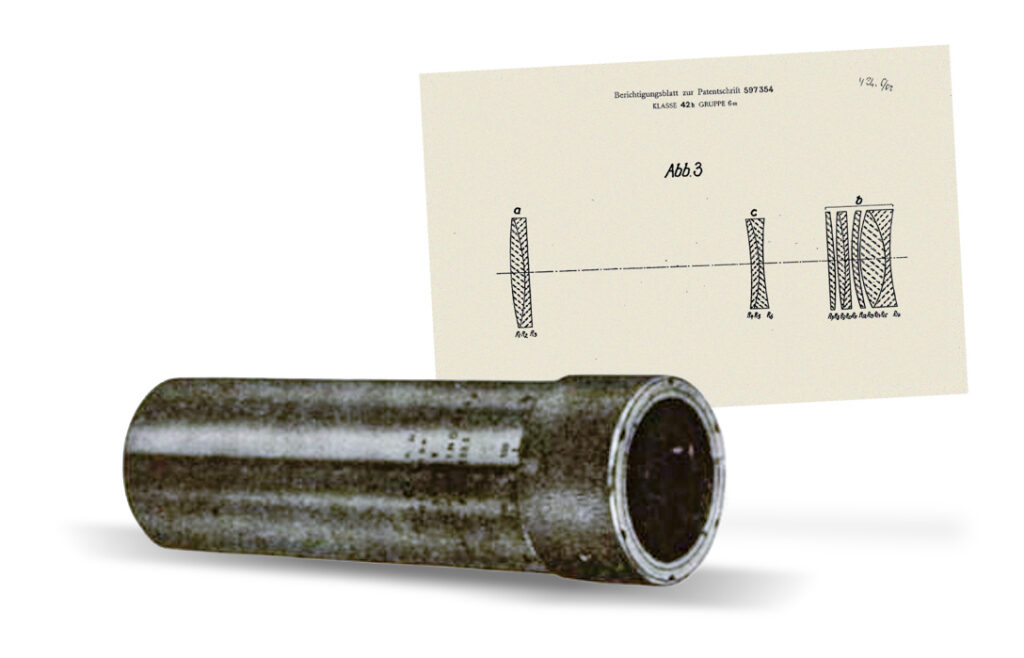
The lens design of this weird looking lens is not described in any detail unfortunately. But the lens drawing above would certainly help to explain the long barrel length. It does look distinctly different from the Vario-Neokino and while it probably wasn’t built in any significant numbers, it was actually advertised (and thus likely sold) as ‘Polykino’ in 1937.
Hensoldt Neokino
Hensoldt Neokino 90/1.8
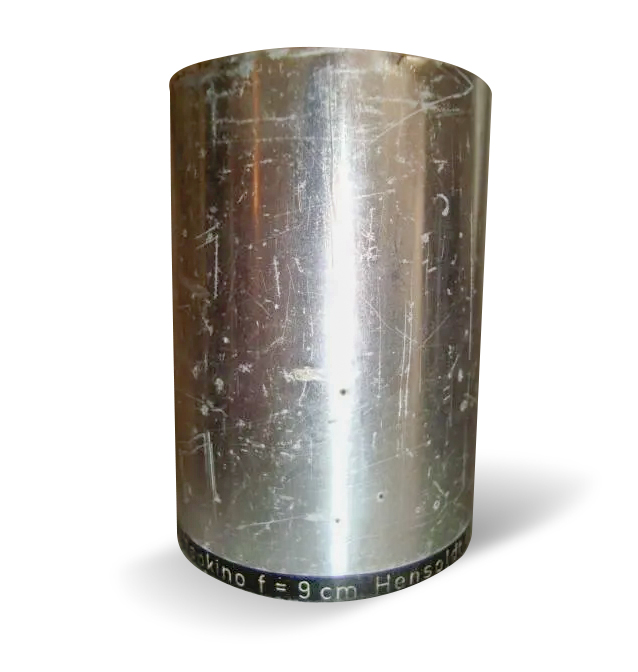
Labeled Hensoldt and 9 cm, so likely an older model, but there’s no information online. Not many Hensoldt projection lenses exist, they seem to be even more rare than the taking lenses which might point towards outsourced work for Emil Busch/ROW in really low numbers.
An alternative explanation would be that this particular lens was made by Emil Busch for a Hensoldt device (they made lots of stuff for the military, as far as I know), though I’m not aware of any projectors or something similar, so it could have been for some completely different application. In this case the Neokino inscription would be surprising, however
Marco Kröger, whose excellent site zeissikonveb.de is one of the best resources on many topics regarding the optical industry in Germany and its products, shared an interesting (top secret labeled) drawing on facebook:
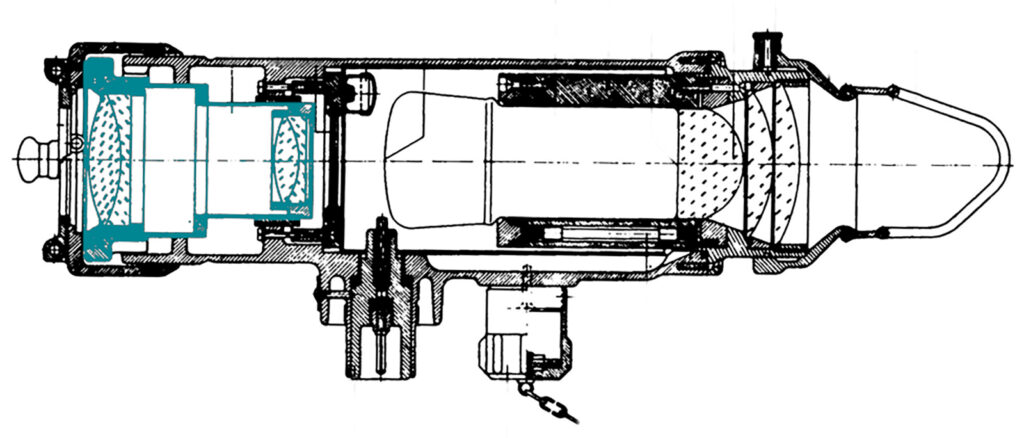
It shows a device for the German Marine called ‘Seehund’. As you can see (I’ve tried to highlight it in the front of the device) a superfast Meyer Kinon Superior lens was included into the optical setup of what was likely an advanced monocular/sight used on German military vessels.
So a device like this could indeed be a likely application for a Neokino lens, that Hensoldt produced for one of their products on the basis of Emil Busch patents/plans.
Emil Busch Super-Filmar
For a long time I was convinced that Emil Busch had limited its lens series to Triplets, Petzval and Double-Gauss designs and never really experimented with asymmetrical Anastigmats like the Ernostar, Sonnar or Speedic. So I was very surprised when I found out that they didn’t only experiment with but even made two series of lenses in that style. The Super-Filmar was initially a family of projection lenses aimed at 8/16 mm projection, but later apparently also produced for 35 mm cine projection. It’s not known how many focal lengths however.
The description (in an article from one of its inventors) of the lens design is certainly interesting:
The new Busch Super-Filmar 1:1.4 (Fig. 1) is a lens constructed from five elements in four groups. The third of which contains a chromatically overcorrecting cemented surface.
(Flügge, Die Kino-Technik, 1935, Translated from German)
The first, third, and fourth groups are converging, the second element is diverging. Thus, in purely external terms, there is a certain similarity to the Petzval type, with the exception of an additional element being placed behind the usual Petzval design.
This similarity also exists in terms of correction, as can be seen from the accompanying correction curves (Fig. 2), except that the intermediate errors are smaller in the new lens, and the astigmatic image planes have been brought to an intersection with almost complete flatness.
On the other hand, a derivation from the anastigmatic triplet is unmistakable. The Petzval type and triplet have each inherited their excellent properties to the new Busch anastigmat.
I found it particularly fascinating that it’s described as a best-of-both-worlds between the Triplet and Petzval design. It’s also remarkable how closely the Carl Zeiss Kipro-Anastigmat – which was released a couple of years afterwards – resembles the Super-Filmar. Given the involvement of Zeiss in the Emil Busch operations (it was already a majority shareholder at that time) it probably shouldn’t be too surprising, however. And after all, pretty much all of these designs were based on Zeiss-created or -owned optical layouts like the Sonnar or Ernostar anyway.
In his book Optics: The Technique of Definition Arthur Cox describes the Filmar (note: he doesn’t seem to distinguish between Neo- and Super-Filmar, but groups them together) as a Triplet-derivative and also defines it as a copying lens. Because the book was published in 1949 perhaps there’s something to that, considering how rare it seems to be.
It’s possible though, that the lens was too expensive or otherwise not well-suited for projection purposes and in the end mostly used for special applications, like copying work, which also got increasingly important due to the rise of special effects and trick-techniques in films as well as newly arising formats and conversion methods.
After all several companies like the Berlin-based manufacturer Crass or Oxberry did produce film-copying machines in addition to rear-projection systems, and it doesn’t seem far-fetched to assume that optics like that could have been used in either of these groups of devices and would explain why no samples are around anymore.
It’s quite surprising to see that Cox wrote about it, given how scarce these lenses were.
The Filmar lenses (there’s indeed no distinction between ‘Super-‘ and ‘Neo-‘ in this case, are also listed and described in H. Naumann’s book Das Auge meiner Kamera. Of course Naumann knew about these lenses, given that he was working for the Emil Busch A.G.
| 16 mm |
Emil Busch Super-Filmar 20/1.4
Emil Busch Super-Filmar 25/1.4
Emil Busch Super-Filmar 35/1.4
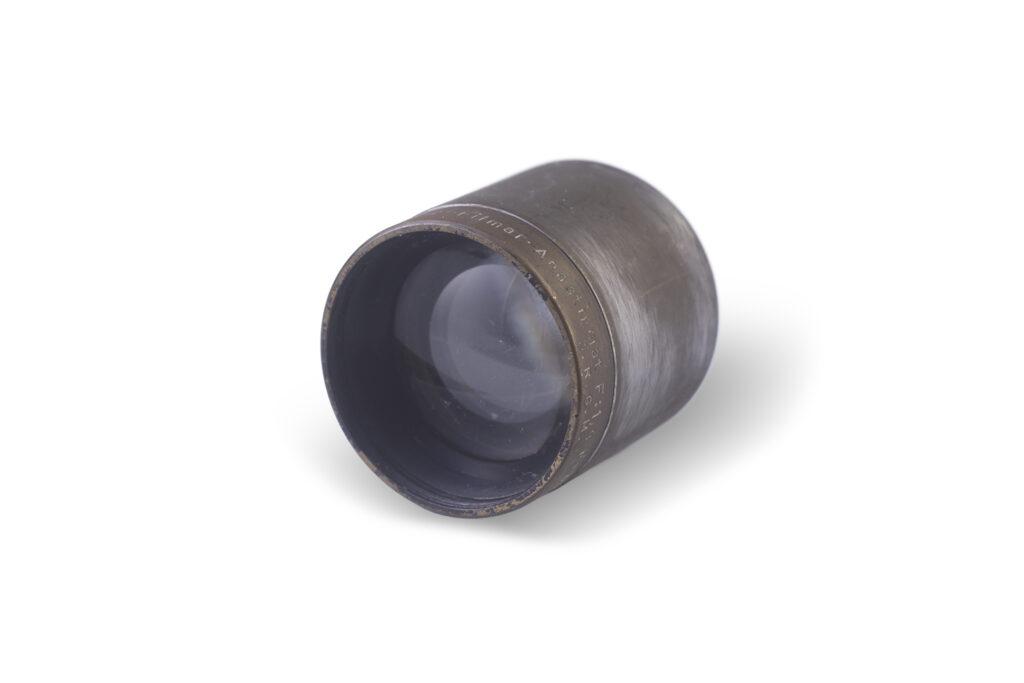
Given that they have a distinct name, I wasn’t aware just how hard these lenses would be to spot until I discovered this one which was offered as a part of a lens lot. These lenses are tiny (this one is 33 mm in diameter) and might blend in so well into the patina of old projector parts, that you won’t even recognize them as separate lenses, if you’re not lucky enough to spot the tiny inscription.
As expected this tiny lens doesn’t cover a full frame sensor, however it’s a highly interesting lens to use on APS-C. The main thing which makes it interesting, compared to the far more common Petzval-type projection lenses of its kind, is that it combines some of the crazy out-of-focus rendering, these lenses are known and appreciated for with significantly better edge sharpness.
That means, you’re not limited to the very center of the image for composition and still get some flavor of the uniquely flawed but interesting look old projection lenses have gained a reputation for.
Don’t expect great sharpness though, because these lenses certainly don’t hold up to more modern Double-Gauss or even later Ernostar/Sonnar variants. But in a way these lenses are a neat compromise between the interesting character of early Petzvals, and the improvements in terms of field curvature and coverage of later Double-Gauss lenses.

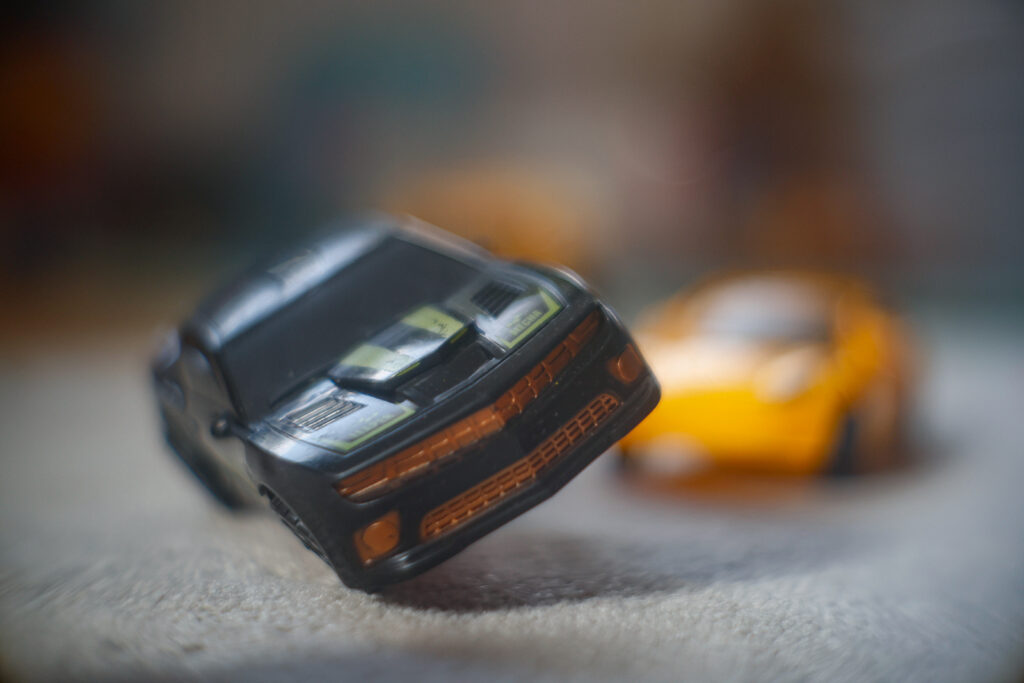
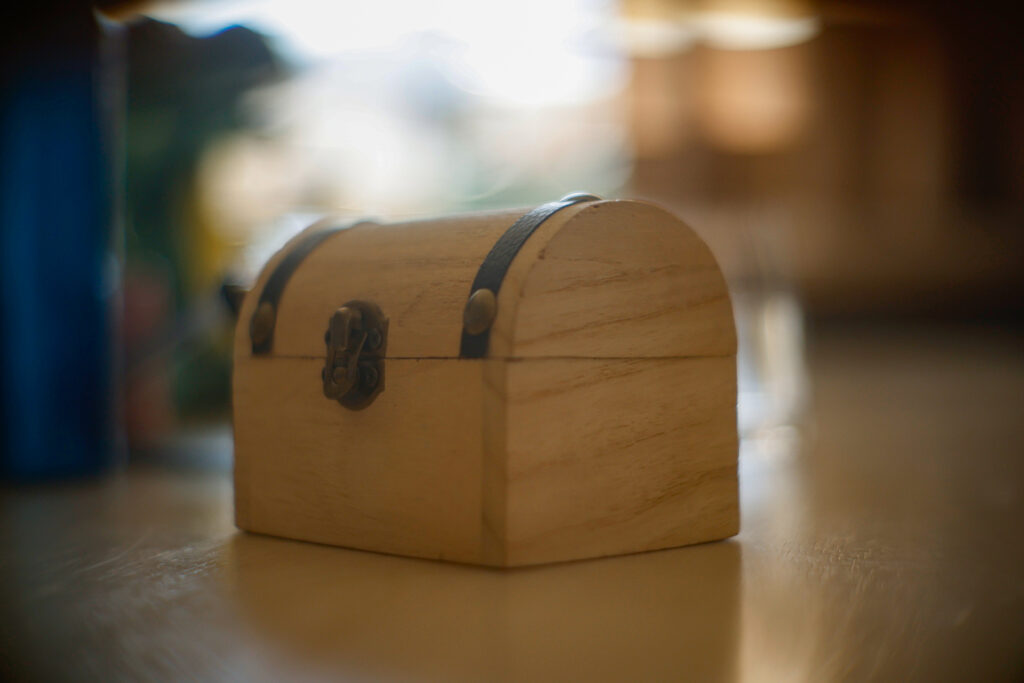




What I’m particularly impressed with, is the liquid-like rendering the lens often shows with highlights, which seem to melt into each other, rather than separating as circles or bubbles. The great speed also helps in exaggerating this effect, compared to most 35 mm lenses, I’ve adapted and experimented with so far.







And as usual a couple of ( cross view) shots:




Emil Busch Super-Filmar 50/1.4
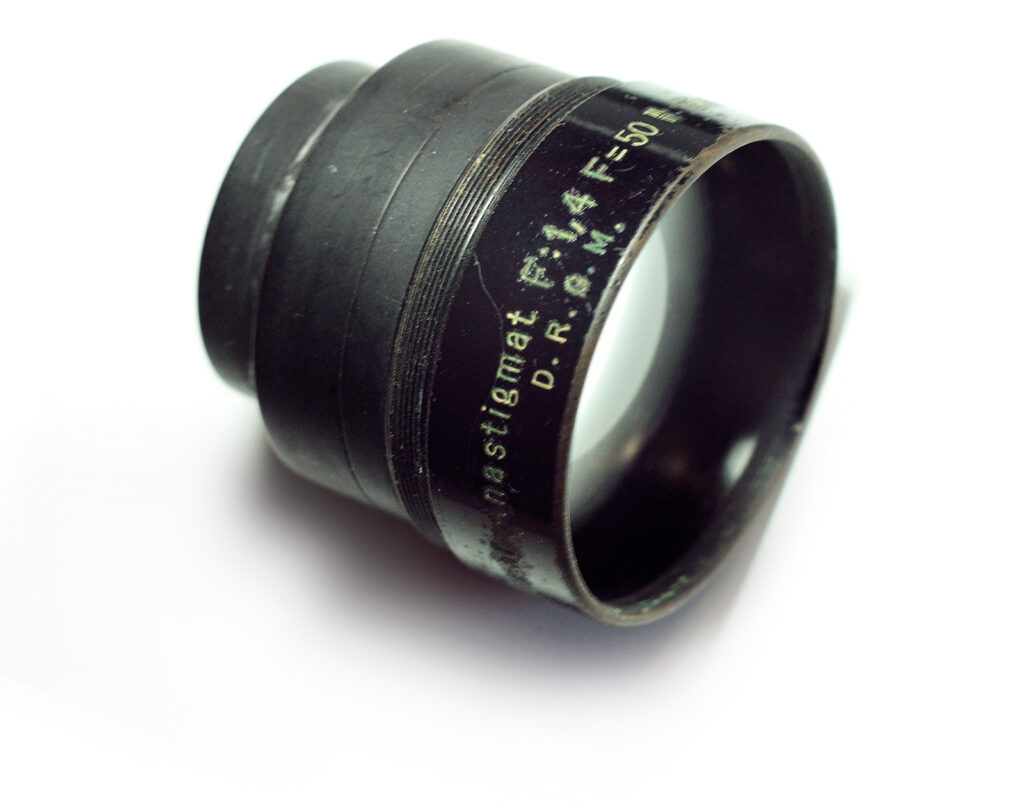
At one point, when I had completely given up on being able to share any impressions or sample shots from the whole Filmar family of lenses user dorfaue in the German digicamclub forum thankfully shared that he had such a lens in his possession. Because of that I’m able to share some shots taken with this lens.
While it vignettes significantly on full-frame it may work nicely on APS-C as you can see with the sample shots by dorfaue, though it’s hard to say how they would end up looking, due to a missing proper adaption.
| 35 mm |
Emil Busch Super-Filmar 250/1.4
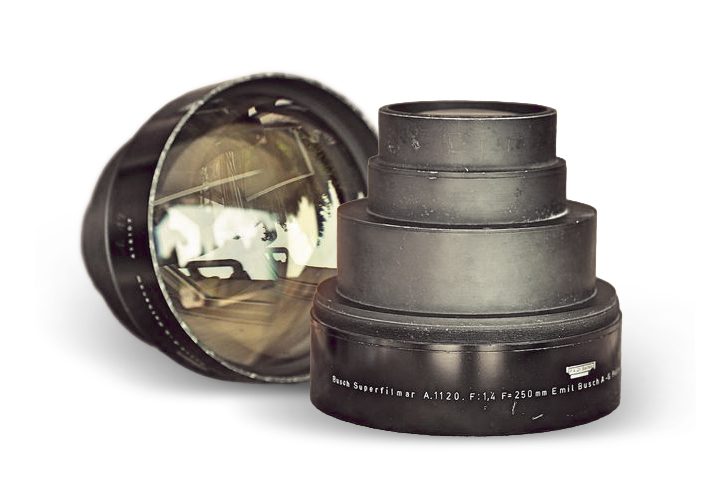
As far as Emil Busch projection lenses are concerned this one certainly is among the most impressive and also intimidating. The giant 180 mm diameter and 7 kg lens Is far beyond anything else we’ve seen from both the Petzval-based Neokino series, as well as the other Filmar-type lenses. There’s no advertising or mention in scientific publications at the time and while that may have to do with the high likelihood of it being made during WWII, it certainly feels like a custom-made or commissioned work for a specific task, rather than part of any regular series.
While at least two of these beasts have been seen (and one sold) on the internet, no single sample shot has surfaced, which leaves us speculating about its capabilities as a taking lens. Perhaps it’s like some of those giant TV projection lenses which regularly appear online and might from time to time inspire new lens experimenters to try them, despite their limitations as taking lenses.
One thing hinting at a possible kind of use case is the fact that Zeiss made similar lenses, the Epiotar 210/1.9 and 420/1.9 and the incredible Biotar 350/1.5, which – according to the fernsehmuseum.de site – was intended for large-scale projection of TV images.
But it’s equally possible that this giant Super-Filmar really is the holy grail of projection lenses and some collectors, who have one of those in their possession, just choose not to share their findings. I would certainly love to know.
Emil Busch Neo-Filmar
The Neo-Filmar was designed for 35 mm rear-projection but likely never produced in significant numbers. Again, there is a description written by one of its inventors, which was published in the same article as mentioned above.
“A version of the anastigmat described above, though with a slightly reduced relative aperture of f/1.8 is manufactured under the name “Neo-Filmar” for background projection of standard film, in focal lengths of 40, 50, and 65mm with a mount diameter of 42.5mm.
(Flügge, Die Kino-Technik, 1935, Translated from German)
The relative aperture of f/1.8 means almost a tripling of the projection brightness compared to the f/3.1 projection anastigmats otherwise used for this purpose. Compared to conventional cinema lenses with short focal lengths, which operate at approximately f/2, the Neo-Filmar lenses have the significant advantage of consistently good sharpness from the center to the corners of the frame. They also exhibit an unsurpassed depth of field, which is perceived as advantageous for oblique projection.”
It’s always great to hear these things from the original source, so I was very thankful when I finally managed to get a copy of the original document… it wasn’t easy.
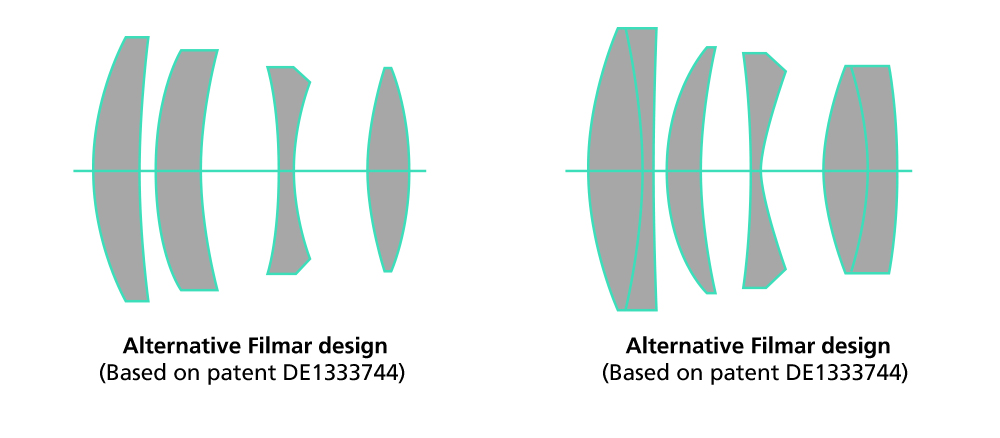
The Neo-Filmar most likely features the same 5-4 Ernostar design than the Super-Filmar but because it was designed for 35 mm projection, it certainly has a better chance of covering a full frame sensor when adapted onto modern mirrorless cameras. It is however also possible that its design looks slightly different. What I consider the patent application for the Filmar lenses (DE1333744U), does feature three different designs. The 5/4 one shown above, a 4/4 design (reminiscent of the Astro-Berlin Pan-Tachar) and another Sonnar-variant with 6 elements in 4 groups.
Helmut Naumann does mention a lens design with one doublet and it being the second group, so the first design shows in the most likely to have been used as a basis for all of them.
In spite of some genuine efforts, I haven’t been able to even find a single image or even drawing of a Neo-Filmar lens. Perhaps the war efforts and the resulting changes in the economy and demands for other optical products, led to an early discontinuation of the series, but due to the massive influence from Zeiss as a majority shareholder, it’s also possible that the production of this series was stopped or never even started for tactical reasons within the conglomerate. We’ll likely never know for sure.
It only existed in three focal lengths, as far as I know:
Emil Busch Neo-Filmar 40/1.8
Emil Busch Neo-Filmar 50/1.8
Emil Busch Neo-Filmar 65/1.8
While I unfortunately haven’t been able to find a sample of a Neo-Filmar lens, I managed to find a quite comparable contemporary projection lens by Som Berhiot, the Cinor P 65 mm f/1.8 (so actually identical specs to the longest variant).
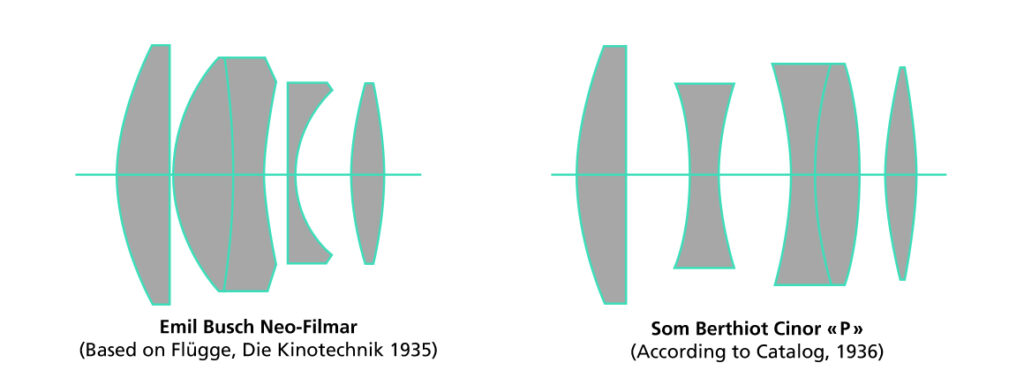
As you can see from the diagrams above, the Cinor P is somewhat close to a reversed variant of the Neo-Filmar design. It’s hard to find a concrete date for the Cinor P design, but it must have existed in 1936 at the latest. It likely didn’t receive a patent, because the basic lens design had already been patented years before by another company. Lenses with both types of construction are relatively uncommon, particularly any faster variants.
In my personal experience the performance of these Cinor P lenses is very good (albeit varying in quality depending on the shooting distance) and thus I would expect similar results for the Neo-Filmar. Here are some sample shots taken with the shortest Cinor P lens I’ve managed to find so far:
Another design-wise somewhat comparable taking lens from the same era is the Foth-Anastigmat 75 mm f/2.5 which isn’t quite as fast as the Neo-Filmar, however it features a 4 elements in 4 groups Ernostar design as well (very close to the first alternative Filmar design, shown above) and it certainly wouldn’t surprise me, if the overall rendering of these two lenses would be somewhat close as well.
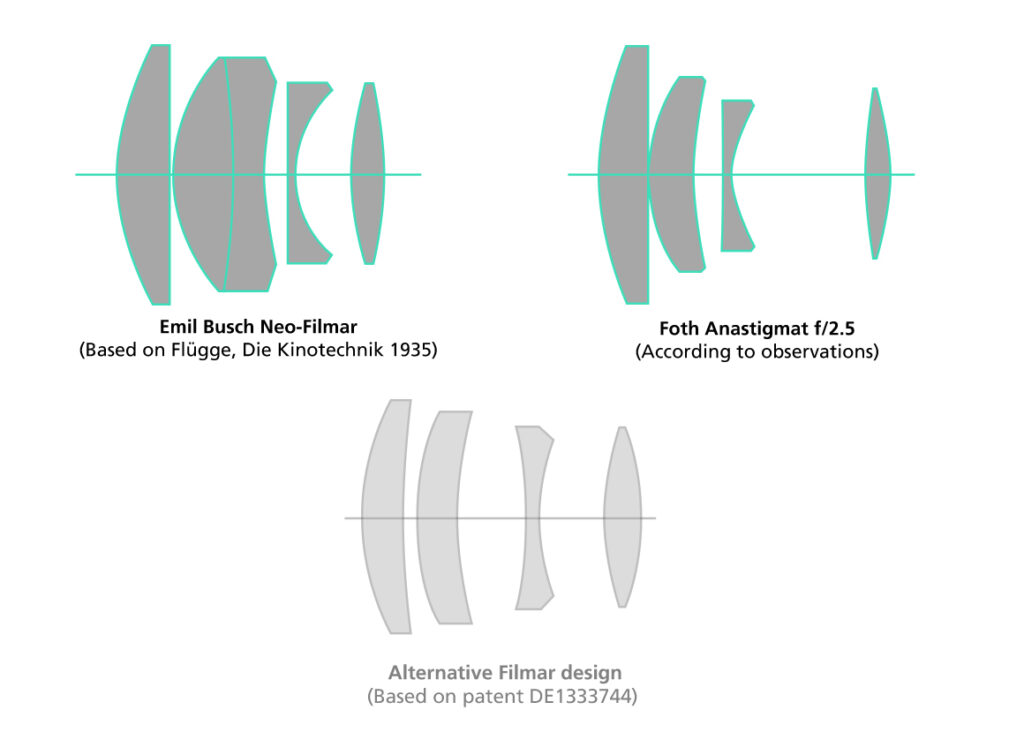
Usually fewer elements mean higher contrast, but since the Neo-Filmar design has one cemented group, the difference might be negligible. Admittedly it’s purely speculative at this point, but here’s another sample of what images taken with Neo-Filmar lenses might look like, if you adapted them onto a modern camera:
Here are the two lenses in comparison:


Left: Som Berthiot Cinor P 65/1.8 | Right: Foth Anastigmat 75/2.5
In my humble opinion a Neo-Filmar lens of similar focal length might fall just somewhere in-between. If you happen to have one of these lenses lying around and can either confirm or prove me completely wrong on that (admittedly bold) assumption, I’m happy in either situation, since I always like to learn something new about unusual and interesting lenses.
Neostar (8/16 mm)
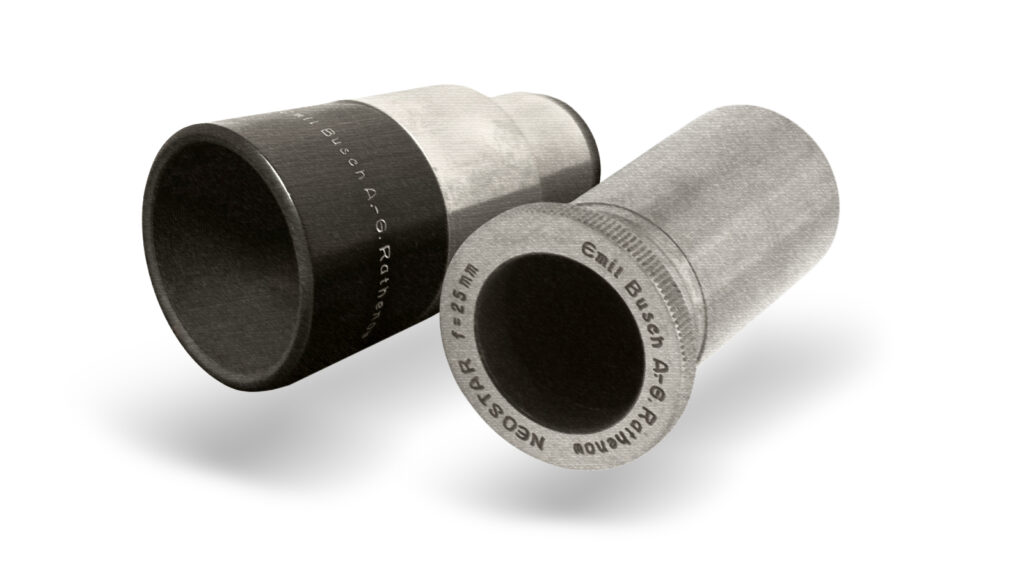
The Neostar series is certainly interesting. It was designed for smaller formats (8, 16 mm) specifically and likely has a more limited image circle compared to the 16 mm Neokino lenses. Why the company decided to create another dedicated series of lenses for other formats is not documented anywhere as far as I know, but it reminds me of a similar situation at ISCO – which I’ve documented in the ISCO Kiptar projection lens article – where several different series were apparently made for a very similar purpose. It’s likely that there’s good reason for these additional series (like particular new illumination systems, specific needs by certain projector series in terms of flange distance or heat dissipation etc.), but sometimes these things weren’t documented in any kind of advertisment etc. and thus not really known anymore.
It seems like most of these lenses have a speed of f/1.7, which initially made me think the f/1.4 version was a later addition. However, the initial introduction of the lens (see below) by its inventor Flügge, the 50 mm Neostar was specifically refers to that 50 mm f/1.4 lens. It seems likely thus, that the additional variants were added later. Similar to the Meyer Kinon Superior lenses and the ISCO Duotar series, there’s some variety of different looking models among the Neostar lenses. This can be caused by either: customization for different projector models/systems or a basis of low-quantity custom orders for the series in general.
And indeed, there aren’t too many of these around anymore and the ones you’ll find are more likely among the shorter focal lengths, making them barely usable for being adapted.
The limited range of focal lengths and the focus on smaller formats are further similarities to the Optische Werke Göttingen/ISCO Duotar lens series in the article ISCO Kiptar Projection Lenses on deltalenses. And according to one of its designers, the Neostar is a 4 elements in 2 groups Petzval design as well:
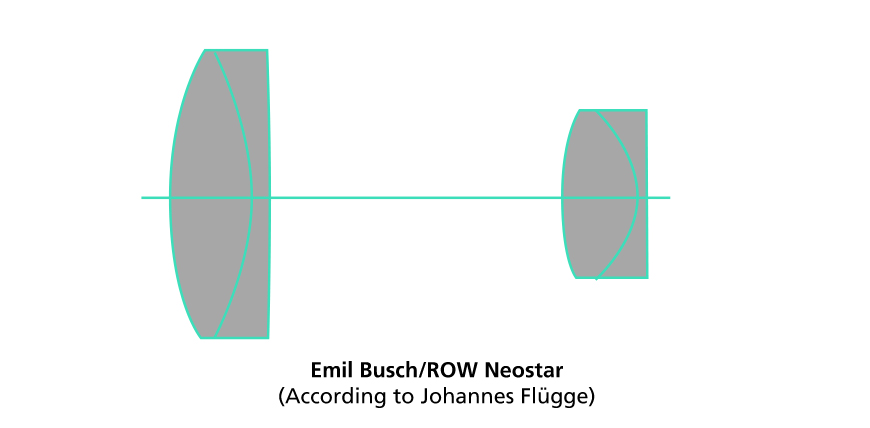
“Therefore, for small-gauge film projection with a 50mm focal length, the calculation and construction of an anastigmat was omitted. Instead, a lens with a relative aperture of f:1.4 was created under the name “Neostar,” which, with the smallest possible number of optical elements, achieves image quality that fully meets even the highest demands.
(Flügge, Die Kino-Technik, 1935, Translated from German)
Because the Neostar has only four lens surfaces facing the air (Fig. 3), reflection losses are minimal, resulting in a light transmission of over 80%. As is well known, standard Petzval-type cinema lenses only have about 73% light transmission, so the increase in light transmission is almost 10% in comparison.”
If the Neostar lenses all share this design, it’s very likely that none of them even comes close to covering full frame format. So keep that in mind, if you consider adapting one of those lenses. On M4/3 they might be exceptional lenses however.
Emil Busch Neostar 25/1.7
Emil Busch Neostar 30/1.7
Emil Busch Neostar 35/1.7
Emil Busch Neostar 40/1.7
Emil Busch Neostar 45/1.7
Emil Busch Neostar 50/1.7
Emil Busch Neostar 50/1.4
Emil Busch Neostar 60/1.7
Emil Busch Glaukar Anastigmat (Triplets)
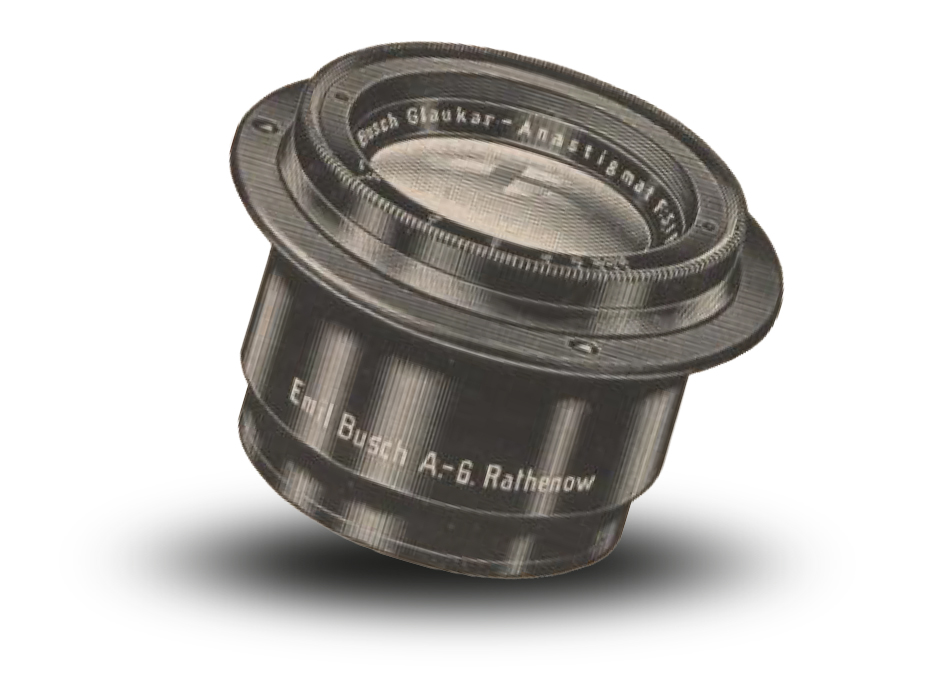
The Glaukar Anastigmat series do have varying designs, but the vast majority are basic Taylor Triplets. The version Emil Busch offered for cine projection wasn’t outstandingly fast at f/3.1 though for the time more than decent and it was said to be very well corrected and offer superior image quality compared with the Petzval alternatives of the time. In The handbook of kinematography, from 1911 it was praised as “… an instrument of a type so perfect as to be not merely fit for optical projection of the highest class, but also equally suitable for the actual taking of the pictures themselves, and everyone knows that to take a kinematograph picture nothing but the most perfect of optical combinations will serve … Other makers may equal it. Candidly, we could name at least one English firm of repute which turns out lenses equally as good. But when a thing is perfect as is this Busch Glaukar, it cannot be surpassed, and there is no getting over it.”
That’s quite high praise indeed, particularly coming for a UK-based outlet. It sounds like Emil Busch wanted to provide a high amount of consistency with this series, that wasn’t as budget friendly as their Petzval-based projection lens series, and so they opted for a slower but consistent speed and high optimization.
Unfortunately I don’t own many Glaukar lenses myself and – partly because of the initial hype caused by the Glaukar kickstarter (see below) but also the more than solid reputation of Busch-made Petzval large format lenses, these lenses still fetch high prices, despite their modest specs from today’s standpoint.
That being said, they always were high-prized items many times the cost of other Petzval-based projection lenses like the Mod. Ki or Kino series. And while they weren’t as fast as their Petzval alternatives, they had the clear advantage of better correction, greater angle of view, significantly better corner performance and because of that they were vastly better suited for also being used as regular taking lenses, which gave them additional value.
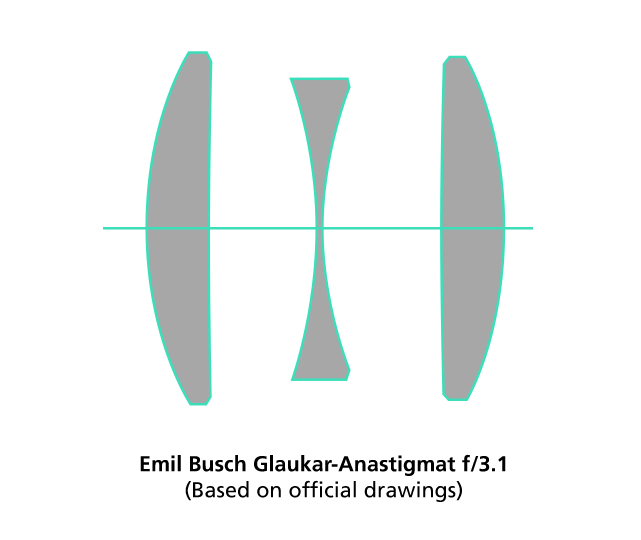
There’s a number of interesting Triplets to compare the original Glaukar lenses to, but in terms of its use case the Meyer Trioplan (which was also sold as a projection lens), the Rüo Optik Anastigmat, the Faliez Planior as well as the Goerz Proj. Hypar.
However the main inspiration for the Glaukar likely came from the UK, where the excellent Taylor Triplet had already started its winning streak as one of the most versatile and capable lenses for a variety of use cases.
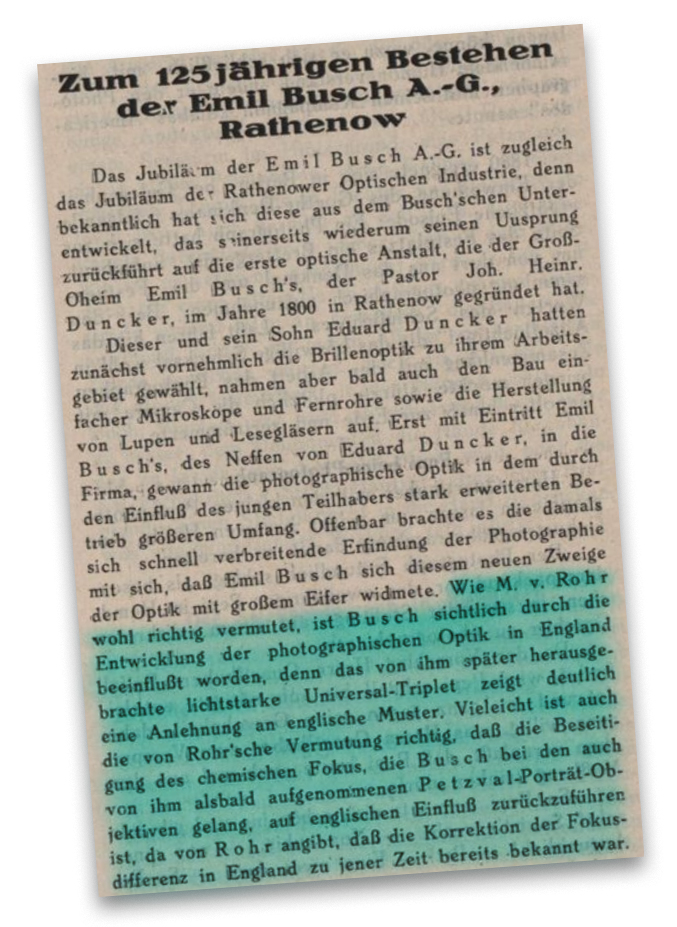
“As M. v. Rohr rightfully assumes, developments in photographic optics happening in England obviously had an impact on Busch since the fast versatile Triplet, which he released later on shows clear signs of influence by English models. Maybe Rohr’s assumption that the elimination of chemical focus, which Busch managed to apply to the Petzval-Portrait lenses, which he had quickly introduced into his portfolio, is also a result from English influence. Von Rohr states, that the correction of focus-differences was already known in England at the time.”
(translated from German)
⌀ 42.5 mm (Serie II)
Emil Busch Glaukar Anastigmat 40/3.1
Emil Busch Glaukar Anastigmat 45/3.1
Emil Busch Glaukar Anastigmat 50/3.1
Emil Busch Glaukar Anastigmat 55/3.1
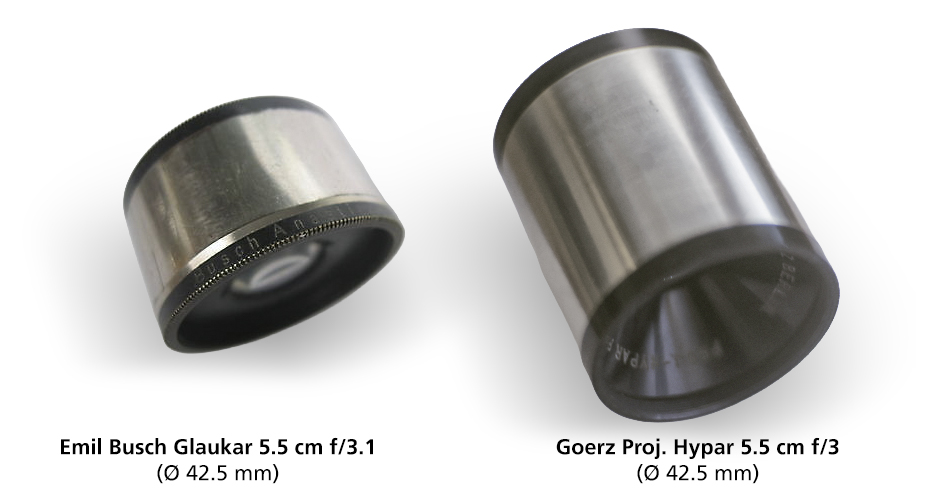
I’ve yet to see one of the shorter Glaukar lenses online for sale… they seem to be rare and likely weren’t produced in very high numbers. Because it’s interesting to at least have an approximation of what a lens in that focal range would look like, I’ll show a couple of images taken with the spec-wise almost identical Goerz Proj. Hypar which is not only a Triplet as well but was also used for the same purpose.
Keep in mind that the differences between the longer focal length variants of both series as shown further down likely apply across the whole range and so it’s reasonable to expect the Glaukar 55 mm variant to be slightly behind the excellent Hypar in terms of detail. While it certainly is among the slower lenses, particularly within the extremely crowded group of normal vintage lenses, it features a unique rendering which might make it stand out among the rest.
As you can see from the comparison image above, the lenses do have a different kind of barrel, with the Hypar featuring a recessed design of the lenses. This allows for some protection against stray light, thus keeping the contrast high, while it would probably be advisable to use some kind of appropriate lens hood with a Glaukar of the same focal length.
Emil Busch Glaukar Anastigmat 60/3.1
Emil Busch Glaukar Anastigmat 65/3.1
Emil Busch Glaukar Anastigmat 70/3.1
Emil Busch Glaukar Anastigmat 75/3.1
Emil Busch Glaukar Anastigmat 80/3.1
Emil Busch Glaukar Anastigmat 85/3.1
Emil Busch Glaukar Anastigmat 90/3.1
Emil Busch Glaukar Anastigmat 95/3.1
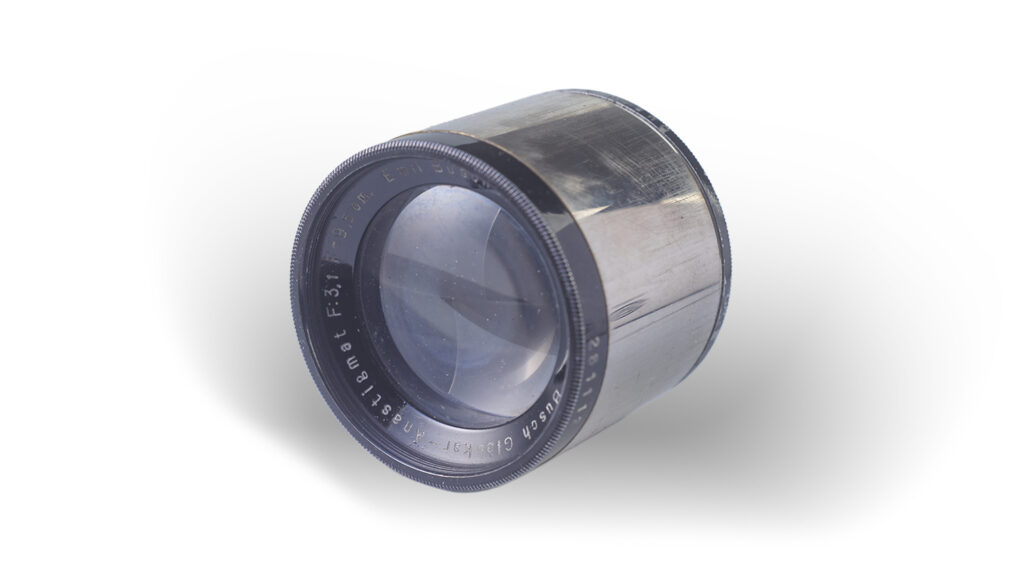
When I finally managed to find a Glaukar-Anastigmat lens, it was a 9.5 cm labeled sample, which might have been produced around 1925, making it almost exactly a century old. It’s reasonable not to expect any lens of that age to come in pristine shape and the sample I got might have lost some contrast over time due to a small but visible amount of haze on the glass.
Regardless of that flaw it still manages to capture images of decent quality and with the help of an improvised lens hood results are acceptable in terms of contrast as well. While I was able to find two different focal lengths of the Glaukar, I decided to purchase this (slightly shorter) variant, because it allowed me to compare it to a roughly contemporary lens with identical optical construction, the Goerz Proj. Hypar.
My Proj. Hypar has a focal length of 9 cm and is slightly slower at an estimated f/3.5, however it’s very much comparable in many ways and so I decided to create a number of comparison shots with these lenses:




Because the Glaukar is slightly faster, it’s not surprising to see that the level of detail isn’t as high as with the Hypar, but from my impression so far, I would doubt that it got close, even if it could be stopped down.
Another comparison I thought could be interesting is with a significantly more modern Triplet, also made for projection purposes, the Zeiss Ikon Orikar 100 mm f/2.5


At f/2.5 the Orikar is among the fastest Triplet lenses in its focal length and has better native contrast than the Glaukar. However that can lead to a lack of nuance in the dark tones in some instances. The Orikar does show a visible amount of chromatic abberations, while the Glaukar is almost free of those.
My impressions is, that the Glaukar image – while certainly lower in contrast – does have smoother transitions and provides a nicer, warmer and more well-rounded look.
Because the specs of this lens are so close to the Glaukar Kickstarter project (which was cancelled and likely turned into a scam project, as shown later in the article), which promoted a re-release of a recalculated Glaukar-Anastigmat Triplet with 97 mm focal length and a speed of f/3.1 in 2018, I also couldn’t resist to compare some of the sample shots which were shared as part of it, with the real deal:


Right image: Tamara Skudies
From all the sample shots shared this portrait in the woods seems the most genuinely ‘Glaukar’ looking of them all. Both in terms of the slightly lower contrast look, as well as the shapes and behaviour of the OOF highlights, it matches what I get with my 9.5 cm Glaukar-Anastigmat in similar lighting situations:

The thing is, that even though this portrait looks really interesting in terms of rendering style, the processing (muted colors, likely use of a LUT or filter etc.) doesn’t allow for a good comparison with the real output of that more modern lens.


Right image: Benedikt Ernst
While I don’t have the opportunity to recreate a more similar looking portrait shot, it’s pretty safe to say, that an original Glaukar likely won’t produce anything looking like this (well done but ultimately overly sharp) portrait, which doesn’t underline any of the reasons I would recommend checking out one of the decade-old Triplets from Rathenow in the first place.
Even though I won’t call it impossible that the team behind the kickstarter at least created a working prototype for a Glaukar, it’s equally possible that they just kept experimenting with their already finished lenses for their earlier Trioplan kickstarter (with very similar specs), stopped it down slightly and – after some post-processing – called it a day.
Regardless of what happened, it is actually quite interesting to compare the Glaukar to the Meyer Optik Trioplan, one of its most famous contemporary Triplet designs. Marco Kröger mentions the following about in his excellent article ‘Objektive aus Rathenow’:
“The history of the Glaukar is a striking match to the contemporary Trioplan by Meyer in Görlitz.”
(translated from German)
The most well known Trioplan is a later 100 mm version (made for 35 mm shooting) but what many don’t know: The Trioplan was also made for projection purposes. The initial line of lenses had a speed of f/3 but it was upgraded to a f/2.8 version within the 1930s. Here’s a comparison of the Glaukar and the Trioplan 10 cm /f2.8:


Left: Emil Busch Glaukar 95/3.1 | Right: Meyer Trioplan 100/2.8
While it’s possible to get some soap bubble bokeh with both lenses, it’s interesting to see that the Glaukar has more of that compared to the Trioplan, whose successors are today for sure the most famous lenses for that particular type of rendering. Both lenses are not really sharp but at least between the samples I’ve tried the Trioplan does have better contrast.

Left: Emil Busch Glaukar 95/3.1 | Right: Goerz Hypar 0/3.5
In a comparison between the Glaukar 9.5 cm and the Goerz Hypar 9 cm the differences are more noticeable. The Hypar lacks the outlining in out-of-focus highlights and is overall smoother. Due to the shorter focal length there’s less blur in the background, but the detail on the subject in focus is significantly better with the Hypar than both the Glaukar or Trioplan.
Because – as some might argue – the Glaukar is far more suited for Portraits than for close-up shots, I’ll share a final B&W portrait comparison with another interesting Triplet from the UK, the Dallmeyer Projection Anastigmat 4” f/3.5
When the Glaukar projection lens is praised in The Handbook of Kinematography – as you may have read at the beginning of the Glaukar-chapter – there’s a mention of an English lens which the following is said about:
“Candidly, we could name at least one English firm of repute which turns out lenses equally as good.”
This almost certainly refers to this exact lens in this comparison. And from my experience, that’s actually quite true.


Left: Emil Busch Glaukar 95/3.1 | Right: Dallmeyer 4″ f/3.5
I’d even claim the Dallmeyer lens is visibly better, but given that my Glaukar sample shows slightly more signs of wear and is also a little bit faster at f/3.1, it was probably closer originally.
Both lenses are quite capable Portrait lenses however, certainly worthy of a better model than yours truly.
Because close-up shots with an emphasis on transitions and out-of-focus areas are particularly interesting to my own shooting, I’ve tried to compare these two lenses with two more shots, both focus stacked with roughly 20 single images, to see if the impression above holds up there as well.


Left: Emil Busch Glaukar 95/3.1 | Right: Dallmeyer 4″ f/3.5


Left: Emil Busch Glaukar 95/3.1 | Right: Dallmeyer 4″ f/3.5
Safe to say, it does. Even when images are stacked (which tends to reduce impacts of different field curvature and possible focusing errors) the Dallmeyer lens provides better image quality, mainly due to reduced glow, which is a factor for the slightly faster Glaukar lens.
The improved performance of the Dallmeyer lens in terms of detail seems to be consistent across all distances and the differences in the look of the out-of-focus highlights is reminiscent of the earlier comparison with the Goerz Hypar. Of course what you prefer may depend on your preferences more than anything else.
It’s interesting to note that both lenses show a slightly brighter area in the center of the bokeh highlights, so that doesn’t seem to be down to possible defects in my Glaukar lens and could have to do with how the basic Triplet design reacts to certain kinds of lighting or reflections instead.
As I understand it, that kind of behavior in OOF highilights is usually associated with spherical undercorrection, but since that’s partly contradicted by the visible outlining of the Glaukar, I’ll leave these considerations to people more experienced in optics. Feel free to comment, if you know more about it.
Anyway, I’ve taken quite a few shots with this lens and had a lot of fun with it, depite its imperfect state and limitations in terms of speed. Take a look:







I really don’t mind the slightly lower contrast of the resulting images and just enjoy the smoothness and slightly outlined but beautifully soft and overlapping out-of-focus highlights the Glaukar produces in many instances.





From all the Emil Busch and ROW lenses I’ve tried, I’d rate the Glaukar as one of the most well-rounded. In my opinion it can be used for pretty much anything and produces decent results. It’s not as crazy of course as many of the Petzval lenses in terms of rendering and also can’t match those as far as speed is concerned, but the classic Taylor Triplet design still manages to prove its worth more than 130 years after its invention.









And here are a number of ( cross view) shots:

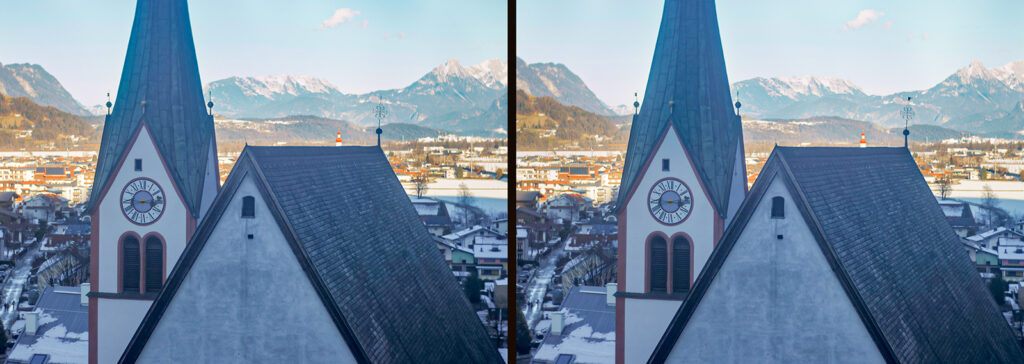
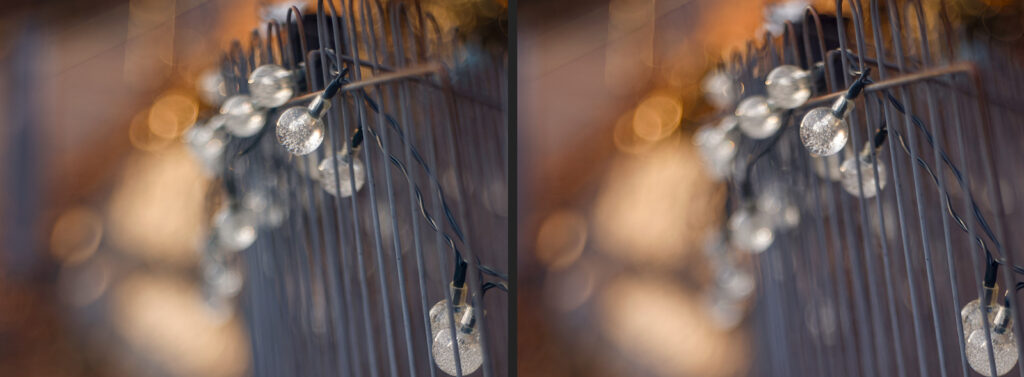

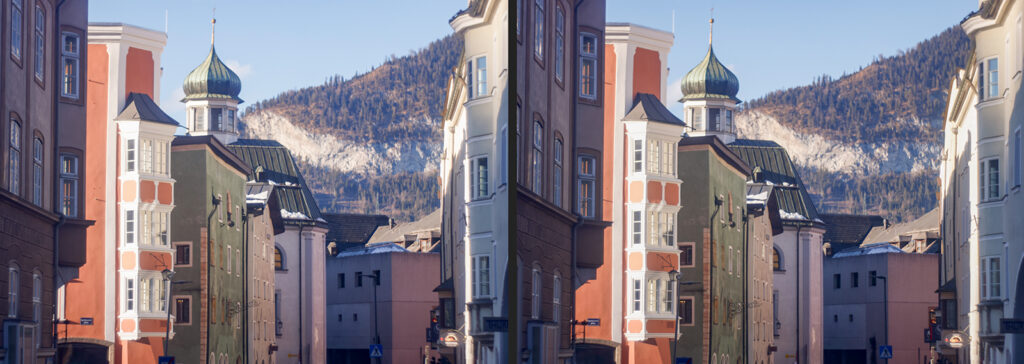
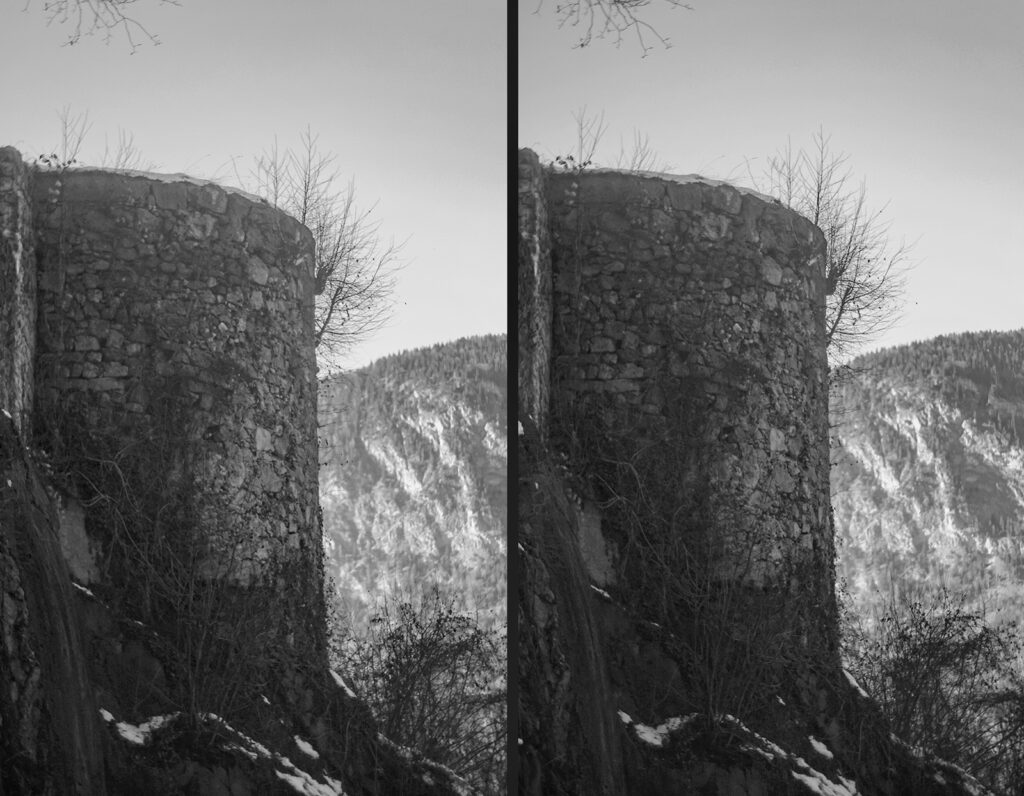
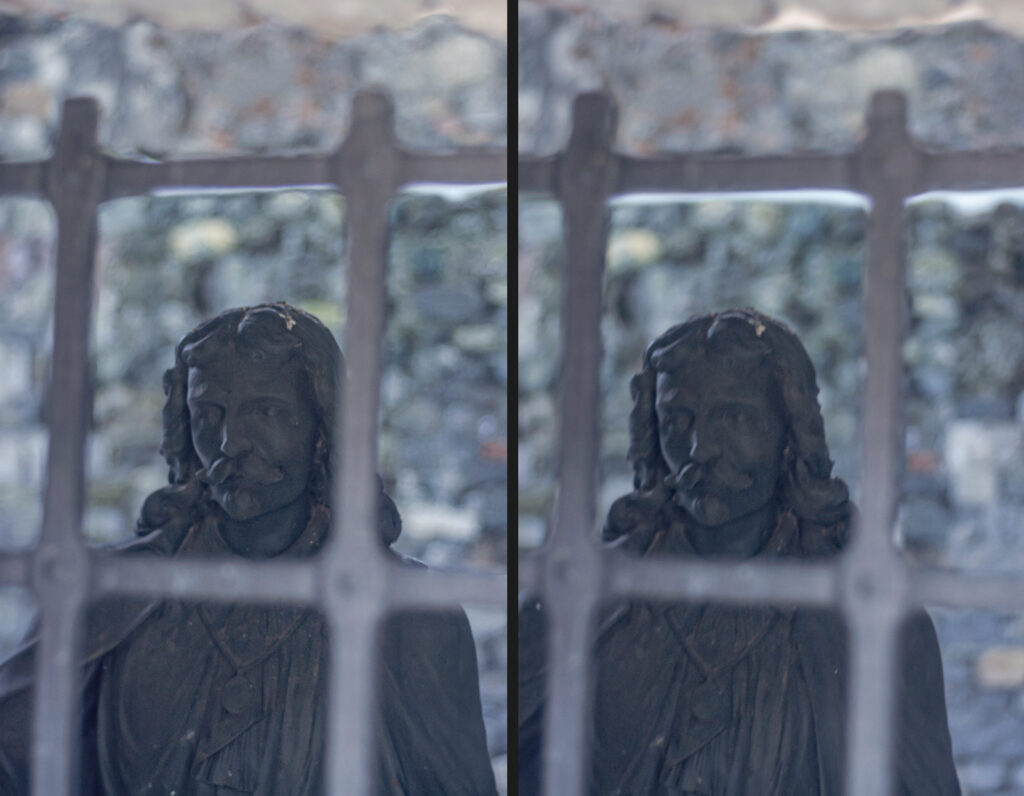
Emil Busch Glaukar Anastigmat 100/3.1
Emil Busch Glaukar Anastigmat 105/3.1
Even though they’re just 3 sample shots, it’s worthwhile taking a look at the results flickr user Andrii Radevych managed to get with a sample of this lens, adapted onto a Fuji GFX camera.
Emil Busch Glaukar Anastigmat 110/3.1
Emil Busch Glaukar Anastigmat 115/3.1
Emil Busch Glaukar Anastigmat 120/3.1
⌀ 52.5 mm (Serie I)
Emil Busch Glaukar Anastigmat 125/3.1
Emil Busch Glaukar Anastigmat 130/3.1
Emil Busch Glaukar Anastigmat 140/3.1
Emil Busch Glaukar Anastigmat 150/3.3
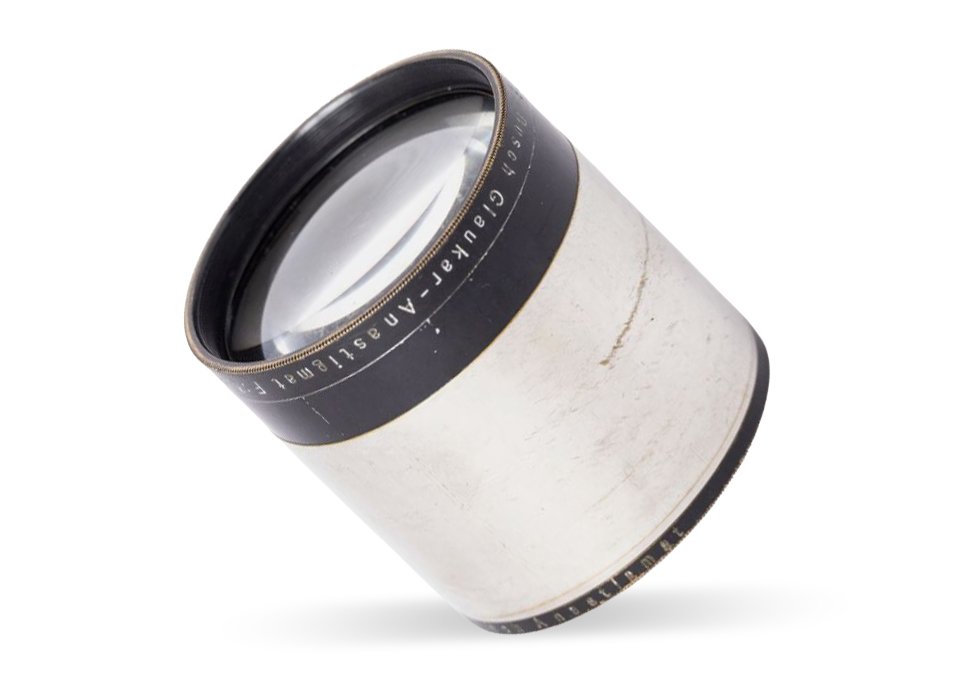
Fellow vintage lens experimenter Sven Rahm from Germany helped me out by sharing some impressions of that lens. He considered it a solid lens, but not easy to handle due to the focal length & diameter. While the resulting sample images looked very good, they weren’t distinct enough to warrant keeping it, which is why he parted with the lens. Thankfully he shared some images of the lens as well as sample shots, so you can see for yourself:



And here are some of Sven’s thoughts on the lens:
“My Glaukar sample, is a classic triplet lens and, due to the lack of coating (as well as a chip on the glass and some cleaning marks on the front element), has rather low contrast, even with the lens hood in use. I find the chromatic aberrations well corrected; if anything, spherical aberrations are noticeable, but not dramatic.
(Translated from German)
Focused to infinity, I find it quite usable, and the center sharpness is very good.
The bokeh is typical of a Cooke triplet and, under certain conditions, it can also produce soap bubbles (like many other Triplets and four-element lenses).
I no longer own it, since its optical condition was no longer satisfactory for me, and I also considered the 15cm focal length too long.”
Emil Busch Glaukar Anastigmat 180/3.7
Emil Busch Glaukar Anastigmat 210/4.2
⌀ 62.5 & 82.5mm (estimated)
Emil Busch Glaukar Anastigmat 290/4.5
Emil Busch Glaukar Anastigmat 400/5
Excursion: The butchering of the Busch name…
The Glaukar was even re-released by a (funding-wise somewhat successful) Kickstarter project in 2018. I usually appreciate such efforts, but unforuntely this one didn’t turn out well…
Since I don’t have any first-hand experience on the matter because the Kickstarter happened years before I was getting into old lenses, and I don’t know anyone involved personally, I won’t claim to know the truth. But I managed to assemble some information about the project and decided to include it here as a reference.
When I looked at the initial Kickstarter pitch, it was surprising and somewhat comical to see that the description used a different (non-Glaukar) old brass Busch lens as a comparison and optical inspiration:
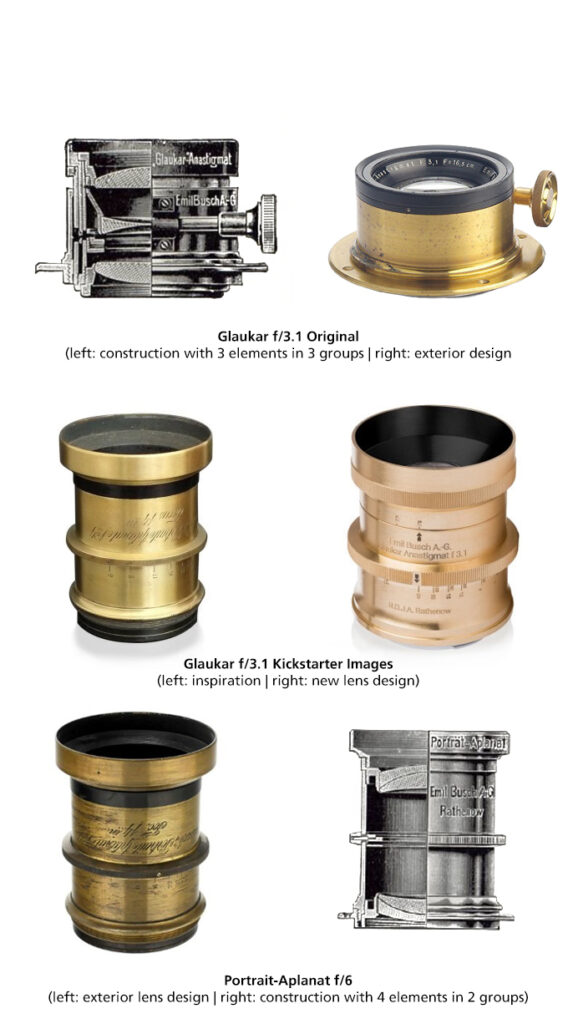
If you look closely, you can clearly see that the old lens among the images shown on the Kickstarter page (middle row) has neither an f/3.1 aperture, nor is it a Glaukar. The inscription says: Portrait-Aplanat which – as far as I know – is an f/6 lens using a 4 elements in 2 groups (known as Steinheil Aplanat or Dallmeyer Rapid Rectilinear) symmetrical design.
Because I was still very curious how images shot with the new Glaukar lens looked like, I started to look for samples and when I couldn’t find any – besides the ones shown as part of the project itself – got a little suspicious. So I started to look into the project and – boy, oh boy – I can’t say I enjoyed what I had to find out:
The Kickstarter updates made it seem like everything was going relatively smoothly – with some small setbacks and delays along the way, but nothing unusual – until a couple of months before the lenses should have been shipped to early backers.
At this point the people behind the Kickstarter informed their backers that their main investor had a severe car accident. That’s very tragic of course and completely out of the control anybody. However they also dropped the information that this individual, called Stefan Immes, was the CEO of net SE, a company which had launched several Kickstarter projects before, mostly for Meyer Optik Görlitz re-releases, like the Trioplan or Primoplan.
Most, if not all backers of the project, learned about that detail for the first time as part this sad announcement. Some even claimed in the comments or elsewhere that they would have never backed the project, if they had known about that.
Unfortunately the kickstarter backers seem to have gotten no refunds for anything. It’s quite an unfortunate story, I’d say. Of course – if it really happened – the accident of the net SE founder is tragic and it’s understandable that this caused a lot of chaos and left the small company in disarray…. however some comments by angry backers claim, that the filing for insolvency happened before the accident:
“… What upsets me as a backer is not a tragedy like the CEO’s auto accident. It’s horrible and not in the company’s control. What bothers me is the evident dishonesty about the bakruptcy filing. That this filing was made before the accident, but no one said anything, is dishonest at best…”
Here’s another take by a news article comment from dpreview forum member Mistral75:
“Globell B.V., net SE’s main operational subsidiary (it’s a software editor and distributor), renamed ColorTec B.V. as of 24 October 2017, was declared insolvent as of 7 November 2017 and liquidated and dissolved as of 29 May 2018, some two months before Dr Immes’s alleged ‘traffic accident’. (…) This could have been the main cash drain, temporarily ‘patched’ by the lens crowdfunding projects. “
In the same comment section people claim that the facebook entries from Stefan Immes don’t reflect anything hinting at an accident and so several commenters doubt the validity of the claim. It’s very hard to verify or falsify those claims, because names of people involved in traffic accidents usually aren’t published. But the whole thing just doesn’t add up.
Coming back to the Glaukar kickstarter (which doesn’t even mention the involvement of net SE): This update #19, shortly before the accident, is certainly looking interesting, given what people found out about the company behind net SE:

The same message about the accident was also posted on several other kickstarter projects:
Globell E.V. had its own kickstarter and as you can see from the comments section there, more than a couple of unsatisfied backers as well:
After reviewing all of the evidence I could find, comparing the dates and taking in the additional information that desperate and very angry people in the kickstarter comment sections and various forums managed to dig up, I’m fairly confident to say that the Glauker Kickstarter was an intentional scam and while not all of the employees and partners involved might have been in the know and deceiving backers of the project intentionally, it still is highly likely that several people were involved in this deceiving activity. Due to the earlier Trioplan 100 mm f/2.8 re-release, it’s possible that there wasn’t even a lot of prototyping/calculation work necessary, and the somewhat surprising choice of a new Glaukar lens might have been influenced by that.
If you’re curious how the couple of the admittedly nicely looking sample shots (credit to the photographers responsible for them, some of whom might have been completely clueless about the whole Kickstarter debacle) which were released to promote the project compare to the real deal, you can find my attempts to show that earlier in the article.
Ultimately the whole thing was an unfortunate story, mainly for the people who lost a significant amount of money, but also for the Busch and Glaukar name, which were slandered for no good reason.
Excursion: The Glaukar Anastigmat 7cm | Another Kiptar in disguise?
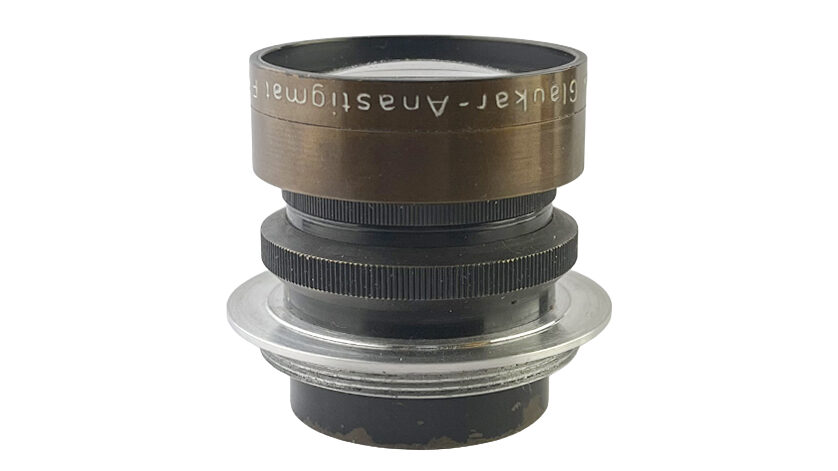
*** SPOILER ***
Click to reveal the spoiler
I left this (admittedly long) part in for entertainment purposes and to give you an idea of how hard some things are to find out/proof, when there’s a significant lack of information around a particular topic.
The TLDR is: This lens is almost definitely fake. It was not made by Emil Busch and there’s no connection to the real Glaukar lenses whatsoever as far as I can tell. It is indeed an ISCO Super-Kiptar lens. Why it was made remains a small mystery though.
*** SPOILER END ***
ISCO Kiptar and Super-Kiptar lenses seem to appear under the weirdest banners… Kiptar lenses have been sold under the Zeiss Ikon ‘K’ label and I also found substantial evidence for Super-Kiptar lenses being sold as Zeiss Alinar IV as well. Many were also sold under the labels Philaron or Philar by Philips, some perhaps even as Focusar by Bauer and finally a number of 35 and 70 mm lenses as Kollmorgen (Super-Snaplite) in the US.
But a Super-Kiptar disguised as an Emil Busch Glaukar? That was really beyond my wildest imagination, until I got hold of this lens.
The Glaukar-Anastigmat 7 cm f/2 I stumbled upon didn’t look like much. It certainly left the impression of not being in its original state and that the variable aperture was later installed. But that’s not the weird part, because particularly before WWII projection lenses have often been used as taking lenses and thus occasionally modified with an aperture mechanism, lens hoods etc. The Glaukar series was among those, which even came in two distinct versions: One as a projection lens and the other one as a taking lens.
Because I was fairly convinced to have a pretty good overview of the Glaukar designs made over time, I was very surprised to see that the Glaukar-Anastigmat 7 cm f/2 lens I got seemingly was a 6 elements in 5 groups Double Gauss design. More symmetrical 6/4 Double Gauss designs had been used extensively by several manufacturers in the years following the 1920 invention of the Opic by H.W. Lee and the particular 6/5 variant with 3 separate elements in the front cell and a doublet + single element in the rear cell, was famously used by Schneider Kreuznach for some Xenon lenses in the late 1930s.
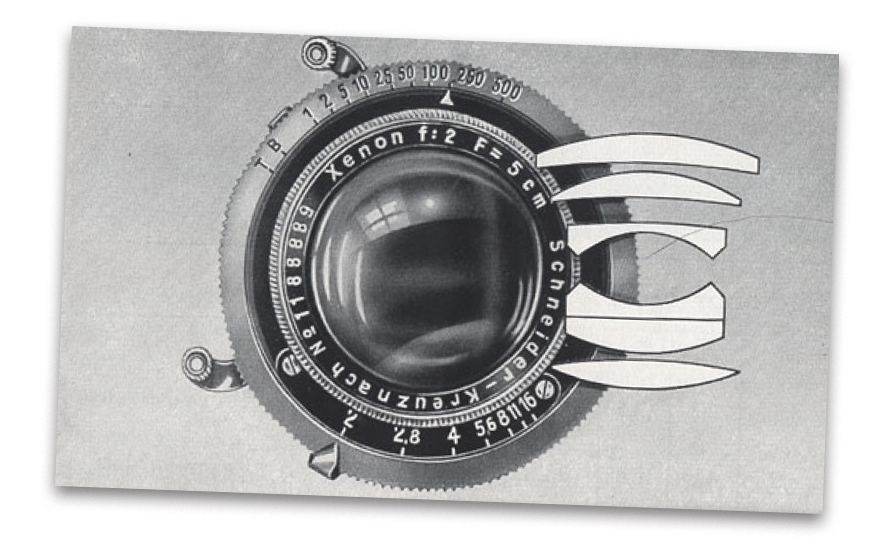
Later on the Schneider subsidiary ISCO Göttingen based the design for their Super-Kiptar f/2 lenses on that Xenon variant as well. And that’s exactly where I had seen that type of lens barrel before. The Super-Kiptar f/2 lenses – when stripped of the outer metal tube/holder do have an extremely similar look.
On the following image you can see the fully assembled Glaukar 7 cm f/2 lens on the top, the separate lens cells in the middle and an image of a Super-Kiptar 70 mm f/2 (taken by user gorvah from the digicamclub forum) on the bottom.
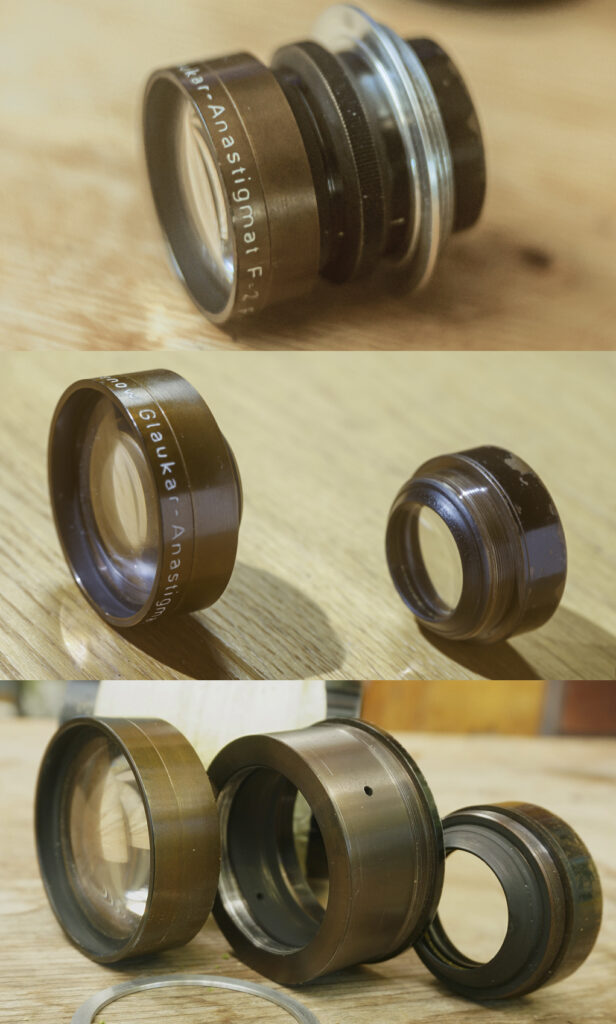
While they looked very similar at first glance, user gorvah on the digicamclub forum was kind enough to measure the diameters of the lens cells and they were completely different.
| Emil Busch Glaukar-Anastigmat 7 cm f/2 | ISCO Super-Kiptar 70 mm f/2 | |
| Ø front cell | 42.5 mm | 52.5 mm |
| Ø rear cell | 34 mm | 42.5 mm |
| length | 46 mm | 55 mm |
On the image below you can spot additional similarities, but also differences. Here the lens is compared to a 80 mm Super-Kiptar, but the differences shown would likely apply to a 70 mm version as well.
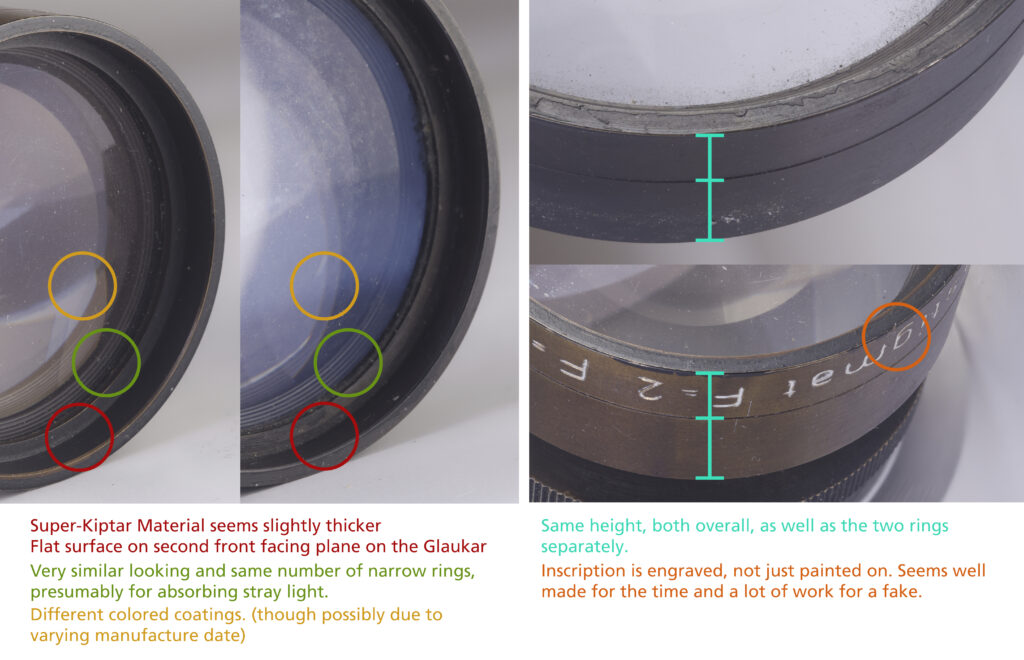
The more details I looked at, the less likely it seemed that the lens was indeed identical to a Super-Kiptar of the same focal length.
By digging deeper and looking carefully I discovered that there might be different versions of the Super-Kiptar however. In an online listing by Gudrun Besler – who helped me out with some great sample shots for the Kiptar article already once – I found images of another Super-Kiptar 70/2 and this time everything seemed to match:
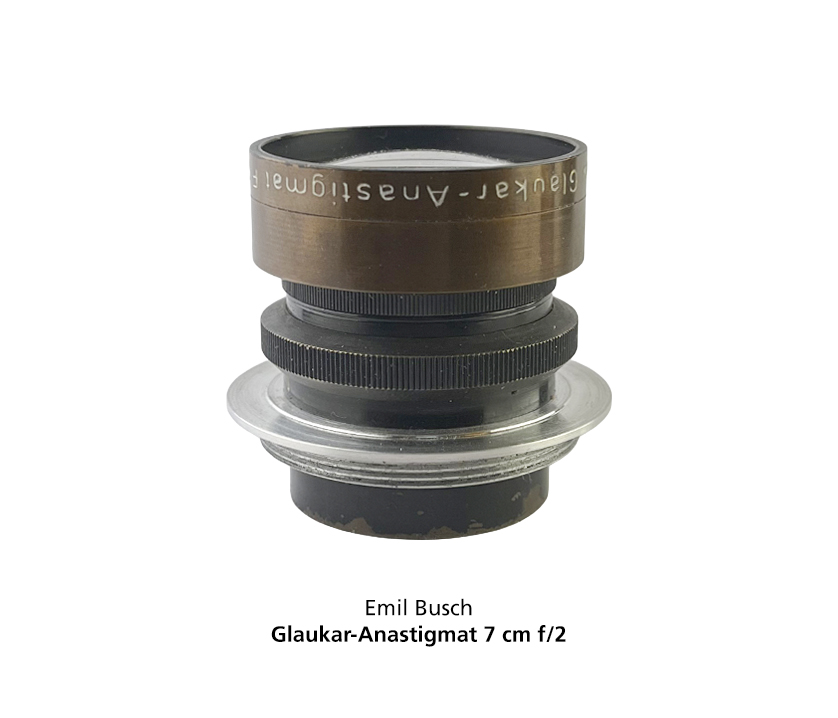
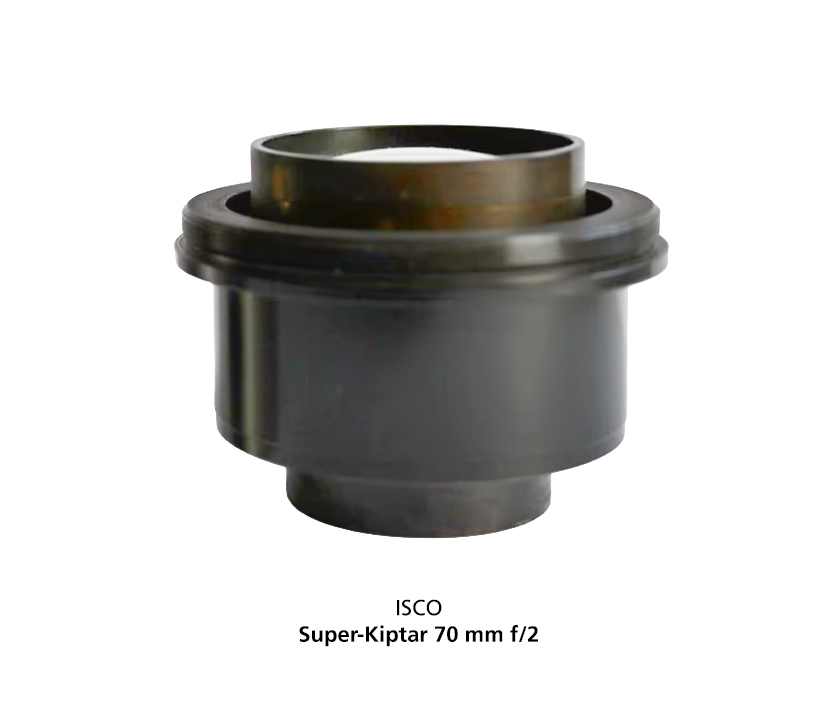
Gudrun measured the parts for me (thanks for that!) and they were identical. The front and rear cells do have the same diameters. For further clarification projection lens expert Bosun Higgs also helped me out a lot with some observations and tricks for checking and comparing the lenses.
After all the examinations it seems pretty clear: The lens cells are indeed from a Super-Kiptar.
At this point I remembered that I had suspected another series of lenses to be Super-Kiptars before… the Zeiss Alinar IV. And the resemblance is even more obvious there. So I thought, that if there really was a connection between the Super-Kiptar and this unusual Emil Busch Glaukar, it might have been through Zeiss. I don’t know how widely known or well-documented it is, but I’ve been told that a LOT of manufacturers from Germany had to source glass elements from Zeiss at some point due to the advanced coating technology, which was only done by Zeiss in-house.
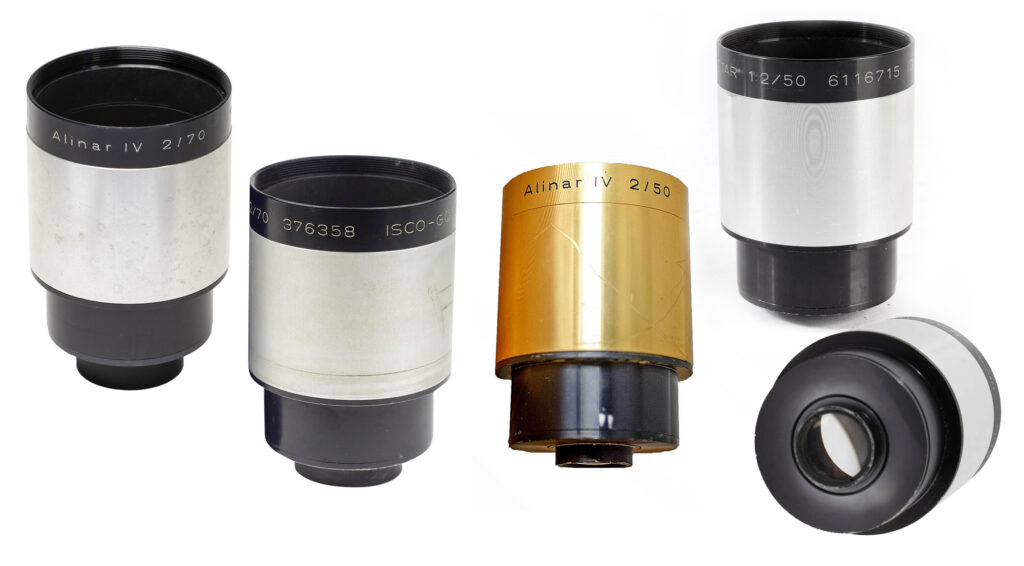
Perhaps Zeiss and their unique glass-making & coating capabilities were the connecting factor behind the surprising similarities between the ISCO Super-Kiptar, Zeiss Ikon Alinar and Emil Busch Glaukar-Anastigmat?
Well… NO! While I was able to find evidence, that Super-Kiptars, sold with ‘Zeiss-Ikon Alinar IV’ inscriptions, actually existed, the (somewhat separately operating) company Zeiss-Ikon – which was an important manufacturer of cine projectors at the time –apparently sourced their lenses from various manufacturers, including ISCO in Göttingen. And while relabeling an ISCO lens as Alinar IV is slightly weird as well, it seems to make a lot more sense to do that, than to smack on a company name, which had already ceased to exist several years prior (1945).
One final theory? Exakt-ly
Unrelated to my look for the origin of this particular lens, but as part of my general research on the Emil Busch Glaukar family, I also stumbled upon two different Glaukar lenses, which were used as taking lenses on a camera, generally known as ‘Nacht-Exakta’ (Night-Exakta). From a quick look-up (please correct me, if I’m wrong on that) I got that this was basically one of the regular Exakta camera models, but instead of the standard lenses, equipped with faster alternatives from different manufacturers. The Zeiss Biotar 8 cm f/2 was one of those lenses, the Meyer Primoplan 8 cm f/1.9 seems to have been another.
When I learned that the Busch Glaukar-Anastigmat 8 cm f/2 has also been used on a camera like that, I’ve started to wonder if that could also apply to my weird 7 cm Glaukar. And while looking for information on that, I not only found out that these cameras were regularly equipped with 7.5 cm focal length lenses as well, but also found one of those cameras fitted with a Glaukar-Anastigmat 7.5 cm f/3.1 lens in addition to other slightly shorter lenses.
So far I haven’t been able to find a reference or image of a combination with a faster Glaukar however, even though it seems like a possibility for Espen Susort’s interesting Glaukar 7.5 cm f/2 lens mentioned later.
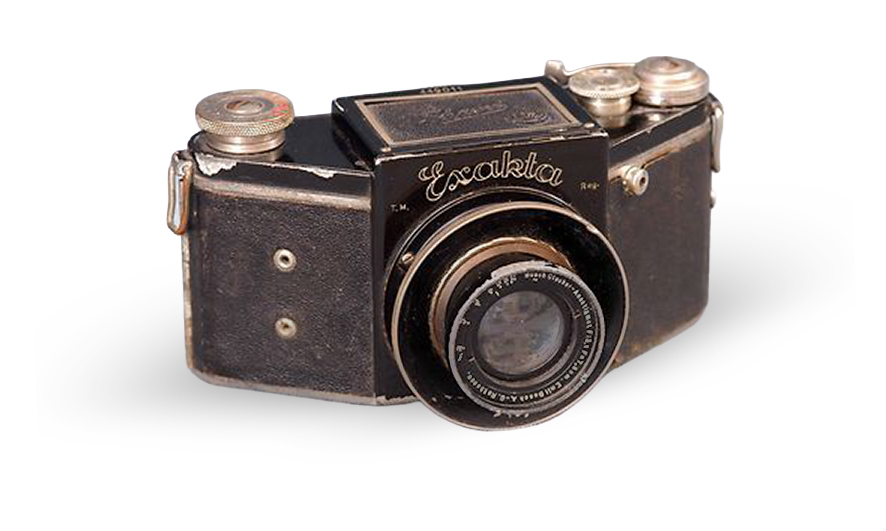
But back on the Glaukar-Anastigmat 70/2:
As stated in the spoiler-tagged part at the beginning:
I’m certain this lens is a fake!
All the connections (to Zeiss, Exakta and particularly ISCO) are somewhere loose to unrealistic and it doesn’t seem to make sense to label something Emil Busch Glaukar, which was made by another – equally or even more renowned – company, unless there was some incentive, for example for a lens to be used in the GDR while hiding the fact that it was from West-Germany, or something similarly weird and unlikely.
Apart from the strikingly similar measurements and look of the lens cells compared to the Super-Kiptar, the inscription also started to show signs indicating a fake lens under closer inspection with a macro lens. Take a look:
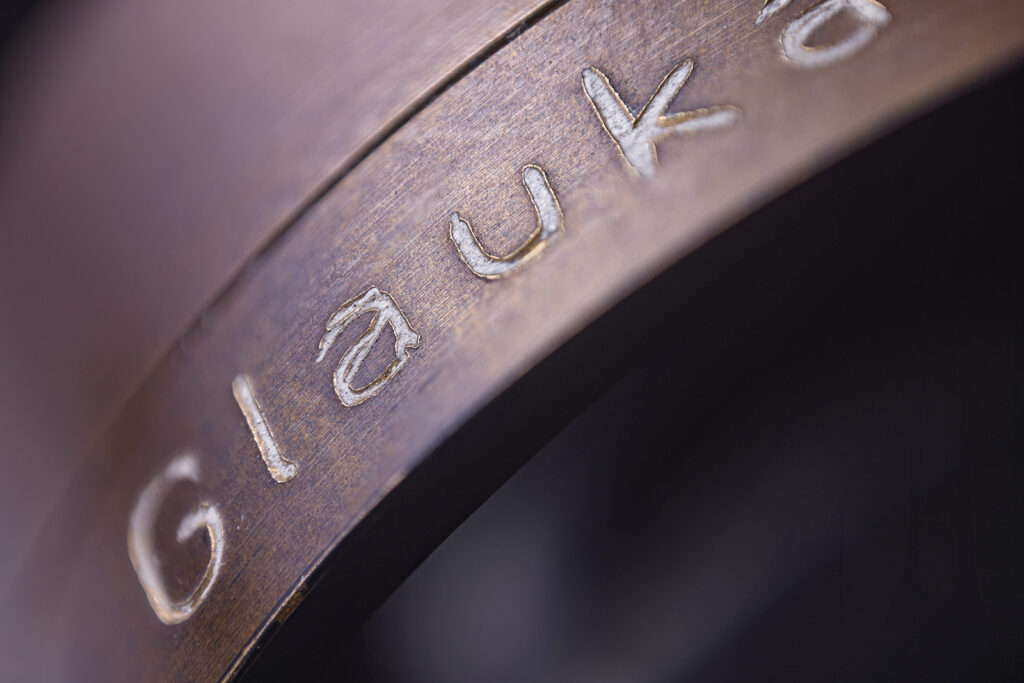
It really doesn’t look bad to the naked eye, but these lines don’t match other Emil Busch made inscriptions and do look home-made in a way.
Once more I want to thank Sven Rahm for his curiosity and reminders to find out the truth, because he didn’t stop asking questions about the weird similarity between the ISCO Kiptar series and the Zeiss Ikon Kinotechnik lens he found. And while trying to find more information on the matter in order to help him out, I’ve stumbled upon several cases of ISCO lenses rebranded as Zeiss Ikon and other brands.
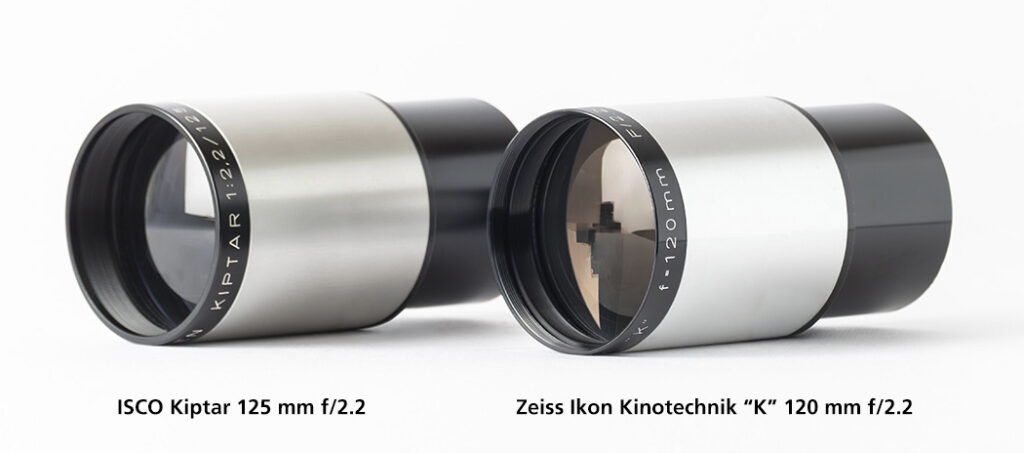
However in the case of the weird Glaukar-Anastigmat 7 cm f/2 my search into this direction wasn’t successful… It just seems to be a reasonably well-done fake. The person who sold it to me – very knowledgeable and with a sincere interest in the history of photographic optics – told me, that the lens came from the son of a former employee of Laack in Rathenow, a company deeply connected (and later merged) with Emil Busch/ROW. Perhaps it was just an attempt from a citizen of the GDR to use a high-quality lens from West-Germany without raising any suspicion about its origin?
After a serious attempt to find out, I considered this my best (and only real) theory, because why anybody would go to such lengths nowadays, in order to scam somebody without asking for the significantly higher prices these lenses usually are offered for, just went beyond my imagination.
Perhaps this was meant as a test to find out if yours truly would be able to come up with the necessary sleuthing capabilities, articles like this need?
In this unlikely case I hope to have passed the test.
If you want to know more about the real ISCO-made lens it turned out to be, you’re once more invited to check out my ISCO Kiptar projection lenses article.
One final hint at more of these fake lenses having appeared on various online marketplaces over the years, came from Espen Susort, who told me about him having suspicions about the true identity of that lens when he saw it online. He was able to dodge the bullet that hit me (shame on me!) and even managed to find another differently labeled sample online. This one had the inscription ‘Voigtländer Ultron 7 cm f/2’ which of course is a significantly better match for the quite similar Super-Kiptar f/2 design, particularly because both might have originated from a design by the same optics engineer: Tronnier.
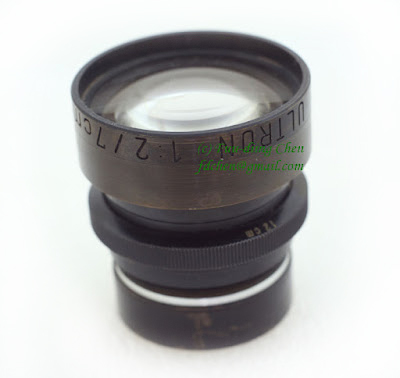
As you can see by the image from blogger fdchen, responsible for the great blog antiquelenses.blogspot.com the lens seems identical.
This of course heightens the suspicions that these modifications were being made intentionally to fool people into buying supposed prototype or unrelease lens variants. The choice of the absolutely weird types of lenses, the non-insignificant amount of necessary work to adapt a (more than decent) projection lens into a working variable aperture still remain big question marks. It just seems like an elaborate hoax and I’m still waiting for someone to jump out behind a tree and shout
“Haha, I made you believe for a second that this 50 years old Super-Kiptar was actually an 80 year old Glaukar! You phony”
and disappear in a mirror of smoke and confetti. Something like that would probably be a fitting conclusion for this whole excursion.
But regardless of its origin (and that it actually turned out to not even belong in an overview of Emil Busch and ROW lenses), what does this lens do on a camera, you ask? Well, see for yourself:


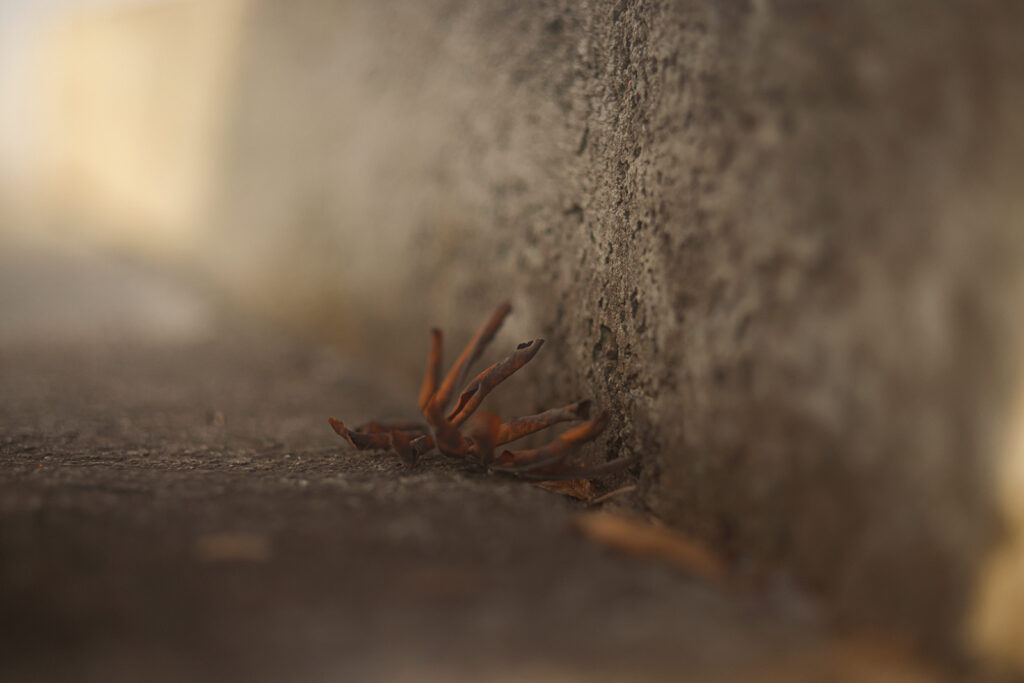



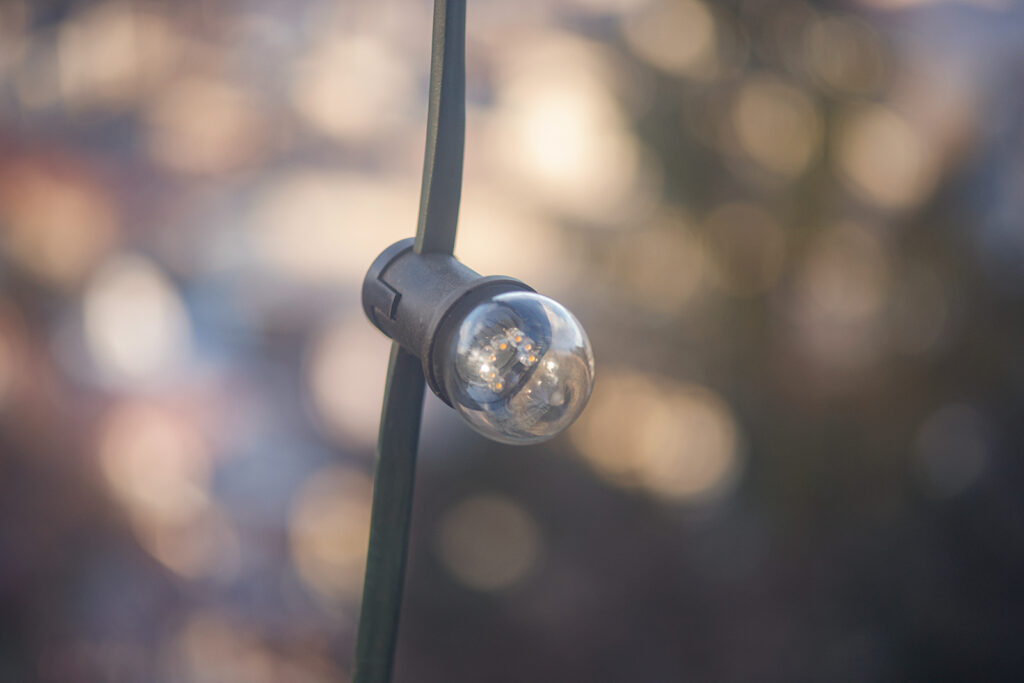






Compared to one of my favorite Double Gauss lenses in a similar focal length, the Schneider Kreuznach Xenon 75/2 it might be slightly less sharp and lack some contrast, but it holds up reasonably well for a banged up Super-Kiptar.
In terms of correction of CAs and smooth transitions it might even have a slight edge, perhaps in part due to the lower contrast. For portraits it might be a matter of taste, but at distance, I wouldn’t expect it to be able to compete with later Double Gauss lenses.
Glaukar Anastigmat (Others)
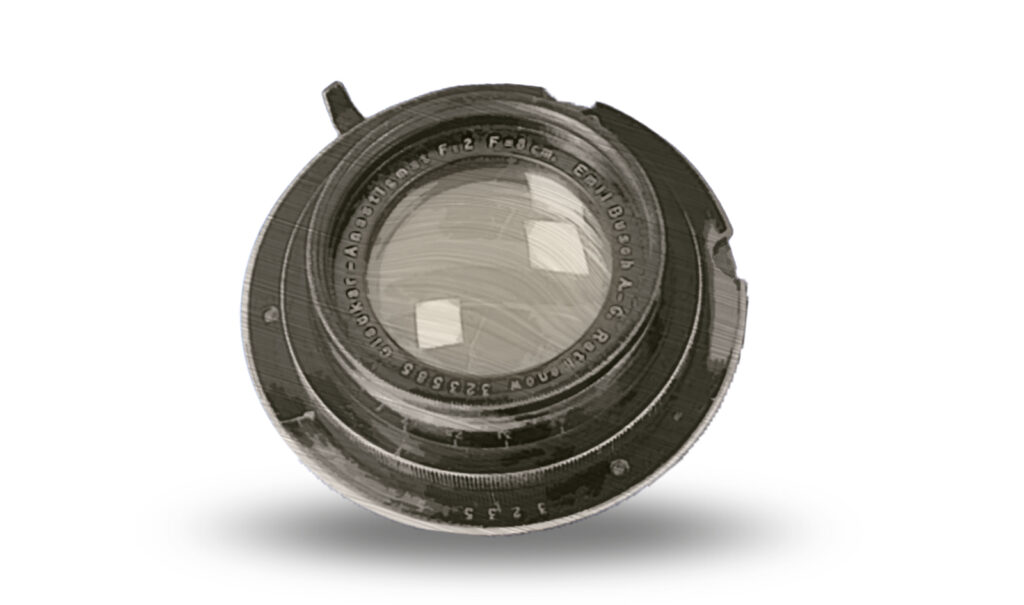
Even though the Glaukar was mainly known as a Triplet lens, the name was later used for a variety of optical designs, ranging from 4 to 5 elements. While I was quite surprised by that when I found out about it initially, that’s actually more common than many people think and was also done with several even more well-known trademark lens names like the Zeiss Tessar, the Kodak Ektar or the Schneider Xenar. What’s more surprising in the case of the additional Glaukar variants however, is that they weren’t announced in any magazine, weren’t featured in ads and probably also not patented. All of that is pointing towards special use cases or something secretive.
52.5 mm
Emil Busch Glaukar Anastigmat 75/2
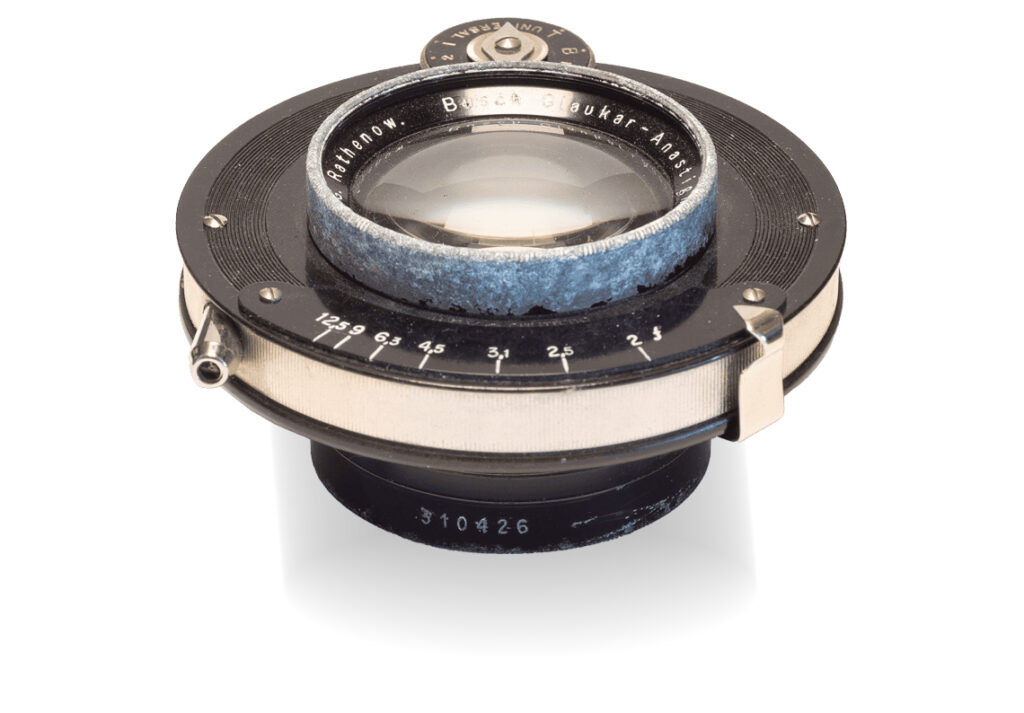
Espen Susort has written about this lens, which he considers “maybe Emil Busch’s greatest mystery”, in great detail. It seems to be a taking lens or converted into a shutter to be used as one and Espen mentions the curious fact that this lens isn’t the usual Taylor-Triplet like most of the other Glaukar lenses. Instead it’s what he refers to as a “reversed Tessar”. Ever since I’ve looked deeper into this kind of 4/3 design (front doublet and two single rear elements) I’m hesitant to continue using that description for lenses like that though.
Because this design is actually significantly older than the Tessar and was first used in Petzvals second (Orthoskop) design and a couple of decades later altered by Steinheil into what they called the ‘Portrait-Antiplanet’ and after a while ‘Triplar’.
Steinheil made Triplar designs as fast as f/2.5 (called Neo-Triplar) in 1911 already, though only in shorter focal lengths. It looks like Emil Busch decided to experiment with that kind of 4/3 design as well and while it didn’t seem to allow for the same kind of correction and image quality the Zeiss Tessar offered, it certainly seems to have been an interesting alternative for certain kinds of application – like low-light shooting or as a faster anastigmatic alternative to the existing Glaukar-Triplets. The company managed to make these lenses even faster than Steinheil at f/2. Why they decided to label them Glaukar as well is unknown, but it might have been because of the existing name-recognition.
In a comment on his article, Espen added that he wasn’t so sure about that particular 4/3 design being the only option, because the front cell of the lens couldn’t be disassembled and so he provided another possible design of 5 elements in 3 groups with a cemented triplet in the front and two single lenses in the rear cell.
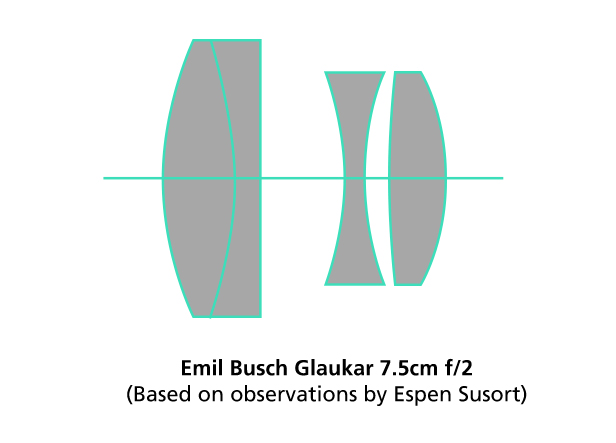
In a forum post later on, Espen clarified however, that there’s indeed not much of an alternative to the 4/3 Triplar design he deems the most likely fit. He measured the different elements/groups and the thickness and diameter don’t allow for anything like the 1+2+1+1 design, the Glaukar 80/2 seems to have used. It really appears to be a unique design.
Further evidence for the existence of a 4 elements in 3 groups Glaukar variant come from a publication called Photographic Lens Manual and Directory from 1959. As you can see from the text it shows lenses for hand and press cameras and might thus refer to one of the shorter Glaukar taking lenses for cine cameras and also features a Tessar-like variation in terms of design, but it still looks like another solid proof for the Glaukar name being used for such a design.
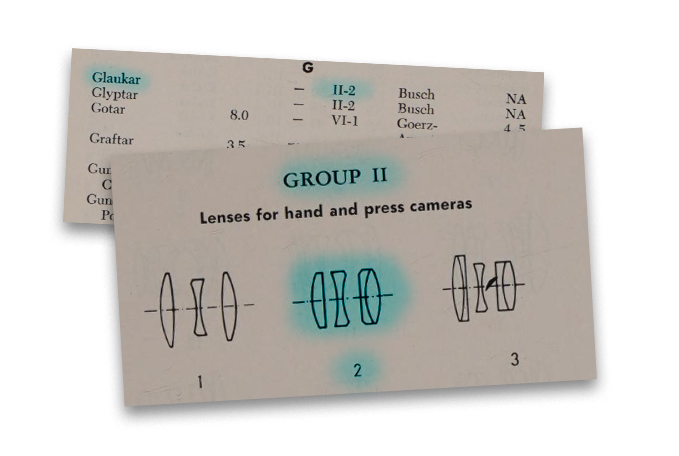
Thankfully Espen also shows some great looking sample shots taken with the 7.5 cm Glaukar-Anastigmat in his article, so make sure to check it out.
In addition to that flickr user rangefindernotdead has also shared a couple of interesting captures with this one. I couldn’t find an image of this lens, but it’s likely identical to the lens Espen has written about. The lens certainly has its own interesting qualities and look for street photography like that.
Initially I also suspected that these lenses may have been sold for stage projection (as you can see later in the article) but because they’re specifically called ‘(Bühnen-)Weitwinkel’ (stage wide angle) though after a while I’ve started to doubt it, mainly because this design isn’t known for wide-angle properties, but also because additional information on that lens series surfaced.
Emil Busch Glaukar Anastigmat 80/2
According to H. Thiele’s excellent book Große Nummernsammlung Photoobjektive this model doesn’t seem to be nearly as rare as one would expect it to, when looking at the exorbitant prices online sellers seem to want for it. According to user varg on forum.grossformatfotografie.de these lenses feature a 5 elements in 4 groups design, with the second group being a doublet. One could perhaps call it a Triplar with an additional element or a distant cousin of the Ernostar and for some reason these lenses don’t seem to be well suited for photography.
I feel like this tracks with what I’ve seen online in terms of sample shots. While the aforementioned 75/2 version does produce nice looking rendering for the most part, the 80/2 variant might have been optimized for specific tasks and so I wouldn’t recommend thinking about buying such a lens for anything close to the absurd prices some people online try to get for them.
The description of the lens design also matches H. Naumanns lens design data for some of the shorter Glaukar lenses, so it might have been re-used for several lenses.
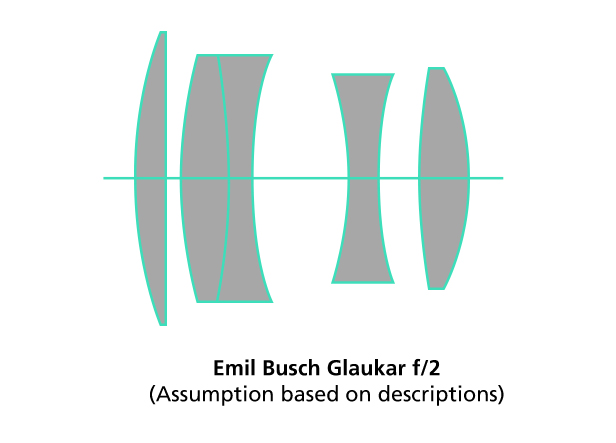
But this design is a speculation at best. It’s interesting that it does seem to be different from the 7.5 cm version even though there could be some similarities, if you view it as the same design with an added front element.
While it’s going to be hard to find out, what these Glaukar-Anastigmat f/2 lenses were intended for originally some additional information about alternative use cases available through connecting old ads and some auction details.
The Glaukar-Anastigmat 8 cm f/2 lenses were apparently also used on cameras called the Noviflex Eichapfel 6×6, which was an early medium format camera for the 6×6 cm (or 2 ¼ x 2 ¼ inch) format.
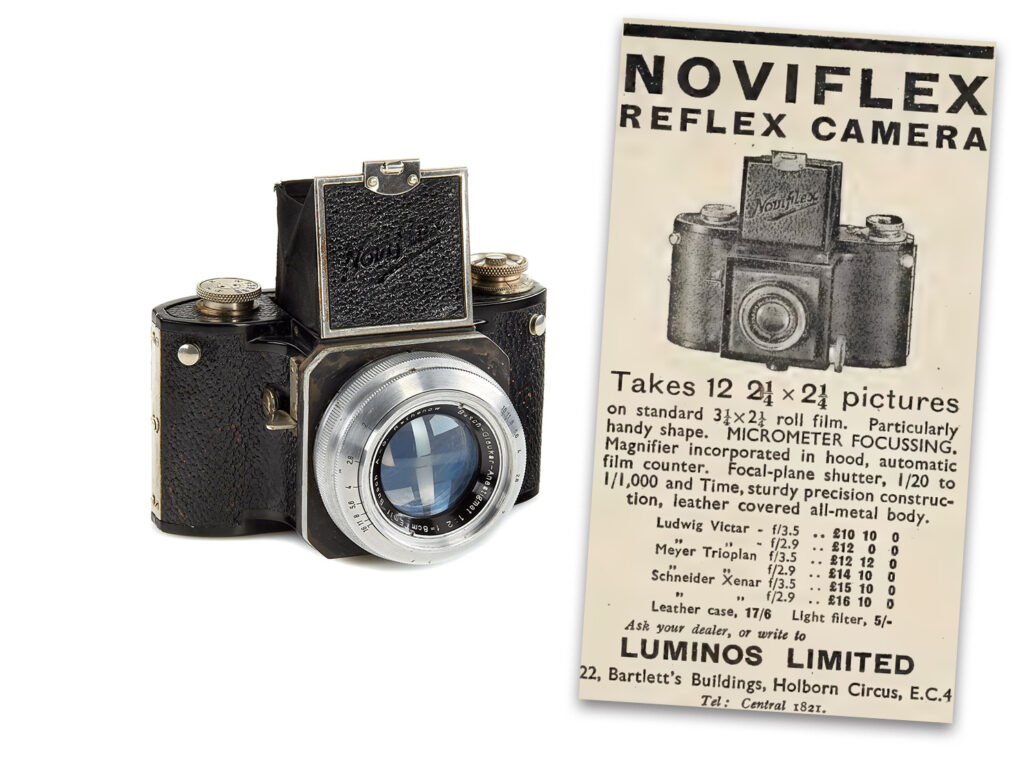
I managed to find numerous ads for this camera and it was supplied with a number of different lenses, but no mention of a Glaukar, despite several such cameras showing up in auctions over the years. An additional inscription on these particular cameras provides a likely explanation however. It reads: ‘RSHA’ which is an abbreviation for ReichsSicherheitsHauptAmt (Reich Security Main Office) which was an office established by the Nazi leadership.
So it seems like these were special equipment for the secret police/military operations or espionage and not intended for public use. With that in mind, it seems plausible that the 7.5 cm Glaukars which have surfaced could have been made for similar purposes. And it would certainly also explain why no ads or catalog listings can be found.
User dejmir shows some really good looking shots – particularly in terms of rendering and color rendition on flickr.
And another flickr member CyrilChen has shared a good number of shots, many featuring a highly interesting look and equally awesome tones in my opinion.
In addition there’s also a great write-up on the oldlens website by another old lens afficionado from East Asia, which provides some interesting details and a number of sample shots. In contrast to my findings the writer of the lens review suspects that this lens was made for a movie camera originally. That would certainly explain why it doesn’t cover the area one would suspect for a natively designed for something like the Noviflex Eichapfel camera, which used a 6×6 cm square format and instead doesn’t even project an image in decent quality over the significantly smaller full frame format.
Given the drop of quality towards the edges of the frame on a small medium format sensor, like the GFX, it’s hard to believe this lens was really intended for a 6×6 cm format originally.
Perhaps it stems from some entirely different application and was just adapted onto various cameras after the fact, due to its fast speed. Here’s one example where a Glaukar lens (of unknown specs) was used in a scientific application:
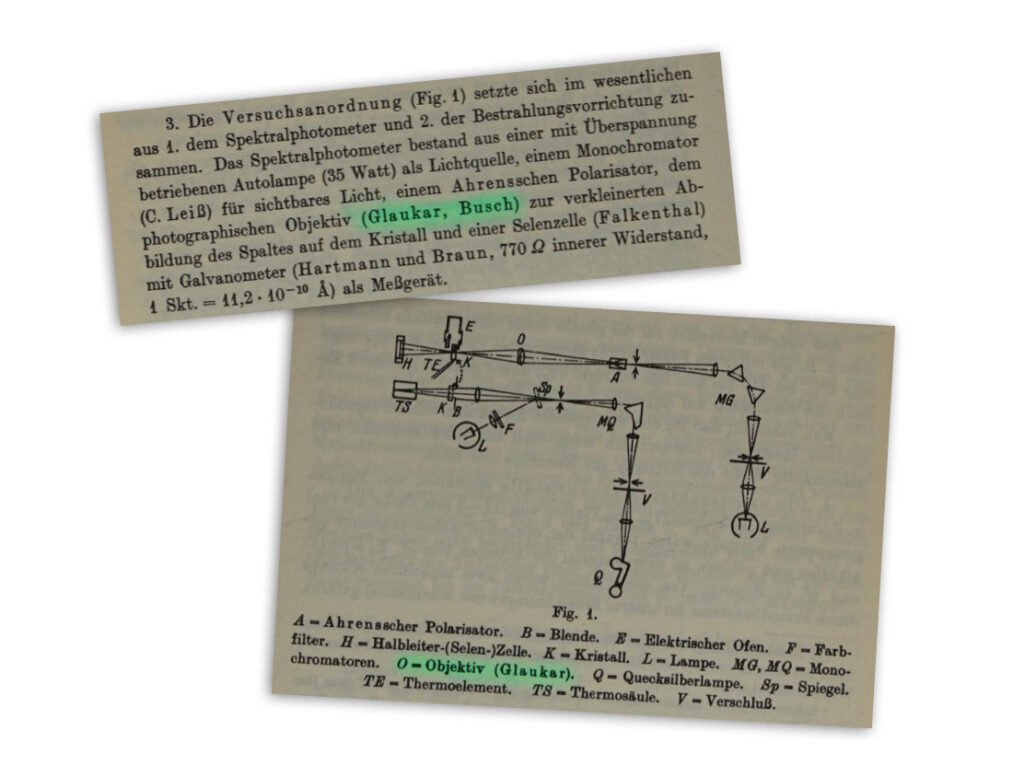
Some of the lenses found may have been either manufactured for or fitted onto the Busch/Butcher & Son Pressman camera. Either way it seems like there were at least two different variants made initially, with a number of additional adaptions/conversions later on. Here are the two basic types, as I see them:
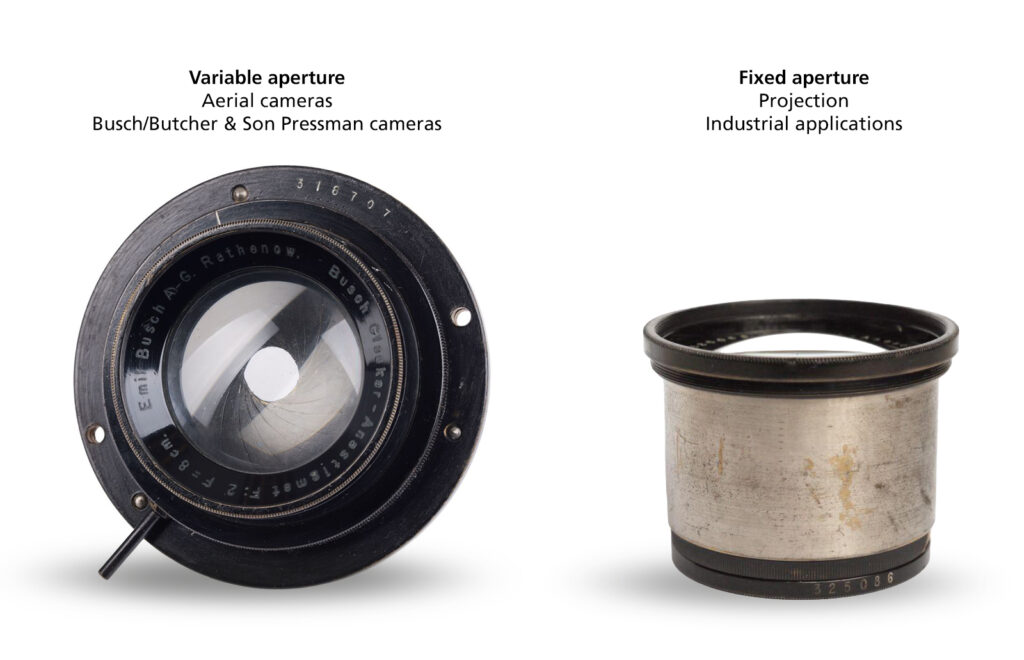
Note, that the variant in barrel as seen on the right had an additional metal barrel attached to the thread, and was said to have a 57 mm diameter. That doesn’t seem to fit any common diameter for cine projection. So it seems more likely that it was used for something else.
Some of the lenses with variable aperture do have that lever attached to the aperture ring. This is common in repro lenses, but can also be seen in aerial cameras from time to time. Also some of these lenses had their aperture limited (from f/2 to f/4.5) which would be very unusual for a regular taking lens.
While it would be surprising, it’s also possible that these lenses featured a design closer to Meyer’s Primoplan. But wait, you say… aren’t the serial numbers of the Glaukar-Anastigmat f/2 lenses suggesting a release around 1930? And wasn’t the Primoplan only released around 1938?
While that is true, a lens almost identical to the Primoplan design, was patented by Goerz in 1925 already, even though I couldn’t find a record of the company producing any fast lens with that design. It certainly is proof however that this particular calculation already was known for several years at the time.
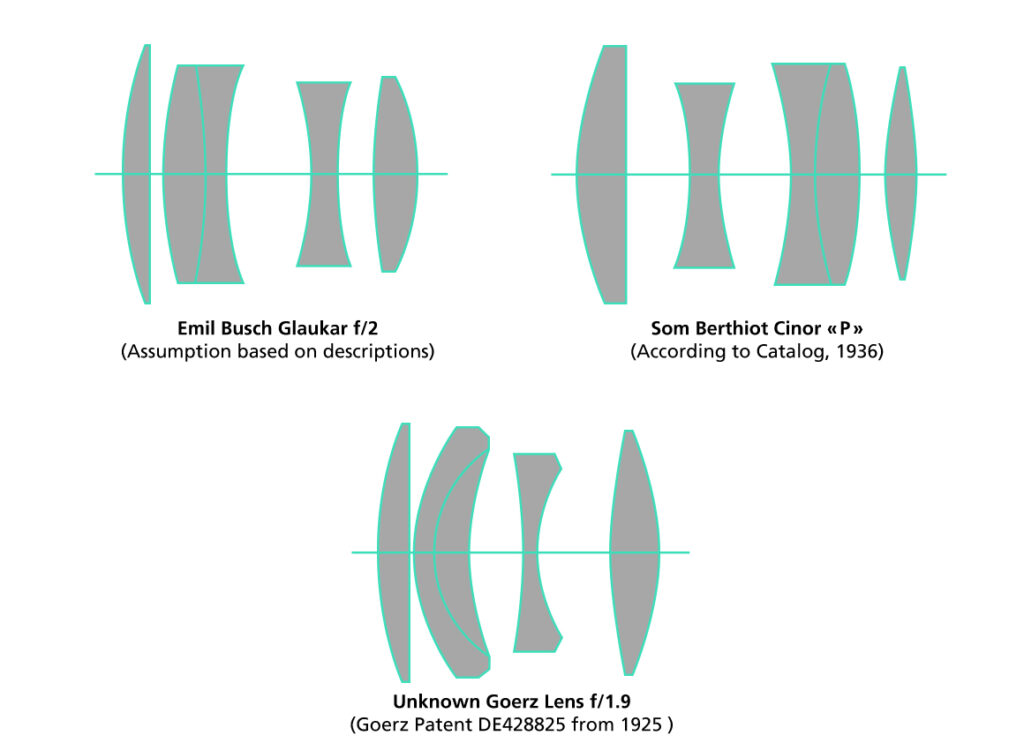
Because I don’t have a Glaukar 8 cm f/2 or a Primoplan 75 mm f/1.9 I won’t go into any details about possible differences or similarities in terms of rendering etc. It seems like the rare Meyer taking lens is superior to the Glaukar variant we don’t know the original purpose of. If you want to take a look at an awesome and very detailed review of the Primoplan 75 mm f/1.9, please check out the work of Nikolaus Burgard on the matter, who also supplied it with a vast number of great sample shots.
An if you want to get an even more in-depth write-up on the origin of the Primoplan, including the underlying original design by Goerz and several variants which never made it to full production, you should definitely pay this Primoplan article by Marco Kröger a visit.
Despite its limitations as a taking lens, a number of great looking shots taken by flickr user jeffo jeffo, can be found here.
The following two lenses were likely intended for repro-work and probably existed in a number of additional focal lengths. They all were quite slow but likely offered excellent flatness of field, even sharpness and great correction for CAs. On a forum they were compared to the Cooke Series III lenses, but of course there were many similar lenses offered by Zeiss (Apo-Tessar, Apo-Germinar), Schneider (Repro-Claron), Agfa (Repromaster) and many others. Even though they’re most likely Triplets, it’s possible that they are Triplets, but given that the Apo-Tessar features a notable exception to the regular Tessar-design, it’s also possible that they used a modified optical construction.
Emil Busch Glaukar-Anastigmat 300/7.5
Emil Busch Glaukar-Anastigmat 307/9
It’s interesting to note that the Glaukar name – which is mostly associated with being an early Triplet-Anastigmat – was used for lenses of various different constructions and for several unrelated purposes. If you happen to find a lens of that varied family, it’s certainly recommended to take a closer look at its properties.
ROW Neokino “System Busch”
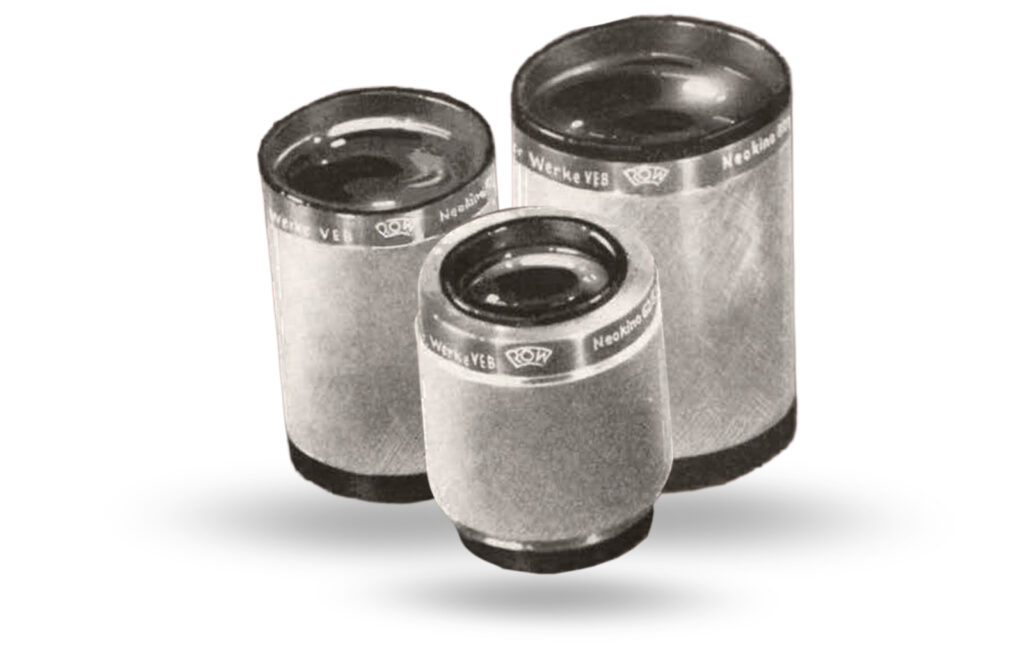
According to this entry on the german wikipedia Emil Busch was expropriated in 1945 by the allied occupation forces and what remained of it a couple of years later, in 1948, integrated into the VEB ROW. This means, that’s the earliest possible date of the ROW labeled lenses. But despite the undoubtedly chaotic times and devastating state of many cities and factories due to the constant bombing (more than 60% of Rathenow had been destroyed), an ROW catalog from around 1950 states:
“Thanks to the highly qualified experts, who had been responsible for the worldwide reputation of the Busch-Neokino lenses, production of cine projection lenses in Rathenow could commence once again as early 1945“
(translated from ROW folder)
Apparently ROW Neokino lenses were supplied for 35 mm projection only, starting from a focal length of 90 mm. 16 mm Neokino projection lenses were not offered any longer (though the Neostar series was continued). The lenses were also stopped down intentionally and many even had a (removable) fixed aperture disk inside. This was likely possible without any actual loss of light throughput, thanks to the advancements of modern coating technology and new types of glass.
⌀ 52.5 mm
ROW Neokino “System Busch” 110/2,4
ROW Neokino “System Busch” 130/2.9
ROW Neokino “System Busch” 140/3.1
⌀ 62.5 mm
ROW Neokino “System Busch” 90/2.2
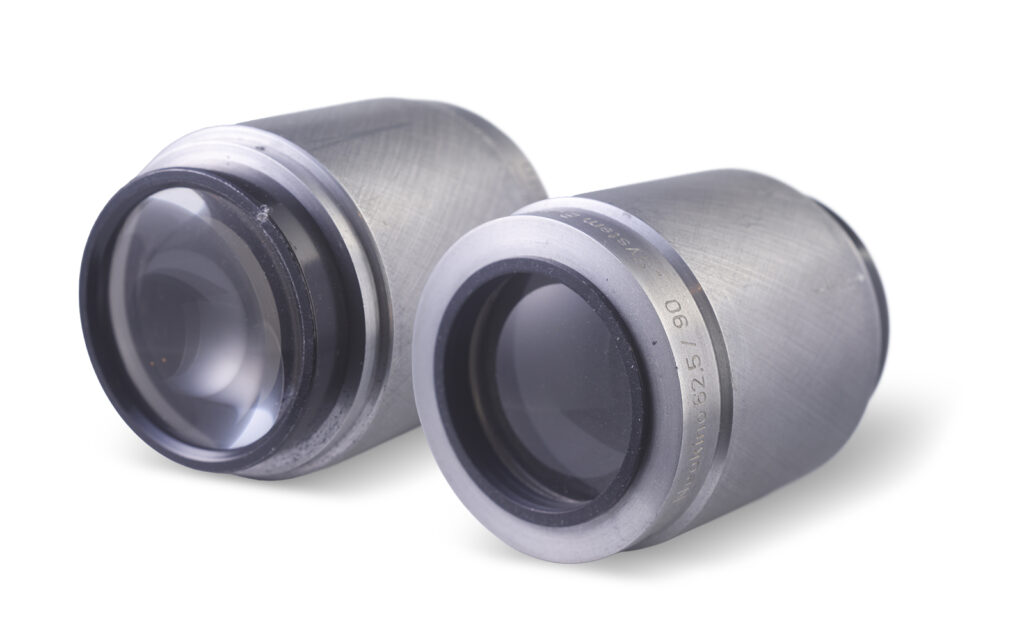
While not among the fastest lenses of its kind, this one does provide a wonderful balance of detail, smooth rendering and more than decent correction. The main difference compared to older Neokino lenses with the same diameter is the smoother rendering and minimized field curvature and of course also added contrast in many instances due to the new coating technology.
Overall these lenses are very comparable to the Kiptar series by ISCO, one of the main competitors from West-Germany at the time.
The significantly larger diameter of the rear lens group, compared to the front one, might have to do with bigger formats developed and used in cine projection at the time. Unfortunately for people who want to adapt these lenses, this often also means an intentional limitation of the front diameter and thus the necessary speed.
Here’s a comparison with what may be considered its successor, the Cinerectim:



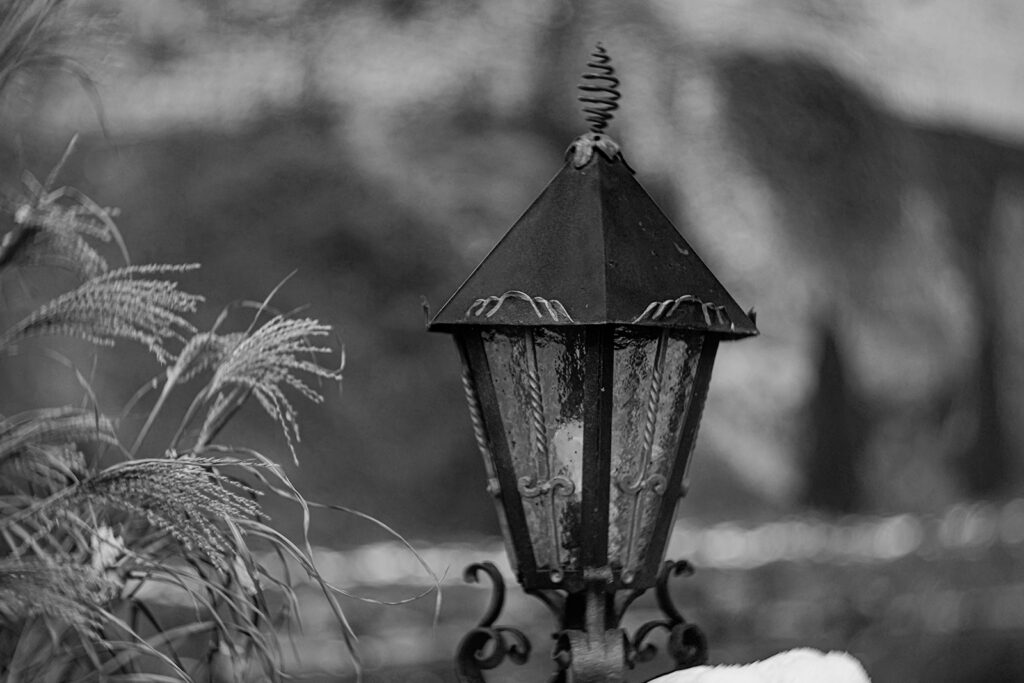

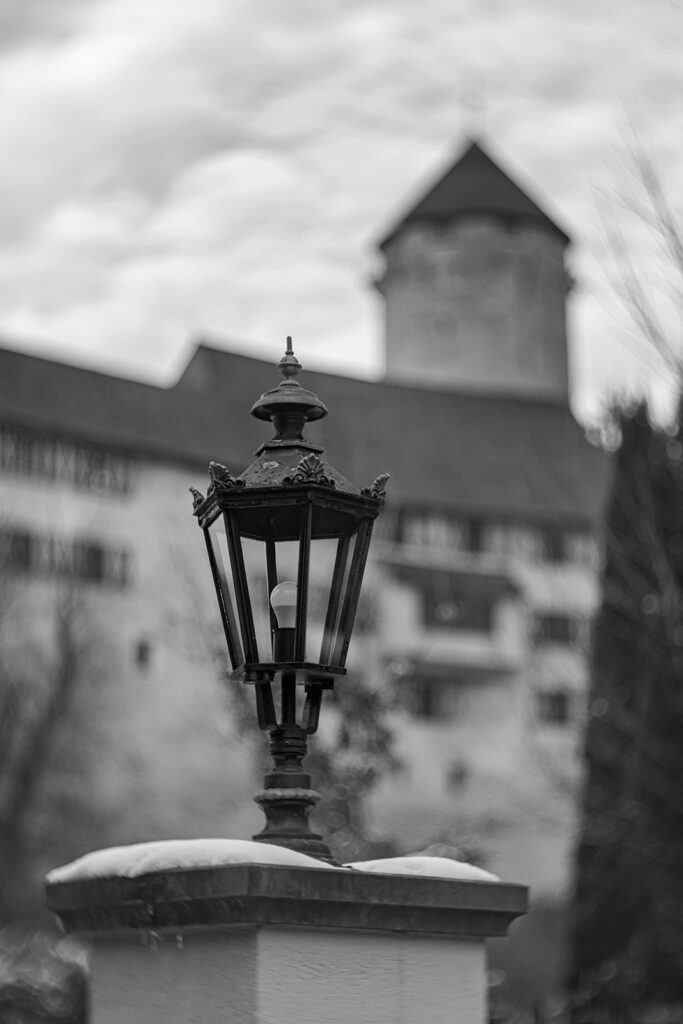


ROW Neokino “System Busch” 100/2.4
ROW Neokino “System Busch” 110/2
ROW Neokino “System Busch” 120/2.1
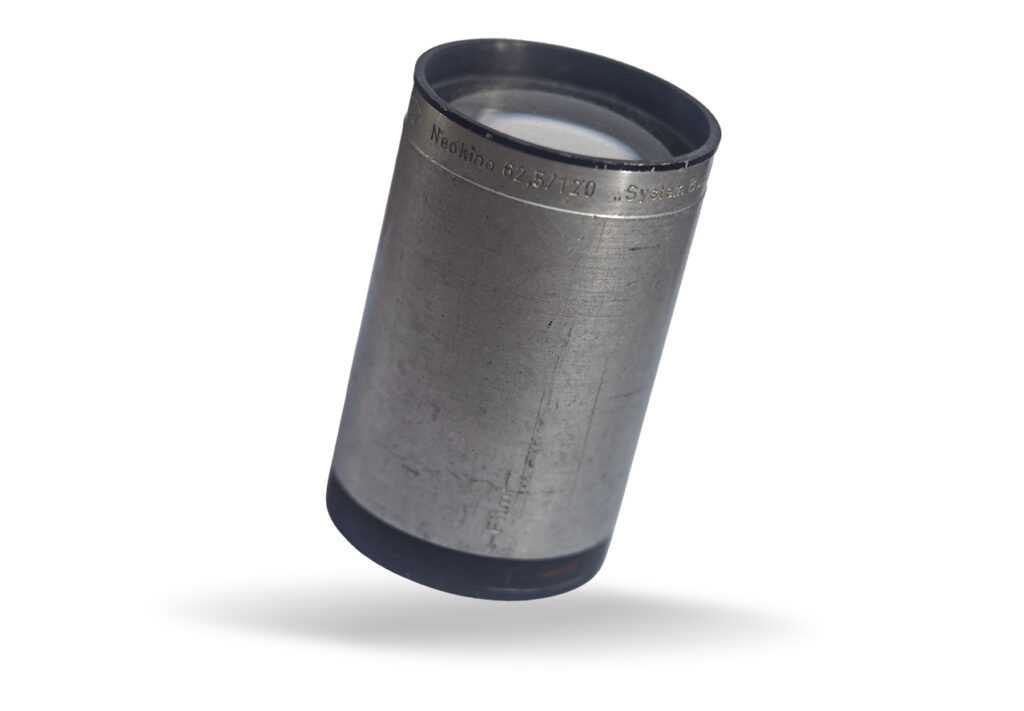
When looking at the Emil Busch and ROW Neokino lenses in comparison it’s easy to notice that there has been a slight reduction in terms of speed almost across the whole line-up. While this seems like a downgrade in the eyes of people who adapt these lenses today, it likely was done with very good reasons. Because at the time the ROW Neokino lenses were in full production coating had very likely already made a big leap, increasing light-throughput significantly, reducing the importance of maximum speed.
This sample apparently experienced some rough handling or had some kind of accident during its career as part of a cine projector setup, resulting in a rattling sound, probably from a loose glass element. Of course some impact on quality is expected in this case and so it’s quite surprising how nice and smooth the overall look still is:





And two stereo ( cross view) shots:



ROW Neokino “System Busch” 130/2.3
While I can’t share anything interesting about this lens, because I haven’t used it for more than a handful of test shots yet, it seems like yet another very good lens. Image quality at distance certainly seems more promising than with most of the older Neokino variants I’ve tried.


ROW Neokino “System Busch” 140/2.4
ROW Neokino “System Busch” 150/2.6
ROW Neokino “System Busch” 160/2.8
ROW Neokino “System Busch” 170/3
ROW Neokino “System Busch” 180/3.1
⌀ 80 mm
ROW Neokino “System Busch” 120/1.6
ROW Neokino “System Busch” 130/1.7
ROW Neokino “System Busch” 140/1.9
ROW Neokino “System Busch” 150/2.0
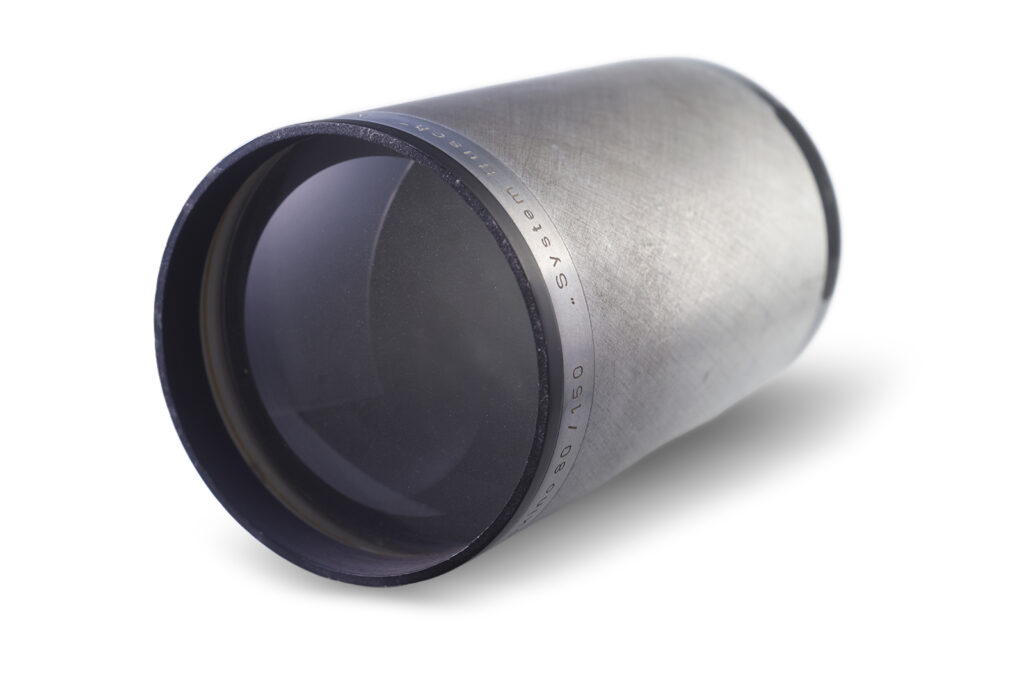
This is quite a giang lens with a diameter of 80 mm and a length of 135 mm and while it’s not necessarily heavy, due to its usual 4/3 Petzval construction and aluminium body, it’s on the outer limits of lenses I still feel comfortable with being attached to my bellows system. Because of that it was pleasantly surprised by how nice it was to use and how interesting the results look.
Of course not even the improved superfast Neokino series by ROW is a sharpness-monster and the basic Petzval design doesn’t allow for the versatility of Double Gauss Equivalents like the Visionar, but the rendering is very smooth – in my opinion significantly more so than with the older Emil Busch variants – and at least in the center part of the frame detail is quite okay.
Chromatic abberations can be a problem in challenging situations, but the enormous compression and smooth rendering easily make up for it in my opinion.



While it’s of course not going to challenge any modern fast lens in many aspects, the upgrade in terms of detail and clarity, compared to the earlier superfast Emil Busch Neokino lenses, is quite noticable in my opinion.





And a number of stereo ( cross view) shots:


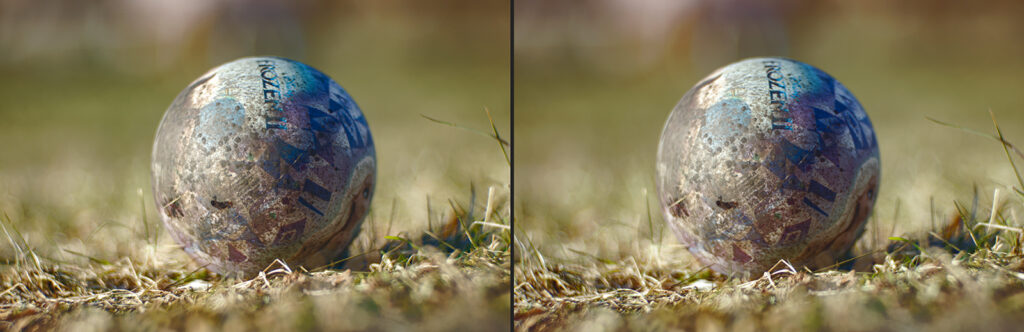
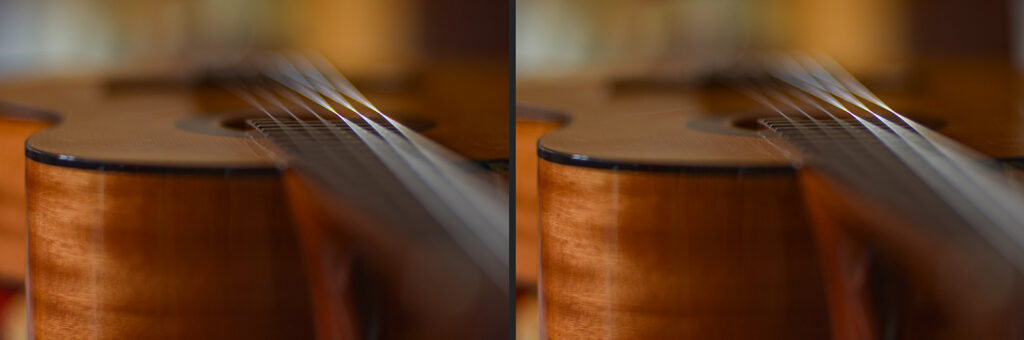
ROW Neokino “System Busch” 160/2.1
⌀ 82.5 mm
ROW Neokino “System Busch” 120/1.6
While the production of Neokino lenses for 35 mm was obviously continued after WWII, the Neokino for 16 mm seem to have been discontinued. Perhaps the competition in the market was increasing, perhaps the developments of good alternatives to fast Petzval designs too little, too late, or the new Ernostar type Super-Filmar series just too expensive to produce… it could even have been a company-internal decision from Zeiss, given that there were lots of alternatives offered within the Zeiss-Kombinat, with Laack (Heleston), Meyer (Kinon) and Zeiss (Kipronar, Prokinar). We’ll likely never know.
ROW Neostar
So far I’ve only managed to find a single sample of an ROW Neostar labeled lens online. It seems like the vast majority of the Neostars was produced between 1935 and 1945 and the series was discontinued shortly after the end of WWII.
ROW Neostar 70/1.9
Three additional series – the ROW Neorectar, Projektar and an unnamed one with a V (likely for coating) – I had never seen before, appeared in the collection of flickr member JLim, who shared some beautiful bokeh shots taken with those small lenses. They all seem to be made for small-gauge projection, either 8, 9.5 or (most likely) 16 mm. The ROW labeling clearly dates them to some point after 1948, but no specific details are known about any of those series.
ROW Neorectar
Of course ‘Neorectar’ made me think of the Cinerectar (35 mm projection) lens series immediately. Because both series only existed for a very limited time, it seems to make sense that this was intended as the accompanying series for small-gauge projection.
It’s possible that they were supposed to be a replacement for the Neostar series, but it could also have been a development of an Ernostar/Sonnar type design based on the pre-war Super-Filmar series.
Flickr user jhonilim has shared a shot of the Neorectar lens disassembled. It certainly doesn’t look like a typical Petzval design. It appears to consist of 4 groups, but the lens elements are not clearly visible even though the reflections likely suggest more than 4 elements.
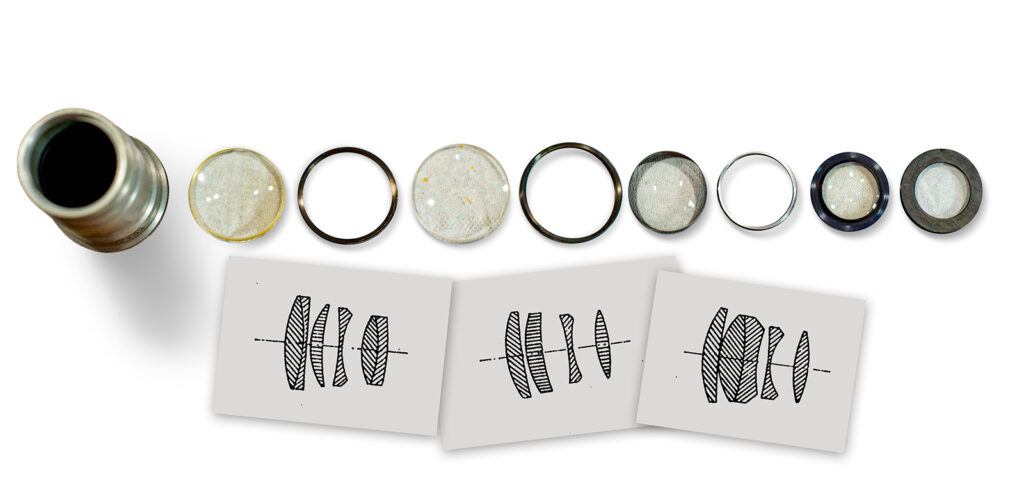 flickr/jhonilim
ROW Neorectar 50/1.6
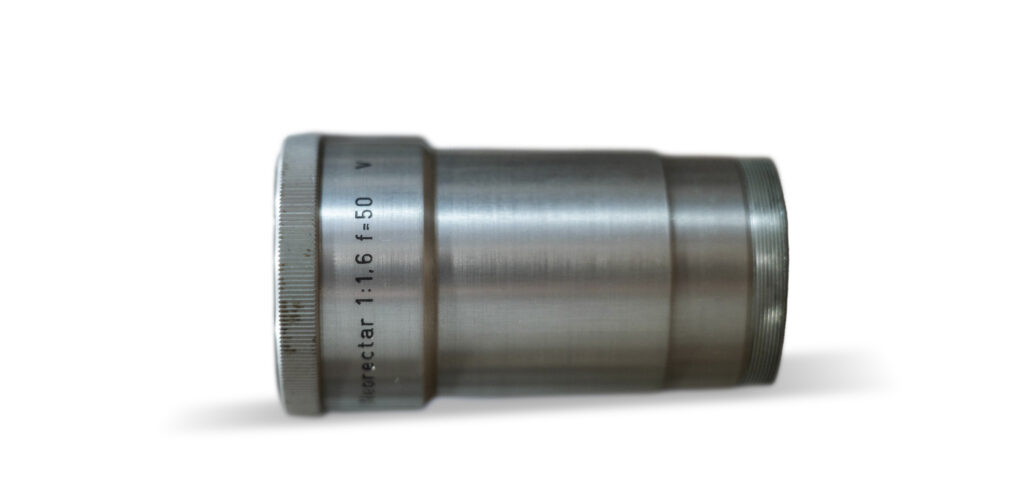
ROW Projektar
The Projektar name is particularly interesting, because there was a lens series of the same name by Schneider Kreuznach, albeit significantly earlier and for 35 mm, while this one very likely is a 16 mm projection lens.
ROW Projektar 50/1.6
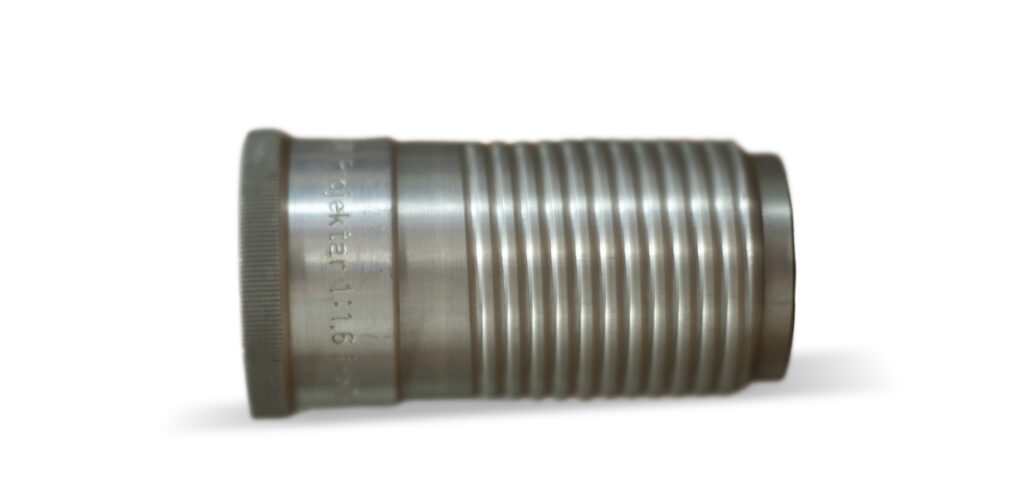
ROW –
This lens doesn’t seem to have a name engraved. There is only a red V on it which usually refers to the coating applied.
ROW 50/1.6
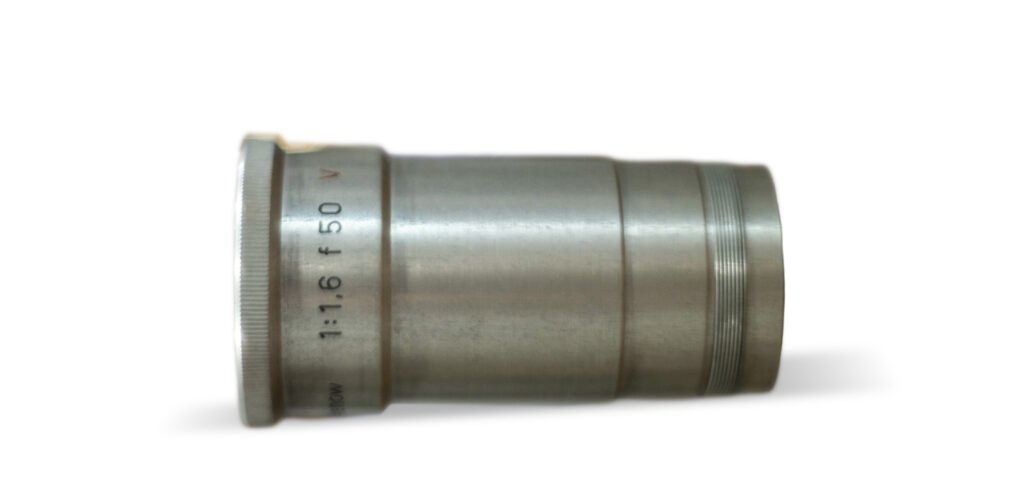
All three of these lenses could be unique/custom ones or prototypes. There’s no mention of any of them in any official material I was able to unearth so far.
ROW Cinerectar
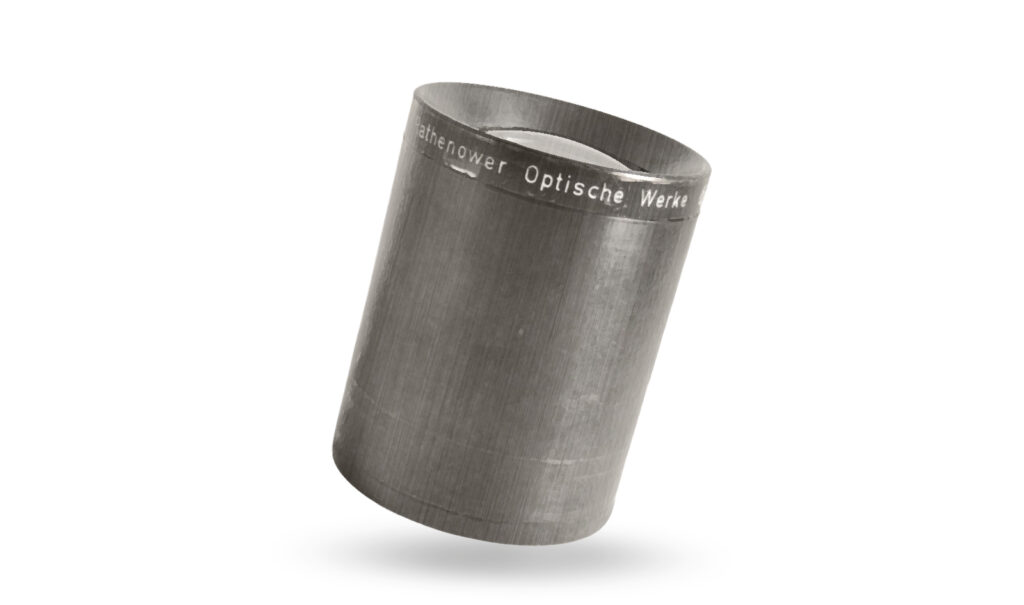
Along with the Cineluxim and the Dioluxim the Cinerectar is among the most uncommon ROW era lenses the company made. Because of its look, the similar name as well as same (Petzval) basic design it’s not unreasonable to assume that it’s basically identically to the equivalent Cinerectim models. Perhaps it was just an earlier name of that line of lenses.
Because the Diarectar line of lenses was seemingly based on a Meyer Optik design one possibility is, that the Cinerectar was also a Meyer lens. If that’s the case it could be a kind of successor to the famous Kinon line of lenses by the Görlitz based company. So far, no Meyer labeled Cinerectar lens has surfaced however which makes this an – admittedly quite unlikely – speculation for now. And if it’s indeed identical to the Cinrectim, it was very likely developed by ROW.
ROW Cinerectar 80/1.9
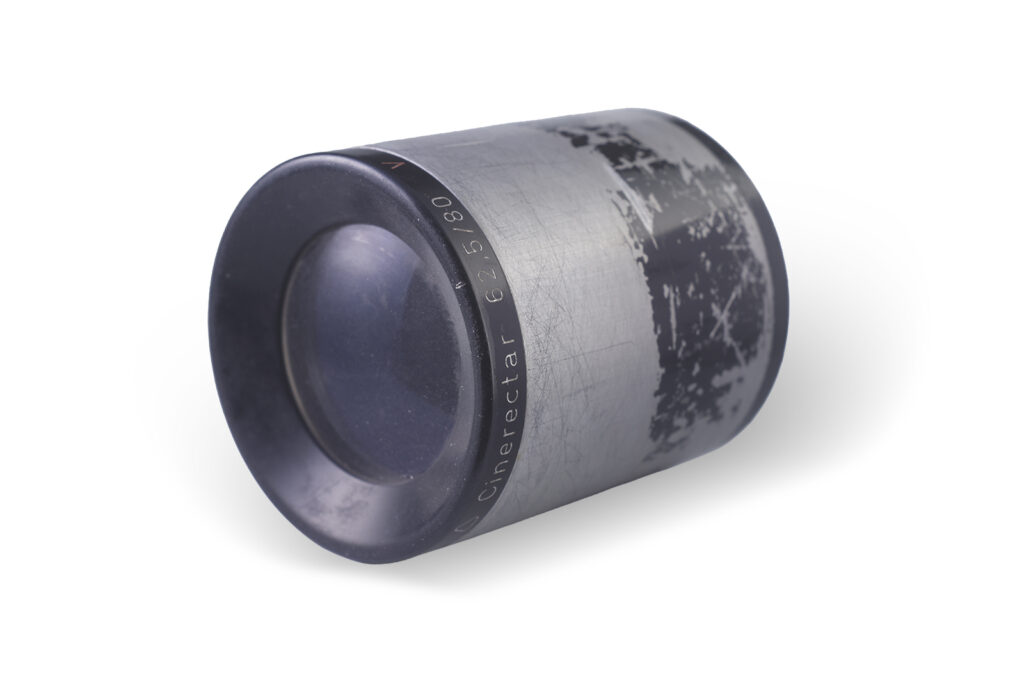
This might have been among the most surprising lenses by Emil Busch/ROW which I’ve tried so far. Given the same diameter and the same basic Petzval design, I was basically expecting another Neokino-redesign, but instead I was greeted by what I can only describe as one of the smoothest rendering projection lenses, which I’ve ever encountered.
Here are some sample shots:








The main strength of the lens is its incredibly smooth rendering in combination with visibly warmer tones compared to most similar projection lenses. It would be interesting to see if the slightly scratched surface on my sample adds to that effect, but because of my experience with other samples of the extended family of lenses, I’d say it is a distinct feature of the Cinerectar/Cinerectim series.


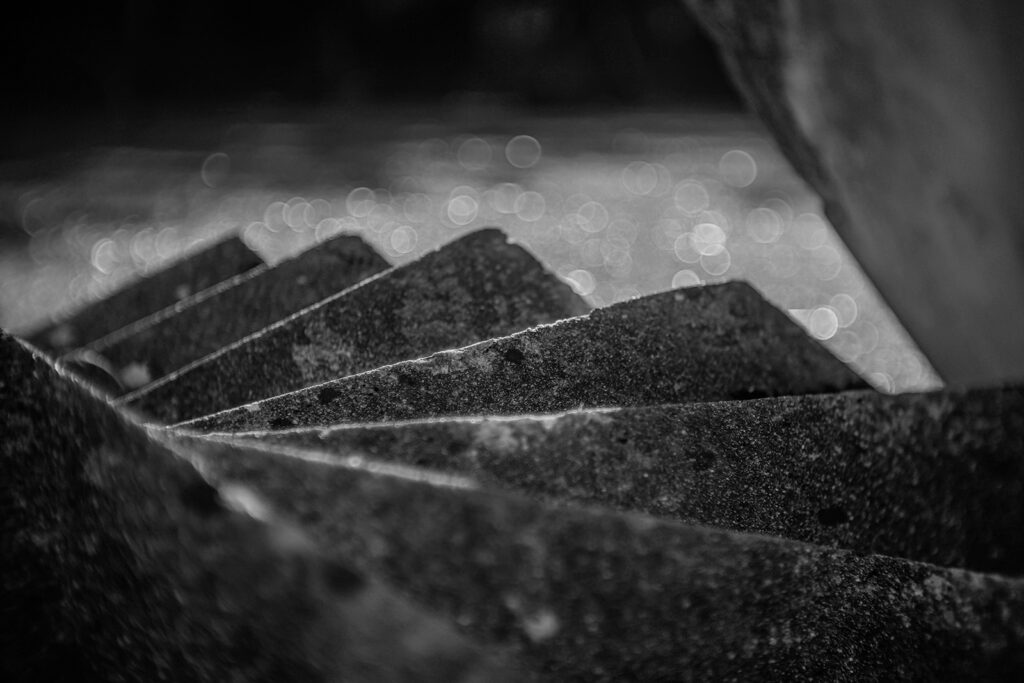

In addition to using it in its regular direction, I’ve also been curious what the lens would do when reversed. And while – as expected – there’s not much left in terms of detail and sharpness, the results were not uninteresting, because they show some slight similarities with the look of soft-focus lenses in my opinion:





Because image quality is quite good for a Petzval lens, I also decided to try and create a bokeh panorama image. While it didn’t turn out exactly as planned and the software had some difficulties dealing with the images (most likely due to field curvature), here’s the result:
It didn’t work out perfectly, but as you can seen further down, techniques like that might work better with lenses optimized for bigger image circles (like the Mod W, which I’ve also created some similar images with).
Of course it is also an effective lens for stereo ( cross view) shots:








ROW Cinerectar 90/1.9
User ulganapi on the digicamclub forum has shared some impressions, measurements as well as interesting sample shots taken with this lens. They seem in line with what I think about the shorter variant.
ROW Cinerectim
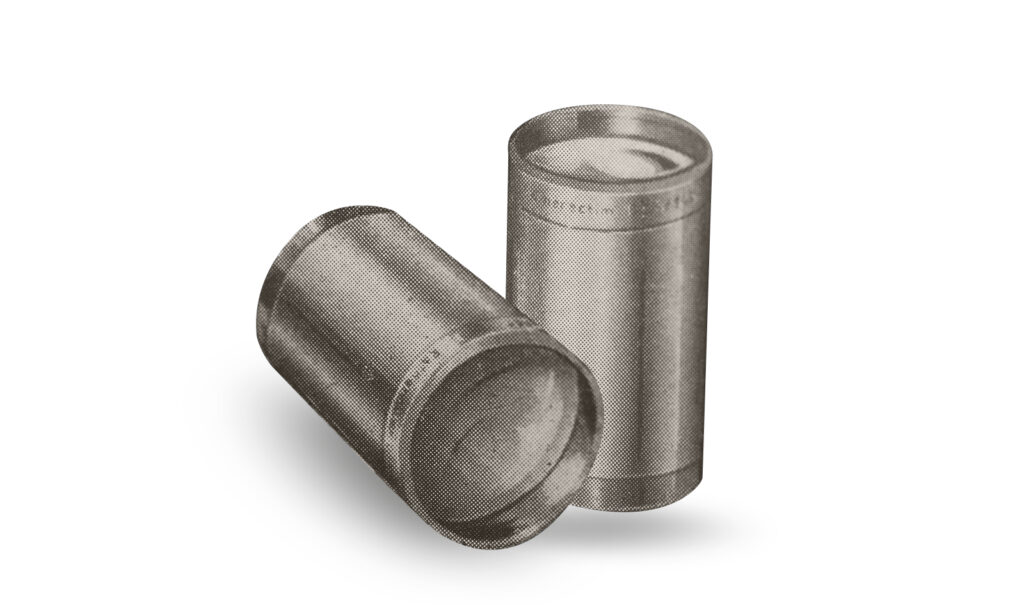
Even though it’s not specified which specific focal length the lens design drawings show, it’s obvious that the Petzval-based designs Emil Busch & ROW used were recalculated a couple of times. In its final variation – the Cinerectim – these lenses were highly perfected Petzval designs and advertised with reasonable claims of significantly better performance across the frame.
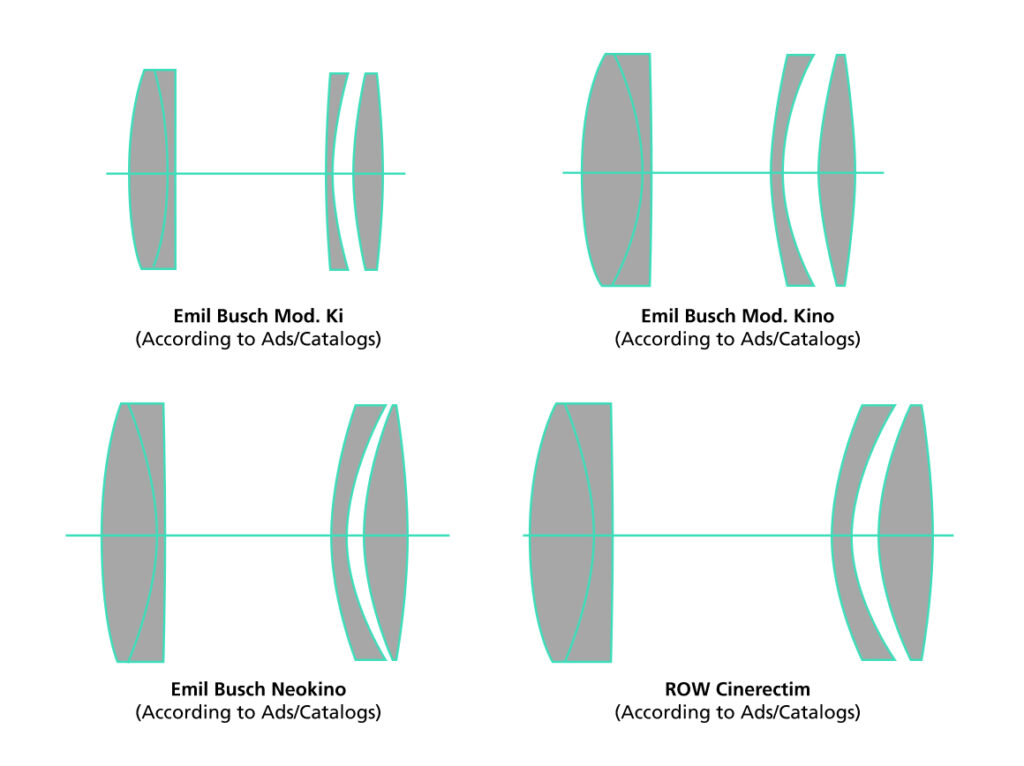
In terms of certain optical flaws however, which make Petzval-based lenses so interesting for being adapted onto modern cameras, this means that you can’t expect the same significant distortion, swirling or textured bokeh which makes some of the older lenses so unique. The right choice depends on what you’re trying to achieve.
Compared to the really extensive pre-WWII Emil Busch Neokino lens family, the Cinerectim line-up was also limited to a similar range of focal lengths, to the ROW Neokino. You still can expect some significant swirling with the shorter variants (around 80-95 mm) but are likely going to find the longer ones to be similar to other high-performing Petzvals like the ISCO Kiptar family.
ROW Cinerectim 80/1.9
See ROW Cinerectar 80/1.9 as it seems very likely that they’re identical. My fellow flickr friend nefotografas from Lithuania has a Cinerectim labeled 80/1.9 lens. And as usual taken a good number of interesting photos with it. Check it out – they do feel in line with my experience: Very smooth, no harshness whatsoever… even in challenging and high-contrast situations.
ROW Cinerectim 85/1.9
ROW Cinerectim 90/1.9
ROW Cinerectim 95/1.9
ROW Cinerectim 100/1.9
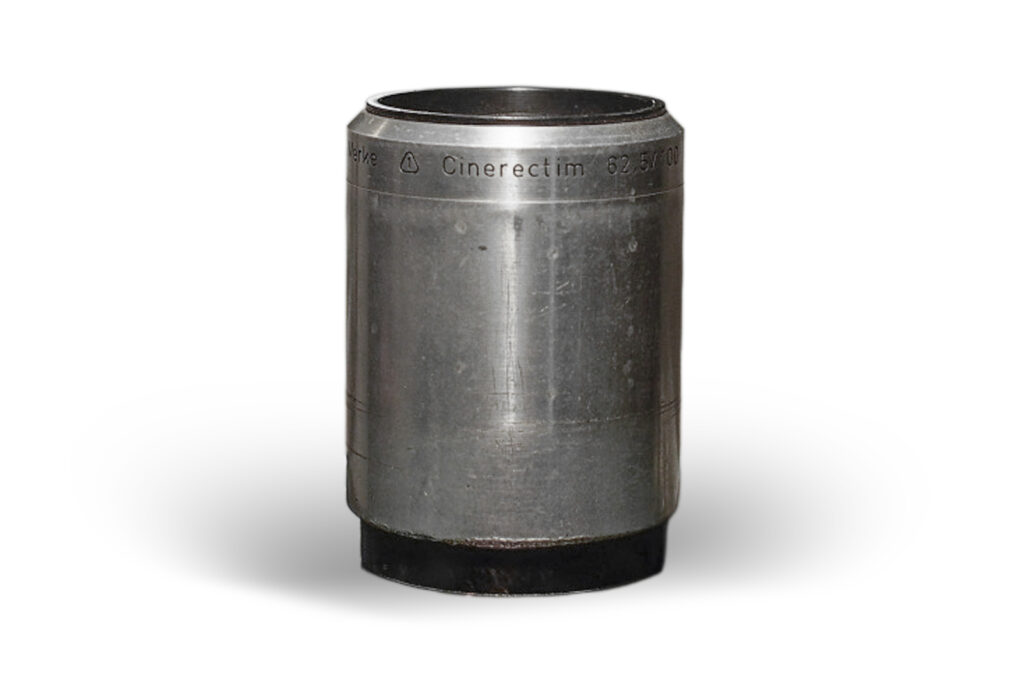
Two users of the german message board digicamclub.de have used this lens, shared some specs and impressions and also included some great looking sample shots.
It’s yet another different lookin variant of the Cinerectim, but one that’s already been known from the earlier Neokino series. Due to the overall small number of lenses online, it’s hard to say, if these differences in terms of look were fixed to particular focal length variants or changes which happened over time. It seems hovever that most outward facing design elements were carried over from the Neokino series.
ROW Cinerectim 105/1.9
ROW Cinerectim 110/1.9
Bernd Hutschenreuther is the trues kind of lens experimenter, doing lots of unusual and highly interesting stuff with lenses, analog processing, printing tech and all aspects of photography. He also owns a Cinerectim lens and has shared his results on flickr. Check it out!
ROW Cinerectim 115/2
ROW Cinerectim 120/2.1
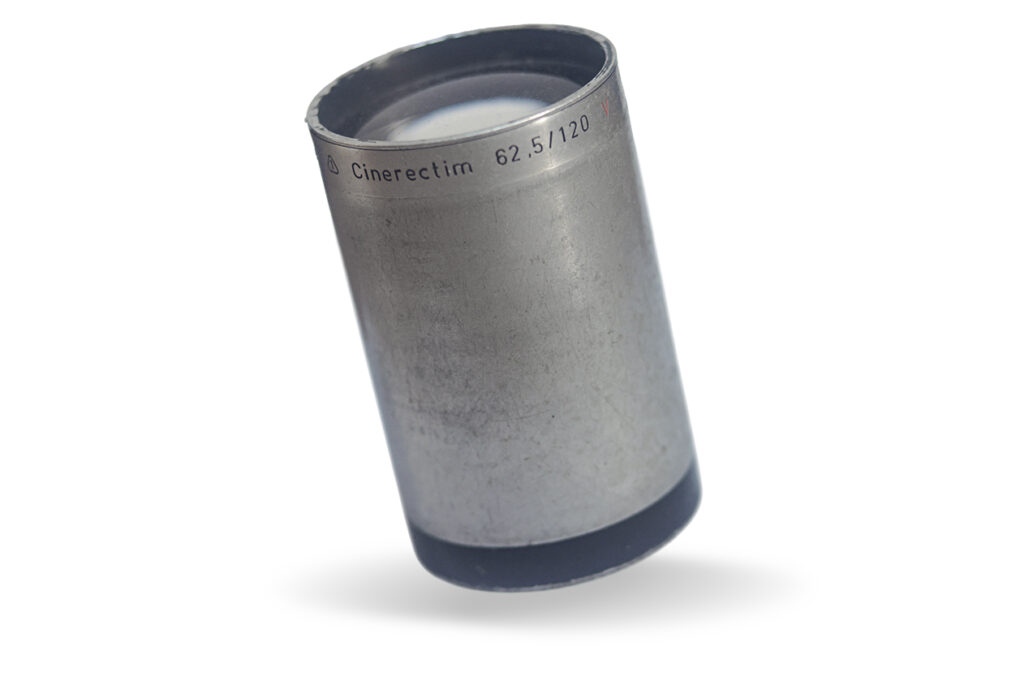
A well-suited lens for being adapted. Quite sharp in the center and with more than decent image quality, yet still enough of the Petzval look to justify experimenting with it, compared to regular manual focus taking lenses. Field curvature Is still significant and correction in terms of CAs only okay, but the lens does fare quite well even in more challenging lighting conditions, compared to its predecessors.



Colors are wonderful and contrast generally more than okay for a Petzval lens. Similarly to the ISCO Kiptar which is a very good series of (perhaps somewhat plain) but highly capable Petzval projection lenses, I can recommend this one without any hesitation. The only downside is the moderate (likely intentionally limited) maximum speed in many cases, but it’s not nearly as bad as with some of the ROW Neokino variants.




Here are a handful of stereo ( cross view) shots:



While they lack some of the interesting quirks in terms of rendering, older Petzval lenses are known for, the smoothness and improved image quality has its own appeal, while still providing enough of a unique look to make it different from modern lenses. If you happen to find one of these lenses, I’d certainly encourage you to take it out for a spin – you likely won’t regret it.
ROW Cinerectim 125/2.2
ROW Cinerectim 130/2.3
ROW Cinerectim 135/2.3
ROW Cinerectim 140/2.4
ROW Cinerectim 145/2.5
ROW Cinerectim 150/2.6
ROW Cinerectim 160/2.8
ROW Cinerectim 170/3
ROW Cinerectim 180/3.1
ROW Cineluxim
When you start to investigate old lens series it’s not unusual to stumble across one you can’t find a lot of information about, particularly when dealing with niche subjects like projection-, enlarging- or industrial lenses which always have been my main interest. However, it usually only takes some time and dedication (as well as some alternative spellings or searches in different languages) to surface some more info. In the case of the Cineluxim it seems to be almost impossible to find any detail. So far there’s only one single mention of the lens series in official material (the magazine Bild und Ton from 1959) and just a single lens shown online by Poland-based enthusiast and lens-expert Marcin Sitko, which you can find an image of below. Even for rare projection lenses that is indeed unusual.
According to the above-mentioned reference in offical ROW materials, the Cineluxim was specifically designed for newly developed CinemaScope projection and similar wide-angle projection standards. It seems to have been used with the ROW Rectimascop 64 2X regularly.
The tradename ‘Cineluxim’ was registered in 1957 already, but it seems like the lens was only introduced to the public around 1959 and thus probably only produced for 2-3 years. Given that it was created for a widescreen format specifically, it’s likely that it features a big image circle and probably also good image quality across a big field.
ROW Cineluxim 60/2
ROW Cineluxim 70/2
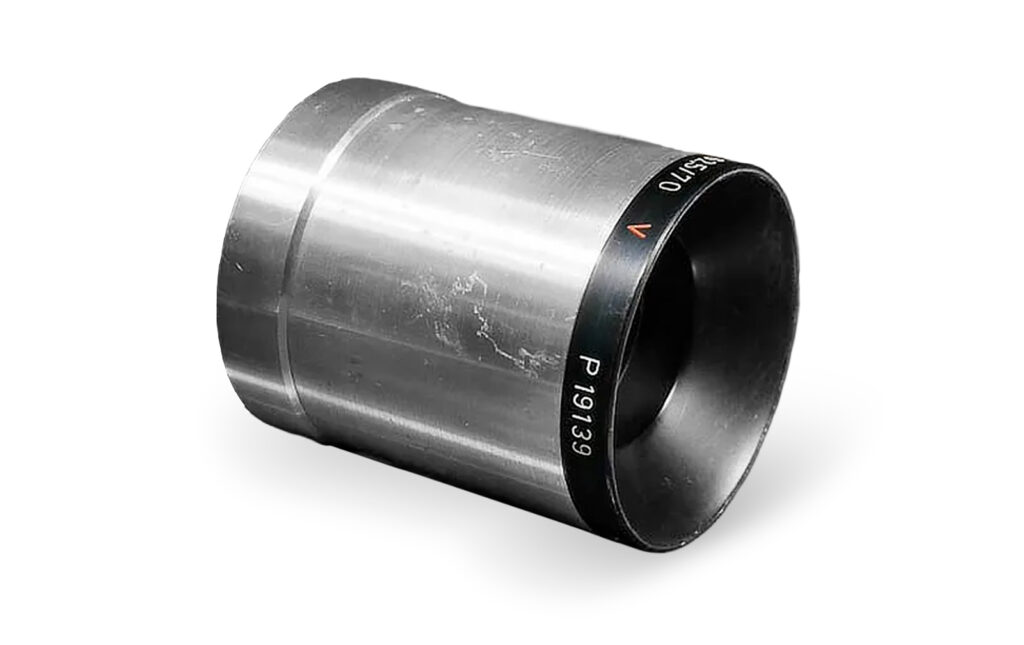
The highly experienced lens experimenter Marcin Sitko from Poland has shown this lens and a couple of sample shots on the mflenses forum. The images look nice, however the amount of swirl seems to suggest a Petzval design, rather than the 6/4 Double-Gauss one official sources reveal. It’s not surprising that Marcin got to the same conclusion.
Given that the only source on the matter mentions the lens being made for wide formats, that is particularly weird and judging by the limited sample shots, it also seems like image quality doesn’t extend to the edges, which would of course be bad for such a specialized lens… safe to say, something doesn’t add up here. Perhaps the Cineluxim and Cinerectar name were initially used for prototypes of various designs and this sample was a Petzval variant.
Here’s a comparison shot with a projection lens of similar specialization from Officine Galileo in Italy. Even though that lens has a focal length of 50 mm, it doesn’t show the same amount of swirl or field curvature as the Cineluxim:


But who knows… perhaps there’s a good explanation about that effect and I just don’t know enough about the details of cine projection to realize it. If you happen to know more about lenses like this and why they might render in such unexpected ways, please reach out and let me know!
ROW Cineluxim 80/2
ROW Dioluxim & Neoluxim
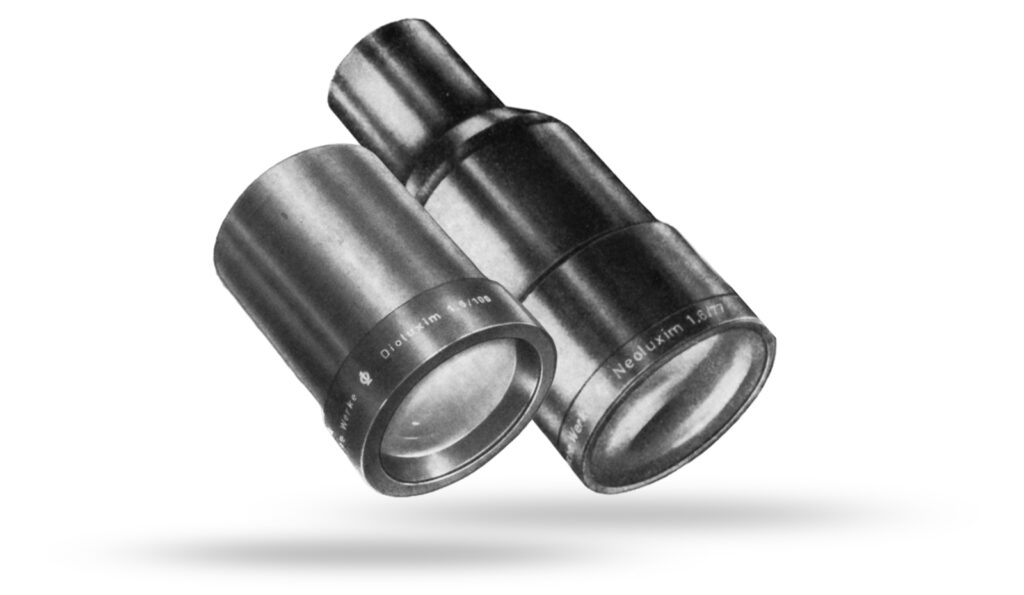
The Dioluxim & Neoluxim system was ROW’s answer to the growing demand for wide-screen projection. The result was an impressive, but probably overall too complicated system of lenses and adapters to vary the basic focal length.
The main projection lens was called Dioluxim and only available in 3 focal lengths. It features a 7 elements in 5 groups Double Gauss construction, quite similar to what ISCO had created in the form of the Super-Kiptar S a decade earlier.
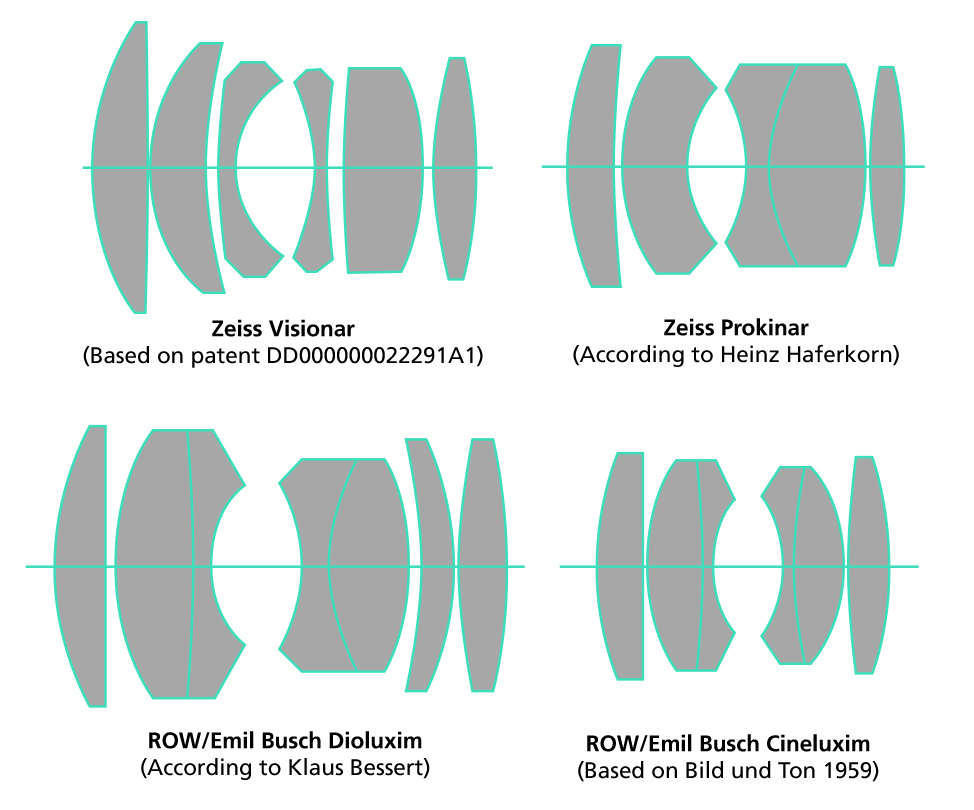
Interestingly enough ISCO’s own system for 70 mm (Todd AO) projection was later revised and they used a 6 elements in 5 groups design instead for their T-Kiptagon system. If you want to take a look at the somewhat related system of base-lens + various adapters to achieve the necessary image for wide-sceen large format projection, please check out the ISCO Kiptar article, where it is shown in detail.
The three Dioluxim lenses could be used on their own, but in addition with three giant adapters featuring a construction with several glass elements (4/2) could be modified into 9 additional focal length lenses, hence offering a total of 12 focal lengths, all with a speed of f/1.6, which is quite impressive.
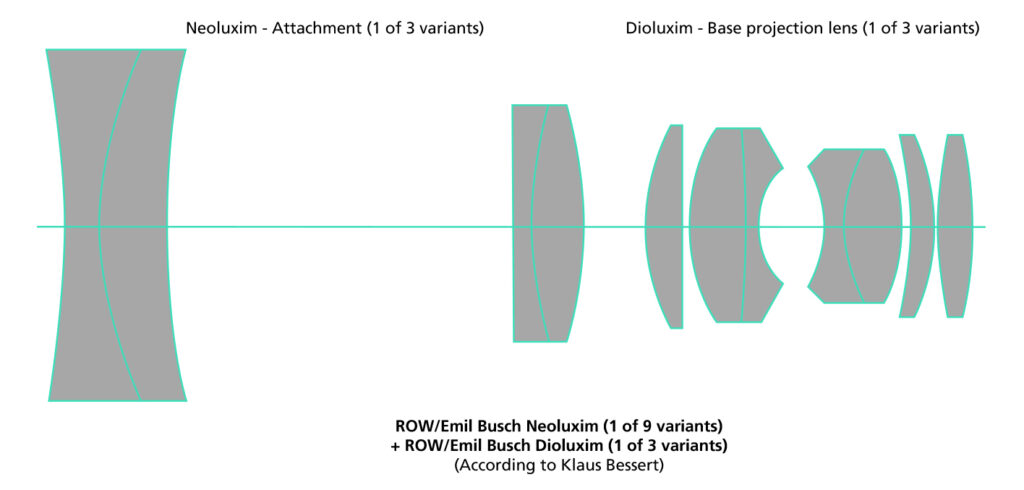
The Neoluxim lenses seem to have been used on Pentacon Pyrcon projectors for 35 and 70 mm projection for the most part, which were built in the GDR from 1962 on. It was available in a couple of different variants and at least judging by a couple of comments from people who knew about or even worked with these machines, they had a pretty good reputation.
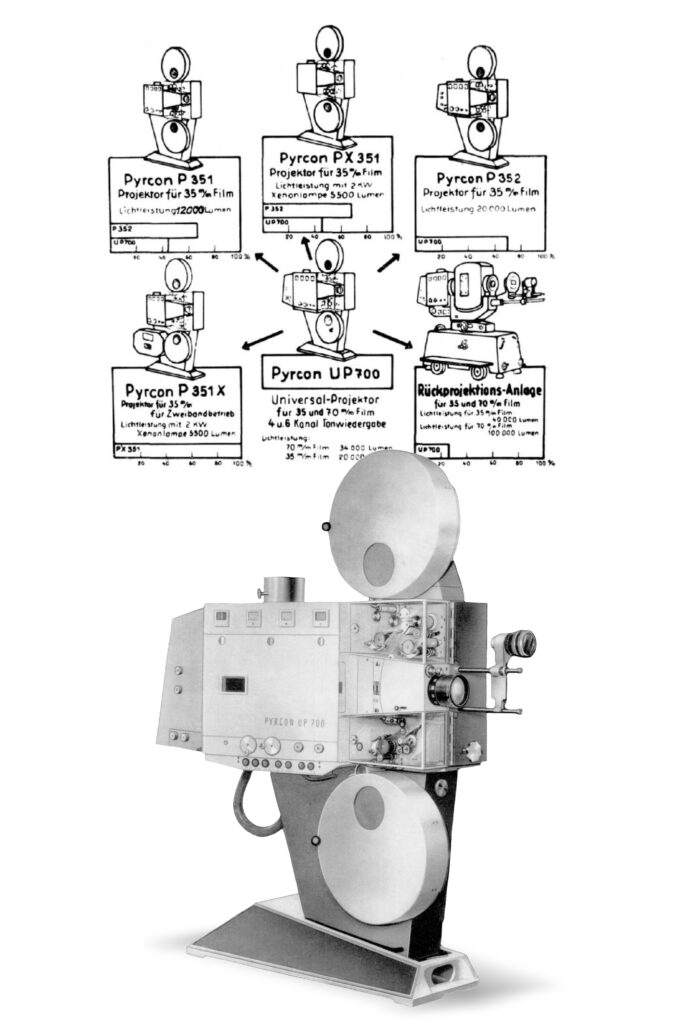
It’s safe to assume though, that they weren’t cheap and the same was likely true for the Dioluxim and Neoluxim lenses used on them. Despite rising interest in big screen imagery, projection lenses for the really big formats remained a nicht product, which explains why ROW produced a significantly higher number of Visionar lenses than Neoluxim/Dioluxim ones.
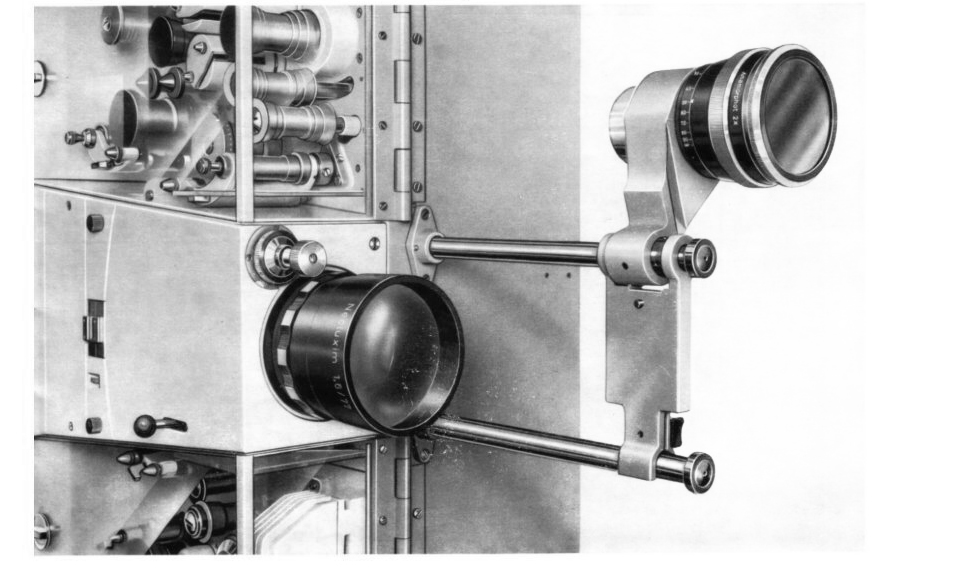
ROW Dioluxim 100/1.6
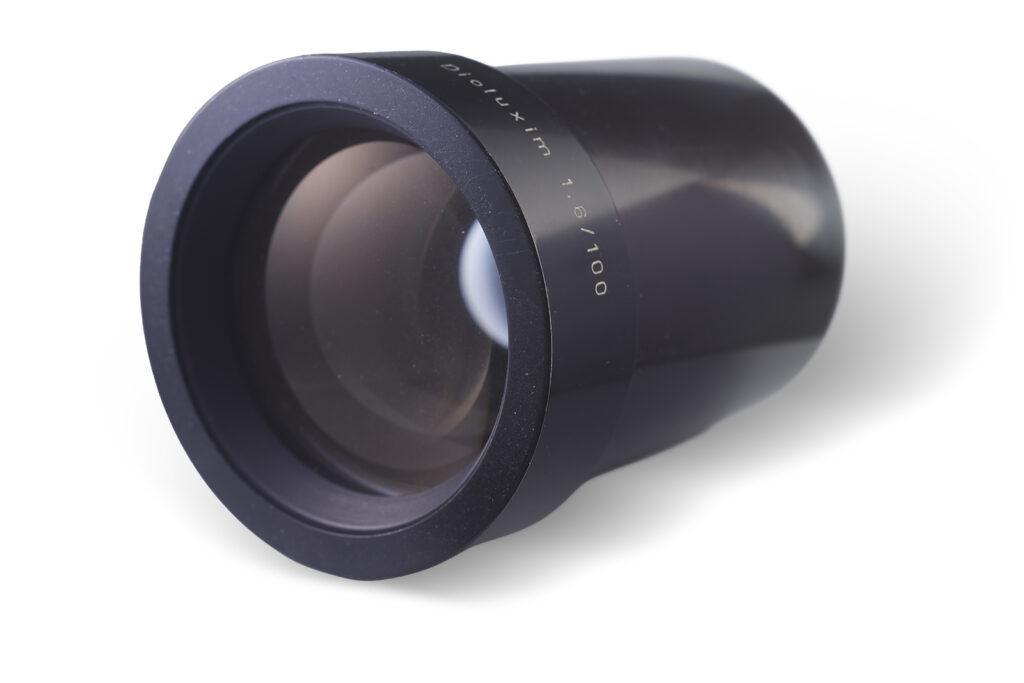
If you don’t mind using big heavy lenses the Dioluxim does look like a nice lens to try. The thing I hadn’t thought of however was the short focal flange distance. So here’s a word of caution: Before you get a lens like that think about if and how you’re going to get it close enough to your camera sensor, in order to use it. With a rear diameter of 80 mm and roughly 20 mm of added internal distance within the lens barrel, it seems like a challenge for sure.
So unfortunately my collection of sample images taken with this interesting lens is still tiny and heavily limited, due to challenges with proper adaption. I’ve managed to take a couple of shots with the lens held in front of the camera. Here are a couple of impressions from that adventure, which was admittedly quite tiring for my hand, given the weight of the lens of roughly 1kg + the necessary additional force to keep it in place:
Because of the lack of proper adaption I didn’t make any intentional comparisons, however I’ve taken an overall quite similar shot with this lens as well as with the superfast Neokino 110 mm f/1.5, so this might be interesting to see:


It’s easy to spot the difference in terms of out-of-focus rendering, where the 7/6 Double-Gauss Neoluxim is clearly smoother and less busy compared to the 4/3 Petzval Neokino lens. Both lenses do have their flaws in image quality, but the Neoluxim does provide better detail across a bigger area. Of course that also comes at the cost of additional weight, with the later Double-Gauss design adding twice the weight of the Neokino.
Even though I can’t really use this lens to good effect yet, I decided to create a couple of bokeh-panorama shots with it, which certainly was interesting:



ROW Dioluxim 109/1.6
ROW Dioluxim 119/1.6
Vorsatz 1.298
ROW Neoluxim 77/1.6
ROW Neoluxim 84/1.6
ROW Neoluxim 92/1.6
Vorsatz 1.54
ROW Neoluxim 65/1.6
ROW Neoluxim 71/1.6
ROW Neoluxim 77/1.6
Vorsatz 2.0
ROW Neoluxim 50/1.6
ROW Neoluxim 55/1.6
ROW Neoluxim 60/1.6
ROW Visionar (Zeiss)
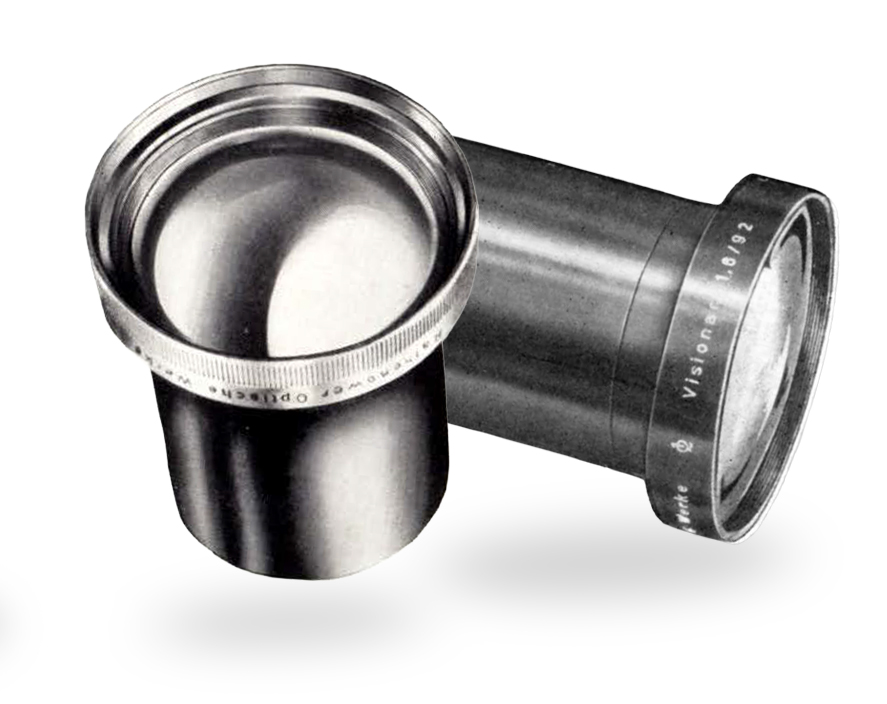
Strictly speaking the Visionar is not a ROW/Emil Busch designed lens, but was instead developed and initially also produced by Carl Zeiss. After a certain point however production seems to have been shifted and today probably more lenses of the Visionar family showing an ROW engraving exist than Carl Zeiss ones.
There’s a number of reasons for producing the Visionar instead of the unique ROW developed Cineluxim or Dioluxim/Neoluxim variants. The first might have been considerations about cemented lens elements and possible heat damage arising because of it. As a 6 elements in 6 groups uncemented design, the Visionar was not at risk. A second reason might have been cost: The more sophisticated of the ROW designs (Dioluxim) seems to have been more complicated and due to the additional attachments with big diameter glass, needed to provide all the possible focal lengths, likely also more expensive to produce than the simpler Visionar.
Of course it might also have been a decision in favor of Zeiss as the mother company and didn’t have to do much with these things after all. However regardless of the potential of the ROW designs, the incredible quality and thoughtful elegance of the Visionar lenses is pretty much undisputed.
Their biggest competitor within Germany, ISCO from Göttingen who had been offering their Super-Kiptar range from the 1950s with similar speed already, didn’t have the advantage of an uncemented design, even though the early start + their location in West-Germany might have given them a big advantage in terms of export into the international market.
If you want to know more about the Kiptar series and all their variants you can check it out on deltalenses.
The Visionar series certainly warrants its own investigation and write-up, which is planned (and perhaps even finished one day…)! Look out for that one or (if years have passed since 2026) remind me to get my act together and finish that stuff.
ROW Visionar 50/1.6
ROW Visionar 55/1.6
ROW Visionar 60/1.6
ROW Visionar 65/1.6
ROW Visionar 71/1.6
ROW Visionar 77/1.6
ROW Visionar 84/1.6
ROW Visionar 92/1.6
ROW Visionar 100/1.6
ROW Visionar 109/1.6
ROW Visionar 119/1.9
ROW Visionar 130/1.9
ROW Visionar 141/1.9
ROW Visionar 154/1.9
ROW Visionar 168/1.9
ROW Visionar 183/1.9
ROW Visionar 200/1.9
Slide Projection Lenses

Portrait Aplanat (f/6)

According to a Busch catalog from 1913, the Busch Portrait Aplanat (f/6) was designed for projection and enlarging purposes and featured a very flat field and fine definition over the whole surface of the plate at full aperture. The company further claims that it’s absolutely free from distortion and that it could be used for all general purposes, such as copying, enlarging, interiors etc.
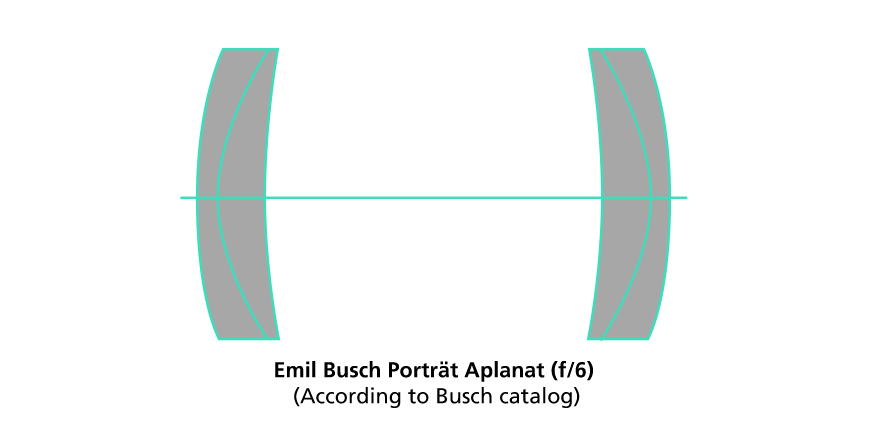
That does indeed sound like a versatile lens and since it featured a well-known design, which both Steinheil (Aplanat) as well as Dallmeyer (Rapid-Rectilinear) had used with great success already. It seems like it wasn’t the ideal lens for a lot of projection purposes, since neither of the aforementioned companies, nor Busch did promote it for that for a long time.
There’s some hints online that this kind of construction was used for stage-lighting, which of course also used projection lenses of some sorts.
It’s possible that the lens was offered in more focal lengths, but here’s the series with f/6, probably the only likely variant to have been used for any projection purposes.
Emil Busch Portrait Aplanat 130/6
Emil Busch Portrait Aplanat 180/6
Emil Busch Portrait Aplanat 280/6
Emil Busch Portrait Aplanat 350/6
Emil Busch Portrait Aplanat 460/6
Emil Busch Omnar
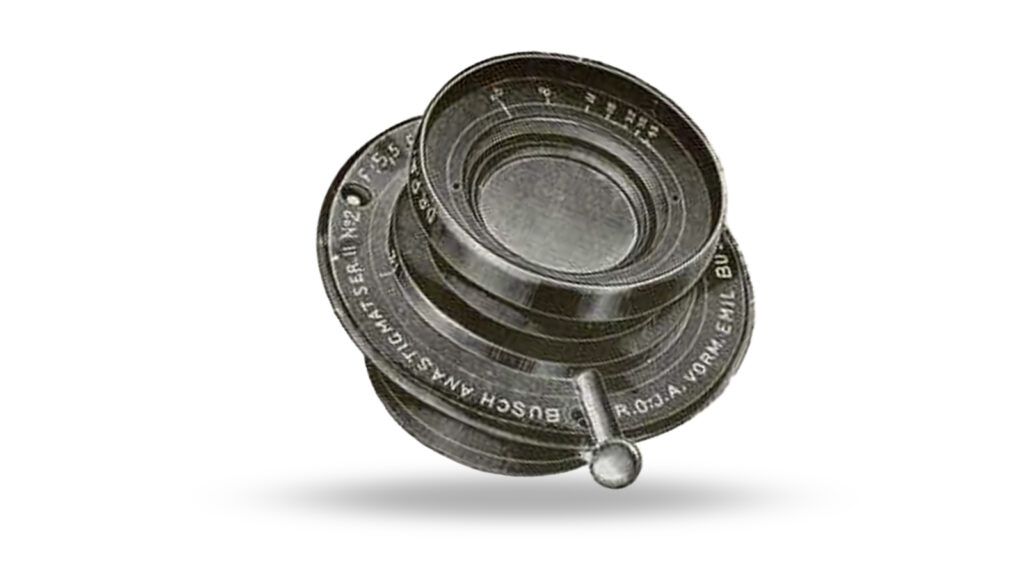
The Omnar, an uncemented 4 element Double Gauss lens, was overwhelmingly used and advertised as a taking lens. A single ad does also mention it as a possibility for projection. Because it’s not very clear with its distinction from the Glaukar lenses, which are also mentioned there, it should be taken with a grain of salt. That being said, lens makers like Rodenstock used a very similar 4 element design for projection lenses as well, so it seems possible.
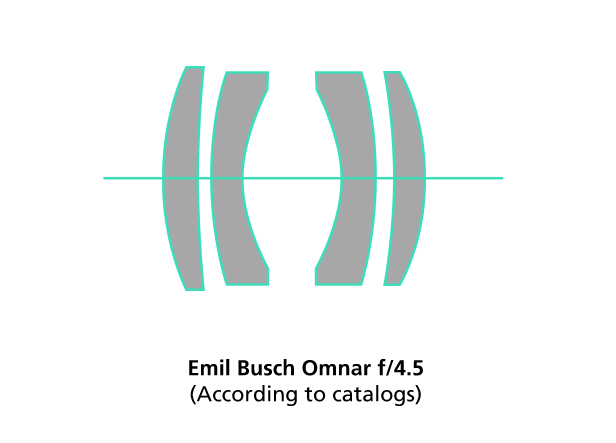
Since the fastest Omnar variant with a speed of f/4.5 was still significantly slower than comparable Petzval projection lenses or even Busch’s own Glaukar-Anastigmat at f/3.1, it likely was only used in special use-cases or for enlarging, apart from its most common use as a taking lens.
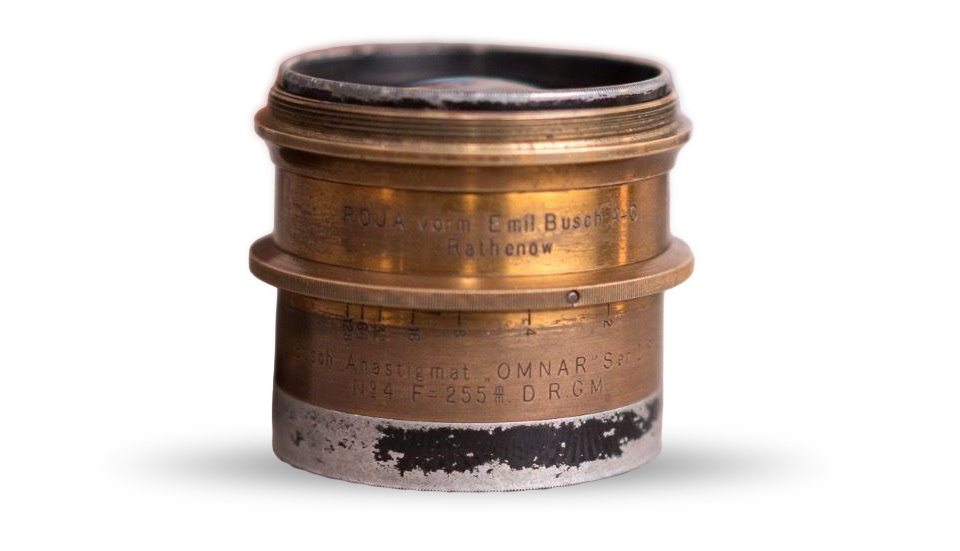
One interesting thing to consider however, is that the Omnar offered a truly significant angle of view compared to other projection lens series. The regular Glaukar only offered 45° (according to Naumann) and the special variant for stage projection had 60°. The still quite fast Omnar however offered 75° (according to catalog entries) and thus made me believe it might have been a possible design for the mysterious ‘Stage-Wide-Angle’ lenses mentioned later…
It certainly seems possible to make lenses of this type in focal lengths from 80 – 130 mm and it was seemingly used by both Steinheil, as well as A. Seibert Wetzlar in speeds up to f/2.5, in shorter focal lengths even faster and specifically also for projection purposes.
Turns out, that wasn’t the case though.
Emil Busch Leukar (Ø 120 mm)
While the Leukar-Anastigmat, a 6 elements in 2 groups Dagor design lens, was an established taking lens, the name Leukar was also used for a set of lenses ranging from 40-100 cm for projection purposes.
This ad shows the more widely known Leukar-Anastigmat and its design:

The only ad where the Leukar projection lens is shown is from 1905 and it seems to have been sold with a big round contraption where different aperture disks could be added in front of the lens. The ad shows a simple 2 elements in 1 group Leukar-lens inserted into the device and mentions that it could be swapped out as well for 3 other focal lengths.
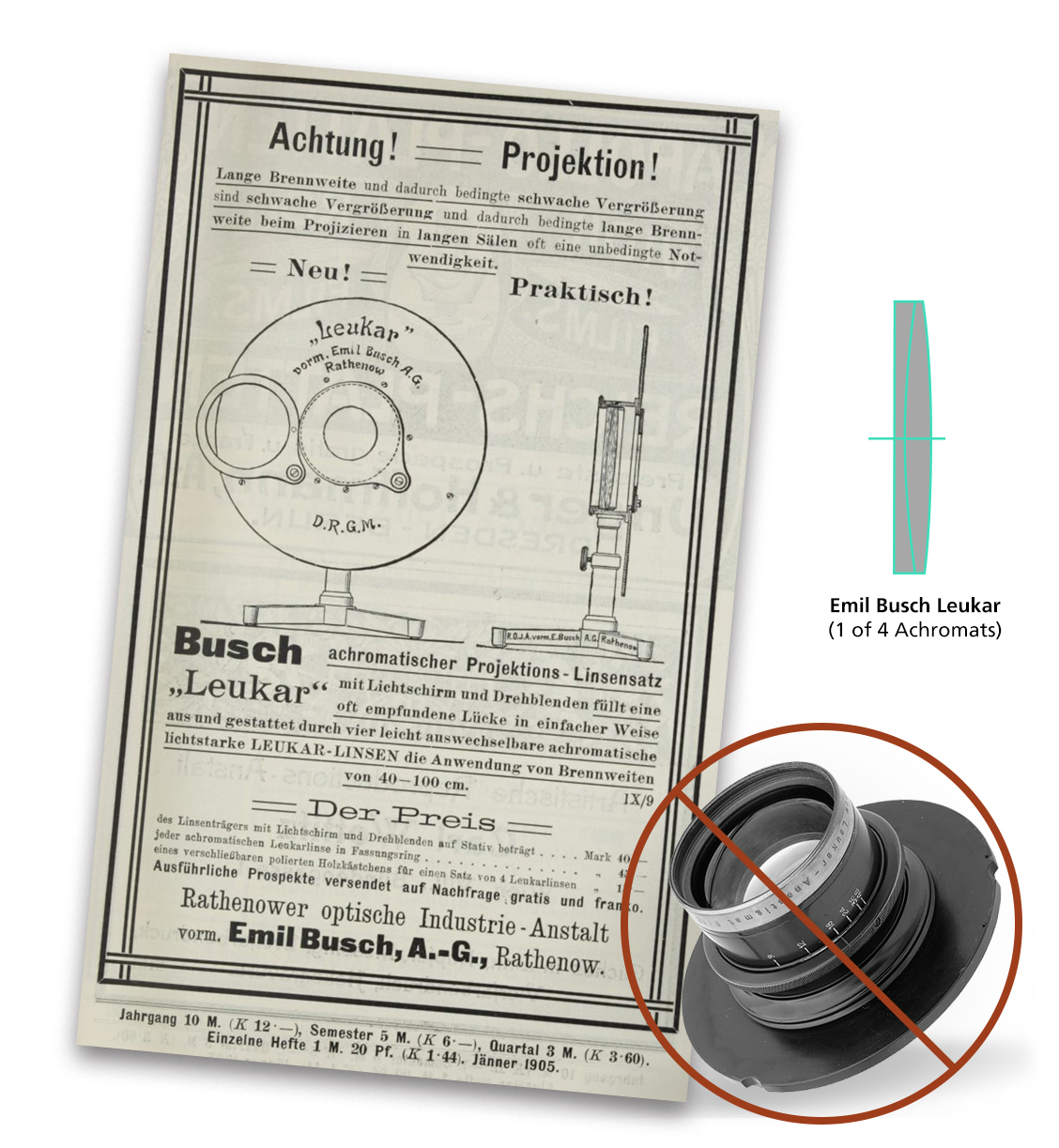
The book Lehrbuch der Projektion by Neuhaus mentions that the front group of portrait lenses – a term likely synonymous with Petzval-designs at the time – can also be used for projection. This would of course explain the long focal lengths. A speed of f/4 for a 400 mm lens is still quite surprising, given that even the Glaukar-Anastigmat in that focal length already had to make do with a speed f/5. It’s likely that image quality wasn’t up to par, otherwise the company would probably have kept the series around for a longer time.
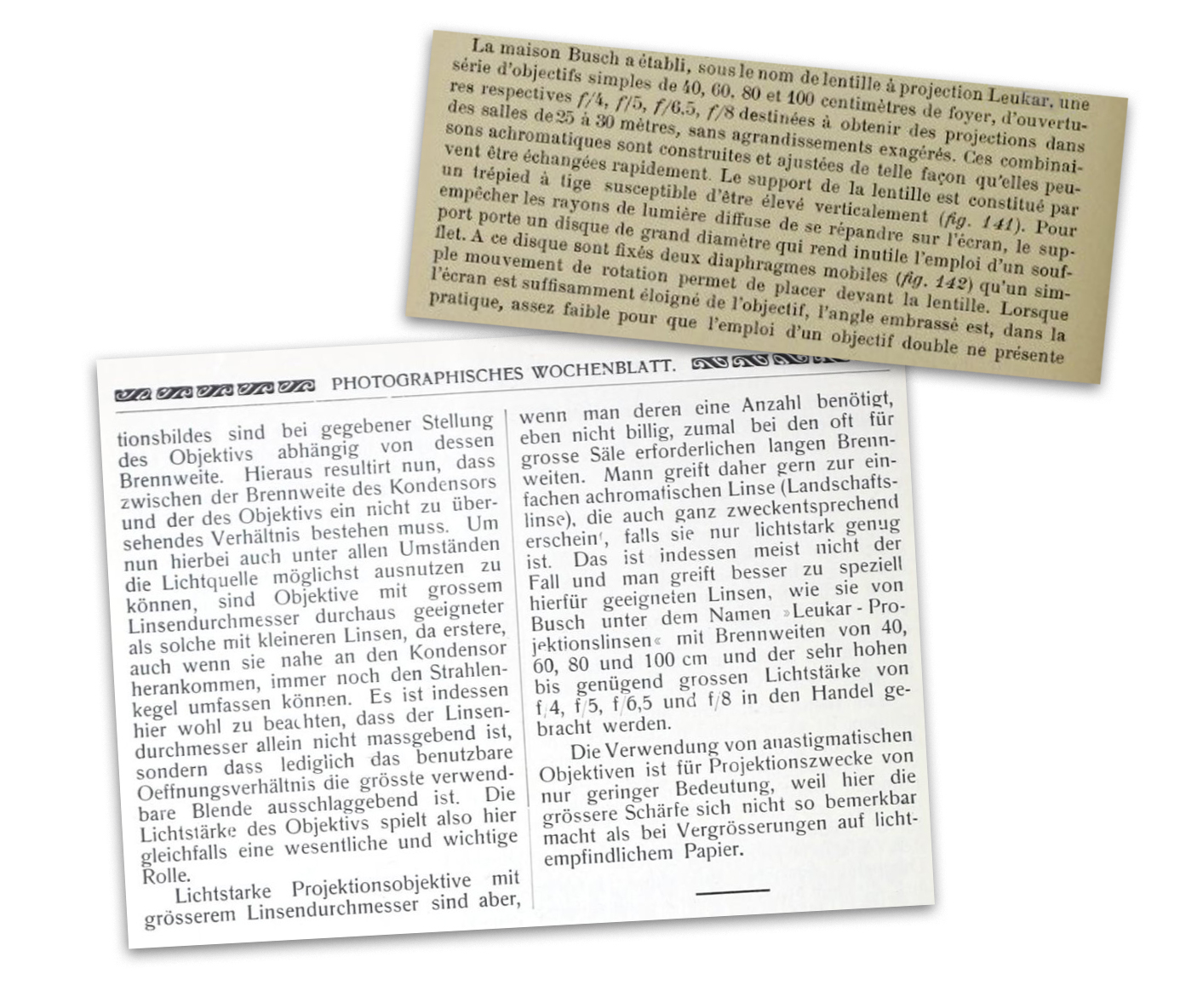
In a French publication called Traite Enclopedique de Photographie these lenses are described in the following way:
“The Busch company has developed, under the name Leukar projection lens, a series of simple lenses with a focal length of 40, 60, 80 and 100 centimeters and respective apertures of f/4, f/5, f/6.5, f/8, designed to produce projections in rooms of 25 to 30 meters without excessive magnification. These achromatic combinations are constructed and adjusted in such a way that they can be quickly exchanged. The lens support consists of a tripod with a rod that can be raised vertically. To prevent diffuse light rays from spreading across the screen, the support carries a large-diameter disc, eliminating the need for a bellows. Two movable diaphragms are attached to this disc, which can be positioned in front of the lens with a simple rotation. When the screen is far enough from the lens, the angle embraced is, in practice, small enough that the use of a double objective does not present any problems.” (translated from French)
From what I could gather online regular Leukar lenses had a fairly good reputation in terms of quality, but since they used a completely different design from the Leukar-projection lenses that doesn’t tell us much today. They might be fine for certain tasks as well, however because of their focal lengths they’re only really usable on large format cameras these days. These lenses were massive with 150 mm diameter and thus extremely fast, if you can use their full image circle. According to the following ad from Italy which mentions the actual diameter of the glass elements in all cases, it seems like the Leukar lenses might be even faster, ranging from f/2.8 to f/6.6 if none of the optional diaphrams are installed.
Of course the Doublet design also brings a theoretical risk of cement separation by overheating with it, but given the focal lengths I somehow doubt these lenses were ever really close to any significant light source. So far I’ve never seen such a lens … if you have one, please put it in front of your camera and let us know what it does.
Emil Busch Leukar 400/4
Emil Busch Leukar 600/5
Emil Busch Leukar 800/6.5
Emil Busch Leukar 1000/8
R.O.J.A./Emil Busch Achromatic lantern projection set
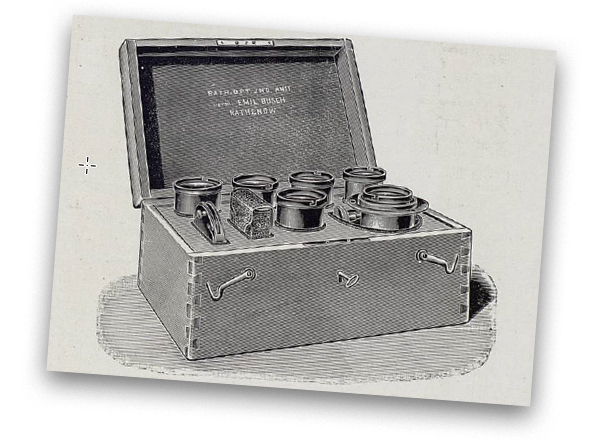
In a 1905 issue of The Optical Magic Lantern Journal and Photographic Enlarger magazine, there’s a mention of Emil Busch offering an “Achromatic Lantern Projection Set”. These lenses were likely the predecessors of the Model U, V and W lenses for cinematic slide projection. Because they were offered in a set it wouldn’t be surprising if they didn’t get a full model description on every lens. So lenses with Mod. V specs but without the inscription on them could have been from sets like this.
This image of a listing I found during my research does indeed add further credence to that theory.
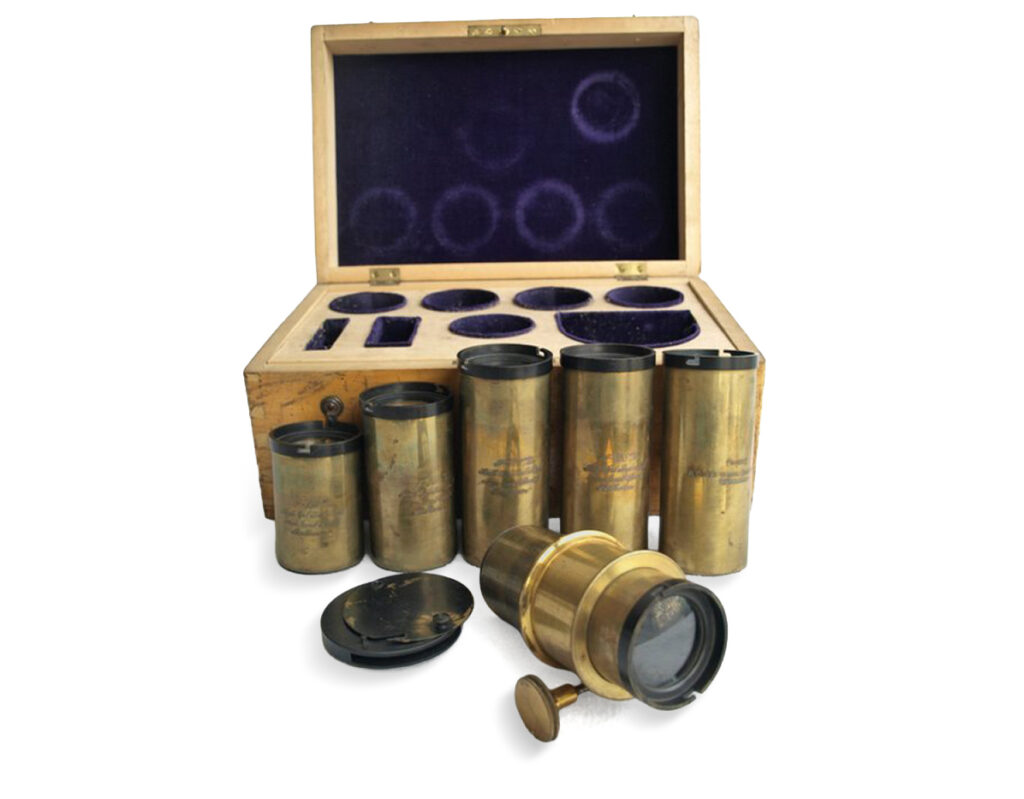
So these lenses likely began as lantern lenses and evolved into still projection lenses used for large format advertising slides in cinemas, where special still projectors were used. They didn’t have serial numbers in the beginning but got them from somewhere around 1912, as well as the Model inscriptions. Their material changed and diameters extended (Mod W.) but in their essence they might have stayed the same for more than 45 years.
Here’s an ad giving a overview of what has been included in such a Lantern Projection Set:
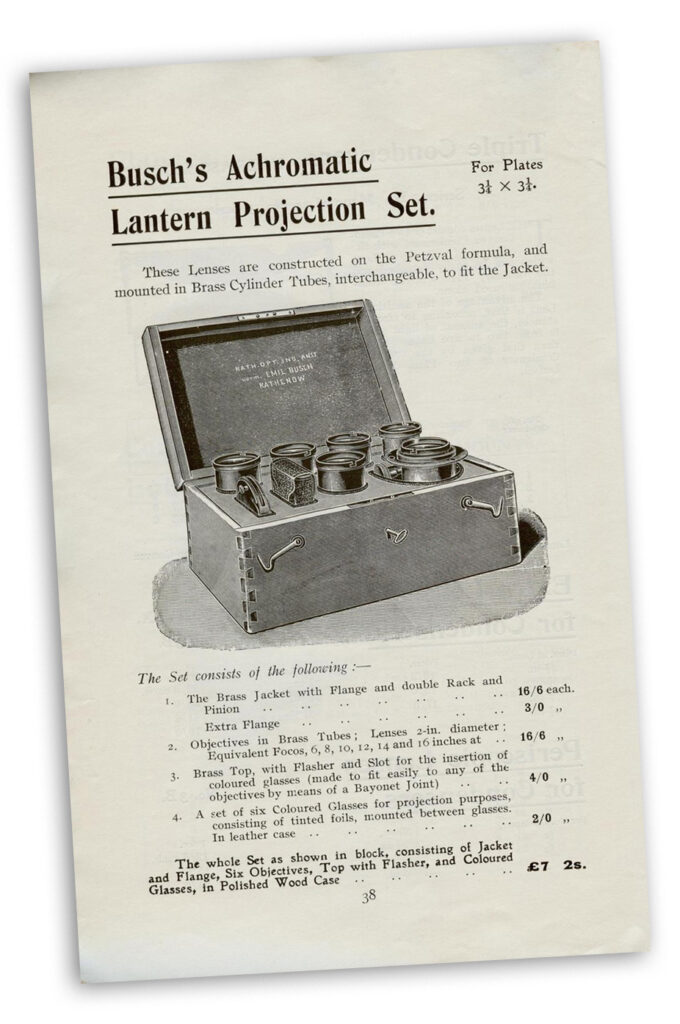
You can find a more detailed overview of the lens dating and different variants under the serial number guide further down.
R.O.J.A. Achromatic Lantern Projection Lens 150/3.6
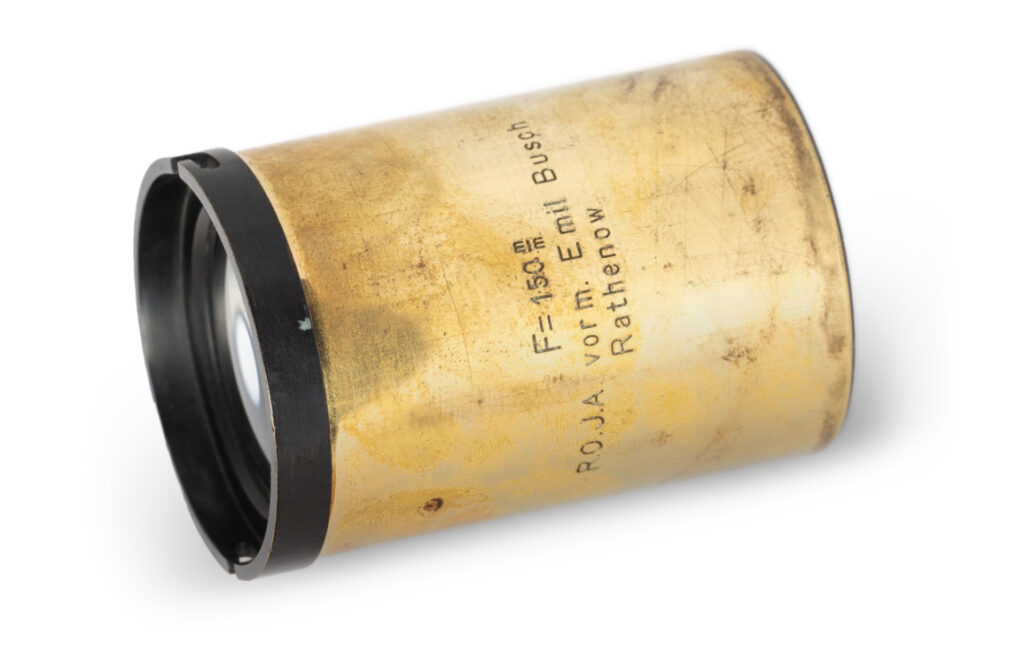
Sven Rahm – who has been mentioned a couple of times already – has tried the lens seen above on his camera and shared a couple of sample shots. While the lens certainly doesn’t live up to later cine or slide projection lenses by Emil Busch, it’s interesting to see the resulting images regardless.
Coverage of should be pretty good (3 ¼ x 3 ¼” or 8×8 cm), so for B&W work on a medium or even some large format cameras they certainly seem like interesting lenses to try.
Here are the Sven’s impressions in his own words:
“The R.O.J.A. (formerly Emil Busch Rathenow) 150mm is a Petzval lens. However, its image quality cannot be compared to that of, say, a Busch Neokino. I notice countless aberrations (chromatic and spherical), coma, halos, and so on. There is also a distinct loss of contrast due to stray light or veiling glare. It is almost unusable in backlighting, even with shading. It simply has it all. You couldn’t really call it “bad,” though—just heavily uncorrected. 🙂
Since I am testing the lens on a 35mm camera, the results were rather off-putting; while this kind of rendering might be acceptable as “artistic” in large format, it is unusable on a 35mm camera—at least for my purposes.
If you like Impressionism, you’ll like this lens. To me, it shows characteristics typical of an Aplanat.
I would like to know what the small bayonet mount on the front lens element was used for and what specific function it served back then.”
(translated from German)
I don’t have a definitive answer to his question regarding the bayonet/notches on the front of lens, but here’s my best guess, illustrated via an image:
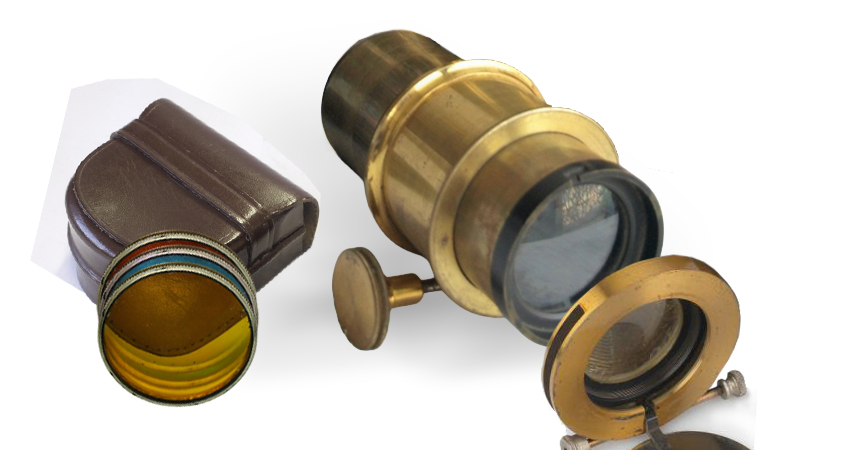
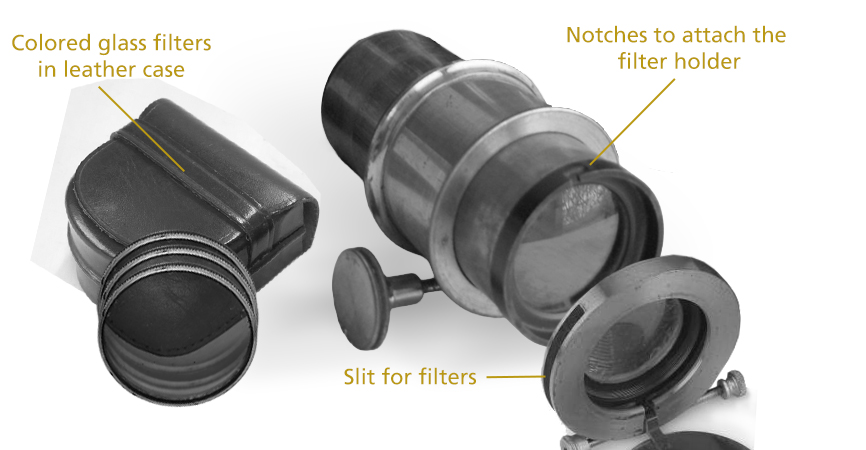
It appears like these attachments were used to hold color- or effect-filters. They were sometimes referred to as “flashers with slot” and sets of differently colored glasses were available separately or sometimes included in sets as the one seen above.
Here are some of Sven’s images compared to ones taken with my Emil Busch Mod. W 15 cm f/2.9 lens:
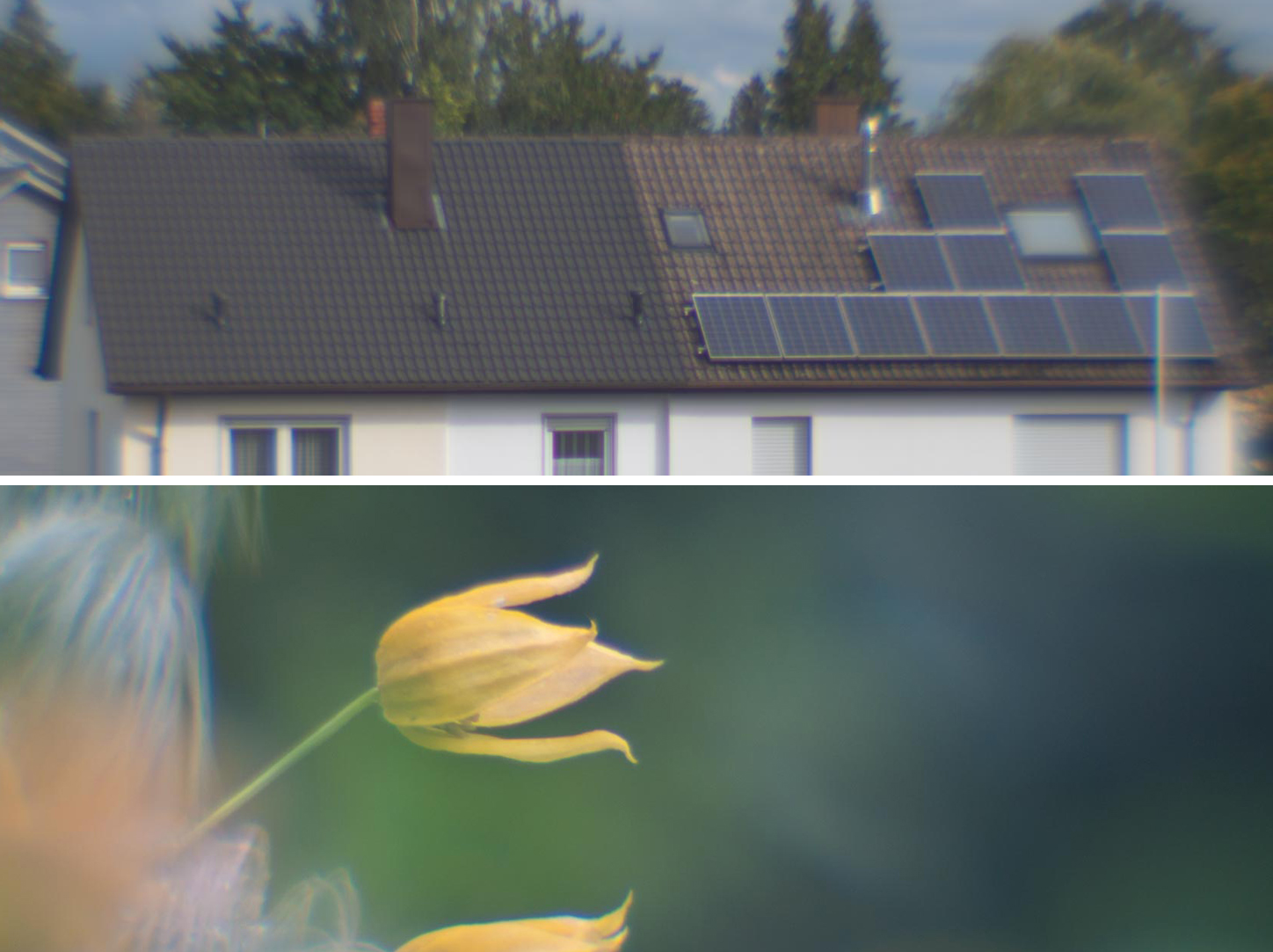
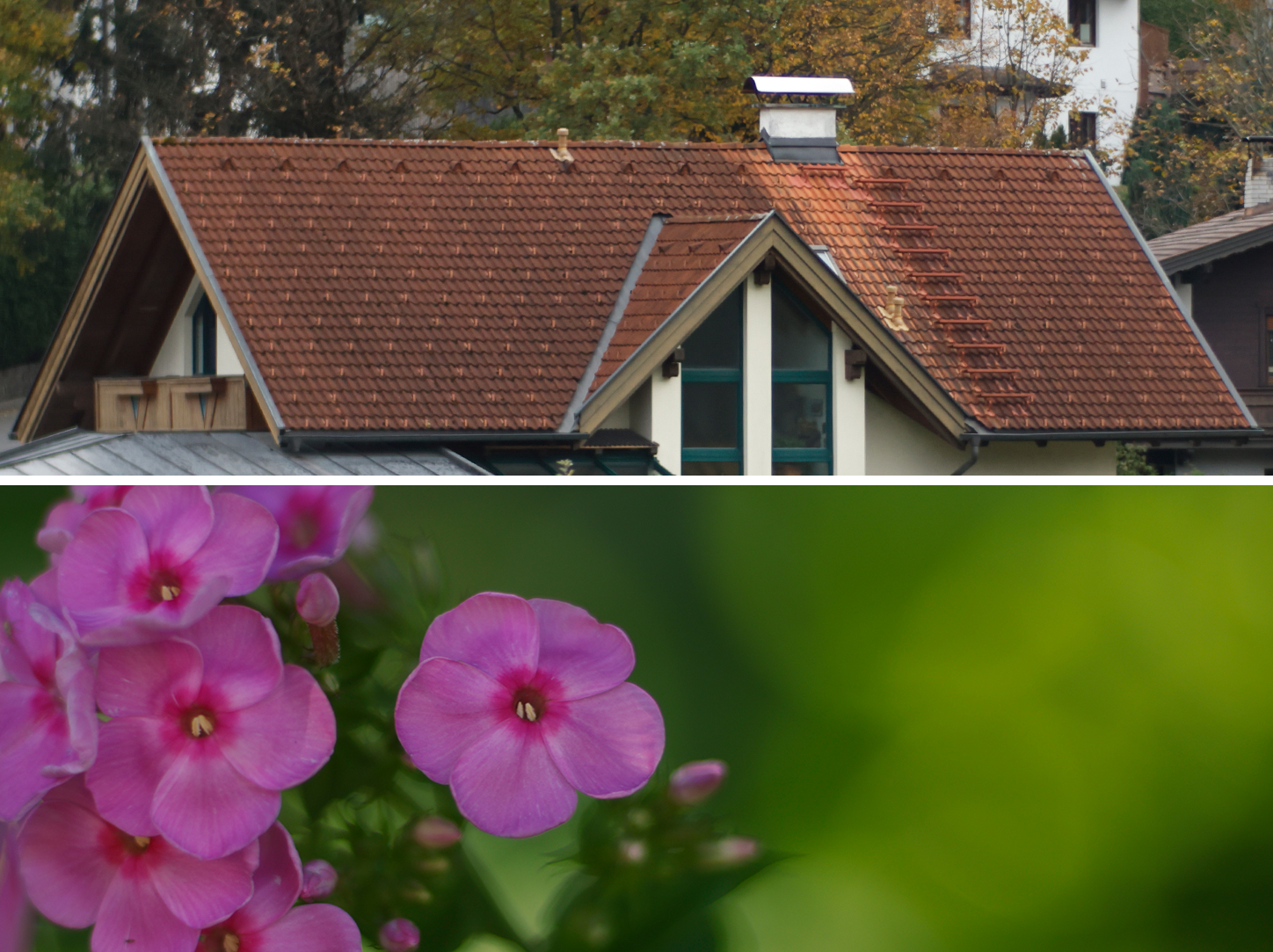
Even though these are not ideal comparison shots and some of the difference in quality could be caused by different lighting, the way the lenses are adapted and also the state of the particular sample is in, it really feels like the upgrade from the initial Achromatic Lantern Projection Lenses to the later Mod V. and W. was significant. The reduced glow and significantly reduced impact of chromatic aberrations, in combination with the overall faster speed, is certainly something to consider when looking for these old slide projection lenses.
And while they’re not strictly part of the same family of lenses, it’s also worthwhile to see the differences between these early Mod. V predecessors and a more modern superfast Neokino cine projection lens. Sven has taken sample shots which show the vast improvements the company was able to achieve within a couple of decades:
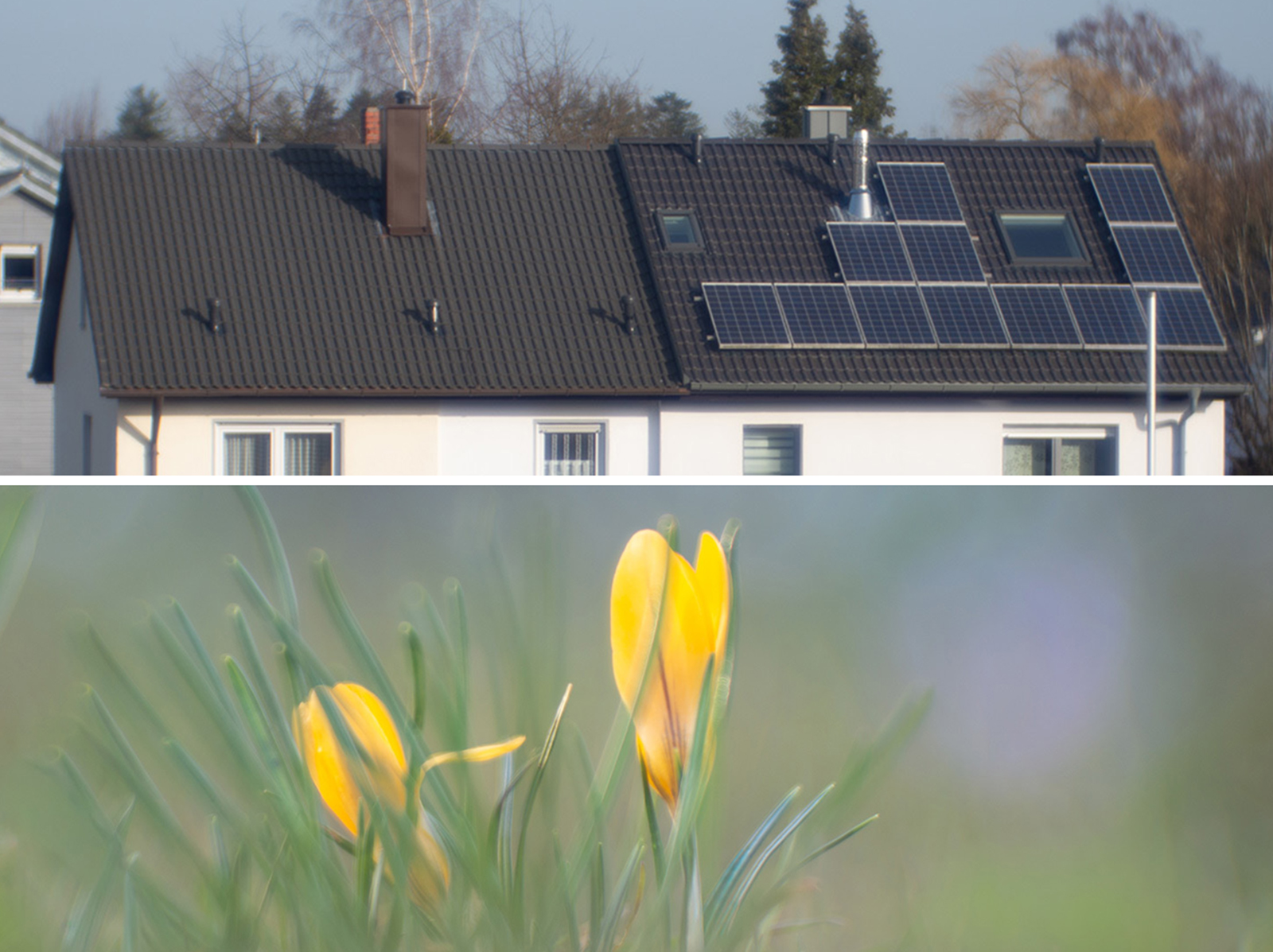
The difference is particularly impressive, if you keep in mind, that the Achromatic Lantern Projection Lens on the left has an approximate speed of f/3.6, while the Neokino lens is incredibly fast at f/1.5
R.O.J.A. Achromatic Lantern Projection Lens 200/4.9
R.O.J.A. Achromatic Lantern Projection Lens 250/6.2
R.O.J.A. Achromatic Lantern Projection Lens 300/6.7
R.O.J.A. Achromatic Lantern Projection Lens 350/7.6
R.O.J.A. Achromatic Lantern Projection Lens 400/8.7
While these early lenses were only mentioned in a limited number of focal lengths, it’s possible that there have already been additional ones.
Emil Busch Mod U
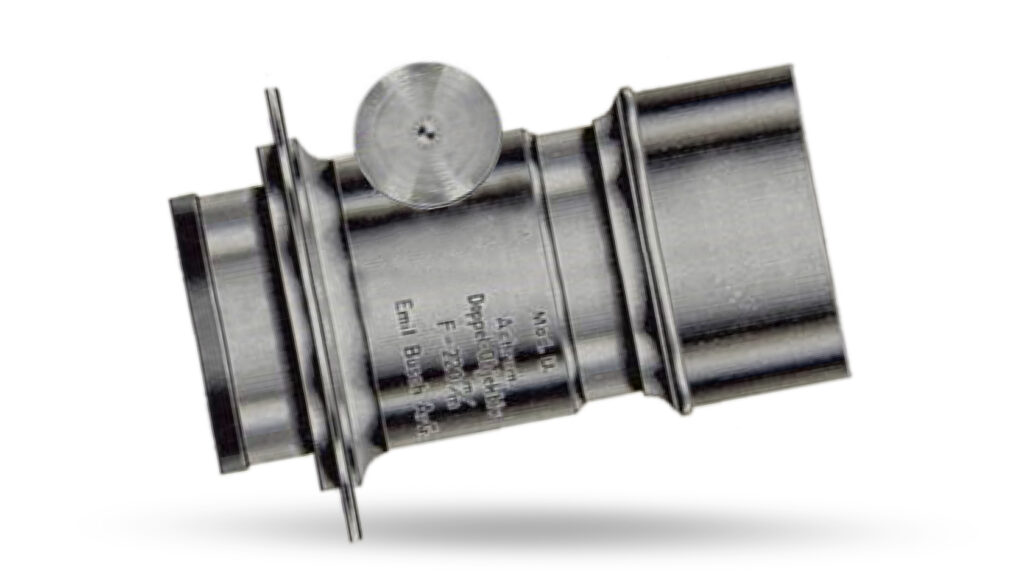
My best guess so far, is that the series was introduced around 1909, but it’s hard to say for sure. All the samples I’ve seen are labeled ‘Emil Busch A.G.’ which suggests a production date of 1907 or later. In the 1913 catalog by Busch Optical (London) this small series is described in the following way:
“A low priced series of Lenses of large aperture with Spherical and Chromatic Aberration well corrected. Specially suitable for Lantern Projection”
(Emil Busch Catalog, 1913)
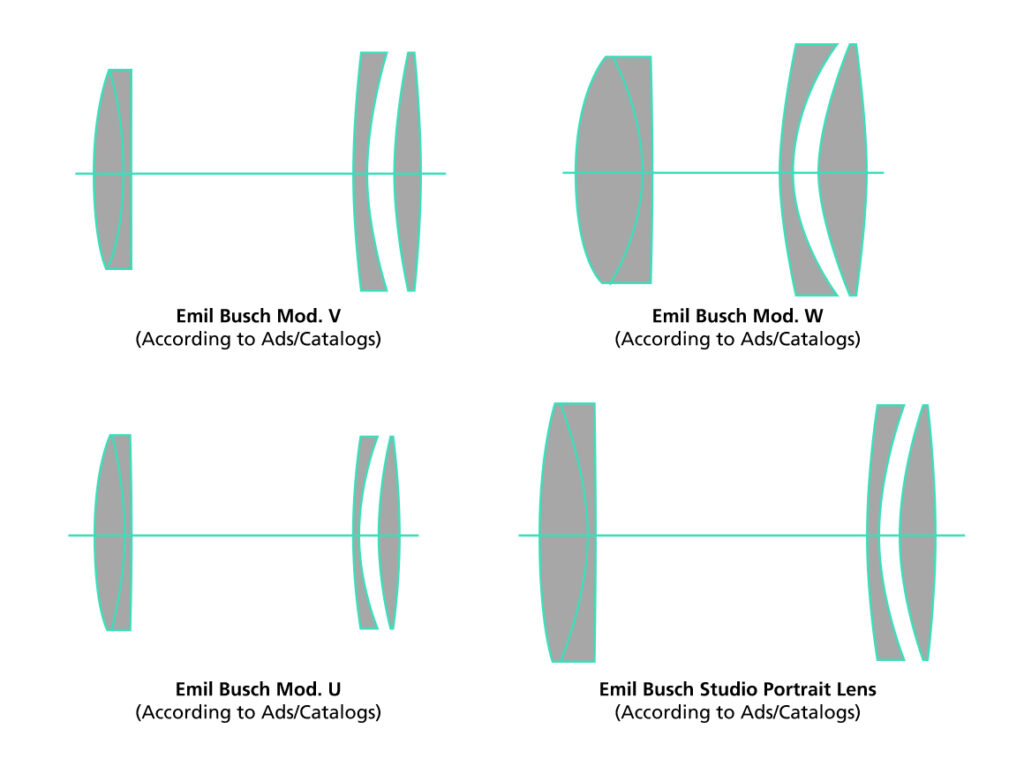
The Doppel-Objektiv (Double-Objective) naming on the other hand was mainly used for taking lenses…. It features a standard Petzval formula with 4 lenses in 3 groups and was only available in 4 focal lengths. These lenses seem rather big for their moderate aperture (at least if the information about lens diameters in the catalog can be believed), so it’s possible that they were intended for lanterns with big diameter mounts in addition to the Mod V and W lantern projection series.
Given the low price point, it might have been suitable for something called “Reklame-Projektion” (Advertising-projection). Devices made for projecting images or short films onto screens or displays in shops or on walls and sidewalks to attract attention.
Here are some descriptions and ads for such devices:

As you can see the Atrax projector even shows a really similar looking lens on the projector.
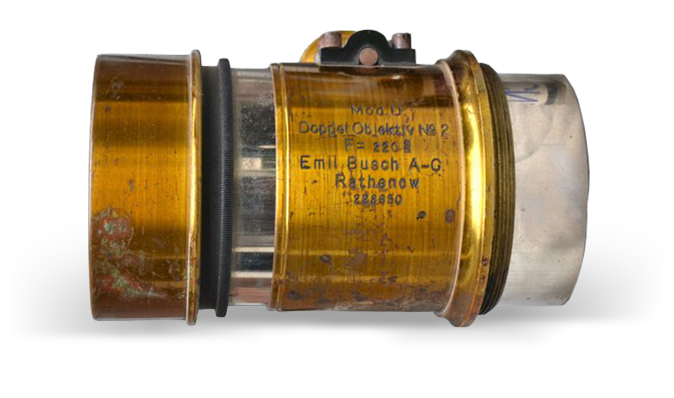
It’s also possible that this lens series was a remnant from early enlarging lanterns, before Triplet, Tessar, Plasmat and Double Gauss designs took over that realm. Here’s an ad which might hint at that, since it mentions a “double achromatic” lens and show such a big device:
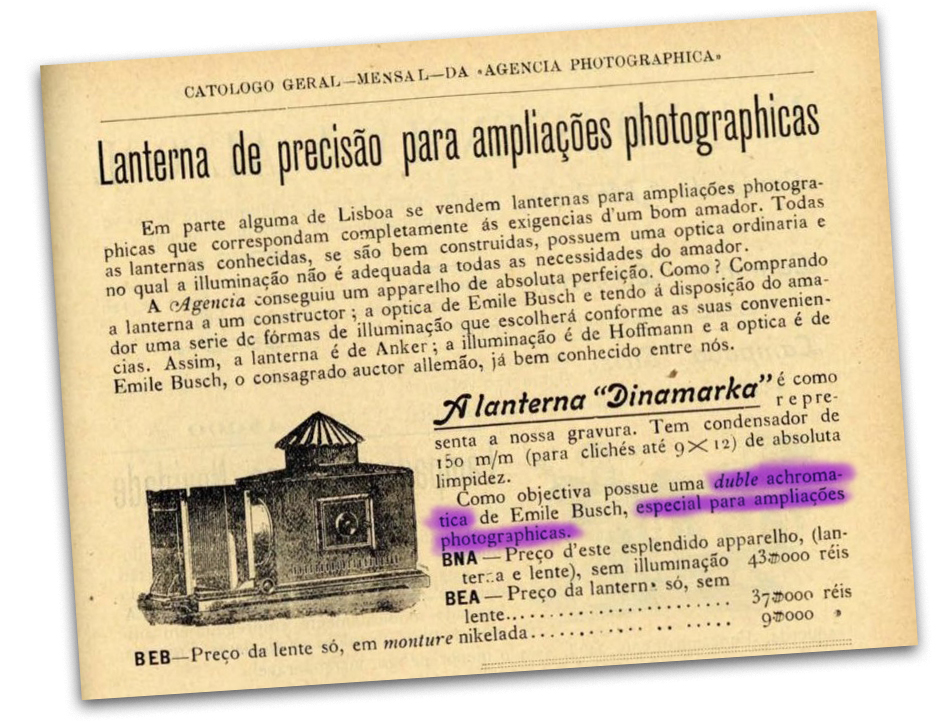
It seems like the third type of Achromatic Double-Projection lens in the following ad references the Mod. U, since it mentions three distinct formats, which fits the three initial focal lengths the lens was offered in according to catalogs. The forth one – with a focal length of 195 mm – was probably added later.

Emil Busch Achromatic Double Objective/Mod. U 165/5
Emil Busch Achromatic Double Objective/Mod. U 195/5
Emil Busch Achromatic Double Objective/Mod. U 220/5
Emil Busch Achromatic Double Objective/Mod. U 254/5
Emil Busch Mod V
A series of first quality Lantern Objectives for 3 ¼ x 3 ¼” slides, giving fine definition right to the margin. They are made to the standard size and will fit the regular Brass Rack and Pinion Jacket, as supplied with most lanterns.
(Emil Busch Catalog, 1913)
One of the obvious things which stands out with these lenses are the peculiar notches on one of rings. Initially I thought it might have been the way these lenses were attached to the lanterns they were used on, but from what I’ve seen about those it looks like they all used a similar mechanism with Rack & Pinion, collars or additional tubes these lenses were held in place or moved with. And it definitely looks like these notches are on the front the lens, which also doesn’t make sense for a mounting mechanism.
After seeing a listing for the Achromatic lantern projection set, shown above, I realized that a set like this seems to include a filter-holder – called “brass top” which had a slot for colored glasses/shapes or front aperture disks. It’s pretty safe to conclude that these notches or were used for attaching this brass top.
Emil Busch Achromatic Double Objective/Mod. V 100/2.4
Emil Busch Achromatic Double Objective/Mod. V 120/2.9
Emil Busch Achromatic Double Objective/Mod. V 140/3.4
Emil Busch Achromatic Double Objective/Mod. V 150/3.6
Time and time again, when a lens series doesn’t seem to have been adapted by enough people to produce some interesting looking shots, it’s Leo Roos from flickr, who demonstrated the opposite. It would be interesting to see how it compares to the faster Mod. V variant in the same focal length.
Perhaps I’ll try to replicate one of the more interesting shots lens expert Leo Roos (RIP) has taken with this lens, but for now I have to limit the comparison to one of the simpler ones, available indoors:
Emil Busch Achromatic Double Objective/Mod. V 160/3.9
Emil Busch Achromatic Double Objective/Mod. V 200/4.9
Emil Busch Achromatic Double Objective/Mod. V 250/6.2
Emil Busch Achromatic Double Objective/Mod. V 300/6.7
Emil Busch Achromatic Double Objective/Mod. V 320/7.4
Emil Busch Achromatic Double Objective/Mod. V 350/7.6
Flickr user phototravex has shared some experimental and nice looking shots with this lens, in a way a good reminder of the fact that even lenses with quite unremarkable specs can produce convincing results in the hands of someone who is willing to experiment and think outside the box.
Emil Busch Achromatic Double Objective/Mod. V 400/8.7
Emil Busch Achromatic Double Objective/Mod. V 450/9.8
Emil Busch Achromatic Double Objective/Mod. V 470/10.2
Emil Busch Achromatic Double Objective/Mod. V 500/10.9
Emil Busch Achromatic Double Objective/Mod. V 550/12
Emil Busch Achromatic Double Objective/Mod. V 600/13
Emil Busch Achromatic Double Objective/Mod. V 700/15.2
Emil Busch Achromatic Double Objective/Mod. V 800/17.4
Emil Busch Mod W
The exact date of the Model W type of Achromatic Double Objective for cine projection is not known, an ad suggests that it
The illumination of this series is one and a half times greater than that of the ordinary lantern objective, a feature that will be found invaluable when a considerable separation of apparatus and screen necessitates the use of long focus lenses. Owing to the large diameter of the lenses, the objectives of this series are extremely suitable for apparatus in which incandescent gas or paraffin light is used. They can be used for ordinary lantern size plates 3 ¼x 3 ¼”, and give an image sharply defined right up to the margin without distortion.
(Emil Busch Catalog, 1913)
While the basic Petzval design both the Mod. V and W feature, are no surprise, their design does show a significant difference to the cine projection models: The big diameter of the rear group. That’s of course due to the necessity to project images from large format glass slides and it makes those lenses suitable for being adapted onto bigger format cameras. While image quality purists might find the quality lacking compared to expensive dedicated Petzval taking lenses, experimentation enthusiasts might enjoy working with the pretty severe cats-eying in the highlights and possibly unique rendering towards the edges.
Emil Busch Achromatic Double Objective/Mod. W 110/2.1
Emil Busch Achromatic Double Objective/Mod. W 140/2.6
Emil Busch Achromatic Double Objective/Mod. W 150/2.9
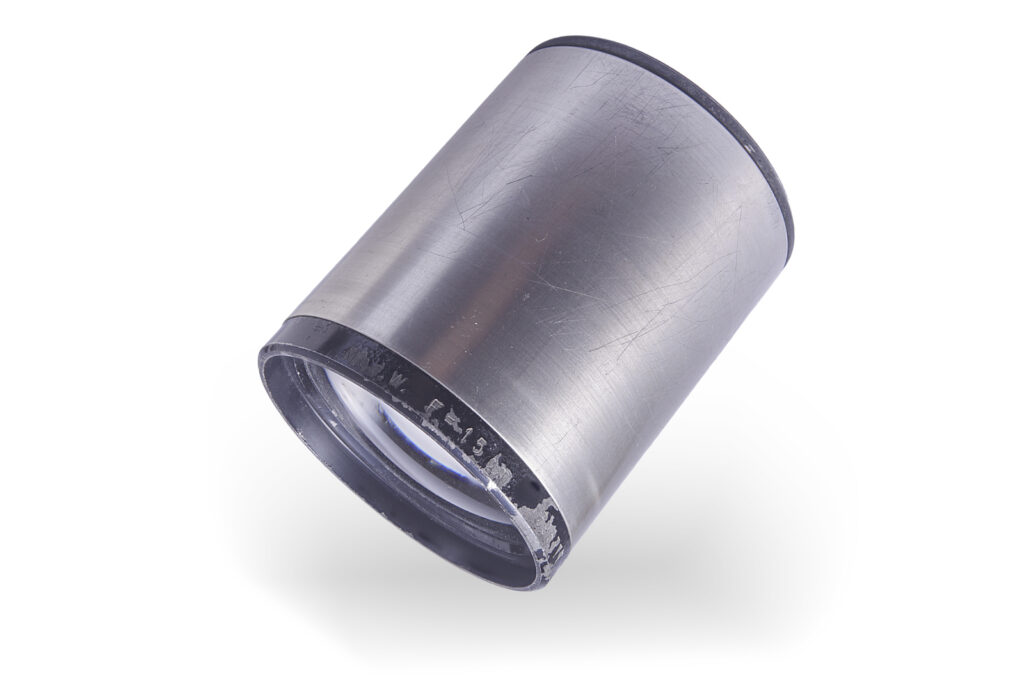
After I received a couple of sample shots and impressions from Sven Rahm (see above) concerning his 150 mm R.O.J.A. predecessor lens, I wasn’t too optimistic about the performance of this one. However, it seems like there was indeed a significant enough upgrade between these models to warrant trying the newer Mod. W lenses.
At f/2.9 this one isn’t extremely fast, but the results show a reasonable amount of detail, very good colors and – because of an ever-present but very slight glow – really pleasant soft transitions. Because the image circle should be quite generous (likely covering 9×9 cm) it’s surprising to see that there’s a significant amount of cats-eying in the out-of-focus highlights. The lens shows quite some field-curvature as well, so – unless you can install your own variable aperture in order to stop it down – it probably isn’t suited for any type of landscape work. It should be an excellent portrait lens however, particularly if you’re able to use it on a medium or large format camera.
Since I’m unfortunately not able to do that, I’ll have to settle for a small bokeh panorama instead:

With techniques like that, even a lens with moderate specs like this Mod. W sample can punch above its weight. It’s not flawless but in my humble opinion still a nice option to experiment with. Here’s another B&W sample:
The lens does work nicely on a full frame camera, likely even better on medium format. Here are a couple of sample shots:











A couple of stereo ( cross view) shots:
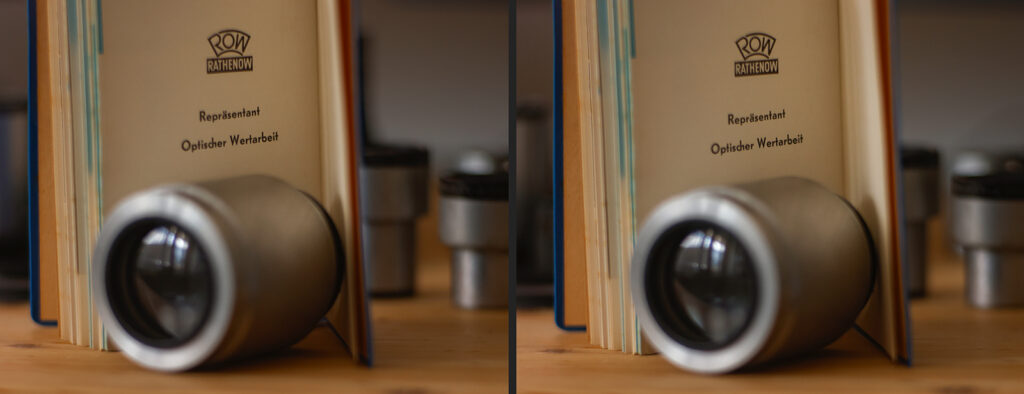
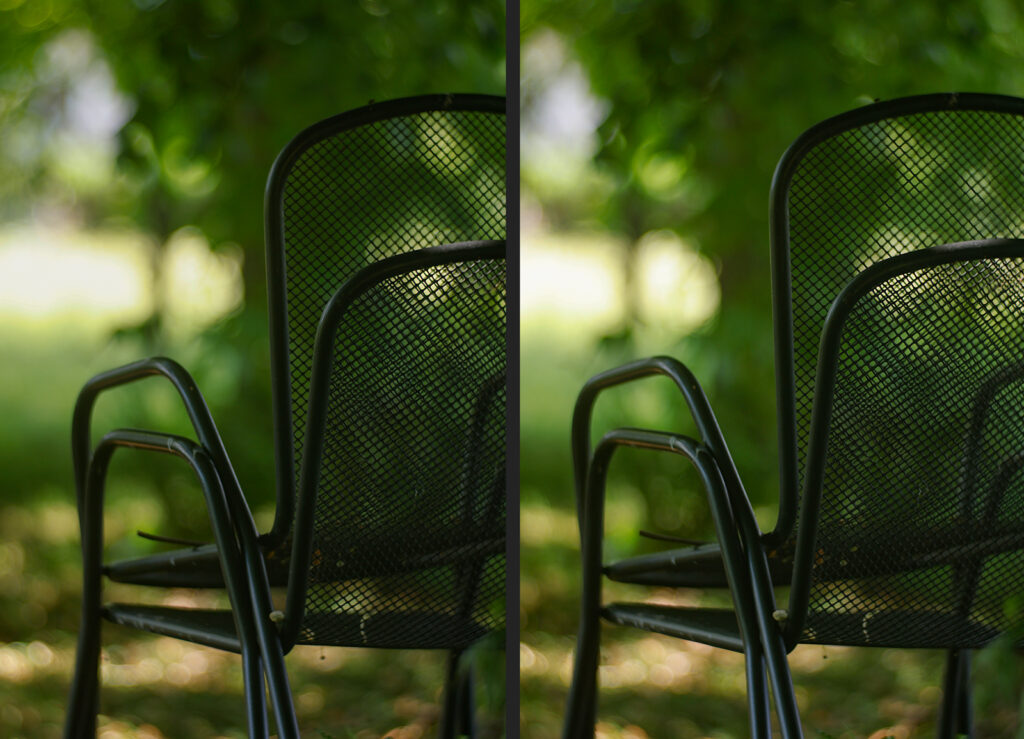

Emil Busch Achromatic Double Objective/Mod. W 180/3.4
Emil Busch Achromatic Double Objective/Mod. W 200/3.8
Emil Busch Achromatic Double Objective/Mod. W 250/4.7
Emil Busch Achromatic Double Objective/Mod. W 300/5
Emil Busch Achromatic Double Objective/Mod. W 350/5.8
Emil Busch Achromatic Double Objective/Mod. W 400/6.7
Emil Busch Achromatic Double Objective/Mod. W 450/7.5
Emil Busch Achromatic Double Objective/Mod. W 500/8.3
Emil Busch Achromatic Double Objective/Mod. W 550/9.2
Emil Busch Achromatic Double Objective/Mod. W 600/10
Emil Busch Achromatic Double Objective/Mod. W 700/11.7
Emil Busch Achromatic Double Objective/Mod. W 800/13.3
Emil Busch Studio Portrait Lens
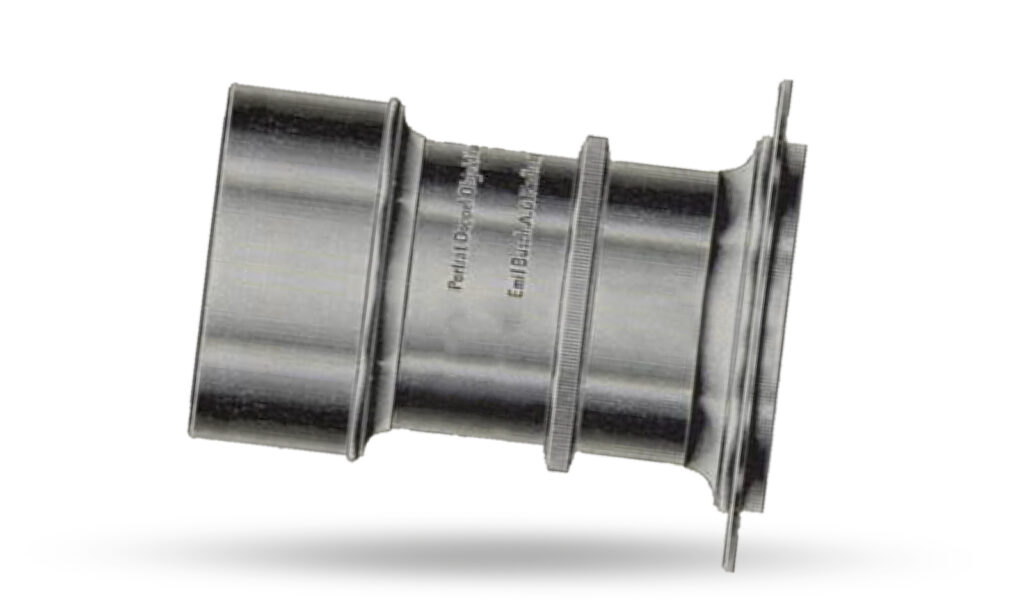
While it might not sound intuitive to include a lens called the ‘Studio Portrait Lens’ into an overview of projection lenses, an Emil Busch catalog from 1913 does warrant it, with the following statement:
“Busch Portrait lenses were amongst the earliest of those constructed on the Petzval Formula, they having been on the market upwards of 60 years.
Modern scientific knowledge combined with the production of new kinds of glass have enabled us to make certain alterations and improvements in the construction, particularly as regards the working aperture of those with longer focus. We have also added some larger sizes, so that the series now includes lenses up to 17 inches focus.
The optical corrections are such as to make these lenses very suitable for high class enlarging or projection.“
(Emil Busch Catalog, 1913)
Even though they were deemed appropriate for enlarging and projection it’s likely safe to say that they were mainly used for studio photography, which reflects in the prices these lenses still fetch today.
That being said, they seem to have been slightly cheaper than the very expensive Glaukar Anastigmats, while still featuring an equivalent speed.
Earlier variants usually have waterhouse stops, while an improved (and in some focal lengths slightly faster) later variant implemented a variable aperture operated by an aperture ring.
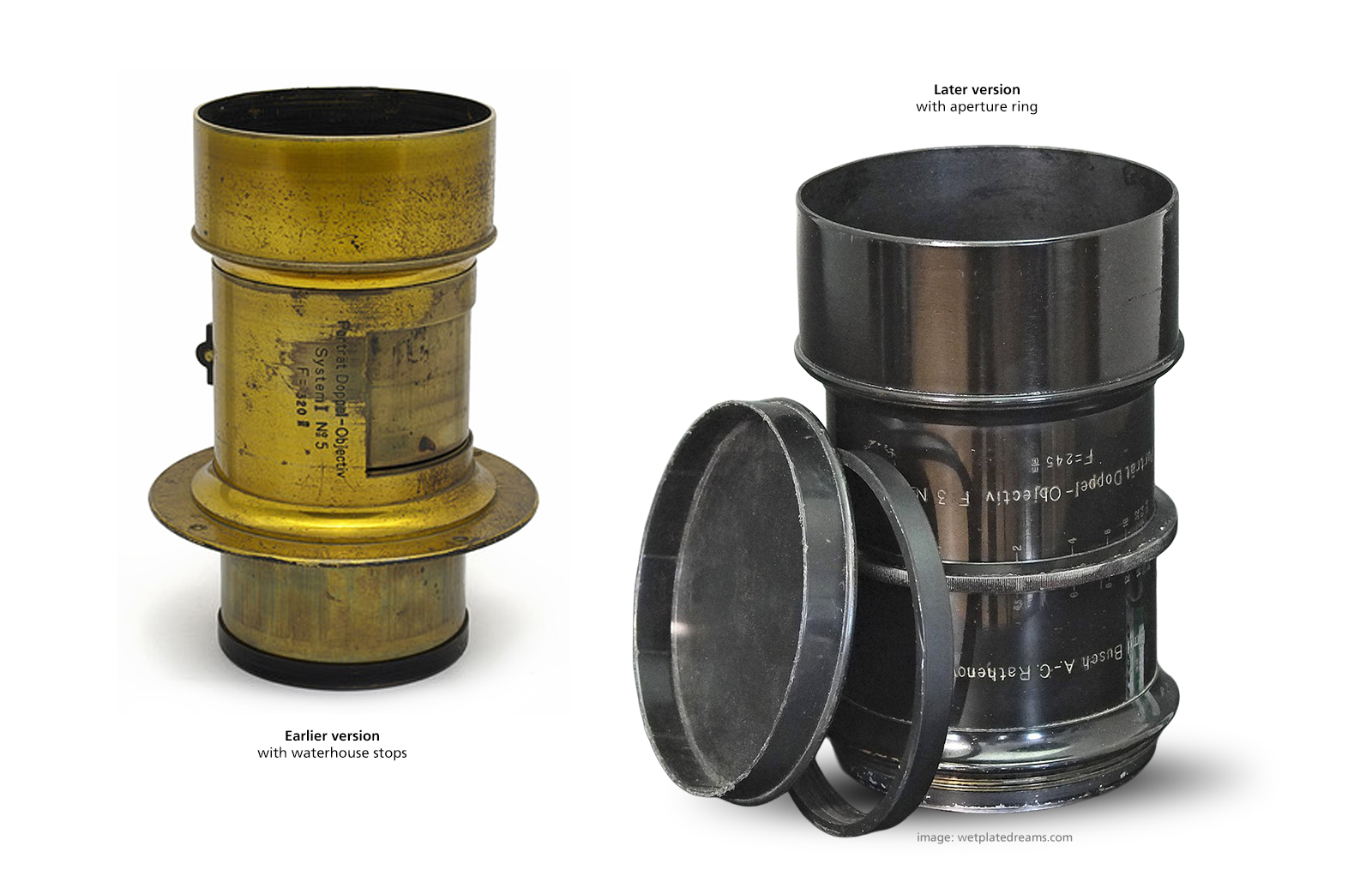
Marco Kröger goes into some more details of this lens and its interesting construction in his great article Objektive aus Rathenow. According to that information the lens featured a mechanism capable of varying the distance between the front and rear group, allowing for optimization for specific tasks or distances. It could probably be seen as a forerunner of what the company created later on in the variable focal length lenses Vario-Neokino, Poly-Neokino or the Vario-Glaukar.
And in that endeavor the company certainly was significantly earlier then the first projection lenses with variable focal length, which started to appear in the US (as you can read in my article on Projection Optics on Deltalenses) and Germany around 1930.
Emil Busch Portrait Double Objective/Studio Portrait Lens 140/3.4
Emil Busch Portrait Double Objective/Studio Portrait Lens 165/3
Emil Busch Portrait Double Objective/Studio Portrait Lens 180/3
Emil Busch Portrait Double Objective/Studio Portrait Lens 200/3
Emil Busch Portrait Double Objective/Studio Portrait Lens 230/3
Emil Busch Portrait Double Objective/Studio Portrait Lens 245/3
Emil Busch Portrait Double Objective/Studio Portrait Lens 280/3.4
Emil Busch Portrait Double Objective/Studio Portrait Lens 320/4
Emil Busch Portrait Double Objective/Studio Portrait Lens 380/4
Emil Busch Portrait Double Objective/Studio Portrait Lens 430/4
ROW Diarectar
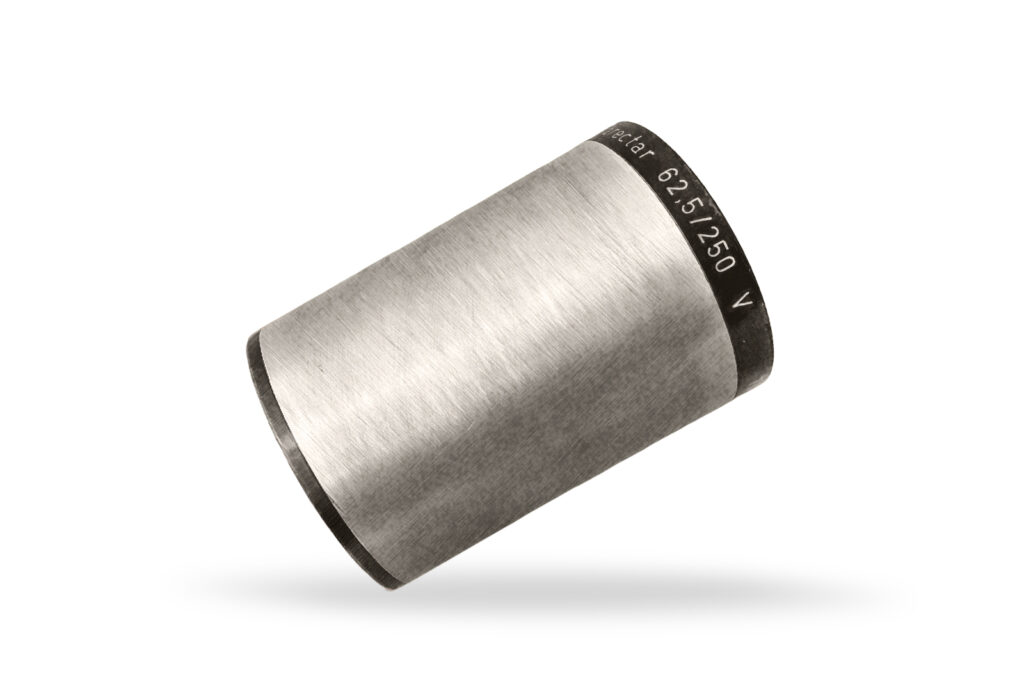
Similarly to the relationship between Cinerectar/Cinerectim, it seems like the Diarectar name was only used for a very limited time or a limited series of lenses and then replaced by the Diarectim name. While the Diarectim name was used by Meyer Optik before, I’ve not seen a sample of a Meyer Diarectar lens yet.
The Diarectar series likely features a Triplet design just like the Diarectim.
ROW Diarectar 250/3.5
Emil Busch Neo-Dia-Anastigmat
While probably only for a couple of years, the Neo-Dia-Anastigmat must have been introduced before the end of WWII and the transformation of the company into ROW. Emil Busch labeled Neo-Dia-Anastigmats are out there and while the series may have been offered in the same focal lengths as the ROW successors (which are better documented) there seems to have been at least one shorter variant with a length of 250 mm.
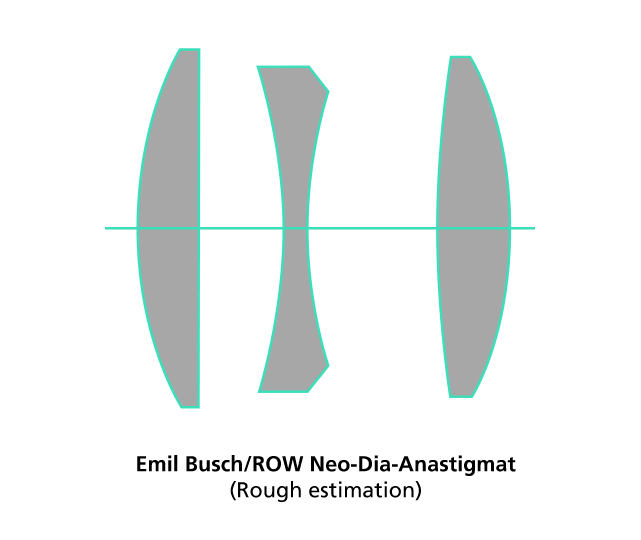
The interesting thing about the Neo-Dia-Anastigmat, is that it likely has a Triplet design, making it distinctly different from the spec-wise very similar Mod. W series.
Helmut Naumann lists a Glaukar series from 20-80 cm for slide projection, so it seems possible that the Neo-Dia-Anastigmat is indeed a direct descendant of it.
Emil Busch Neo-Dia-Anastigmat 250/4
ROW Neo-Dia-Anastigmat
While they may have been decent lenses when used in their original application, the Neo-Dia-Anastigmat series is not particularly suited for being adapted to modern cameras. But as usual, results on larger sensors or film, might still be interesting, particularly because they’re cheap compared to similar Glaukar lenses, they might share some basic design features with.
ROW Neo-Dia-Anastigmat 300/5
ROW Neo-Dia-Anastigmat 350/5.8
ROW Neo-Dia-Anastigmat 400/6.7
ROW Neo-Dia-Anastigmat 450/7.5
ROW Neo-Dia-Anastigmat 500/8.3
ROW Neo-Dia-Anastigmat 550/9.2
ROW Neo-Dia-Anastigmat 600/10
ROW Diarectim
It seems like the Diarectim was either a Meyer lens originally and later produced under the ROW label or vice versa. It’s also possible that some focal lengths were made at the Meyer plant and some at the ROW one. The similar name to several Emil Busch lenses is certainly confusing. The name was apparently used for both home slide-projector lenses as well as professional large format slide projection in cinemas.
⌀ 42.5 mm
Presumably for full frame (36x24mm) slide projection.
ROW Diarectim 100/3.5
⌀ 62.5 mm
ROW Diarectim 150/2.8
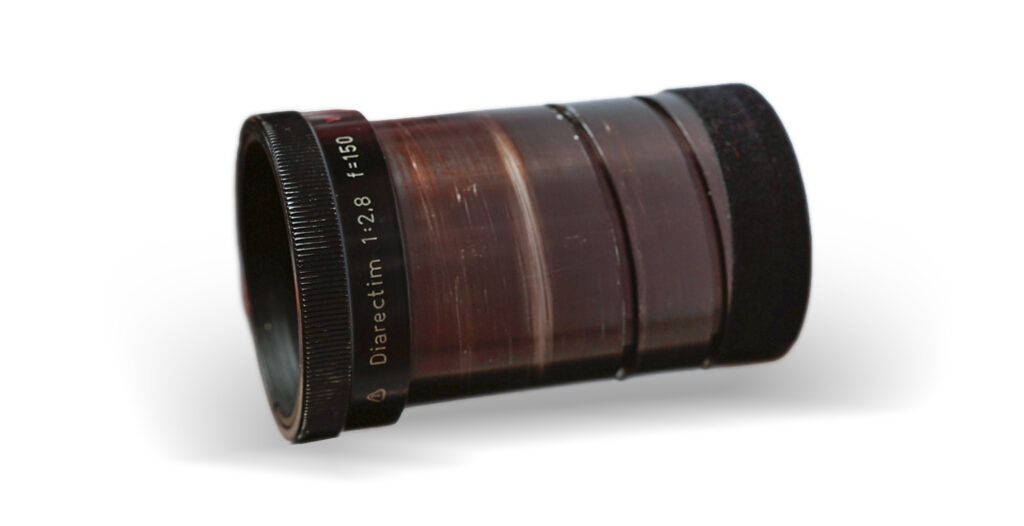
Even though the focal length and optical design (3 elements in 3 groups Taylor Triplet) does suggest a fairly big image circle (it is likely able to cover the 6×6 medium format), sample images taken on a full frame camera by users mekbat and witt on the digicamclub forum don’t seem to give conclusive evidence to believe you can expect great corner performance with this one, if you decide to use it on a medium format camera.
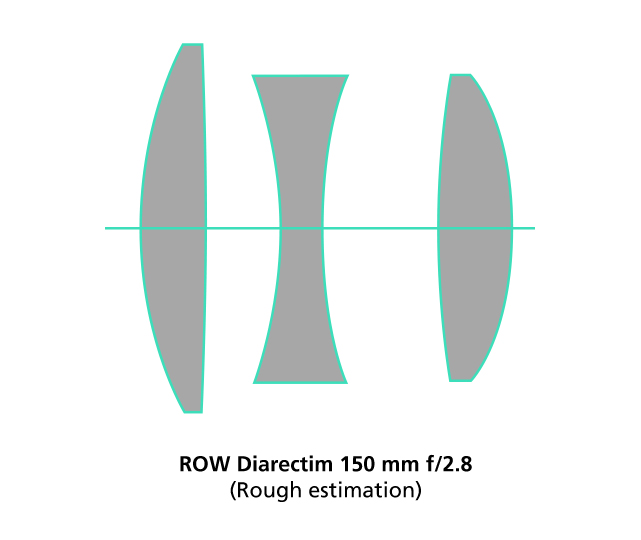
Like many similarly fast Triplets it does have a slightly busier rendering, which can be quite interesting in certain situations, while distracting in others. Bubbles should also be possible, but they’re not too pronounced usually and tend to be significantly less rounded towards the edges.
My flickr friend nefoto has used this lens to good effect and shared a significant number of sample shots, which is a great opportunity to get an impression yourself.
These longer Diarectim lenses with a typical silver barrel, used for multiple other ROW series, were designed to project 8.5 x 8.5 cm or 8.5 x 10 cm (longer focal lengths) slides, according to official ROW material. Even though it has to be clarified that the speed for most variants below is merely an assumption, it’s fairly clear that these aren’t particularly fast lenses, so unless you’re able to use them on a large format camera, it’s probably not worth the work necessary.
ROW Diarectim 180/4
ROW Diarectim 250/5.8
ROW Diarectim 450/7.8
User mekbat on the digicamclub forum has tried the (very likely) identical Meyer Optik Diarectim 450/7.8 variant. It’s great to see how much extension is needed to even be able to focus to infinity… it’s pretty insane.
ROW Diarectim 500/9
ROW Diarectim 550/9.8
…
ROW Diarectim 900/16
Epidiascope/Episcope Projection Lenses
The diameter likely at least 120 mm or bigger. Even though these lenses only featured three glass elements, these must have been extremely massive, perhaps even weighing several kilograms.
The Optisches Industrie Museum Rathenow (oimr.de) shows some projectors apparently built by Emil Busch, which might have been able to feature giant projection lenses like that. The true purpose of the device in question is currently unknown to me however, so it could be something different as well.
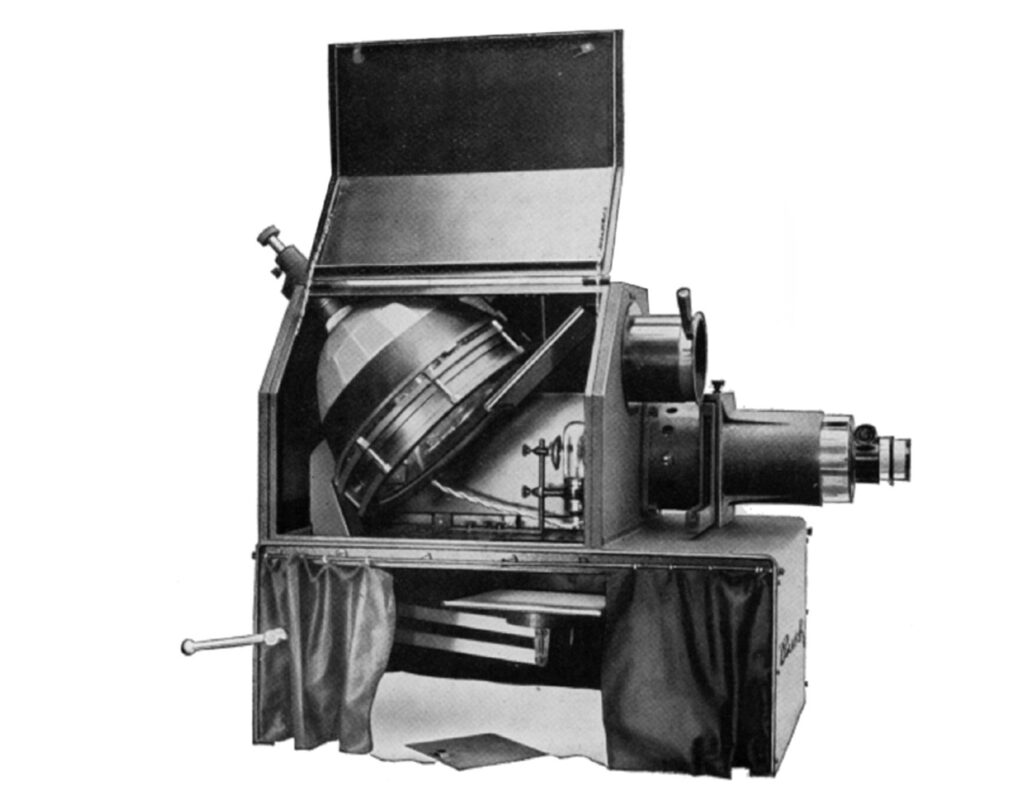
It appears that these lenses were not produced and sold in high numbers, because so far I still haven’t been able to spot many samples on the open market or as part of the images I’ve seen of various collections from museums.
Another device which might feature one of those giant lenses, is an early color-film-projector, which can be seen in the OIMR (museum) in Rathenow:
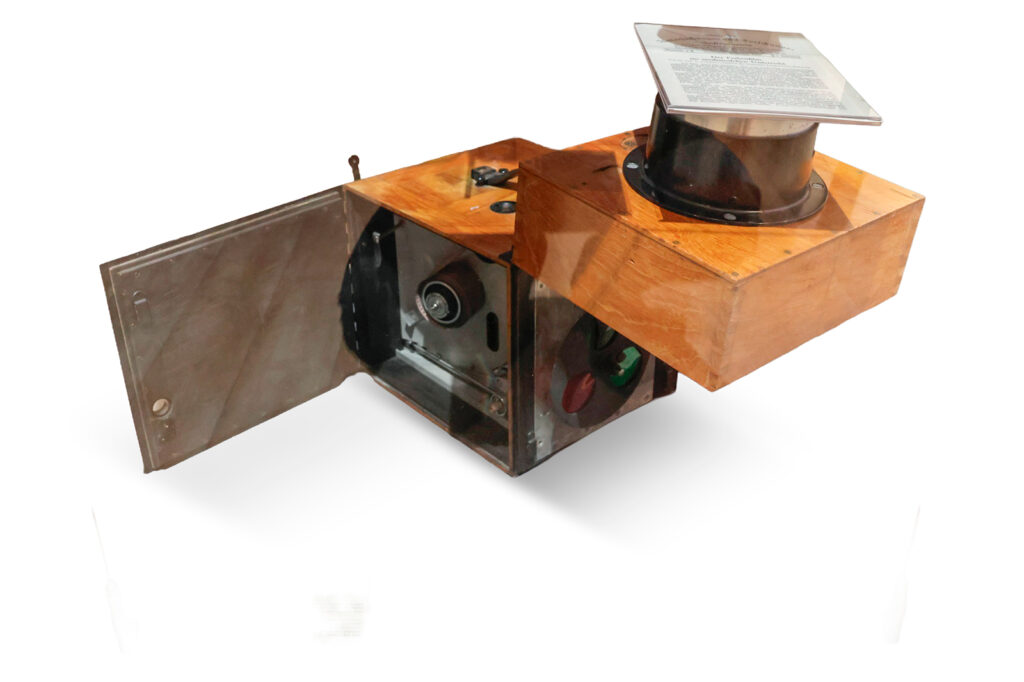
While these lenses probably aren’t a great fit for regular full frame or even medium format cameras, it might be an excellent lens for large format and even more so Ultra Large Format experiments, like the ‘Abracam’ from lens experimenter Bram Stolk. Check out the results he got with a similar lens from Liesegang.
Emil Busch Episkop-Anastigmat (Glaukar) 420/3.6
Emil Busch Episkop-Anastigmat (Glaukar) 490/4.2
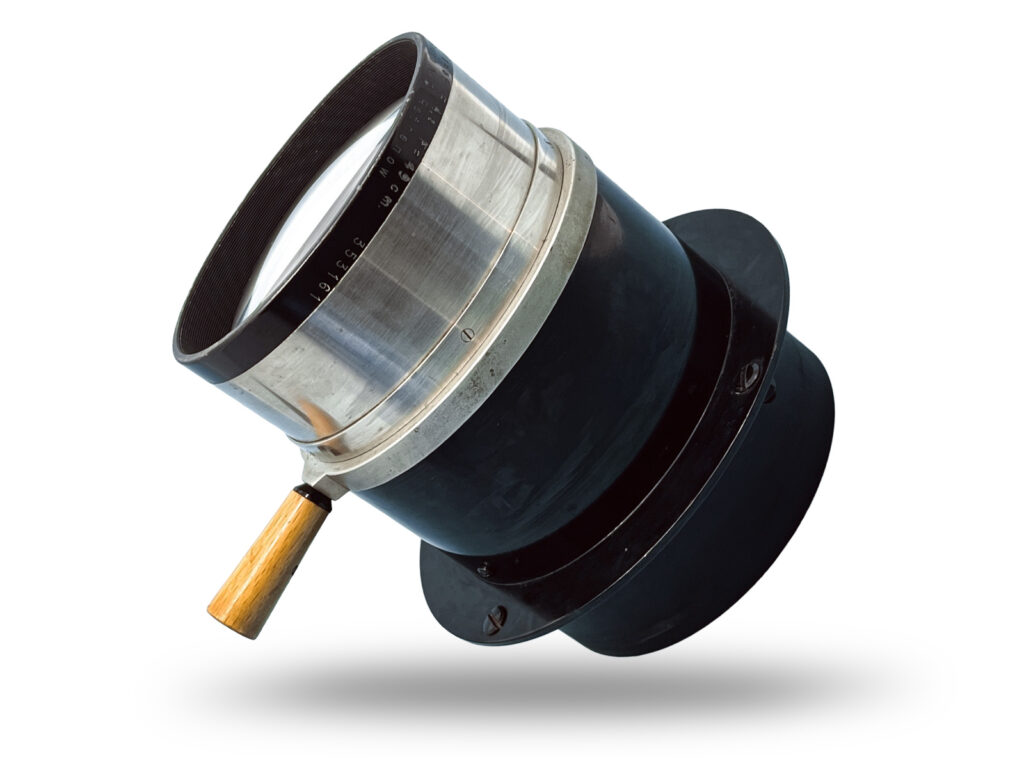
This sample, which is offered on ebay by seller montreal.classic.camera is labeled “Episkop-Anastigmat” but it’s not unreasonable to assume that it is a giant Glaukar as well.
Emil Busch Episkop-Anastigmat (Glaukar) 550/4.7
Emil Busch Episkop-Anastigmat (Glaukar) 600/5
Stage Projection Lenses
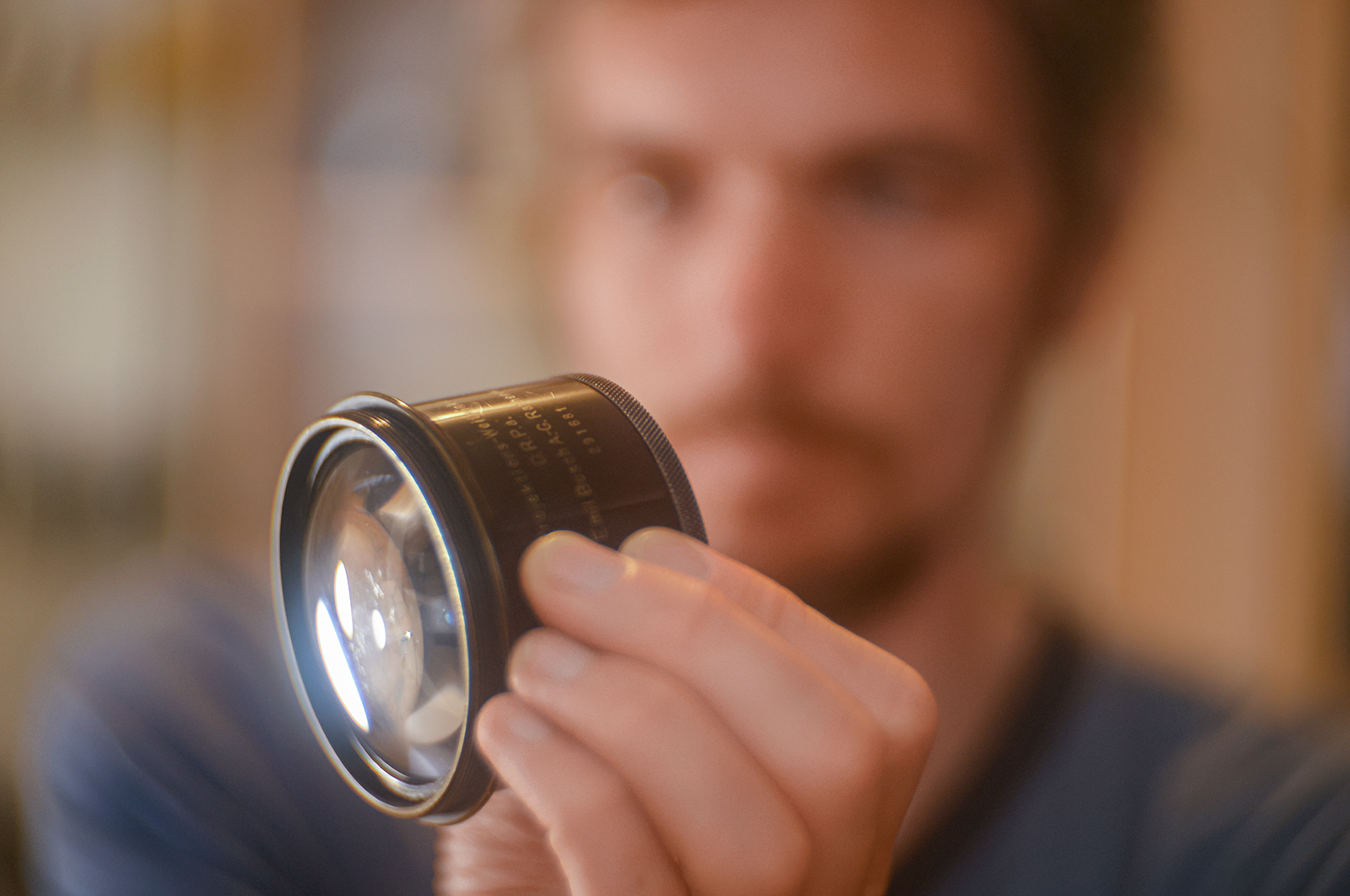
The term ‘Bühnenprojektion’ (Stage projection) was a new one to me, when I first read about it on an Emil Busch ad. Of course I was familiar with theater-, musical- and opera-productions using projectors for additional effects etc. but I always assumed that this was likely a development which began considerably later, when the first digital projectors appeared. Turns out I was completely wrong on that one, and the 1930s and -40s were full of inventions regarding stage projection.
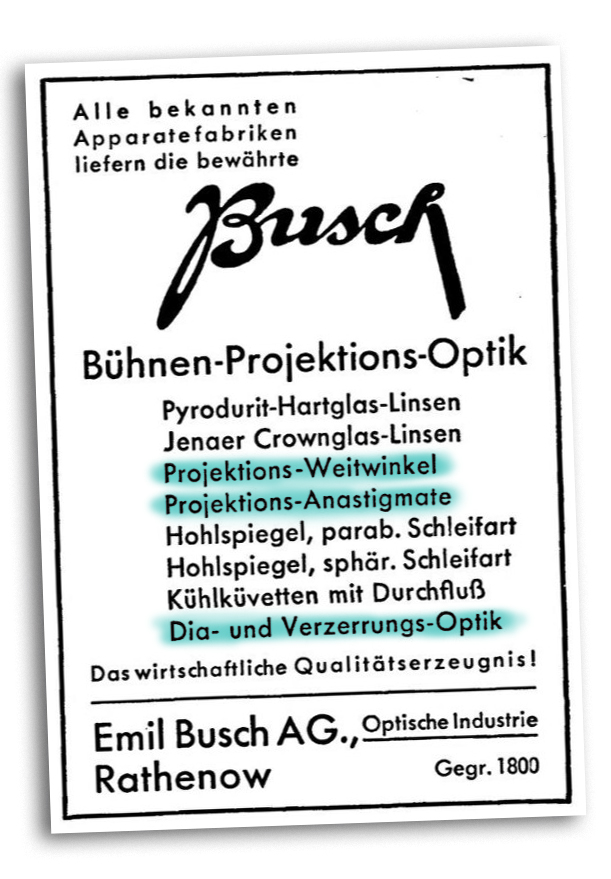
There are not too many resources on the matter online but certainly a couple of interesting ones on archive org, if you’re interested:
The first one is this article in the magazine Die vierte Wand, which details something called ‘Wolkenprojektor’ (cloud projector) and many different variations of such a device.
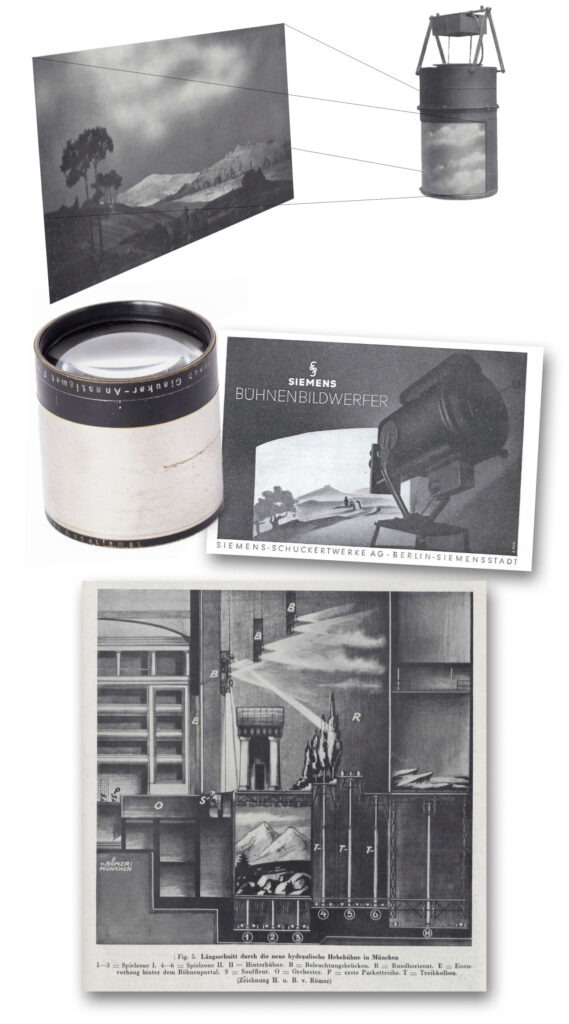
In another write-up called ‘Die hydraulische Doppelstockhebebühne‘ shows a specific setup, including such a special projector.
And finally here’s an interesting overview of several such special effects projectors.
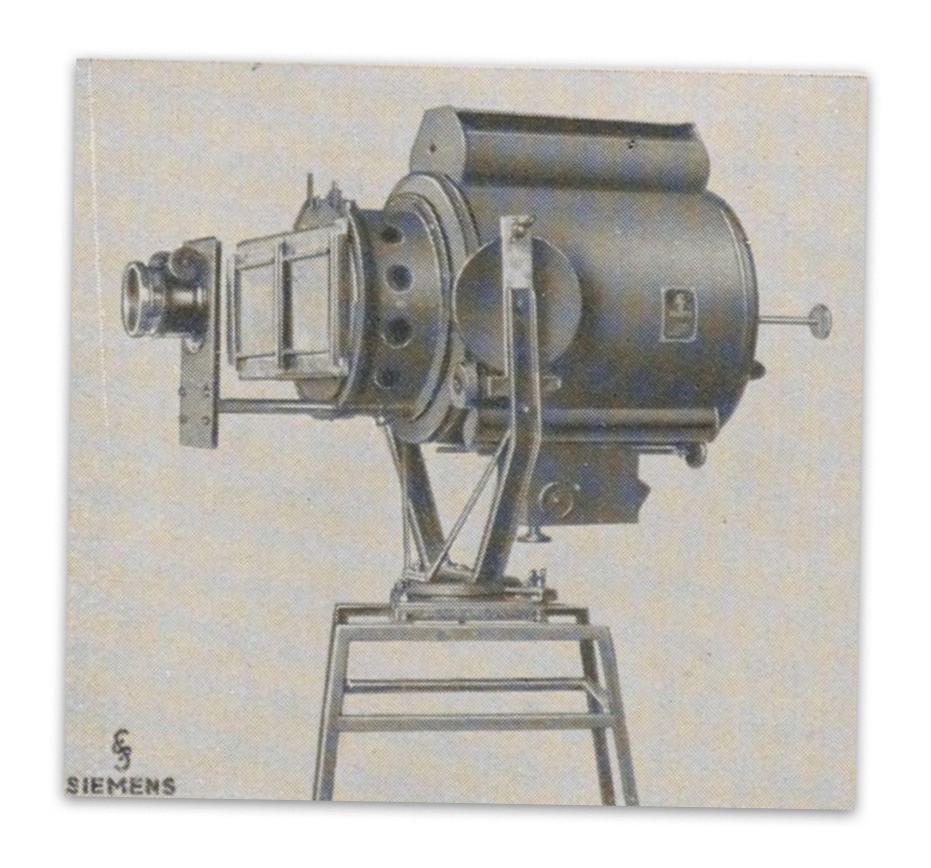
What the company Siemens called ‘Bühnenbildwerfer’ (stage background projector) was yet another variant of such a device though likely mostly based on still projection. It seems to have been able to replace older devices such as the ‘Wolkenprojektor’ which were limited to single effects. Depending on the requirements of these projectors a variety of regular projection lenses for still and cine projection might have been useable, while certain installations might have necessitated uniquely designed lenses.
The company Emil Busch A.G., Rathenow, had limited itself to a small but well-arranged exhibition of its products. It essentially extended to specialist cinema optics, i.e. all optical accessories for equipping cinema theatre machines, i.e. the well-known Neokino lenses of all sizes, slide lenses, Neo-Hohlspiegel, spherical concave mirrors, paraboar mirrors, sound film optics, auxiliary capacitors, etc., as well as projection anastigmates and wide-angle lenses for background, cloud and scenery projection, and finally to the special field of narrow-film optics; this subheading includes the aspherical condensers of various sizes produced by Busch, its well-known narrow-film Neokino lenses 1:1.6, as well as brightening mirrors and sound film optics. – Not to be forgotten are the Vario-Neokino and Polyneokino, the two special models with variable focal lengths.
(translated from Die kinotechnische Ausstellung auf dem Internationalen Filmkongreß Berlin 1935)
Here’s an explanation of the specific requirements for stage projection in one of the big theatres at the time in Vienna:
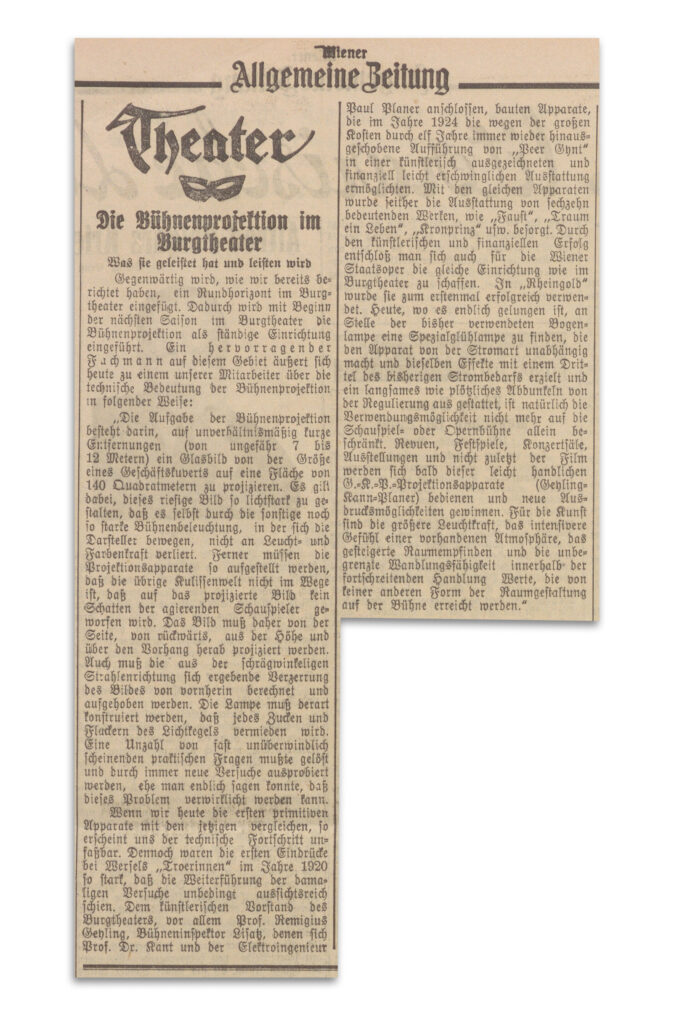
I‘m fairly certain every stage was somewhat different in one way or another and thus often required specific solutions but an overview of some rough necessary parameters is certainly interesting:
“The task, stage-projection has to accomplish, is to project a glass plate, the size of an envelope at short distances (roughly 7 to 12 meters) onto an area of 140 square meters. It’s essential that this giant image is projected with the necessary luminosity, which allows it to keep its vibrancy and color in spite of the strong stage lighting (…). In addition the projectors have to be placed in a way, which avoids the rest of the scenery as well as the actors being hit by the light from the projector. Thus the image must be projected from the sides, from behind or above stage above the curtain. Furthermore the resulting distortion must be calculated in advance and cancelled out.”
(translated from German)
While a lot of these necessary special requirements are in part achieved by additional parts, the demands for a projection lens is certainly even higher than usual, particularly in terms of sharpness across the frame and overall image quality.
Emil Busch (Bühnen)Projektions-Weitwinkel
It’s still somewhat of a mystery what type of lenses these were. The name mentioned in the only source I was able to find, which is Naumann’s book “Das Auge meiner Kamera”, translates to “Stage – Wide Angle” and – as far as I know – it’s the only place any kind of detail about those lenses is mentioned at all. What makes things even more complicated, is that there’s an additional Glaukar series for stage projection mentioned in the same source, with longer focal lengths (see above under “Glaukar-Anastigmat – Others).
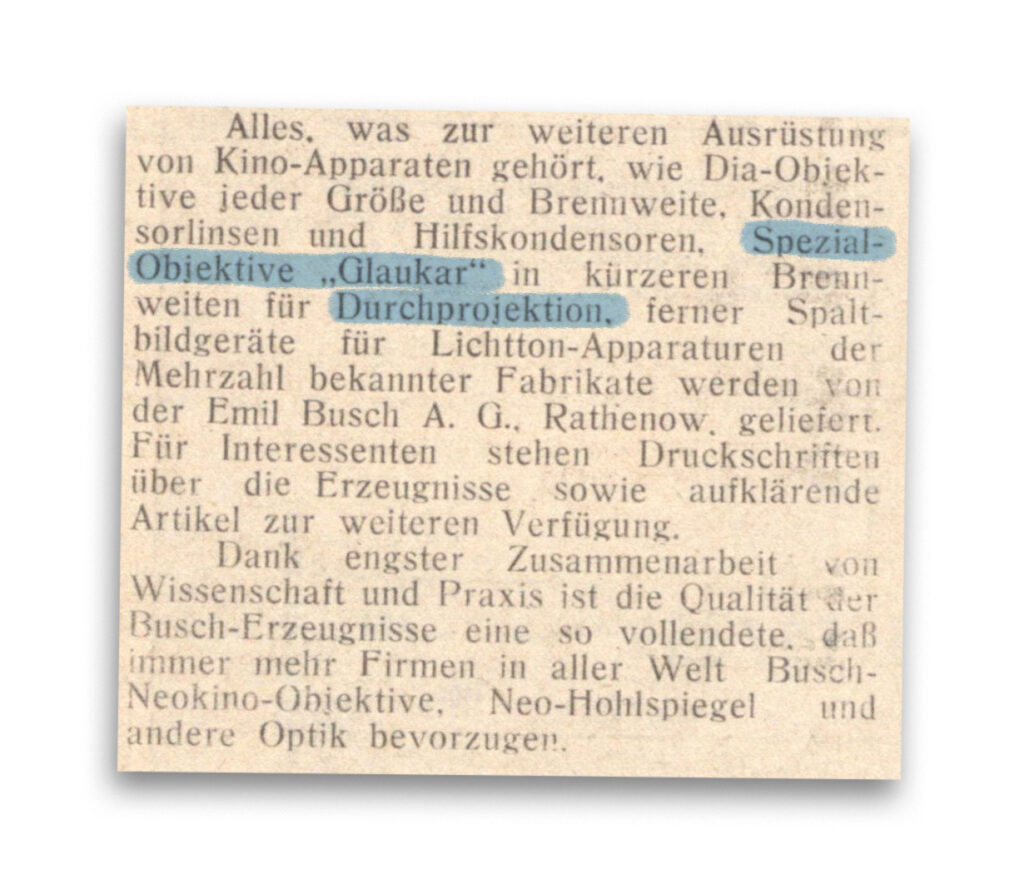
In the following ad a shorter series of special Glaukar lenses is mentioned for being used for rear projection purposes:
This does sound similar to what you might need in terms of short-throw stage projection and also matches the focal lengths better than what we know of the Neo-Filmar, the other series which we know was used for rear projection.
Another lens I’ve spotted, which might belong to that category was apparently labeled “Spezial-Anastigmat” though the sample in question does fall outside of the focal length range given by Naumann with its 5 cm focal length.
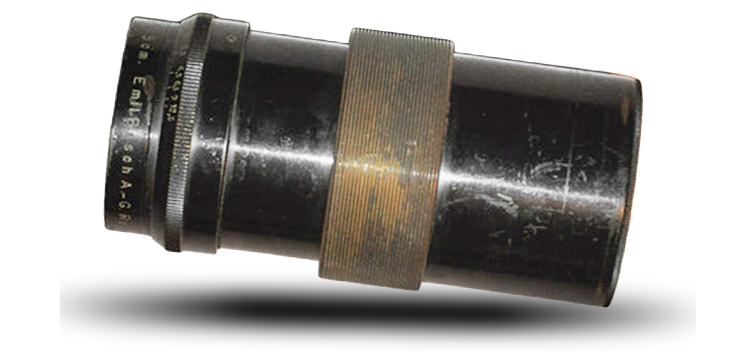
In a short summary about the international film congress of 1935 in Berlin, there’s a mention of “projection anastigmats and wideangle-lenses for background-, cloud- and scenery-projection” so it seems like these lenses were indeed shown to the public.
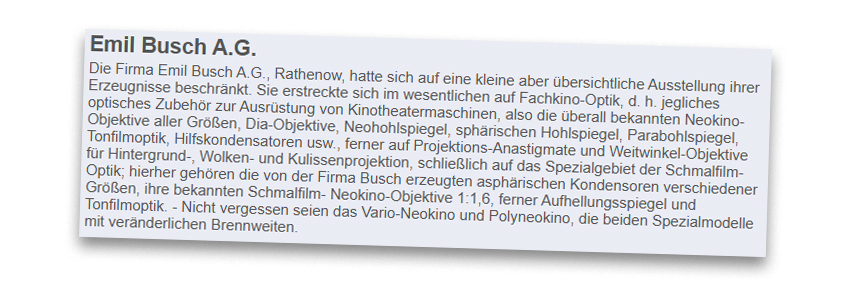
While all of that might point towards vague possible use cases of these lenses, the search that resulted in the only concrete mention of a specific one might have been one of my most challenging so far… and it led me back to my home country Austria and one of its most famous theatre institutions, the ‘Burgtheater’ in Vienna.
Because at this place, a man named Remigius Geyling, who was responsible for creating stage decorations and scenery started working on a new system for stage projection. Together with two men named Kann & Planer he managed to design an elaborate stage projector, which – contrary to former rear projection models – managed to work at steep angles from the front without interfering with the actors and lighting on stage. The new system was patented (various patents around 1928) and called GKP system, because of the last names of its inventors.
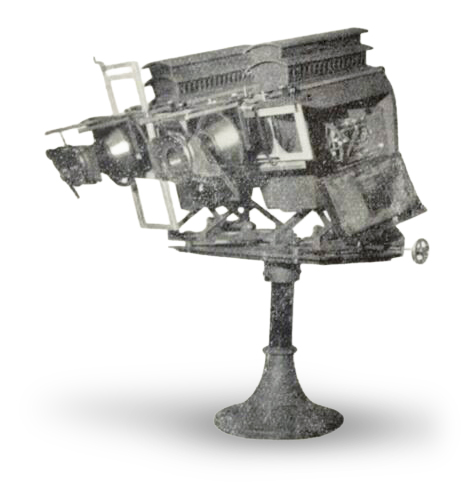
And according to a detailed description in the magazine Photographische Correspondenz from 1929 this device was indeed equipped with a “besonders berechnetes Weitwinkel (Busch-) Objektiv” (particularly calculated Wide Angle (Busch-) lens”), capable of projection the 13×18 cm big glass slides with excellent sharpness to a 140m2 screen.
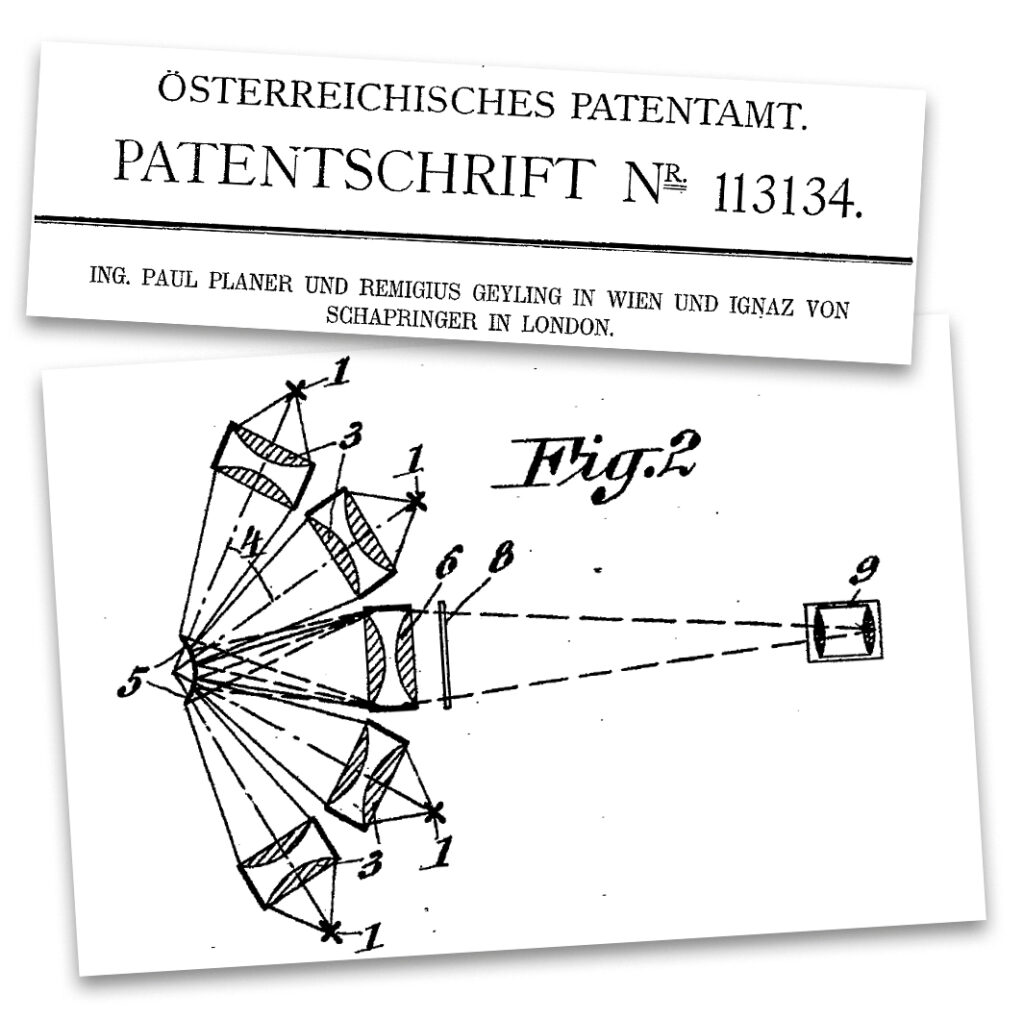
The results must have been pretty spectacular, because the system got quite some attention all around the world. You can read up on the system in this summary on the official Burgtheater page.
A visualization of possible installations as well as two applicable use cases, namely background projection in theatre productions, as well as advertisements on large buildings was shown by one of the inventors Paul Kanner in an article within an issue of the magazine Photographische Korrespondenz in 1929.
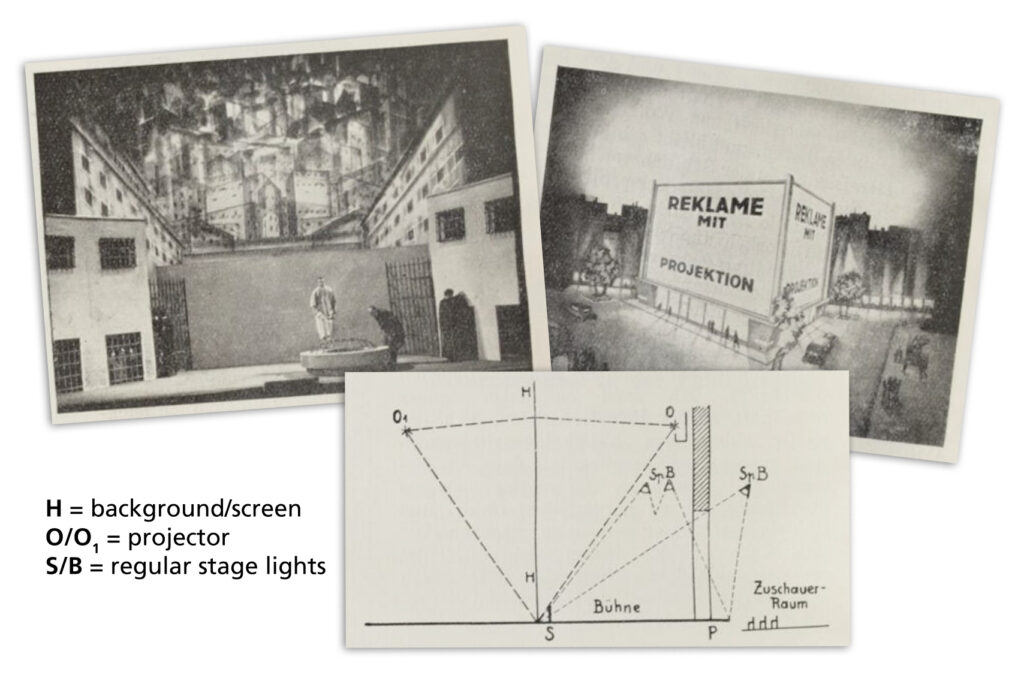
That’s a lot of history and unfortunately didn’t unearch as much information about the actual lenses as I’ve hoped… but it is all I was able to find so far, and I guess at least a story worth documenting. If you happen to know any more about the specifics behind it, please reach out and help me with that.
From my observations so far, I think the lens design might be a 2/2 Periscope type.
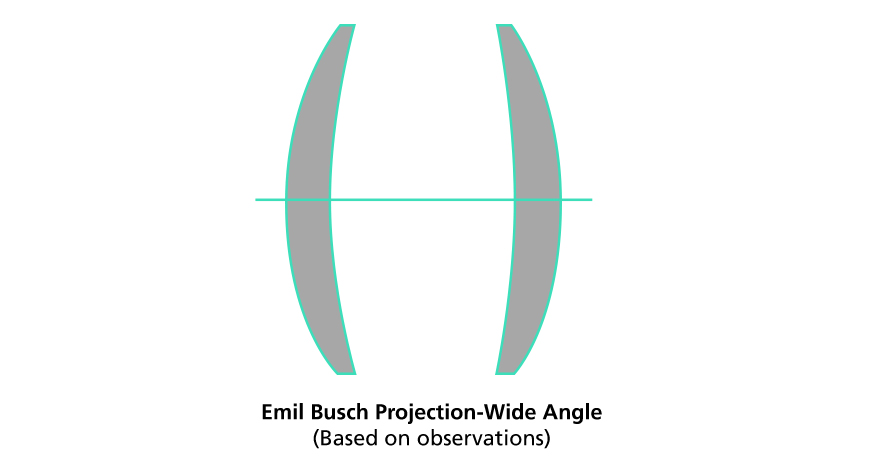
If that’s indeed the case it certainly is the only projection lens I’ve ever seen to use a design like that. It’s interesting (though likely a coincidence) that this type of design is shown in a Busch catalog from 1913 in combination with a glass slide and a condenser.
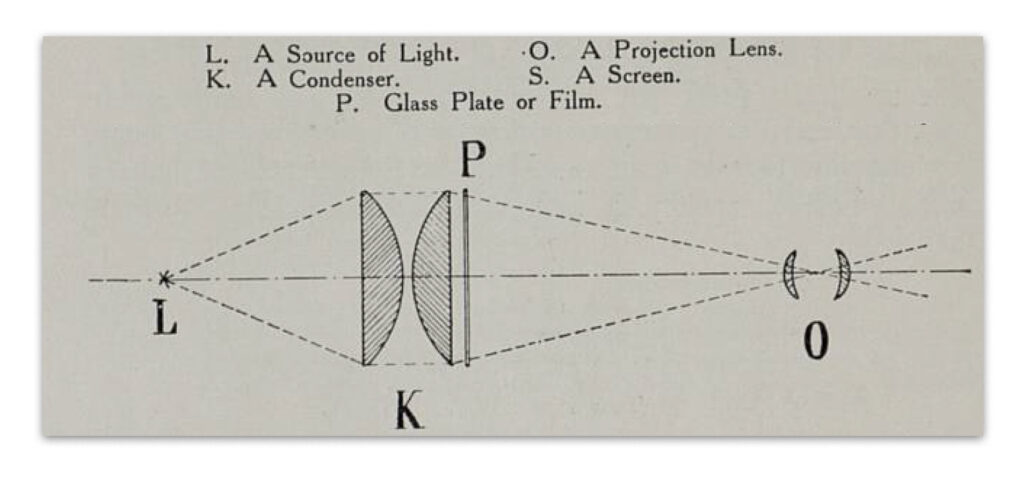
Apart from the shortest, the longest and the 83 mm focal length, other variants are guesses only and thus greyed out.
Emil Busch (Bühnen-)Projektions-Weitwinkel 80/1.X
Emil Busch (Bühnen-)Projektions-Weitwinkel 83/1.3
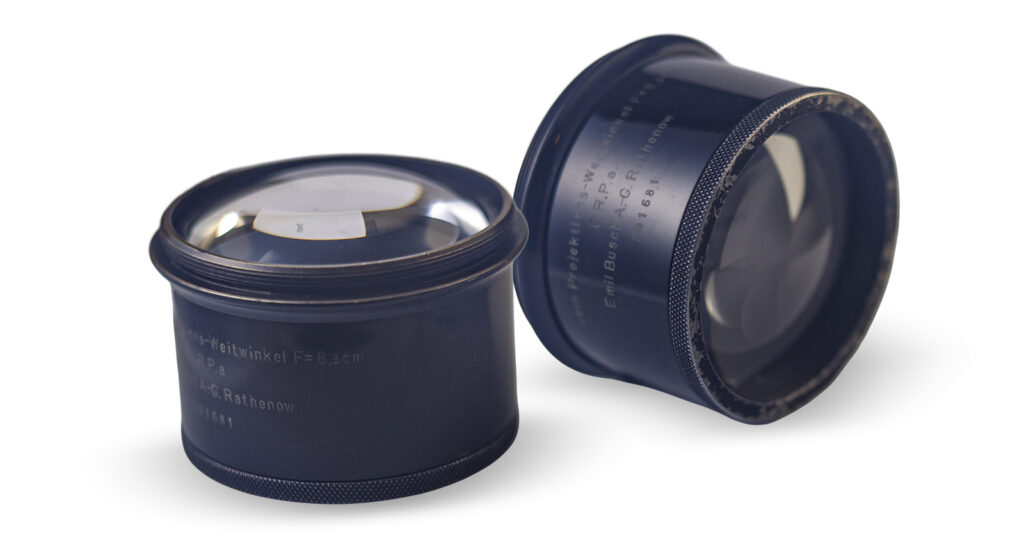
Bad news first: When I finally managed to find and get such a lens into my hands, I quickly found out, that they don’t seem to be of any use as adapted taking lenses. I’m not quite sure about the specifics, but I assume this has to do with the unique way these lenses were used in their original application. It seems like without their specific condenser arrangement (as seen above in the drawing from the patent (Fig.2), these lenses can’t be used.
That being said, I was finally able to learn some more specifics about the potential speed of the lenses, as well as their optical design. It seems like these lenses are almost unbelievably fast if the whole diameter could be used. I doubt that’s the case however.
Emil Busch (Bühnen-)Projektions-Weitwinkel 90/1.X
Emil Busch (Bühnen-)Projektions-Weitwinkel 100/1.X
Emil Busch (Bühnen-)Projektions-Weitwinkel 110/1.X
Emil Busch (Bühnen-)Projektions-Weitwinkel 120/1.X
Emil Busch (Bühnen-) Projektions-Weitwinkel 130/1.X
Emil Busch Projektions-Anastigmat (Glaukar)
It seems like these Glaukar lenses for stage projection were usually labeled ‘Projektions-Anastigmat’ and from observations of online samples I would estimate their speed of somewhere around the usual Glaukar line at f/3.1, even though their big diameter of 80 mm might suggest otherwise. It’s likely that these lenses were used in devices where 80 mm was one of the main standards. As mentioned in a book by H. Naumann, they were intended for stage projection, but that might have included a number of different applications as shown before.
According to Naumann these Glaukar lenses were Triplets like the usual projection and taking lenses. The angle of view (of 60 degrees) likely made them a superior option for theatre projection, which often had to work within narrow spaces. They were probably used for large format slide projection for the most part.
Emil Busch Projektions-Anastigmat (Glaukar) 150/3.1
Emil Busch Projektions-Anastigmat (Glaukar) 160/3.1
Emil Busch Projektions-Anastigmat (Glaukar) 170/3.1
Emil Busch Projektions-Anastigmat (Glaukar) 180/3.1
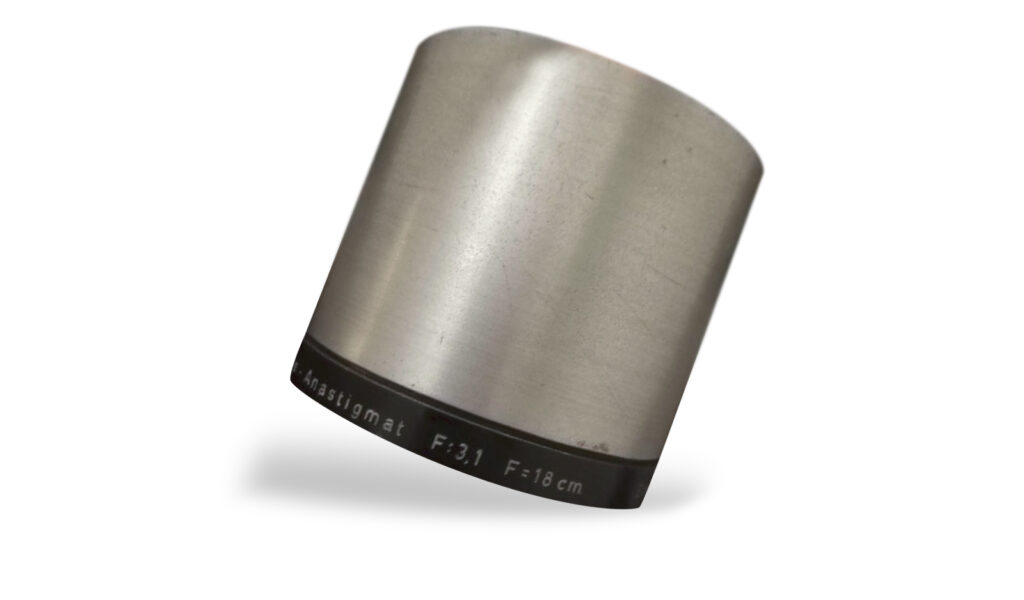
Emil Busch Projektions-Anastigmat (Glaukar) 190/3.1
Emil Busch Projektions-Anastigmat (Glaukar) 200/3.1
Emil Busch Projektions-Anastigmat (Glaukar) 210/3.1
ROW Projektions-Anastigmat (Glaukar)
While the Glaukar as a cine projection lens seems to have been faded out during the late 1930s, the manufacturing of the bigger diameter series for stage-projection was continued under the ROW banner after the war. It’s likely that the series was re-calculated and obviously coated at that point while the Glaukar name was omitted.
It’s pretty safe to assume that more than one focal length of this series was produced, so far only one has been seen in the wild. Given the popularity of different (mostly Double Gauss) designs, it’s also possible that these lenses were not produced in batches, but only on demand.
ROW Projektions-Anastigmat 180/3.1
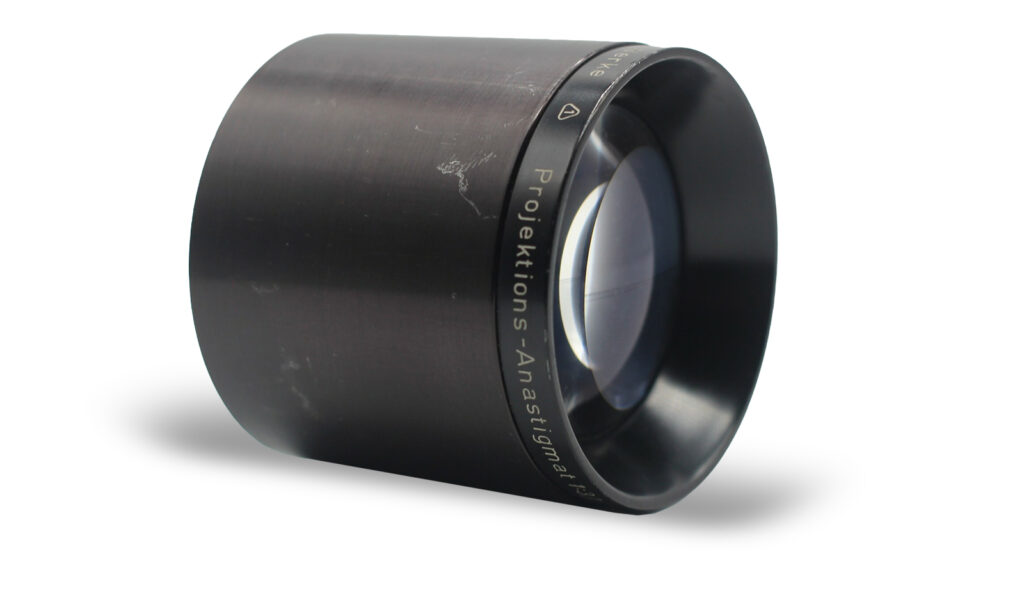
Serial Numbers & Models
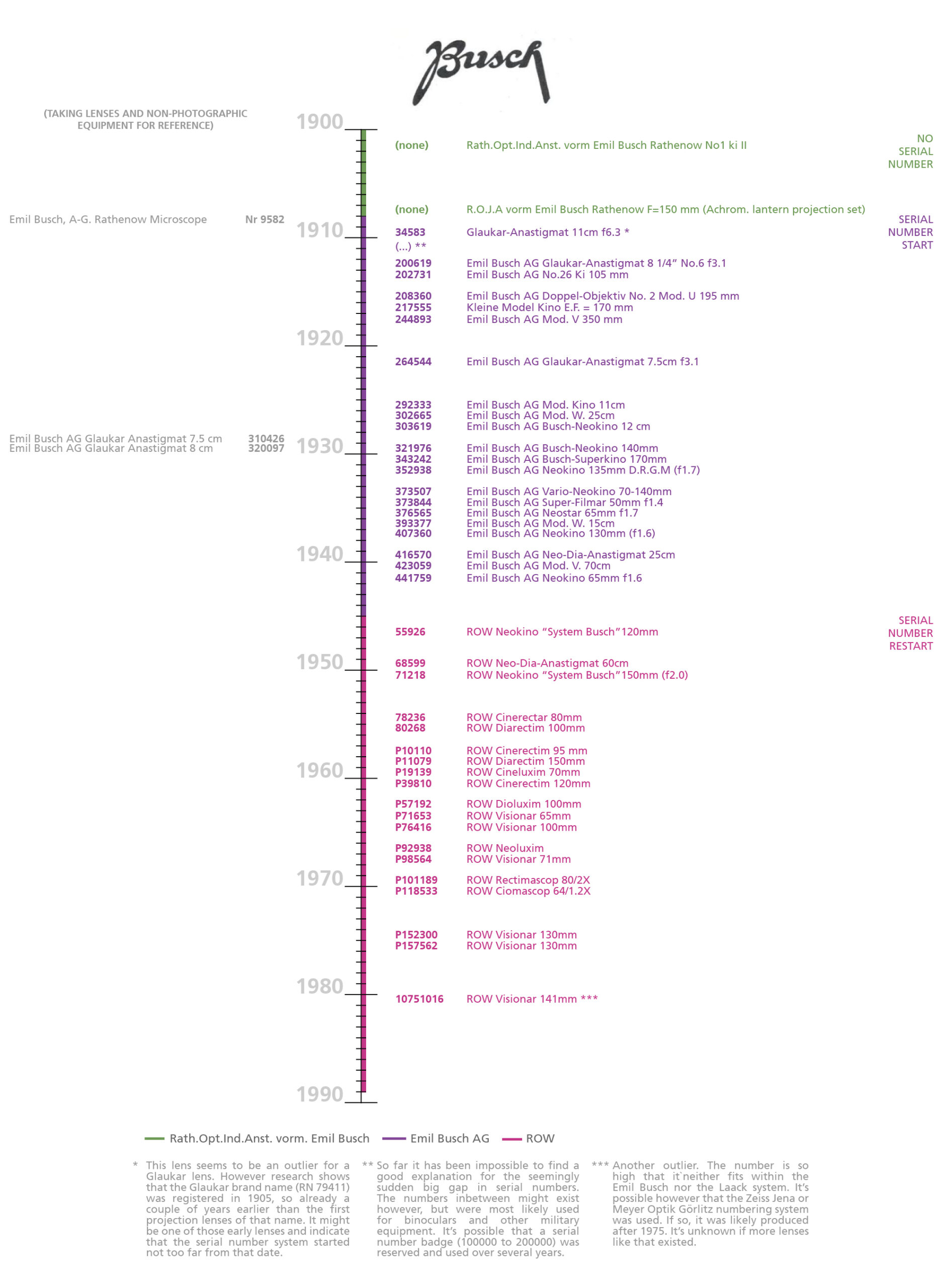
Company names overview
| Company name | Dates & Inscriptions |
| J.H. Duncker, Königl. privilegirte Optische Industrie-Anstalt, Preussen | 1800 – 1819 (no serials) |
| E. Duncker, Königl. privilegirte Optische Industrie-Anstalt, Preussen | 1819 – 1845 (no serials) |
| Emil Busch, Besitzer der Königlich privilegirten optischen Industrie-Anstalt (vormals E. Duncker) zu Rathenow (Preussen). | 1845 – 1872 (no serials) |
| Rathenower Optische Industrie Anstalt A.G. (vorm. Emil Busch) | 1872 – 1908 (no serials) < 1898 = RATH. OPT. JND. ANST vorm. Emil Busch > 1898 = R.O.I.A / R.O.J.A |
| Emil Busch A.G. | 1908 – 1945 (serial numbers #1) |
| cxn (rarely on lenses) | 1939 – 1945 |
| ROW – Rathenower Optische Werke | 1948 – 1989 (serial numbers #2) |
Additional lens dating pointers
| D.R.G.M – Deutsches Reichsgebrauchsmuster (simpler, faster form of patent in Germany) | 1891 – 1945 |
| Emil Busch Optical Company (London) | 1904 – 1937 (marked in inch) |
| Kleine Model Ki/Kino lenses | ~1914 |
| Material Upgrade Duralumin(ium) | > 1937 |
There’s no agreement on the question whether Emil Busch used consecutive numbers or not. Some people claim that different serial number systems were used for various parts of the production and in particular that the numbers from binoculars were separate from photographic lenses. There might be a point to the latter claim, but I somehow doubt that photographic lenses were entirely separate.
From my observations so far, I would see it as feasible that photographic lenses and microscopic equipment shared a serial number system. It would certainly help to explain the surprisingly big gap between 41.000 and 200.000. But if you have another explanation for these missing numbers or are able to spot either a taking- or projection lens with a serial number which falls within that range, please reach out to me and let me know.
I’ve tried my best to find evidence for my theories and claims, but it seems like – and the official sources in the cultural institutions in Rathenow confirmed as much – that almost no official data about serial numbers is still in existence. The only official official production numbers I was able to find are from the (US-based) CIA, which lists ROW output for one quarter in 1952 like this:
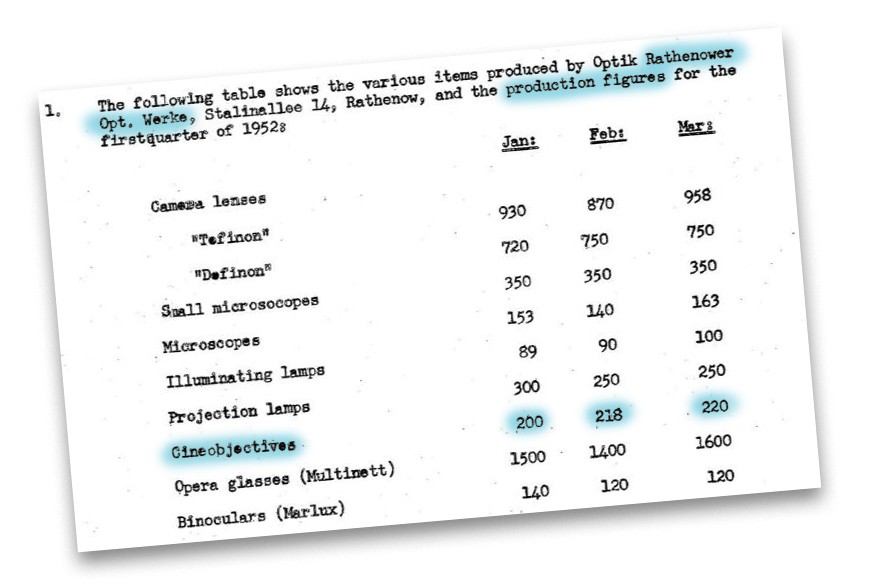
As you can see the numbers all seem quite low for a company the size of ROW, and while production in 1952 might have still suffered from the consequences of WWII, it likely isn’t too far off from the regular numbers before. If we assume that production kept relatively steady throughout the year, the overall yearly number of cineobjectives (I think that the CIA refers to projection lenses as such, since ROW wasn’t known to produce significant numbers of cine taking lenses) produced in that year amounts to 2.500.
The production of projection lenses at ROW lasted for about 43 years. If the number 2.500 for the yearly output increased slightly every year (as would be expected given the upwards economic development in Germany at the time as well as additional products hitting the market) the roughly estimated number of 260.000 lenses produced over that period of time – which a consecutive serial numbering system would indicate – doesn’t feel unreasonable.
The picture I was able to gain through comparing hundreds of lenses, their serial numbers, appearance like materials, glass, coatings, optical details, color etc., numerous ads, catalog entries, forum posts, online listings and auction sites and various books on the matter, is still inconclusive. However – with the additional help of serial numbers shared by Espen Susort, Mark Welsh, Lichtspiel Bern (a cine museum and archive in Switzerland) and several people on online forums (see credits and links at the end of the article) – it has been possible to create a tentative overview as seen in the graph, which can hopefully be built upon and refined further with the help of future contributions and insights. For now here’s an overview of my observations and conclusion to accompany the serial number overview aboves:
Mod V & W – Models and Serial numbers
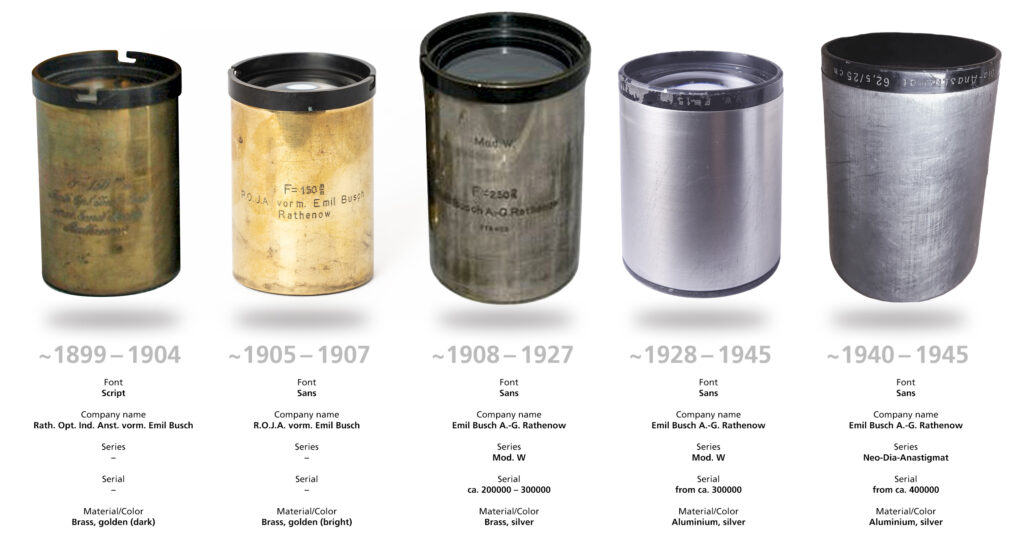
These are probably among the oldest projection lenses by Emil Busch. There might have been earlier lenses for lantern projection offered by Emil Busch, but if so, they don’t seem to be documented. The two examples on the left were part of what was sold as the ‘Achromatic Lantern Projection Set’.
The oldest versions are easy to distinguish by the script font used and the longer abbreviated company name ‘Rath. Opt. Ind. Anst. vorm. Emil Busch’. The Mod. V (52.5 mm) series were probably the same optically, just sold as single lenses and labeled differently.
The second version with a brighter golden finish still used a shorter abbreviation of the old company name (R.O.J.A.) and was likely introduced somewhere around 1905.
From 1908 on the third (silver brass) version was used. It featured the new company name ‘Emil Busch A.G.’ and, in addition to a serial number, also had the Model type engraved. The Mod. W was introduced later (around 1911).
The fourth version used aluminium barrels and had the inscription on the outside of the front ring. It was probably introduced around 1928, close to the first upgrade to the Neokino series.
It’s easy to spot that the fourth version lost the notches (for the filter/slide holder) on the front of the lens. The most likely explanation might be, that the old lanterns were no longer in use and newer slide projectors used different systems for these features.
Surprisingly a fifth version was added in the form of the Neo-Dia-Anastigmat as well, likely around 1940. While these lenses are significantly more common with their later ROW labeling, it seems like a number of these lenses was also produced with Emil Busch inscriptions and serial numbers slightly above 400000.
Mod Ki & Kino – Models and Serial numbers
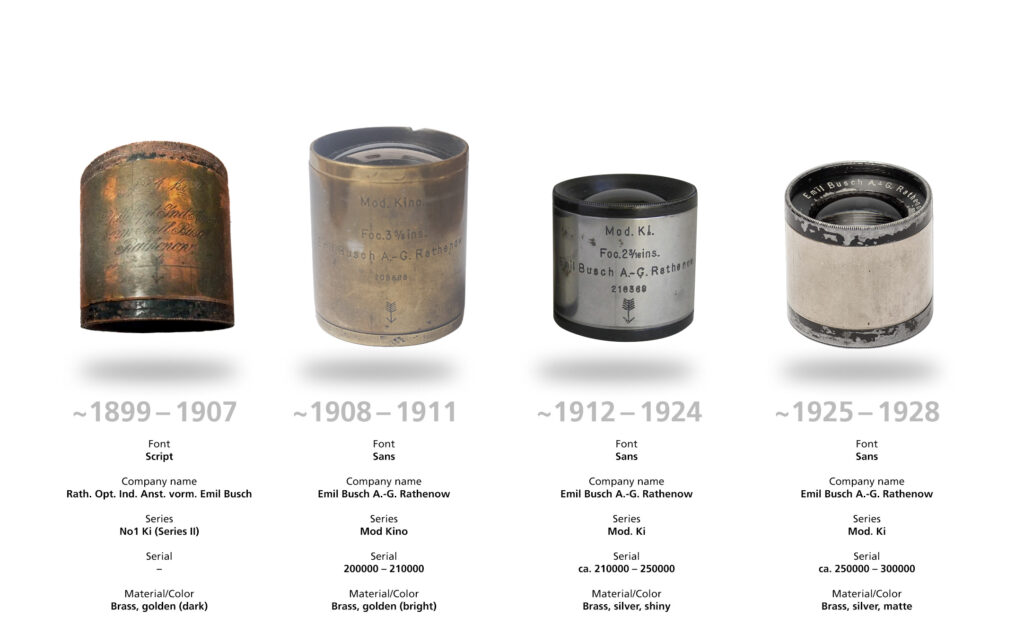
The Mod. Ki lenses – basic petzvals with 42.5 mm diameter – were first introduced in 1899. The Kino series was added later around 1907. It had a bigger diameter (52.5 mm) and double illumination at the same focal lengths.
Once again the earliest models look very unique because of their darker patina as well as the script font used.
The second version (a Kino version is shown here, but there were likely Ki models like that as well) was brighter and used a sans font. It also had a serial number engraved. Some models still show the No. X (lens number to distinguish the lenses, which was used as reference in catalogs/price lists), but not all of them. It’s unclear weather all of these lenses were golden colored and it just wore out over time, or if the color has only been applied to some of them. There definitely are some silver variants around as well.
The third version, in silver shiny brass barrel with black front and rear rings was produced for a long time.
The final version of the Ki/Kino series was likely released slightly before or at the same time as the introduction of the Neokino series, which was in 1927. These lenses had a matt finish but still used brass barrels, very reminiscent of the early Neokino variants.
Some more notes on that:
While it initially looked like the Mod. Ki/Kino lenses were produced for a long time, due to the many different looking variants, I’ve started to doubt there was any significant overlap between them and Neokino series. The highest Mod. Kino lens serial spotted so far is 292333, the lowest Neokino number 303619. There might be closer ones and of course some overlap is very much possible as well… but it seems likely that the number 300000 is extremely close to the launch of the Neokino series and it’s known that this occurred in 1927.
One of the reasons why I think it makes sense that the Ki/Kino were discontinued shortly after the Neokino launch is the fact that their ranges were mostly integrated under the Neokino umbrella. There’s a vast number of Emil Busch (not counting the ROW models) Neokino lenses with diameters from 32.5/42.5/52.5/62.5/82.5 and 105 mm. A magazine from 1933 mentions that there are 83 Neokino variants… that’s quite a lot. While I have managed to list a majority of them further up under Emil Busch Neokino, there might still be some out there which I haven’t seen or which only differed in terms of mounting/lens bodies or diameters.
It looks like the Neokino name quickly gained traction after its launch and thus all the other names ‘Kino/Neoki/Superkino’ were integrated into that system. At least that’s my theory so far and would also help to explain why we don’t see more samples of Busch-Neoki or Busch-Superkino lenses.
Early 52.5 mm diameter Neokino lenses used cm for focal length until a certain point and then switched to mm. Later Neokino lenses seem to have used mm exclusively. Some samples (like the superfast 16 mm variants, but also some 35 mm lenses) even show an inscription of their speed in f-stops. But that’s a rare occurrence… Lenses for still projection (Mod. U, V, W) are all over the place with their focal length labeling.
Neokino – Models and Serial numbers
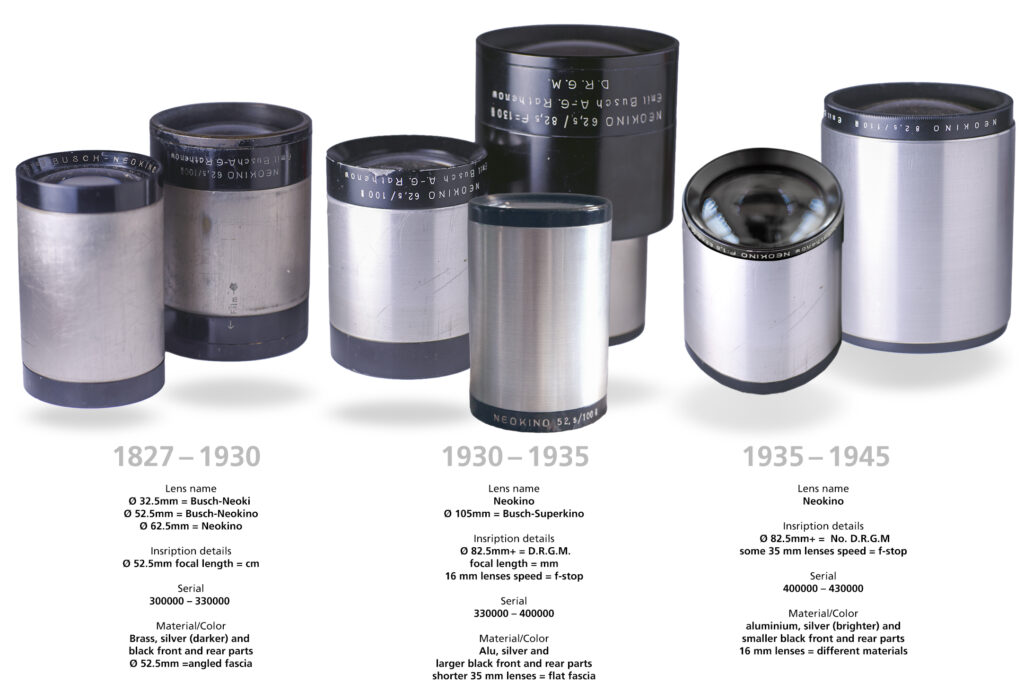
Giving decent estimates of Neokino lens production dates is made more difficult by the numerous different versions these lenses existed in.
At first the Neokino lenses only existed in 52.5 mm diameter (like a continuation of the Mod. Kino series) and 62.5 mm, which was a significant upgrade in terms of speed, but not unheard of. The barrels of the first versions were made of brass. Early Neokino lenses with 52.5 mm diameter were labeled ‘Busch-Neokino’ – likely up until serial number ~325000 - just like the Busch-Superkino or Busch-Neoki which I’ve seen. As expected lenses like that do have a low serial number. This labeling was apparently not used on the 62.5 mm version at all, but so far I don’t have any clue why.
The second variant, which was introduced in 1930, likely changed the barrels to aluminium or ‘Duralim’ (a special aluminium alloy) developed in the late 1920s. The first superfast Neokino lenses were also introduced at the time. These lenses had a long black front barrel with significantly bigger diameters and a D.R.G.M inscription, which was something like a “patent light” in Germany at the time… not counting as a full patent, but still protected as a unique idea and apparently faster/easier to get.
A couple of years later, around 1935, the third variant rolled around, changing the look of the barrel to an all-silver version and placing the inscriptions on the thin front rings only. It also included f-stop values on some of the lenses and removed the D.R.G.M. notice. I don’t know for sure if the 52.5 mm variant was even continued from this point on, though up until this point (serial numbers around 400000) it certainly was.
Judging by an entry in the book ‘Die Wissenschaftliche und Angewandte Photographie’ by Michael Kurt which shows some correction details of Petzval lenses, the Neokino recalculation to a f/1.6 lens was actually done in 1928. It’s likely however that the introduction to the market only happened in 1930 as suggested by several ads/articles.
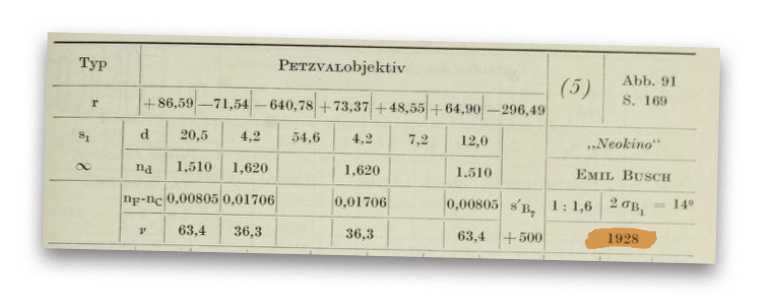
The latest Neokino lenses for 35 mm appear to show f-stop engravings:
It’s not known however if these were applied throughout or only for particular batches/models. Regardless of the reasons, this practice was not continued after the war with similar 35 mm ROW lenses.
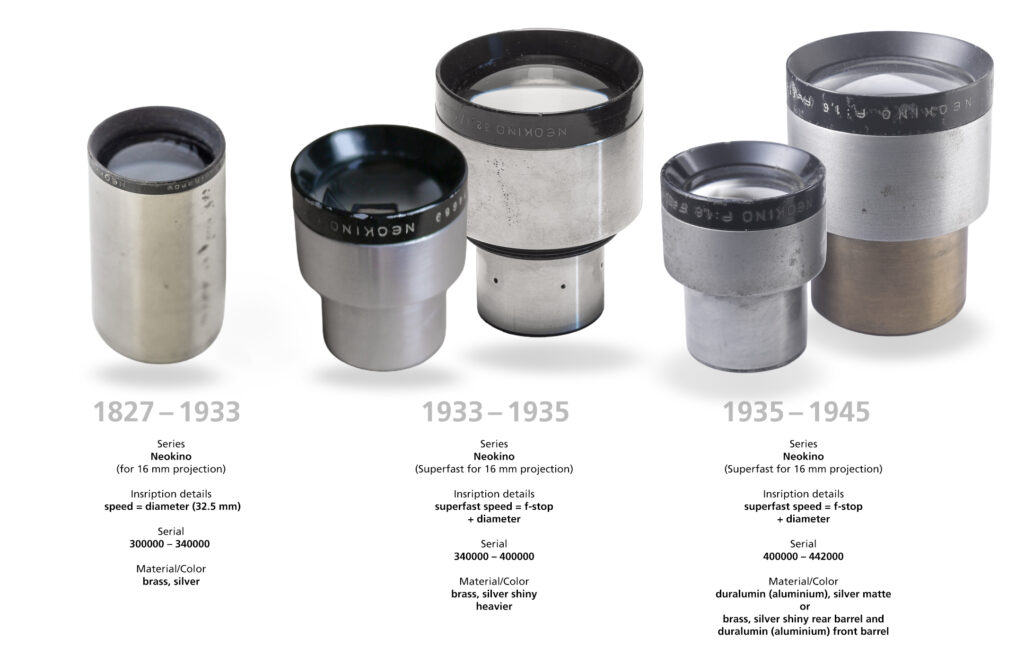
The Neokino lenses for 16 mm projection pose even more of a challenge, when it comes to dating. First of all, because they’re less common and are rarely sold separately, secondly because their features vary in ways which can easily be misinterpreted.
So far no specific mention of the first dedicated Emil Busch lens for small-gauge projection has surfaced, but it’s not unreasonable to assume that the company offered simple variants from the moment on the Neokino series was released.
Thus the first 32.5/33mm diameter variants were likely sold from 1927 onwards.
A couple of years later the first upgrade appeared around 1933 in the form of the f/1.6 variants (which was also engraved) and additional focal lengths. The lenses still featured shiny brass barrels which added a considerable amount of weight, particularly to the thicker (up to 52.5 mm variants).
After massive improvements in the manufacturing and refinery of aluminium alloys, the second upgrade featured so-called ‘Duralim’ barrels, which made the lenses significantly lighter. These later lenses don’t seem to feature a diameter inscription anymore.
Emil Busch & ROW Glaukar Series – Models and Serial numbers
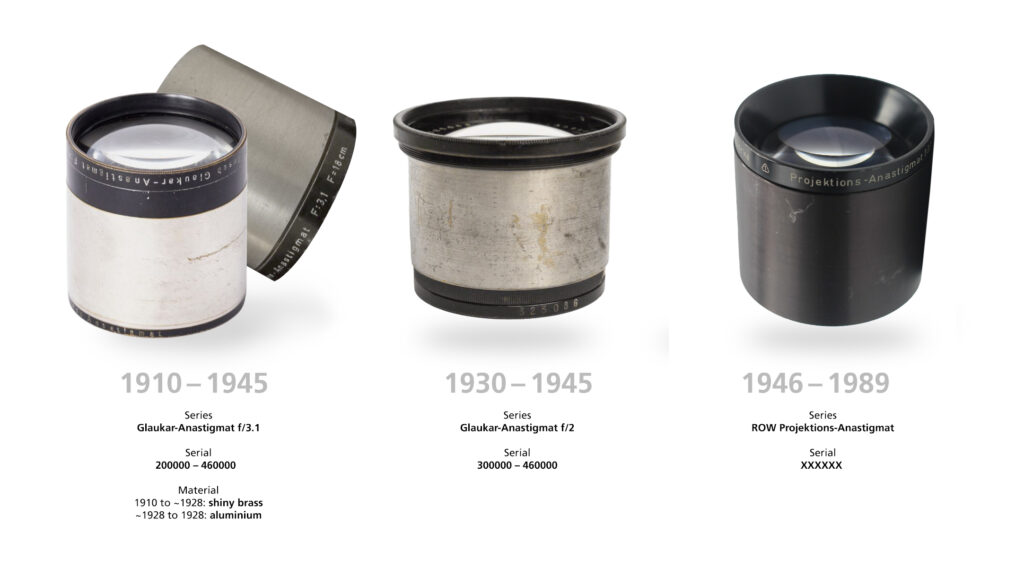
Lenses with the name Glaukar were produced for a very long time. While the trade name was registered in 1905 already and the first taking lenses might have been produced shortly after that. A single Glaukar taking lens with a really low serial number can be spotted on the overview graph. If it’s a real serial number and not a mistake, it is likely that this lens dates from 1905-1907.
The Glaukar-Anastigmats f/3.1 were introduced in 1910 onwards. Their serial numbers show quite some spread and it seems like the lens was produced with an aluminium/duralumin barrel instead of the shiny brass one the first series shows from around 1928 on. The inscription might have changed as well to ‘Glaukar Projektions-Anastigmat’ or just ‘Projektions-Anastigmat’ with the change of material.
Later on that name was kept around and still produced under the ROW banner, but given how scarce these lenses seem to be, it’s likely that this type was only produced in small batches or on demand.
As far as ROW lenses are concerned documentation is slightly better and we know some more specific dates. The Cineluxim lens (of which we’ve have only seen a single one so far) is likely from 1959. Its low P-number thus gives us a hint at the change from Nr.XXXXX to PXXXXX We know when the Visionar lenses launched (1961) and it also looks like the short-lived Cinerectar series was an earlier version of the Cinerectim, which is significantly more common. ROW labeled lenses with serial numbers far outside of the ranges mentioned above, were likely made by another company, like Meyer Optik, Laack or Zeiss. Enlarging lenses seem to have been Laack-made for the most part (at least they seem to fit their numbering system). The one notable exception among the Visionar range – even though it’s labeled ROW – might well be within the Zeiss-Jena system.
ROW Diarectar, Diarectim, Neo-Dia-Anastigmat – Models and Serial numbers
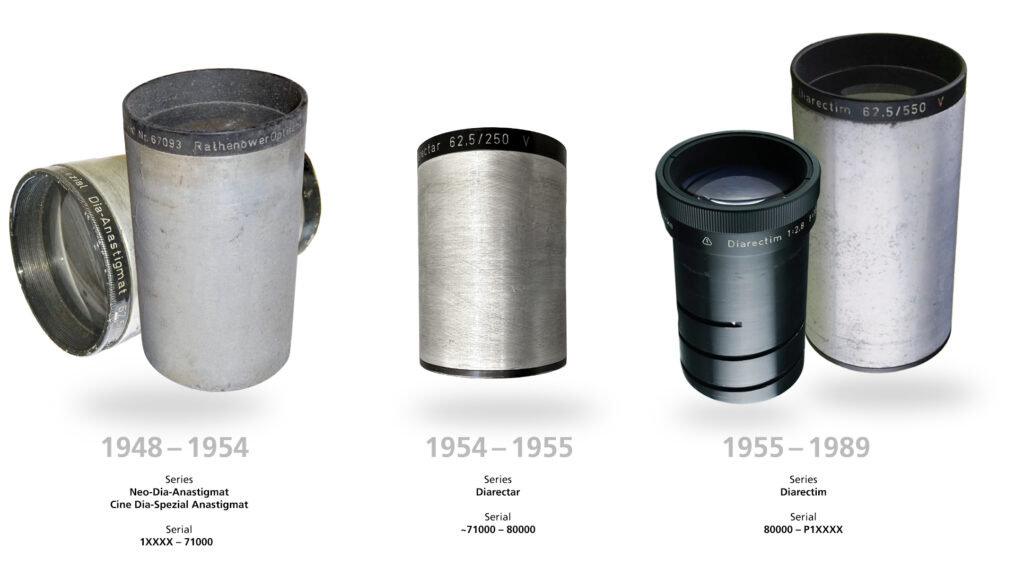
The Neo-Dia-Anastigmat lenses were likely the first still projection in cinemas made by ROW and later replaced by the Cinerectar and shortly after the Diarectar. The black variant of the Diarectim has a threaded groove which might be a hint that it was used in some type of home projector, rather than for cine still projection.
Meyer lenses with some of those names have been seen as well, so it’s unclear if the basic design stems from the Emil Busch Mod. V and W or from a similar Meyer series.
ROW Neokino, Cinerectar & Cinerectim – Models and Serial numbers
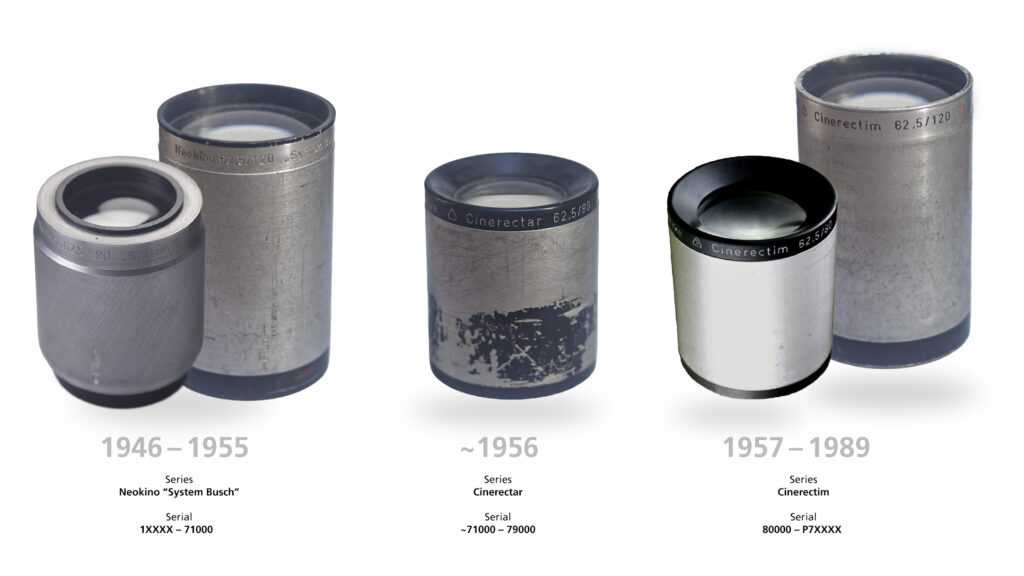
The Neokino lenses were manufactured again shortly after the end of WWII. They were likely redesigned and certainly got a new look and an additional ‘System Busch’ inscription, in order to remind people unfamiliar with the new ROW name of their heritage.
The Cinerectar – while also Petzval-based – seems to have been a newly designed lens released around 1956. Its name seems to have been replaced by Cinerectim shortly afterwards however. At least that appears to be the only reasonable explanation for why so few of those lenses are out there. Both the Cinerectar, as well as the Cinerectim lenses were sometimes painted in black on the outside. That paint must have easily come off however and so many lenses exhibit the silver material underneath in parts or even on the whole barrel. New coating seems to have been one of the main points for the upgrade and re-naming of the Neokino series.
While Cinerectim lenses might have been produced until the end of ROW in theory, their numbers likely started to dwindle soon after the release of the Visionar series around 1963.
ROW Cineluxim, Dioluxim/Neoluxim & Visionar – Models and Serial numbers
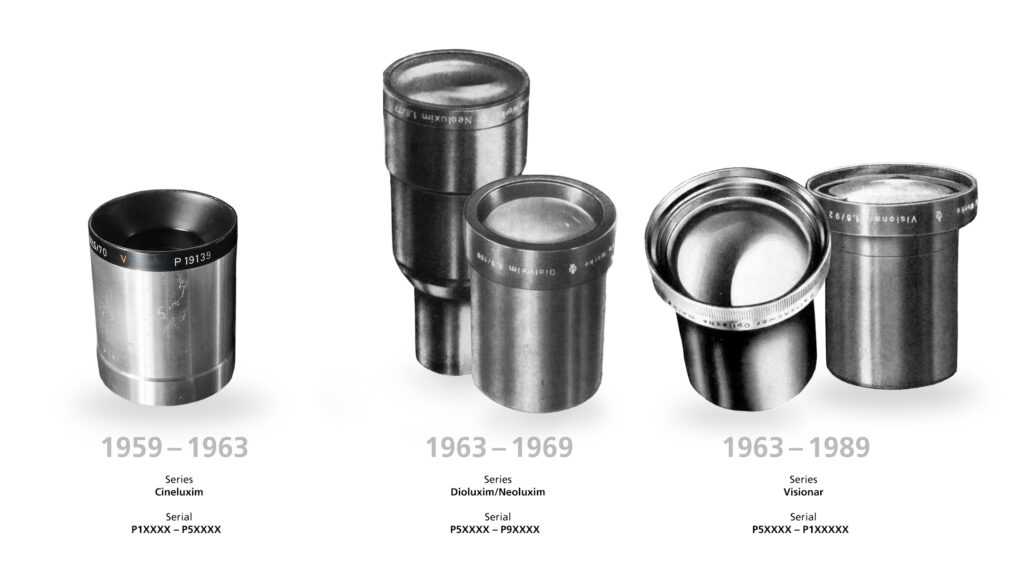
The Cineluxim seems almost inexistent, which makes it very hard to get an estimate of production and serial number ranges. The single sample seen so far already has a PXXXXX serial however and because we know that the lens was introduced around 1959 (specifically for broader formats, which were on the rise) and probably only produced until 1963 when the Dioluxim and Visionar lenses took over, it’s likely that the numbers were very low.
The Dioluxim (called Neoluxim when used with additional lenses in front, which varied focal length) was also produced in low quantities only, probably because of the complex construction, or the company-internal competition from the (Zeiss developed) Visionar line.
The Visionar finally was produced in vast numbers by the VEB Rathenower Optische Werke and while concrete numbers may be hard to come by, I think more lenses with that inscription may have been made than Zeiss-labeled samples. In addition to the seemingly very successful Anamorphic adapters, the Visionar line certainly played an important part in keeping the company in business until the last days of the GDR and so it seems like the mother company Zeiss made some reasonably good business decisions for its Rathenow-based subsidiary.

Today the Emil Busch name is mostly known for early inventions like the Pantoscope, unique lenses like the Nicola Perscheid Objektiv (a special soft focus portrait lens) and among large format enthusiasts, for the big old heavy brass Petzval lenses the company produced before the start of the 20th century.
But a couple of projectionists still know the names Emil Busch and ROW for their projection lenses and a small but perhaps growing number of people who love to adapt some of these (technically obsolete, but creatively still highly interesting) lenses to modern cameras, might be enough to keep some of their legacy alive!
Big thanks to

First and foremost, I want to thank my friend Mark Welsh, initiator of the deltalenses.com site, who managed to find some highly relevant clues and specifics in regards to serial numbers, naming convention etc. and who has been a major reason for my continued strive to find out everything behind the lenses I grew to love.
Another big Thank You goes out to Espen Susort for the inspiration in the form of his excellent articles on the 50 and 65 mm Neokino, as well as the Glaukar 7.5 cm Emil Busch lenses as well as the interesting and enriching conversations!
I also want to thank Bosun Higgs on the adapted lens talk part of the dpreview forum for his continued generous help, the research and write-ups on projection lenses including ones by Emil Busch and for sharing his extensive knowledge in general.
Sven Rahm deserves a lot of credit for finding and adapting a number of highly unusual lenses, sharing some sample shots, personal impressions and knowledge with me. I’m thankful for the opportunity to exchange and discuss a number of ideas and theories.
Furthermore I’d like to say Thank you to the people at the OIMR (Optische Industrie Museum Rathenow), specifically Bettina Götze and Daniela Born, who took it upon them to provide some really interesting information, in spite of the sparse documentation on the matter of projection optics.
Another big Thank you goes out to the kind members at the filmvorführer forum, the digicamclub, mflenses and dpreview adapted lens forums for all the input, serial numbers, images etc. It’s highly appreciated!
I also want to thank kinofritze for assembling and sharing a wealth of information on various projection lens series by Emil Busch & ROW, but also lots of other manufacturers.
PeterG, a kind user on the filmvorführer forum generously offered to send me additional offical material from ROW, which was very interesting and helpful. I’m really grateful for that!
Thanks a lot to the people at Lichtspiel Bern (a cine museum and archive in Switzerland) who shared some interesting lens data and serial numbers with me.
I also appreciate the help of Gudrun Besler, which was essential for finding out the truth behind the fake Glaukar-Anastigmat lens. Gudrun is a great photographer and shared some beautiful shots taken with Emil Busch lenses online, so make sure to check it out.
And last but not least, Marco Kröger certainly deserves another big shoutout for his excellent research on the matter on zeissikonveb.de! Thanks for sharing all that information and insights.
5 responses to “Emil Busch & ROW”
-
Hi Johannes,
thx for your visit at my blog and linking it from your blog.
I am happy to meet in the wide web an other legacy lens fan 🙂
Best regards
Bernhard
-
Hi,
thanks a lot for your comment! It’s always great to see your experiments and the humorous and creative writing on your site. I’ll make sure to check your blog for lenses which fit into the topics I’m going to cover, since I’m always interested to hear your opinion.
Best regards,
Johannes
-
-
Hi Johannes,
here a NEOKINO: #382 NEOKINO 62.5 11.5 Emil Busch AG Rathnow adaptiert mit 3D-Druck Adapter auf M42
https://deramateurphotograph.de/tag/382/
BR Bernhard
-
This is the most in-depth article I’ve ever seen on a company that made projector lenses. You’ve definitely unearthed a lot of new information and presented it very professionally. This is already my goto place for anything related to Emil Busch. I hope to see more great articles in the future. Would it be a good idea to add a last modified date? I think you’ve updated this article a lot since I first saw it.
-
Thank you very much! I’m really glad you think so, particularly because your own articles are among the best I know and contain a lot of unique information and excellent presentation!
Thanks for the suggestion. That’s a good idea. I’ve added it!
-


Leave a Reply